Qing Gu - Reviews

Qing Gu
+Add to Custom List
Sort
Add review
... Read More
I need to process this paragraph and I genuinely cannot. Let me just sit with it for a moment. "Of course, I had considered death. But as soon as the thought arose, I immediately rejected it. I haven't committed any wrong, so why should I die? I cannot punish myself for someone else's problems. I firmly believe that death doesn't solve problems; it's merely an extreme way for the weak to escape them. Furthermore, I didn't want my ashes to be improperly handled after my death, stubbornly kept in some place and unable to be buried." On the surface this reads as pragmatic resistance. But read it again. The reasoning is so layered - first the moral argument (I did nothing wrong), then the philosophical stance (death is for the weak), then... his ashes might be kept somewhere and he can't be properly buried. What does that last part reveal? That he's been thinking about this for a LONG time. That he's imagined the aftermath of his own death in such specific, detailed terms. That someone who is truly trapped doesn't just think about dying, they think about what happens AFTER they're dead. The mundane horror of undeliverable ashes hitting him harder than the existential dread of confinement. And then right after this devastating internal monologue about survival and dignity, the narrative pivots to banality. Boredom. Sleep. The tapping stone. The sudden appearance of hope through Wan Ying. The emotional whiplash is intentional and it mirrors exactly what confinement feels like - you can't sustain any single emotion because your nervous system is too exhausted. You oscillate between despair and mundane distraction because that's all you have left. When Wan Ying asks if Shen Jianqing has made things difficult, and Li Yuze hesitates about whether to tell her, I felt that knot in my chest. Some things are too heavy to share. Some things you carry alone because the weight doubles when you try to pass it to someone else.
... Read More
Shen Jianqing's dialogue in these chapters is genuinely one of the most chilling things I've read in a romance-adjacent novel. Let me just focus on this exchange: He catches Wan Ying whispering something to the protagonist, grabs her arm, wraps his arm around her waist like a claim, and then turns to her with this clouded expression and says "You're not thinking about how to leave me, are you?" The protagonist's exact reaction: "I felt as if struck by lightning, my hair standing on end with a hollow feeling in my chest." She thinks he knows. She thinks she's been caught. And then he immediately laughs it off as a joke. The cruelty of that moment is so well-written because the author doesn't even need to telegraph it — Shen Jianqing himself probably doesn't fully know whether he was joking or not. He's testing the waters and when she freezes, he retreats behind humor. Meanwhile Wan Ying's dialogue is this different flavor entirely. Her lie to Shen Jianqing — "He just, fell. I was, helping, him up" — with those deliberate pauses is so calculated. She's performing innocence. And her whisper to the protagonist, "Do you want to leave here?" delivered with what the text calls "captivating allure" — that voice, that rhythm, it paints a completely different character in just one sentence. Every character's speech patterns feel distinct.
... Read More
There's this moment—just a few lines in—and it wrecked me. Shen Jianqing sits by Li Yuze's bed after the forced feeding, stops talking, stops moving, and just... breathes. The narrative says 'time seemed to freeze. No one spoke in the room; you could even hear a pin drop.' But then the narrator adds: 'But I knew he hadn't left, because his low breathing never ceased.' That's it. That's the whole emotional weight of their relationship right there. This person who claims to care, who brings food and medicine and calls wounds 'gifts,' exists in Li Yuze's personal space like oxygen—inescapable, constant, and completely indifferent to whether Li Yuze wants him there. The horror isn't in grand threats or dramatic violence. It's in the quiet. It's in the fact that Shen Jianqing can switch from gentle ('you must be too weak to eat') to vicious (flipping him onto the bed) to nostalgic (bringing up the Lanmen wine) and never break character. He's not angry. He's not even particularly sad. He's just... present. And that's infinitely more terrifying than any villain monologue could be.
... Read More
I need to talk about this scene because the atmosphere-building here is absolutely unmatched and I literally felt like I was standing in that bamboo grove watching everything unfold. Let me paint this out for you. The author opens with the villagers' faces being 'expressionless, solemn, and quiet' under firelight that makes their gazes flicker like 'eerie ghost flames.' That image alone is enough to give you chills. It's not a festive atmosphere at all — it's the opposite of everything a celebration should feel like, and that dissonance is what makes it so unsettling. Then you have the lusheng melody rising and rising until it's 'so piercing that it hurt my eardrums and shook my spirit' — and then SILENCE. The abrupt cutoff of sound is described so perfectly that I actually paused my kindle and just sat there. 'The sound of the bonfire burning became uncharacteristically clear and low.' This is the kind of writing that makes you feel the absence of noise physically. And the bamboo grove scene where Ah Ze stumbles upon those two figures with the jar — dim light filtering through, someone breaking a seal, leaning in close to either inhale the wine's aroma or take a tentative sip — it's so atmospheric you can practically smell the damp earth and bamboo leaves. The chieftain's entrance on the platform, hoarse voice but commanding presence, 'like those of an aged yet still powerful eagle' — the visual of two bare-chested men moving in seamless coordination to pour and distribute wine while everyone watches in that dead silence? Director-level scene construction here. The whole world of the Unassimilated Miao feels incredibly alive and distinct from anything else in the genre.
... Read More
What I love about this batch is how the author uses these tiny, almost casual moments to build tension without any actual action scenes. Let me walk through the rhythm: It starts with something light—compliments about photography, playful banter about the deleted photo. Feels like a road trip vlog. Then the butterfly footprint appears, which is this weird little punctuation mark. A mystery planted in passing. Then the flirtatious girl winking, and the narrator immediately killing the mood with 'we're here for work.' Comedic relief, but also… is he serious or deflecting? The guesthouse owner conversation is the pacing masterstroke here. On the surface it's just exposition about the village and commercialization. But watch how the author writes it—the owner HESITATES. Words on the tip of his tongue but refusing to come out. The narrator presses, and the owner backs off with 'it shouldn't be too hard to find.' Something was almost said. Something important. And the narrator lets it go. He doesn't press further. That's such a smart structural choice. The reader is sitting there going 'WHAT were you gonna say??' while the protagonist is over here eating noodles and not pressing. It creates this delicious frustration. Then the night scene—scrolling through photos, falling asleep. Quiet. Routine. And then the ROOSTER CROW. Morning. The flower. End of batch. The pacing goes: social chaos → intimate quiet → mystery planted → withheld information → overnight passage → supernatural-adjacent discovery. Each beat serves the next. No filler. The author trusts us to connect the dots between the butterfly footprint, the deleted photo, the guesthouse owner's hesitation, and the mysterious flower. By the time that flower appears on the windowsill, my brain is already making connections and I NEED the next chapter immediately.
... Read More
Okay, so let me just talk about what happened in these chapters because wow. The way the author set up this whole traitor situation and then delivered the judgment scene was honestly one of the most intense sequences I've read in a while. Here's the thing that got me—the trial isn't just a plot device to punish a character. It's layered. Ah Song betrays the group, but we slowly realize through the narrative that he was actually protecting Wen Lingyu. The reveal that he knocked over that wine cup wasn't random; it was a deliberate act of devotion disguised as clumsiness. That's a really clever structural choice by the author—delaying the explanation until the judgment scene makes everything hit harder. And then there's the wine. The same wine setup from the Huoxing ceremony appears again, but this time only Ah Song drinks it. The parallel was so deliberate that it made my skin crawl. I kept thinking—was this supposed to happen? Were they all walking into a trap? Li Yuze narrates this realization himself: 'I had fallen into a trap unknowingly, foolishly believing everyone had good intentions.' That moment of dawning horror was beautifully written. The chapter also does something really interesting with information control. We get Shen Jianqing's perspective on love in those opening philosophical lines—obsessive, fanatical—and then we see him act on exactly that philosophy throughout. The narrative is building toward something bigger, and I have a feeling the trap mentioned isn't just about Ah Song. It's about all of them. The plot feels like it's tightening its grip with every page. One thing I want to understand though—what exactly happens after the wine? Is Ah Song going to die? And more importantly, how does this affect the group's dynamic going forward? The author left so many questions hanging at the end.
... Read More
Okay, I need to talk about Hong Hong because this little bug is arguably the sharpest observer in the entire novel and I am HERE for it. The moment Hong Hong realizes Shen Jianqing and Li Yuze fought? Immediate diagnostic mode. Rubs head, analyzes body language, notes the venomous蛇-like gaze Shen Jianqing deploys when Li Yuze turns his back. Then — and this is the part that made me choke on my tea — Hong Hong HATCHES A PLAN. Fakes illness. Lets Li Yuze carry it. Lets Shen Jianqing take it. Traps itself in a Gu container on purpose so it can eavesdrop on the make-up conversation. This creature has more social intelligence than half the human characters. And the genius of it is how Hong Hong watches Shen Jianqing transform from icy and distant to visibly pleased the moment Li Yuze calls out. That shift — imperceptible to everyone except the bug — is pure character revelation. Shen Jianqing pretends at indifference but his aura screams joy. And then he locks Hong Hong in a box while confessing his real feelings to Li Yuze: "I don't mind being exhausted, Yuze Ah-ge..." The sentence cuts off but we don't need the rest. The door clicking shut is punctuation enough.
... Read More
This chapter is a masterclass in controlled pacing. It starts almost lazily — coffee shop, ordering drinks, small talk about the verdict. You could skim through the beginning and miss the slow dread building underneath. But then the author pivots with Ah Song. One question from Wen Linyu and suddenly the entire emotional axis of the scene shifts. The protagonist's internal monologue about seeing that same tender expression on Shen Jianqing's face — that's the first real turn. From there, the chapter keeps descending. First to the sanatorium where we see Xu Zirong barely walking, then to Qiu Lu's ward where everything feels heavier, more fragile. The author never rushes. Every scene gets its own breathing room. Xu Zirong's walking sequence alone takes up a full paragraph — the hesitation, the stumbling, the near-falls, the sweat, the eventual smile. You can't speed-read through that. It forces you to slow down and witness it. And the ending? It just... stops. No conclusion, no emotional bow tied up neatly. The mother's humming, the finger raised for silence, the wire mesh enclosing everything — it's an image that lingers precisely because the author refuses to give you closure. The chapter before this would have dealt with the mountain aftermath, and this one deals with the long tail of survival. The pacing mirrors the characters' own experience: there's no clean resolution, just gradual adaptation to an unadaptive world.
... Read More
The camera. Let me just sit with this symbol for a moment because I think it's the central motif of the entire novel and these chapters make it devastatingly clear. The camera begins as something shared between Li Yuze and Shen Jianqing in an innocent moment - teaching, connection, the forest with lush green darkness. But by the dream sequence, the camera has transformed. It becomes "a black abyss, ready to swallow one's soul." The lens is hollow, dark, and Shen Jianqing's face disappears behind it, only his crimson lips visible. He becomes less human, more entity, more predator. The thing they once shared as connection has become the instrument of his consumption. But here's what I find most interesting: who is watching whom? Shen Jianqing watches Li Yuze through the camera. But he also watches him constantly in reality - the confinement, the isolation, the meals brought personally to prevent interaction with others. The camera is just the technological extension of his surveillance state. And Li Yuze, trapped in the stilt house, can only look OUT through the barred window. He's reduced to a passive observer of the forest below, unable to act, unable to leave, watching Wan Ying throw stones like a child sending messages from a tower. The theme of observation versus agency runs through everything. Shen Jianqing controls the frame - he decides what is seen and what is hidden. Li Yuze's only agency comes in small rebellions: refusing to die, refusing to pretend he's in love with his captor, reaching out to Wan Ying despite the danger. "I haven't committed any wrong, so why should I die?" - This isn't just about survival. It's about moral clarity in a world that has inverted all normal ethics. The captor plays the devoted partner. The captive is expected to be grateful. The one who holds the camera lens sees everything but is seen by no one on equal terms. The Wuzi grass at the end - fire as signal, fire as destruction, fire as liberation. What better symbol for a trapped person than the one element that can consume everything, including the prison itself?
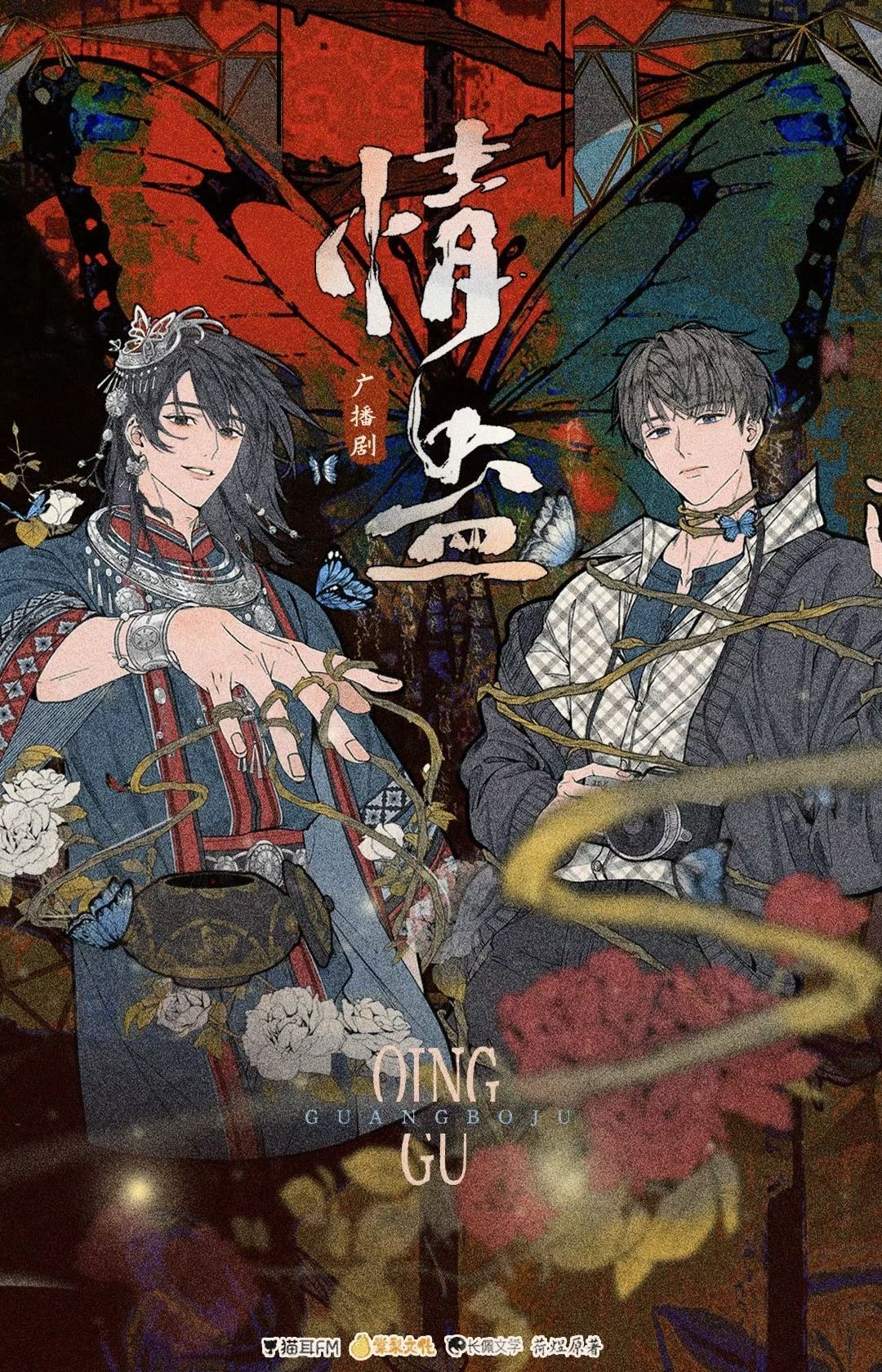
... Read More
Shen Jianqing calling him "Yuze Ah-ge" is absolutely brutal and I need everyone to understand how good this is. On the surface it's affectionate—those Ah-ge, Ah-ma, Ah-ba terms are Miao familial terms, right? They're supposed to create intimacy, a sense of belonging. But Shen Jianqing wields it like a tool. Every time he says it, he's reminding Li Yuze that this person is close to him, that he has access, that he's inside the boundaries where Li Yuze lets people in. The first time he uses it during that scene? "Li Yuze, Yuze Ah-ge... you still owe me once." He's turning a term of endearment into a ledger entry. Like their entire relationship is a series of transactions and debts, and affection is just another currency. But then later, after the morning after, when he's serving porridge and being weirdly proper about it—all polite, all restrained—and says "Yuze Ah-ge, this is the porridge I woke up early to make"—it's different. It's almost tender. Almost human. And that's what makes it dangerous, because now Li Yuze doesn't know which version is the real one. Which version gets to decide what happens next. The dialogue in this section is so deceptively simple. Shen Jianqing barely says more than a few words at a time, but each line carries three layers of meaning. Li Yuze's internal monologue, on the other hand, is where the real voice lives—intellectual, analytical, always trying to make sense of something that refuses to be sensible. I also love the narrator's little dig at traditional gender roles: "Many people say that men are creatures of their senses... If you can't even control your own body, how can you control your life?" This is Li Yuze trying to maintain his dignity through reason, and it's failing spectacularily. His own body betraying him, his mind going blank "as if a kilogram of paste had been poured into it"—the humor here is dark and self-aware and absolutely perfect.
... Read More
I'm still not over the bit where Ah Song finds his own tears and snot-covered hands clutching a plastic card like it's gold. The text describes him wiping dust off it with his sleeve, and I literally had to put the book down. Here's a man who has lost himself completely—no memories, no identity, just this hollow child-like presence—and yet his body remembers what his mind can't. That card is the last tether to Wen Lingyu, and he would rather die than lose it again. But the most devastating moment isn't even about Ah Song. It's when the protagonist whispers "Wen Lingyu" to him, syllable by syllable, like she's teaching a ghost how to speak. And he manages one sound: "Yu." Just one. But it's enough. It's enough to make her (and me, reading this) feel this huge swell of hope and grief simultaneously. Because yes, maybe he can remember. Or maybe he'll never remember anything else. The uncertainty is what kills you. And then Shen Jianqing shows up and shatters the whole fragile moment. There's something so painfully tender about the protagonist trying to give this name to someone who can't hold onto it, while knowing full well that whatever peace she found in this forest is about to be destroyed. The emotional whiplash in these pages is unreal.
... Read More
The imagery in this section is absolutely cinematic and I need to talk about it. 'His body slightly turned, revealing half of his profile' — that single detail did so much work. You can picture the moonlight catching one side of his face while the other stays in shadow, which is honestly perfect visual metaphor for a character who is half-revealed to us. Then the insects arrive and the description goes full visceral: 'like flowing black satin, like spilled black blood.' The double simile is genius because it moves from beautiful to horrifying in the span of two phrases, mirroring exactly how the narrator's own feelings about Shen Jianqing are shifting. And the religious imagery — 'fanatical cultists exalting their sovereign, their emperor, their god' — that's the line that haunted me. It elevates Shen Jianqing from mysterious stranger to something almost mythological, something dangerous and reverenced. The woods themselves feel alive in a way I've only experienced in the best gothic horror. Cold wind, faint moonlight, shadows wavering. Every sensory detail pulls you deeper into this unsettling atmosphere. I also appreciate how the story keeps giving us these quiet moments of normalcy amid the dread — Xu Zirong cracking jokes about his 'fresh, lively body' while half-dead from fever is both darkly funny and deeply unsettling. The contrast makes everything worse, not better.

Leave a comment

You must be logged in to leave comments. or
