Qing Gu - Reviews

Qing Gu
+Add to Custom List
Sort
Add review
... Read More
Okay, this whole scene with the insects is genuinely one of those moments where the author just leans in and whispers 'things are about to get worse' and I was already sweating before the bugs even showed up. The buildup is masterful — starting with that eerie, moonless darkness where 'these were the only two pitiful light sources in the world,' and then layering on the sound design like a horror movie script. 'Rustle—rustle—' repeated like a heartbeat getting faster. My skin actually crawled reading it. But what really raises the stakes here isn't just the bug swarm itself — it's the revelation that this might not be random. Xu Zirong's confession hits different because it reframes everything. They didn't just stumble into bad luck; something *herded* them here. The insects earlier weren't just insects, and the fact that navigation died right after he diverted the car? That's not coincidence, that's something with intent. And then at the end — that white flower, deliberately placed, stem cleanly snapped, same one from the Miao village inn. Someone has been watching them. Following them. The stakes just escalated from 'we're lost in the woods' to 'we're being herded by something that knows us and has been playing with us.' I need to know what happens next because the tension is absolutely suffocating in the best way.
... Read More
Every character in this scene has a distinct voice, but Shen Jianqing's dialogue style is what stood out most to me. "How did, you all, get here?" — that slight awkwardness in his speech pattern immediately marks him as an outsider to the modern world, someone who doesn't speak the same language these university students do. But then he shifts seamlessly: "That path leads out. I'm not lying to you." Sincere, direct, almost too straightforward. And then later: "You truly want to go? No regrets?" — which sounds like a warning but is actually just a question. The narrator even notes his attitude was "sincere, his expression serious, not at all like he was lying." So which is it? Is he sincere or is he manipulating them? The ambiguity in his dialogue is brilliant. Meanwhile, the narrator's own voice is analytical and self-aware — they catch themselves overthinking, acknowledge their ambitions, try to read the situation carefully. Xu Zirong is all aggression and bluster. Qiu Lu is eager and people-pleasing. Wen Lingyu is quiet but calculating. Each character's speech patterns reinforce who they are without any exposition needed. And the narrator's internal voice — that mix of academic curiosity and growing unease — makes the whole thing feel grounded and real.
... Read More
What makes this section genuinely gripping isn't any big action set piece — it's the fact that the author keeps raising the stakes quietly while making you feel like everything's settled. On the surface, Xu Zirong and Qiu Lu are recovering. Great news, right? But the moment Wen Lingyu drops the word "Dongjiang," the ground shifts under Li Yuze's feet. Because Dongjiang isn't just a random county — it's loaded with history and meaning for all four of them. Xu Zirong's frown when he says the name reveals hidden pain. Whatever happened there matters, and the story hasn't finished with it yet. Meanwhile, the unresolved thread with Shen Jianqing continues to simmer. Li Yuze finally articulates the core conflict: they want to change but are terrified of it. They want to move forward but can't let go of the past. This internal war is what makes every external conflict feel personal. The parasite, the Gu insects, the brain damage — these aren't just plot devices, they're manifestations of something deeper. The stakes here are about whether these characters can ever truly be themselves again after everything they've survived. And honestly, the most tension in this section comes from what's NOT said. The silence between Li Yuze and Wen Lingyu. The distance she describes. The promise Shen Jianqing made and what it might cost them. The author knows exactly how to keep you on edge without ever raising their voice.
... Read More
This passage really is about how memory refuses to stay buried. The silver ribbon isn't just an accessory—it's a visual echo of Shen Jianqing's hair ornaments, a subconscious reminder that the protagonist has been projecting his lost love onto new faces. 'Rather than looking at her, it was as if I was subconsciously looking at something that resembled Shen Jianqing.' That line is the thesis. The sachet left at home becomes a potent symbol of abandonment and absence; it's both a physical object and a metaphor for what's been left behind. Even the Taoist temple, with its generic statues, represents the universal human desire to find meaning or solace in familiar rituals when everything else feels uncertain. The class birthday tradition itself speaks to our need to create artificial anchors—recurring celebrations that give illusion of permanence in a world where 'we are all destined to return to the masses.' The meteor imagery earlier—Zhao Rugu's appearance as 'a fleeting meteor, briefly streaking across the sky before vanishing'—ties into this too: love as transient phenomenon, beautiful but ultimately passing. It's all about how we carry love forward, how we mistake familiarity for destiny, and how even rejection can feel like relief when it confirms our fears about human nature. The deepest theme here might be the courage it takes to acknowledge that sometimes forgetting is harder than remembering. Let me go back and unpack that meteor metaphor. Zhao Rugu compares dating to 'just feeling a connection and giving it a try,' but the protagonist sees her as a fleeting meteor—temporary, bright, gone. Yet his own relationship with Shen Jianqing was presumably more permanent, yet now it's reduced to memories triggered by silver ribbons and insect repellent. The sachet becomes a relic of a lost intimacy; leaving it at home feels like leaving a piece of himself behind. And the temple visit? It's not about religious faith; it's about seeking an external place to process internal chaos. The generic statues highlight how we project our own narratives onto neutral objects. The class birthday ritual, with its 'grand' celebration, contrasts with the protagonist's inner fragmentation. How do these themes resonate? They speak to anyone who's ever loved someone they couldn't keep, who's tried to fill a void with new connections, who realizes that healing isn't linear. The symbolism here isn't heavy-handed; it's woven into the fabric of everyday moments—a ribbon, a sachet, a temple walk. That's what makes it so powerful.
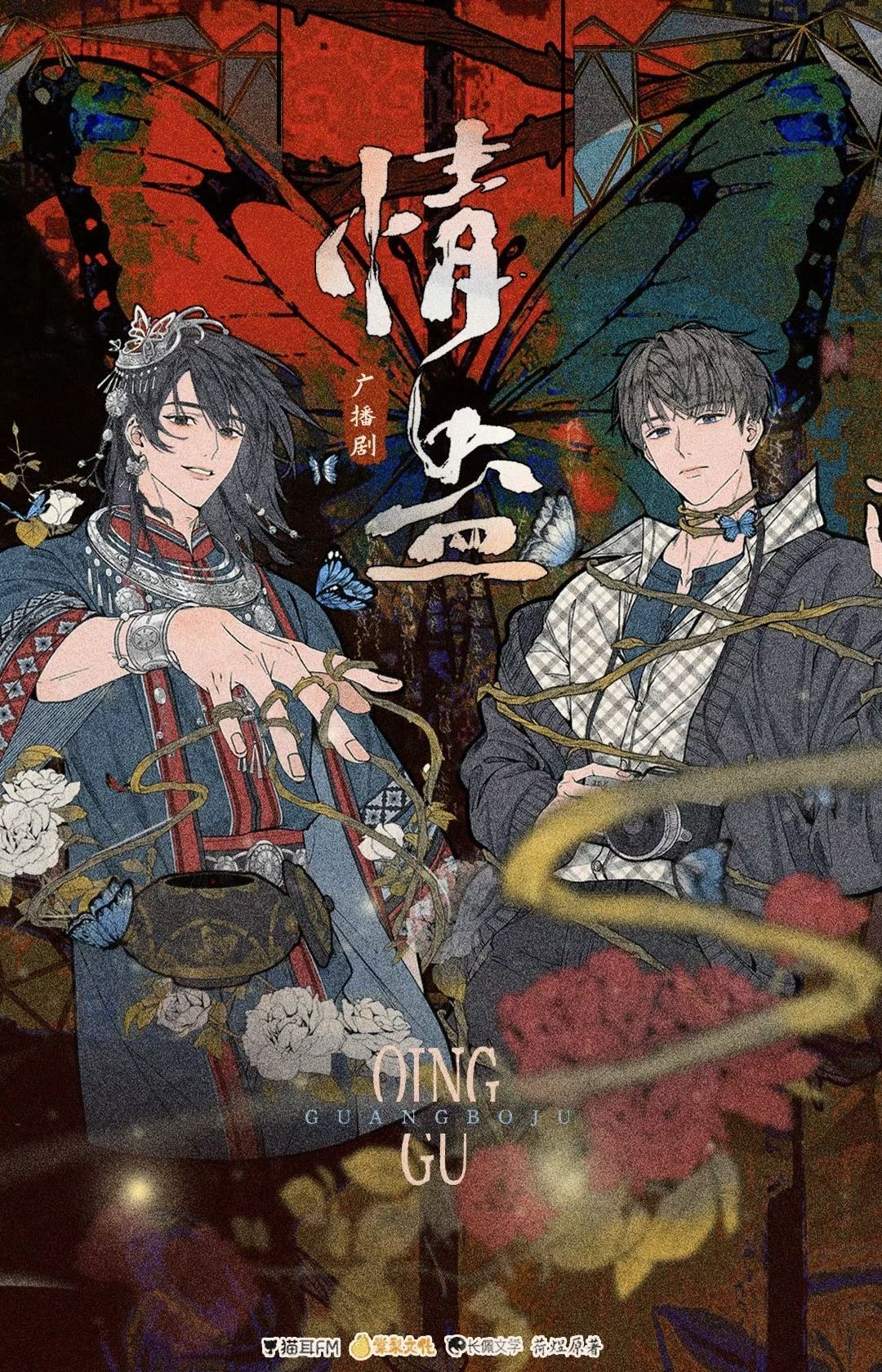
... Read More
Okay so I need to talk about this because my brain is still processing. The big twist here isn't just that Shen Jianqing is imprisoned Li Yuze—that was building for a while. The twist is that he was ALWAYS there. At the village. Watching. Recording. Collecting moments like a collector stamps. When he mentions the Lanmen wine incident, it reframes an entire chunk of backstory. Everything Li Yuze thought he knew about his time in Dongjiang Miao Village just got contaminated. Was Shen Jianqing behind Ah Li offering that wine? Was the whole village setup part of a longer game? And then there's the Miao Gu subplot—the fact that his three friends already have Gu insects planted in them means this wasn't a spontaneous kidnapping. This was planned, calculated, and executed over what sounds like months or years. The plot here operates on two levels: the immediate physical threat (Li Yuze trapped, sick, powerless) and the vast historical threat (Shen Jianqing's years of observation and manipulation). Every thread pulls tauter the more you examine it. And I'm still not sure whether Li Yuze's illness is natural or part of the plan too.
... Read More
I keep coming back to this one image: the sealed windows, the iron bars, the fragmented scenery outside cut into little blocks. It's such a simple description but it creates this claustrophobic dread that lingers. The room itself feels like a character—once open, generous, full of light and possibility, now a cage with every exit methodically eliminated. And then there's the herbal paste on Li Yuze's forehead contrasting with Shen Jianqing's scabbed wound. These details aren't just decoration; they're visual storytelling about who holds power, who tends to wounds, who keeps scars. The Lanmen wine flashback scene is especially vivid—Ah Li offering wine, Li Yuze crouching slightly to avoid touching her, tilting his head back. The author mirrors this exact physical positioning with Shen Jianqing forcing the medicine bowl, but strips away all the social context and leaves only raw domination. Same posture, completely different meaning. That kind of cinematic parallel is what makes the worldbuilding hit so hard—it's not about describing temples and villages, it's about how a single gesture can carry decades of hidden history.
... Read More
Okay so this scene where Wen Lingyu deletes the candid photo—let me talk about this because it is SO loaded. She literally finds the photo, calls out 'Photographer Li, you make mistakes too!' and then DELETE. Confirm. Gone. And the narrator feels this 'faint sense of loss' and literally catches himself wondering what's wrong with him. Like… buddy, you know exactly what's wrong with you. You kept it. You looked at it. It mattered to you. And then—plot twist—he goes back to his room and RESTORES IT. Says it's 'for studying the physical characteristics of the Miao people' but we all know that's BS. He kept it because he wanted to keep it. The fact that he's sitting there rationalizing it to himself like a guilty kid is kind of heartbreaking and adorable. Meanwhile Wen Lingyu is OUT HERE TESTING HIM. She calls him the hardest 'steel-straight man' and laughs about it, but notice she also noticed the photo in the first place. She was looking through his camera. She was close enough to see what he was looking at. Their whole dynamic is this weird push-pull where she's teasing him about having zero romantic awareness while simultaneously being the one paying attention to his every move. Who's really the clueless one here?? Also the shoe print moment—someone left a butterfly footprint on his shoe in that crowded square and he didn't even notice until Wen Lingyu pointed it out. Meanwhile a girl winks at him and he immediately pivots to 'we're not here for romance, we're here for WORK.' Bro. You're restoring deleted photos of people at midnight and you're telling ME you have no romantic cells. The hypocrisy is magnificent.
... Read More
Okay, can we just talk about Shen Jianqing for a sec because this man is a walking red flag wrapped in silver jewelry. Five years have passed and what has he learned? Absolutely nothing. The moment Li Yuze catches sight of Xiao Wen, Shen Jianqing SHIFTS. He literally steps in front of Li Yuze like a human shield and hides that red mark on his hand. Hides it. Like it's evidence of some crime. The possessiveness hasn't aged a day. And don't get me started on Li Yuze. This guy went from that cold, detached person to... well, still kind of straight-laced but softer. When he says Shen Jianqing has been pestering him for a Qixi gift, there's this tenderness underneath the exasperation that tells you everything. They're clearly together. But that split second where Li Yuze wanted to say something to Xiao Wen before being interrupted — "when the time is right," "take full responsibility" — that was probably about their wedding. That hit me right in the chest. Everyone moves on. Everyone except the narrator. The student even commented on how handsome they both are. They looked good together in those blue Miao outfits. And Xiao Wen just walked away. Just... walked. Like it was nothing.
... Read More
Okay so I need to just sit with this passage for a second because the plot twist here is absolutely devastating. Up until this point, Shen Jianqing has been operating under a complete false identity — half a month of playing the harmless, gentle Miao youth, and the protagonist has bought it hook, line, and sinker. The narrative explicitly confirms what we've suspected all along: "My suspicions hadn't been wrong; Shen Jianqing wasn't the Shen Jianqing I had seen. Perhaps this was his true self. He had been deceiving us from the beginning." This is such a classic structural pivot point in the story — the moment when the protagonist's world literally collapses. What's brilliant about the plotting here is that the author doesn't soften it. There's no dramatic villain monologue, no elaborate scheme being explained. It's raw, immediate, and horrifyingly practical. Shen Jianqing literally just says what he wants and takes it. The pacing goes from slow-burn dread (the cave confrontation, the dialogue) to sudden explosive violence (the sachet strike, the overpowering) in a way that mirrors how real trauma unfolds — chaotically and without warning. And then the aftermath? Waking up in his room like it's just another day? That's not a plot convenience — that's psychological realism. The protagonist's mind is trying to protect itself by treating it as a dream, but the body remembers everything. "Nothing felt normal. It was like being repeatedly run over by a large truck." The half-month setup paying off like this is the kind of structural investment that makes you feel cheated and impressed at the same time. The author planted this bomb early and detonated it right when we thought things might get better.
... Read More
Okay can we talk about how the author basically traps our protagonist in a cave with a venomous snake AND a crippling injury? That's not just tension, that's sadistic storytelling and I am HERE for it. The way the snake is introduced—"Hiss—hiss—" first you hear it, then you see it, the triangular head, the red eyes with those vertical pupils—this is textbook predator framing and it works so well. But the real twist isn't the snake itself, it's what saves them. Not a weapon, not strength, but a GODDAMN SACHET. A little pouch of dried grass that Shen Jianqing gave them earlier and they'd completely forgotten about. That's such a clever narrative callback. The author planted it as world-building flavor text and then weaponized it as a life-saving device two chapters later. Classic Chekhov's gun... or Chekhov's herbal sachet, I guess. And then—right after surviving the snake, right when you think they're safe—the fever hits harder. Of course it does. Because the universe hates them. The sequence of threats (snake → fever → isolation → parental abandonment thoughts) is basically a spiral downward that makes you want to shake the protagonist and also hug them simultaneously. The cliffhanger ending with Shen Jianqing returning in this entirely different energy? Chef's kiss. We went from "he saved me once" to "he looks at me like I'm an insect" in one scene transition. What did I do to deserve this rollercoaster?
... Read More
Okay I am not okay. I literally had to pause reading because my brain refused to process what just happened. The narrator walks in on Shen Jianqing under moonlight, this eerie calm figure with his hair loose, surrounded by thousands of black insects like some kind of creepy insect king — and it all connects. The getting lost. The burst tires. That white flower on the windshield. The fever that hit both Qiu Lu and Xu Zirong at the exact same time and then just... stopped at dawn. None of this was coincidence. Someone was herding them. And the person they trusted most, the one who pointed them toward safety, might have been steering them somewhere else entirely. The twist hits so hard because up until this moment, Shen Jianqing was painted as this beautiful, brilliant guy trying to help them survive. The betrayal isn't just personal, it's structural — everything we thought we knew about the journey recontextualizes in one scene. I keep going back to that line: 'That path stretched endlessly.' Did he ever actually point them toward an exit, or was it just another thread in whatever net he was spinning? Also, the sudden recovery timing is driving me crazy. Two people spike a fever together, the caretakers lose sleep, and by morning they're bouncing back like nothing happened? That's not realistic illness behavior. Something is very wrong here.
... Read More
Let me just say this: the pacing in these chapters is masterful. Not flashy, not showy, but deeply controlled. The author knows exactly when to slow down and when to let things breathe. It starts slow — inn breakfast, congee, casual morning banter. Nine o'clock, as the agreed time. The author even NAMES the time, which grounds everything in reality. We're not in dreamtime; we're in a real morning with real people eating real food. This leisurely opening lets us settle into the characters and their relationships before the story picks up. Then the climb. This is where the pacing shifts. The physical effort of ascending — Qiu Lu panting, refusing to rest, the steep incline — creates natural momentum. We're moving upward literally, and the narrative moves with us. No transition needed; the journey IS the transition. By the time they reach the drying yard and meet Ah Li, the story has already gained enough energy to sustain the longer scene that follows. The encounter with Ah Li is brief but dense with information — her role, her knowledge of the area, her interest in Li Yuze. It propels them forward to the old woman's house. And the ending! It cuts right at the moment of cultural exchange — the oil tea, the questions, the old woman's warm welcome. It doesn't resolve anything. It opens a door (literally and figuratively) and leaves us wanting to step through. That's excellent chapter structure. What I appreciate most is how the author never rushes. Even the most information-dense moments — the description of the village layout, the old woman's appearance, the oil tea preparation — feel unhurried. They have room to exist. You could read this slowly and absorb everything, or skim through and still get the full picture. That's rare. The one thing I'd note: some readers might find the middle section (the walk up, the drying yard) slightly drawn out. But I think that's intentional. The slowness mirrors the actual experience of visiting a mountain village. You don't rush. You climb. You breathe. You arrive.

Leave a comment

You must be logged in to leave comments. or
