Qing Gu - Reviews

Qing Gu
+Add to Custom List
Sort
Add review
... Read More
Okay I need to just talk about this one moment because it completely wrecked me. Shen Jianqing shows up at night covered head-to-toe in dirt and mud, chest heaving, having apparently just run back from helping Lu Qi harvest fruits in the rain, and his FIRST WORD is "You looked very sad when you saw him this morning. If I go and help him, will you be a little happier?" He basically just went and did manual farm labor in a violent storm because the protagonist felt pity watching an old man rub his aching back in a field. And he doesn't even frame it as romantic or grand, he just says it like it's the most natural thing in the world. This man is so deeply attuned to her emotional state that he notices her sadness from ACROSS a rice paddy and decides to act on it immediately. But here's the thing that makes it so complicated — he's also the person who has her essentially trapped in this village. The guy who wrapped his arm around her waist with possessive energy that morning, the guy whose joke about "thinking about leaving me" made her blood run cold. He's both the cage and the one handing her an apple. I keep going back and forth on whether to root for this or run the other way.
... Read More
Okay so I need to talk about what just happened with Wan Ying because my brain is still reeling. This woman spent how much time manipulating Li Yuze? Luring him out under the pretense of checking on Shen Jianqing, acting like she cared, sending him herbs that were confirmed by Shen Jianqing himself... and it was all because SHEN JIANQING didn't want her. Like. She liked him. And he's her COUSIN. The text literally says they're cousins but I had to double-check because the emotional betrayal here is SO specific and sharp. What hit me hardest was when Li Yuze finally connects the dots - it's not about outsiders disrupting the village, it's about romantic rejection. 'She liked Shen Jianqing, or rather, Wan Ying wanted to be... with Shen Jianqing?!' That sentence structure with the ellipsis made me physically wince. You can feel him reconstructing the entire history of this place backwards. And then the layer about Ah Song - she made him like that. Made him suffer - and now she's doing the same to Li Yuze. The parallel is sickening. But what really got me was Li Yuze's final moment of reflection, when he realizes that even if he's being cornered, he'd rather die than become 'a burden, someone ignorant and needing constant care.' That's not just defiance. That's someone who has watched too many people they love get destroyed by this place's customs, and refuses to let it happen to themselves. The emotional arc here goes from confusion to horror to a cold, sharp clarity. And I'm sitting here wondering if Shen Jianqing actually knew about Wan Ying's obsession before he even met Li Yuze, or if he was just another person who got played by someone wearing a sweet smile.
... Read More
Okay so Zhang Xu drops the phrase 'our Ah Ze' and it's honestly the most devastating three words in this whole chapter. Just casually, like it's nothing, but you can tell Shen Jianqing heard it differently. His eyes literally changed when Yuze explained what a roommate was — pressed his lips together, deep frown, and that murmur: 'No wonder he said our Ah Ze.' That was not curiosity. That was hurt. And then the classroom scene? He just sits there, completely still, when the teacher calls on him. Not defiant — just completely outside of this world. Nobody else looks as lost as he does, not even slightly. But what got me was the moment at the end. Zhang Xu shows his rash-covered arms, and Shen Jianqing 'subtly adjusted his sleeve, then hid his hands behind his back.' That's not a small detail. That's someone protecting something. And Yuze notices. He always notices. The way they move around each other — Shen Jianqing asking 'what's your relationship with him?' right after Zhang Xu leaves, like he needed to know immediately. He doesn't say 'I'm jealous.' He asks a neutral question and lets Yuze answer. That restraint is painful to read.
... Read More
The flower. A silent gift from an unseen watcher. It could mean safety, it could mean a curse, it could mean 'I know your name.' The fact that Li Yuze wonders if it was meant for Wen Lingyu because of how the rooms were arranged at the inn — that's not random. The author is telling us that nothing in this forest is accidental. Every object, every placement, every encounter has meaning. The forest itself seems to be communicating through symbols rather than words. Then there's the youth's red mole on his right eyelid — appearing and disappearing as he blinks. A mole that flashes in and out of visibility like it's barely holding onto the surface world. And his braid flying through the air when he turns too quickly, tracing a black line. These are visual details that feel like brushstrokes on a painting. The youth himself is a walking symbol — bamboo basket on his back, mid-length hair giving him a feminine quality, standing perfectly still while others panic. He doesn't belong to the same reality as the main characters. And the road. Always the road. It continues extending, supporting and accompanying them. Is the road leading them out, or is it leading them deeper? The light of salvation is ahead — or so everyone thinks. But in stories like this, the path to freedom is almost never a straight line.
... Read More
This excerpt is a masterclass in emotional whiplash and I need to talk about it. We open at absolute rock bottom — the flower discovery, the bugs from last night flashing through Li Yuze's mind, the paranoia of being watched. The prose gets shorter, more frantic. Goosebumps. Hairs standing on end. Turning his neck stiff with fear. You can feel the panic building through the sentence structure itself. Then — sudden tonal shift. Qiu Lu and Xu Zirong emerge from the car sleepy and teasing. The tension breaks like a rubber band snapping. For a moment I thought, oh thank god, normal people again. The author lets us breathe. But then Li Yuze explains the flower and the inn incident, and the tension comes back sharper than before. Qiu Lu clutching Xu Zirong's arm. "Someone's been following us..." And just when we think we've hit maximum anxiety, they see THE YOUTH. The relief is almost physical — Wen Lingyu and Qiu Lu embracing, Xu Zirong making a cross gesture despite being an adamant materialist. Even Li Yuze feels relaxed for the first time. The smile returns. He even offers the youth a ride. And then the youth says "I've seen you" in perfect Mandarin after speaking broken Chinese moments before. The relief curdles. The reader is left sitting in that exact moment of wrongness, wondering what just changed and why. The chapter basically ran us through an entire emotional arc — terror, comedy, terror, hope, and then this quiet, creeping horror at the end. Absolutely brilliant control of pacing.
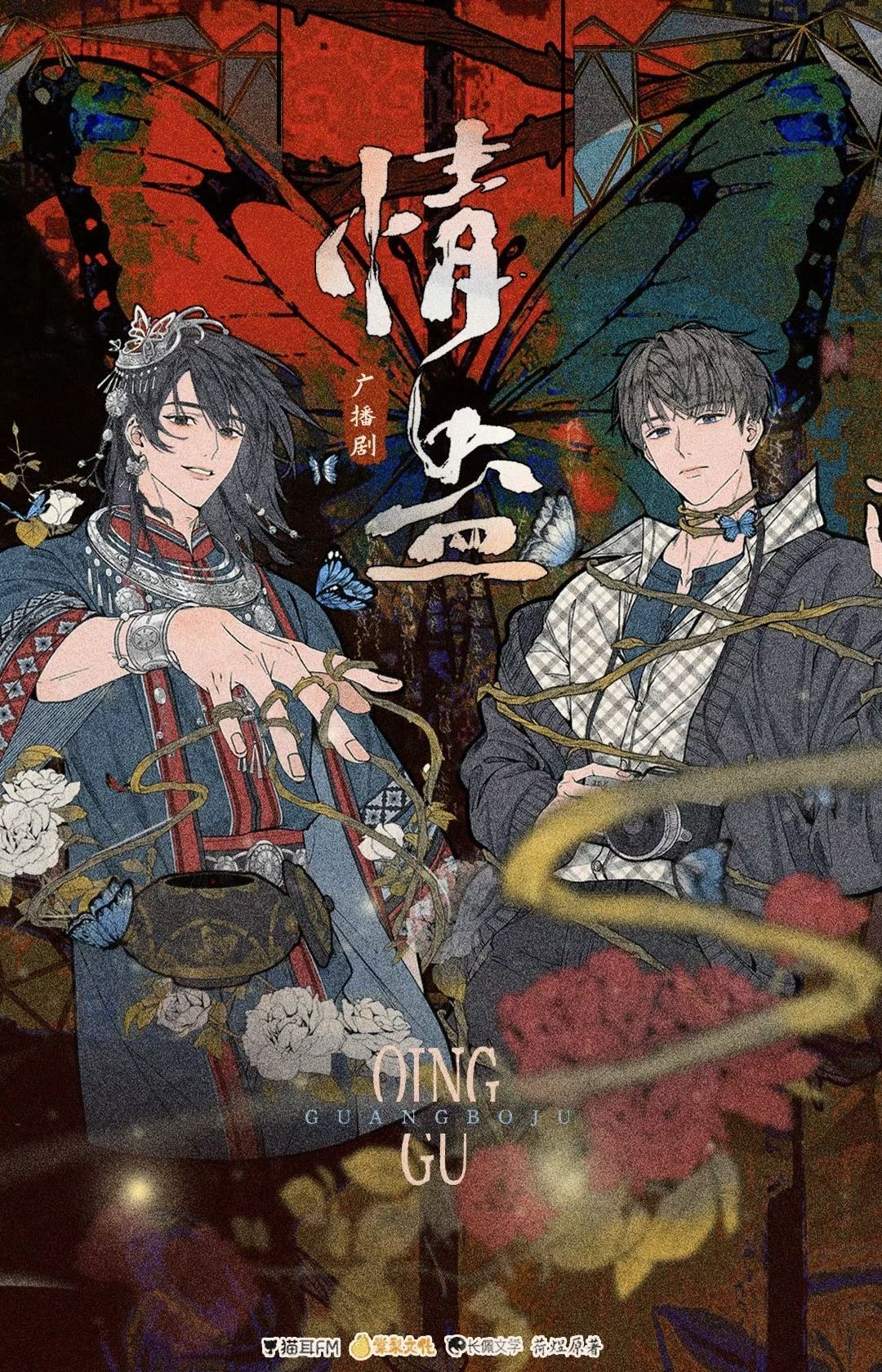
... Read More
The word 'fate' appears right at the beginning when Li Yuze notices Shen Jianqing saying it again. And then Li Yuze thinks about fate being wonderful at the end of their encounter. And then fate immediately punishes them with blown tires. I think the author is playing with this idea that fate is not benevolent—it's indifferent, or maybe it's testing these people. The camera is another symbol that keeps coming back to me. Li Yuze can't bear to leave it in the car because it contains important data. But data about WHAT? The photos of Miao Village, the encounter with Shen Jianqing—these are records of something that may never happen again. The camera represents memory itself, the human need to capture and preserve moments. And then there's the wilderness setting which is classic symbolism for stripping away civilization and revealing who people really are. Xu Zirong reveals himself as someone who blames others. Qiu Lu reveals her fear of abandonment (her parents waiting at home). Wen Lingyu reveals her competence under pressure. Shen Jianqing—well, he's already gone, but his presence lingers like a ghost. The blue speck growing smaller in the rearview mirror is one of the most haunting images in this passage.
... Read More
This chapter is a pacing miracle and I need to unpack why. It starts slow — Yueze knocking on a door, tidying his clothes, this almost mundane moment of preparation before entering his father's space. You'd think the author is taking it easy, right? But then within the first few paragraphs the emotional temperature is already climbing. The pregnant stepmom reveal comes so casually and then the father's comment about Yueze looking like his mother hits like a punch. The dinner scene is where the pacing really shows its teeth. On the surface it's just people eating, but the author has layered three separate conversations happening simultaneously — the father and Professor Ye discussing research, the quiet devotion of Wang Yurong, and Yueze slowly realizing he doesn't belong here. Each layer adds pressure. Then Professor Ye brings up college romances, which seems completely off-topic, and the father mentions the professor's daughter. That's when the pacing shifts from slow burn to full explosion. Yueze slams his chopsticks. The father slams his bowl. And the chapter ends mid-sentence with 'I don't'. What I love about this structure is that the author never lets you breathe between beats. There's no filler, no scenic transitions, no 'meanwhile back at the ranch.' It's one continuous pressure cooker and by the time Yueze cuts himself off, I was physically leaning forward.
... Read More
Let me talk about the structural brilliance of how this chapter builds toward that final phone call because the pacing here is chef's kiss levels of perfect. We start with Li Yuze alone in this dark apartment, sleeping through her afternoon class, lost in grief—which immediately establishes the emotional baseline. Then Hong Hong appears, giving us this moment of tenderness and hope. Next we transition to the snow scene where she encounters Zhao Rugu, which provides both atmospheric beauty and character development while expanding the emotional landscape. She's walking alone past the lotus pond, lost in thoughts of Shen Jianqing, when suddenly this couple appears. Everything feels contemplative and slow, almost meditative in its sadness. And then—ding ding—the phone rings. Xu Zirong calling out of nowhere after weeks of no contact, sounding different, recovered, inviting her to meet. The structure here moves from isolation to connection, from the private grief of an empty apartment to the social obligation of a meal, and that final image of snowflakes landing on her fingertips while she remembers 'that figure clutching the railing for support, struggling to maintain balance' sets up this incredible emotional whiplash. She's walking through light snow toward hope while carrying the weight of guilt about what Shen Jianqing did to Qiu Lu and Xu Zirong. The pacing doesn't rush; it lets each moment breathe before building toward the next revelation.
... Read More
This is some of the tightest chapter work I've read in a while. We go from a seemingly warm greeting - 'You're finally here! Remember to help me check if Shen Jianqing is okay...' - to a life-or-death standoff at a gorge in what feels like five minutes of reading time. But here's what's actually impressive: the author doesn't rush it. Each beat lands. Wan Ying's smile doesn't change at first. The wine jar appears gradually. The narrator takes a step back. His foot slips. And THEN the mask drops. The structure follows this brilliant pattern of false calm escalating into genuine danger, with each revelation hitting like a physical blow. First we learn it was a lure. Then we learn why - not politics, not tribal purity, but REJECTION. A lover's jealousy dressed up as vengeance. Then the bigger picture snaps into focus: she wants the chieftain position, and Li Yuze figured it out mid-conversation. The pacing of THAT revelation is perfect - he says it with a trembling voice, she raises her eyebrows with genuine amusement, and suddenly the whole power dynamic shifts again. He's not just a victim anymore, he's someone who can THINK his way out of this. The chapter ends on that unfinished gambler's thought - 'I had gambled many times before, losing every time. But surely God couldn't let a...' - and I am NOT okay with this cliffhanger. Absolutely not. The author has trained us to expect the worst and then delivered something worse, and now we're just hanging here waiting for the next move.
... Read More
Okay, so here's the thing that genuinely scared me this chapter: the stakes just multiplied exponentially. Before, it was "two people have fevers, maybe they drank tainted wine." That was manageable. You find water, you cool them down, you figure out who put something in the wine later. But now? Now there are THREE injured people instead of two, and the narrator - presumably the most capable one based on who takes night watch and who volunteers to explore the cave - is literally unconscious at the bottom of a pit with a broken ankle and a bleeding head. The external conflict just became internal in the worst way. Who's going to save whom? Wen Lingyu is outside, presumably shaken but functional. But can she actually get the narrator out? The pit is two meters deep with smooth walls - that's not something you climb without help or equipment. And the Miao villagers, the suspicious wine, the Huoxing ceremony - none of that mystery has been resolved! We're still wondering about those two figures who were furtively putting something in the bamboo grove wine. The suspense hasn't dropped; it's just shifted from "will they survive the fever" to "will they survive now that the protector is also injured." And underneath all of this is the interpersonal tension - the narrator keeping secrets about Shen Jianqing, Wen Lingyu's blush, the couple dynamics. The emotional stakes are just as high as the physical ones. This is what makes the chapter work: every conflict layer adds pressure without resolving anything. I am genuinely worried for these characters.
... Read More
Honestly, these chapters read like someone slowly tightening a screw. It starts hot — Shen Jianqing closing the distance, the MC fleeing. Then there's a beat of cool-down where the MC hides in their room and essentially writes a thesis on why they should NOT fall for this person. That section is the emotional breather, but even then, the prose is so tight it's suffocating. Lunch breaks the tension temporarily — Xu Zirong's comedic timing with the chopstick gag gives us air to breathe. But Shen Jianqing not looking up? That tiny detail re-sows the anxiety. Then BAM — door knock. Confrontation. The dialogue here moves SO fast. 'Are you avoiding me?' â†' 'I'm not disgusted' â†' 'Or have you realized my feelings?' Three lines of exchange and the MC is cornered. Then the pivot to food and the sachet — the sudden softness after the intensity is perfectly calibrated. The MC's breakdown afterward is where the pacing really shines. It's not melodramatic. It's quiet. 'My heart was bitter and sore, my throat felt tight.' Short sentences. Minimal decoration. The emotion hits harder because the prose is restrained. Festival scene resets the rhythm again — longer descriptive passages, sensory details of the fire and music and dancing. Different pace, different energy. And then the final line drops like a bomb. The author knows exactly when to speed up and when to slow down. No dragged-out scenes. No info dumps. Everything earns its place.
... Read More
This book's dialogue is a masterclass in evasion and subtext. Like, nobody — AND I MEAN NOBODY — says anything directly when it matters. Take this exchange: Xu Zirong asks 'What's wrong?' about Shen Jianqing and Ah Ze opens his mouth but nothing comes out, so he just lies and says his stomach feels off. The narrator literally chuckles softly at his own terrible excuse. That laugh says so much about how aware they are that they're all performing here. Then there's Xu Zirong's easygoing banter — 'Good brother, can't be without me, huh?' — which is perfectly natural character voice, warm and slightly teasing, but it also highlights the tragic irony because the reader knows Ah Ze is actively distancing himself emotionally. Qiu Lu's wordless communication with Xu Zirong is another highlight. She 'lightly placed her right hand on Xu Zirong's arm, casting repeated sidelong glances to point out Shen Jianqing, while silently exaggerating her lip movements to mouth, He's in a bad mood today.' No spoken words needed. The author trusts the reader to read body language and that's such a mature narrative choice. And the chieftain's single shouted word — 'Fu kai!' — carrying all the weight of authority and ritual, mirrored by the villagers responding in unison. One word does the work of a thousand. Even Wen Lingyu's silence after the wine spill — she and Ah Ze exchange a look and she shrugs — is more expressive than any dialogue could be. The narrative voice itself is worth praising too. It's restrained, observant, and occasionally wry. Ah Ze's internal monologue has this quality of someone who's trying desperately to maintain control while everything around him spirals. The author never over-explains; they let the gaps between words do the heavy lifting.

Leave a comment

You must be logged in to leave comments. or
