Qing Gu - Reviews

Qing Gu
+Add to Custom List
Sort
Add review
... Read More
This passage is a masterclass in how to handle the moment AFTER the climax. You'd think the hardest part of writing is the action—the rescue, the escape, the confrontation. But honestly? This quiet aftermath is way harder to pull off. The author makes a deliberate choice to NOT dramatize Li Yuze waking up. No gasps, no dramatic music, no 'I'm alive, I'm alive!' Just: chest pain, instinctive clutching, and then the slow, groggy process of understanding where he is and what happened. 'Protagonist instinctively clutched my chest.' That's it. That's the opening line energy. And it works because the reader is ALSO trying to piece things together in real time, just like Li Yuze. Then the info drops one at a time, not in a dump: - First: you survived (relief) - Then: your friends didn't survive the same way (devastation) - Then: five months, not months (disorientation) - Then: stay quiet about what you saw (terror) - Finally: your father didn't really care (heartbreak) Each revelation escalates while the emotional volume actually DROPS. Li Yuze gets quieter after each piece of news. That inverse relationship between information density and emotional expressiveness is gorgeous writing. The chapter ends on an almost mundane note—asking about school starting—and that mundanity is what makes the underlying horror so much worse.
... Read More
Is it just me, or is this entire chapter absolutely drowning in imagery of entrapment? Let me count: the fever makes them physically trapped in their bodies, unable to move or think clearly. The cave is a physical trap with its hidden pit. And the narrator is trapped emotionally - by memories of Shen Jianqing, by feelings she won't acknowledge, by the sachet she can't throw away but can't use either. That sachet, by the way, is doing so much symbolic work. It's a protective talisman that's lost its potency (the scent is faint now), but she keeps it anyway. It represents a connection that has faded but cannot be severed. And then she gets physically trapped in the pit while literally holding that sachet in her pocket. I'm not even sure if that's intentional on the author's part, but it feels meaningful. The theme of being unable to let go versus the need to survive is playing out on every level. There's also the water imagery - she goes into the cave specifically to find water to help the feverish ones, but the water becomes associated with danger (the slippery pit, the darkness). In many ways, the very thing she's seeking to save others becomes the thing that endangers her. Everything is interconnected. Nothing is simple. The fever itself - returning despite apparent recovery - suggests that some problems cannot be solved with surface-level treatment. You have to go deeper, into the cave, into the darkness, into the parts you'd rather not explore. The narrator is learning this the hard way.
... Read More
Let me talk about stakes because this is where the story really picks up pressure. On the surface, the conflict is simple: someone betrayed the group, and there's a punishment. But the author immediately complicates this. Ah Song's defection wasn't cowardice—it was protection. He chose to bear the label of traitor to save Qiu Lu, Wen Lingyu, and others. So the moral landscape shifts beneath our feet. Who is the real villain? Who deserves punishment? The stakes for Li Yuze are equally complex. He's caught between loyalty to his friends and his complicated relationship with Shen Jianqing, who holds all the power. When Shen Jianqing says 'Tomorrow, I'll take you to witness it all,' it's presented as a favor but feels like a test. What will Li Yuze see? What will he be expected to do afterward? The external conflict—the village's justice system—is portrayed as absolute and unforgiving. But what's really terrifying is the internal conflict. Li Yuze realizes he 'had fallen into a trap unknowingly.' The Miao people's hospitality, the ceremonies, the warmth—it was all calculated. The stakes just escalated from personal drama to survival. And Shen Jianqing himself—what does HE stand to lose? He's positioned as future ruler of this land, yet he's also shown as almost desperate in his attachment to Li Yuze. An eighteen-year-old boy wielding absolute authority while being emotionally dependent on someone who doesn't fully trust him. That's a conflict waiting to explode. The villagers' final gaze toward Li Yuze—'cold and indifferent, no different from looking at a dying insect'—suggests the stakes have shifted again. He's no longer a guest. He's something else entirely. And I have no idea what that means yet.
... Read More
I need to talk about how sharp every single line of dialogue is in these chapters. Shen Jianqing: 'Are you avoiding me?' That's it. Three words and the entire power dynamic shifts. He's not pleading. Not angry. Just stating a fact and making the MC accountable. His tone is described as 'almost accusatory' but the delivery is so calm it cuts deeper than any shout could. 'You didn't eat enough for lunch. I steamed some glutinous rice cakes for you; they're in the kitchen.' — The ultimate deflection. The most devastating line in recent memory. Someone poured their heart out and got handed a recipe. Xu Zirong's comedic dialogue is perfectly timed. 'No wonder you've lost your appetite and can't focus. You had a romantic encounter, right?!' And Qiu Lu's response — 'Do you want me to sew your mouth shut with a needle?!' — instant shut down, sharp and funny. Their banter feels lived-in, like we've known these people forever. The MC's internal narration is where the voice really sings though. 'Shen Jianqing is a good person, but ultimately, he is a boy.' That line. That IS the entire thesis of the emotional conflict. Short. Final. Almost cruel in its simplicity. And that final fragmented line — 'there's no need for him to wast' — the incompleteness IS the point. The sentence cannot finish because the MC's own rationalization cannot sustain itself.
... Read More
This section of the novel plays with pacing in such a smart way. On the surface, it's a pretty straightforward arrival-and-settle-in chapter. You've got the journey, the negotiation with the village elder, the settling in—and a lot of narrative space dedicated to just... existing in this new environment. But what keeps it from dragging is the constant undercurrent of tension. Every friendly interaction is undercut by something unsettling. The villagers laughing. The beautiful woman's lingering look. The mix of awe and apprehension in their eyes. The narrator tries to brush it off but the reader can feel the wrongness building. And then you've got these quieter moments that hit harder because they're so understated—like when Xu Zirong jokes about not wanting Xiao Lu as payment and she immediately punches him. It's funny and it breaks the tension, but it also just reminds you that these characters have dynamics and history. The transition from the big group scene to the private camera moment is perfectly timed. After all that external action and social navigating, you drop into this intimate one-on-one that suddenly shifts the entire emotional weight of the chapter. And ending on that unfinished line—"Ca"—is basically cruel in the best way. It's not a cliffhanger about plot; it's a cliffhanger about feelings. The pacing isn't fast but it's never boring because there's always something simmering beneath the surface.
... Read More
The structure of these chapters operates like a pressure cooker with two very different kinds of heat. The first act — the night sequence — is all immediate, physical terror. Short sentences. Sensory overload. The insects aren't explained; they're experienced. The pacing here is frantic, matching the narrator's heartbeat, and I couldn't stop turning pages because the fear is contagious. Then the second act — morning — does something clever. It drops the tempo dramatically. Sunlight, dew, aching muscles from bad sleep. It lulls you into thinking maybe they're okay, maybe this was just a rough night. And then: the flower. One object, one moment of clarity, and the dread creeps back in slower but deeper. This isn't jump-scare fear anymore; it's the chill of realizing you're being watched. What works brilliantly is how the author uses time gaps as breathing room without losing tension. The overnight watch rotation creates natural structure. Each character's turn keeps the narrative moving even in stillness. And that transition from the group's emotional reckoning (Zirong's confession, Lulu and Zirong reconciling) to the narrator's solitary discovery at the windshield — that shift from collective to individual perspective is where the real payload lands. The chapter ends not with action but with a single image that recontextualizes everything. Chef's kiss.
... Read More
I need to talk about Wen Lingyu because this chapter absolutely wrecks her in the best way. She's been hovering around Li Yuze since before I started reading, but here? Here she's not just subtly into him—she's visibly, painfully, achingly into him. And the author never lets us forget it. 'Her eyes were filled with unspoken feelings'—that line hit me like a truck. It's not dramatic or overwrought, it's just stated as fact, and somehow that makes it so much worse for her. The scene where Qiu Lu pulls everyone toward Ah Li is genuinely devastating in retrospect. Qiu Lu is being the loyal friend, trying to create an opportunity, and Li Yuze responds by literally walking away from Wen Lingyu mid-touch. He excuses himself with 'I only brought one pair of shoes!' which is either the most creative lie I've ever heard or the most polite rejection in the history of Chinese fiction. I respect the hustle honestly. But what really got me was the forearm moment. Wen Lingyu doesn't let go when she steadies herself. Her hand slides DOWN his arm to his forearm. That's not an accident—that's her choosing to stay connected. And then the author describes the thin white shirt, the heat of her touch reaching his skin, the shivers going through him. This is intimate as hell, and he immediately says 'It's too chaotic here. Let's go to the stands.' He's creating physical distance while also protecting the camera around his neck the whole time. The man is committed to emotional avoidanced. What makes this character dynamic so interesting is that Li Yuze isn't being cruel. He's being careful. The narration explicitly tells us: 'directly rejecting a lady to her face is very impolite, and I also didn't want to make the relationship within our four-person group too awkward.' He's trying to let her down gently while preserving group harmony. But it's a terrible strategy because he's not actually being clear—he's just being absent. And Wen Lingyu deserves better than slow-motion ghosting dressed up as politeness. Then there's Ah Li, who represents the alternative—a woman who is bold, direct, and sees right through him. She doesn't play games. She offers wine and smiles and stares with those 'unwavering eyes.' Li Yuze can handle her because she's not asking for anything emotional, but I wonder if he underestimates her. 'A beauty beyond compare' and she knows exactly what she's doing. Meanwhile Wen Lingyu is blushing and stumbling and getting cursed at by her own friend ('Stupid straight man! Deserves to never have a girlfriend in this life!') and it's just... yeah, Qiu Lu has a point. The relationship geometry here is gorgeous. Four people in a square, two of them wanting the same person, one of them pretending not to want anyone, and the Miao traditions surrounding them turning every casual interaction into something with permanent consequences. I'm genuinely invested in figuring out which knot untangles first.
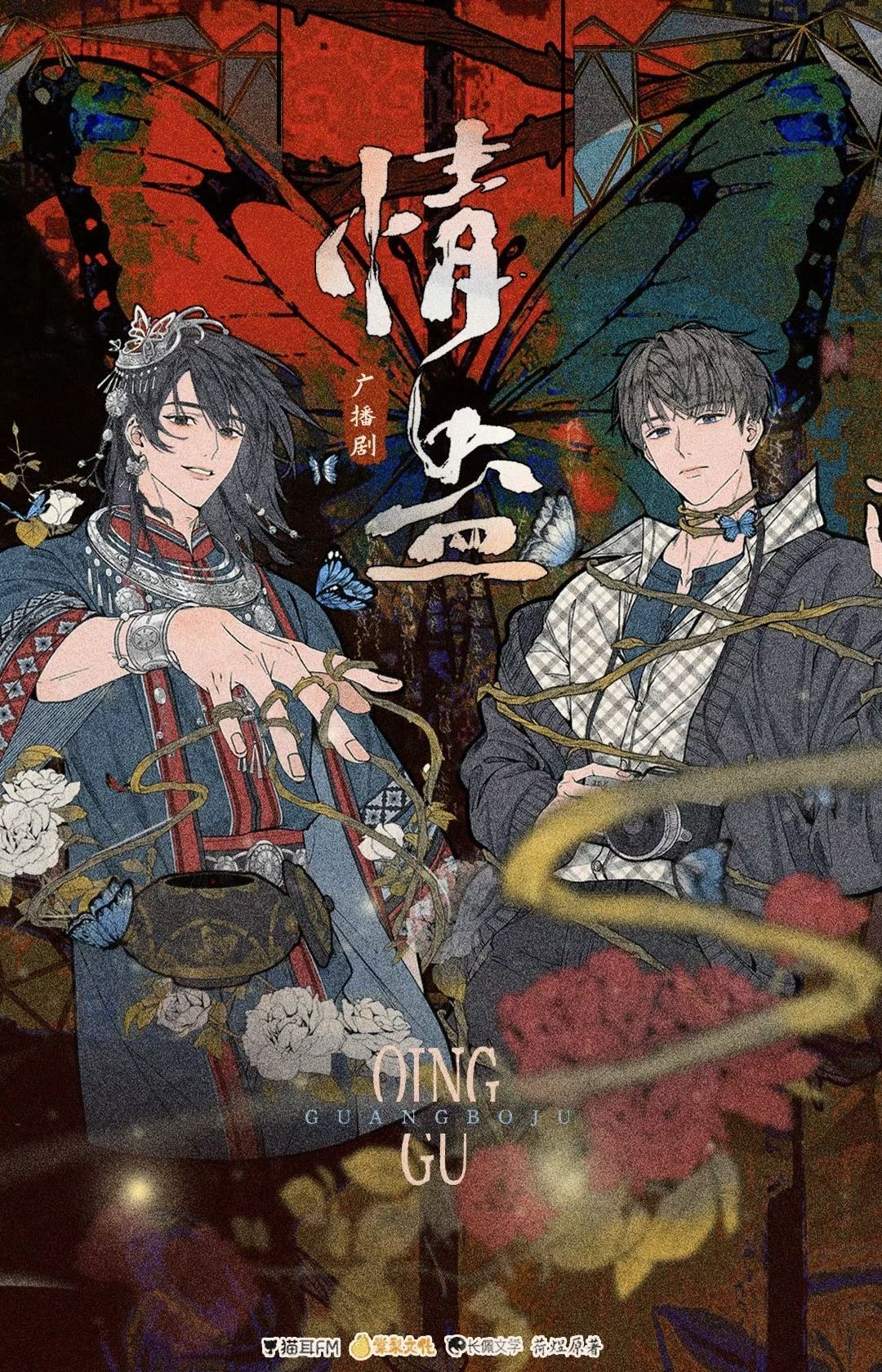
... Read More
The contrast in settings throughout this section is doing so much heavy lifting that most readers probably don't even notice. We start in what feels like a sanatorium or recovery room — enclosed, clinical, tense. Xu Zirong pouring tea is almost domestic in its normalcy, which makes the underlying dread about his health hit harder. The detail about the tea being poured steadily, "not a single drop spilling," says something about control and composure under pressure that the dialogue never needs to state outright. Then they move outdoors, and the author gives us this gorgeous, melancholic winter scene: the snow has stopped, the roads are melted into mud, and there's a thin layer of snow still clinging to the tree branches, giving them a white trim from a distance. The novelty has worn off for everyone, people are dispersing in small groups. It's a scene that feels almost cinematic in its loneliness. The cold, muddy, half-melted landscape mirrors exactly where these characters are emotionally. Nothing is frozen solid anymore, but nothing is fully thawed either. They're in this liminal space between survival and living, between healing and permanent damage. The atmosphere does half the storytelling here. I particularly love how the physical environment reinforces the emotional ones — walking through melting snow with Wen Lingyu, having this conversation about who they are and who they've become.
... Read More
Let's talk about stakes for a second, because this passage raises them in so many directions at once. On the external level, we have the mystery of what made that man wail in the forest. Hoarse, low, desperate—it's introduced right at the end as an open hook, and honestly I was already on edge before that even appeared. The narrator claims not to believe in ghosts, which is always the perfect setup for something terrifying to happen. But it could also be another human threat, another complication in an already crowded narrative landscape. On the internal level, the narrator is fighting a war against their own softness. Every time Shen Jianqing plays the fragile invalid—whether genuine or performative—the narrator caves. "Several times I wanted to just ignore him, but in the end, I'd give in to his persistent calls." This is the conflict of someone who knows they should pull away and physically cannot. The body betrays the mind, and the mind knows it's happening. And then there's the scar on Shen Jianqing's face—the permanent reminder of what he risked. It's described almost clinically: "From the corner of his right eye all the way to his cheekbone, the scar wasn't prominent, but it had a faint reddish hue that was hard to ignore." Hard to ignore but hard to look away from. The narrator literally notes that it doesn't detract from his appearance—it adds "indescribable ambiguity." Ambiguity is exactly what their entire relationship feels like right now, suspended between caretaker and captive, between enemies who survived each other and something dangerously close to affection. Who's in more danger here? Shen Jianqing got half killed getting medicine. The narrator is slowly being dismantled by someone who knows exactly how to press. Both are赌上了 something.
... Read More
I need to talk about this rain because it's doing so much heavy lifting and nobody's giving it enough credit. "This rain, marking the transition into deep summer, fell intermittently for four or five days, a continuous drizzle." The narrator mentions this right after the sex scene, right after everything falls apart and重组s into something new and uncomfortable. The rain isn't cleansing—the word I want to use for what it's actually doing is suffocating. Heavy, persistent, unrelenting. It soaks everything until there's nothing left dry underneath. And then the forest: "The green of the forest, washed by the heavy rain, had deepened into a rich, dark emerald, every leaf saturated with water." Saturated. That's the word. Everything is pressed under weight, drowning in atmosphere, unable to breathe freely. Li Yuze is sitting there feeling a "dull, persistent ache" in his ankle—the old wound that never really healed, now reactivated by the damp. His body remembers what his mind is trying to process. The physical landscape mirrors his internal state perfectly: everything green and alive on the surface, but underneath, soaked and swollen and hurting. Then there's the Li Shangyin poem he recites: "Autumn gloom lingers as frost falls late; withered lotuses remain to hear the sound of rain." Withered lotuses. Listening to rain. This is a man who has been broken and is still sitting in the storm, trying to find beauty in it because that's what civilized people do. That's what someone like Li Yuze does—he intellectualizes his pain into classical Chinese poetry instead of letting himself scream. And Shen Jianqing doesn't understand poetry. "Poetry? What's poetry?" He's the mountain spirit, the creature of instinct and sensation, and the fact that he can't grasp what Li Yuze is trying to communicate through verse says everything about the gap between them. He hears the rain but he doesn't know what it sounds like to a withered lotus.
... Read More
I keep coming back to the narrative voice in these chapters and honestly it's one of the most honest pieces of first-person writing I've read lately. There's no pretense, no filter. When the protagonist says things like "Ai, illness truly is the destroyer of human will"—that's not a literary observation, that's someone who's been reduced to their basics talking to themselves to stay sane. The internal monologue has this raw, stream-of-consciousness quality that makes you feel like you're inside their head, not reading about someone who is. Even the casual thoughts—"She probably could; after all, she did so well last night"—feel authentic. That's a person trying to stay positive by rationalizing, even while completely falling apart. And then Shen Jianqing finally speaks and his dialogue is SO different from what you'd expect. "You told me that outsiders value bartering, fair exchange. You want me to save you, but what can you offer in return?" This is the first actual spoken line from him in this passage and it changes EVERYTHING about how you reinterpret his previous interactions. Was he always calculating? Or did something break in him? The protagonist's narration immediately picks up on this: "he had never spoken to me in such a cold, even malicious, tone." The contrast between memory and reality is spelled out in a single sentence. That's efficient, devastating dialogue writing. The author doesn't need a monologue to show character development—they just need one line spoken in the wrong tone.

Leave a comment

You must be logged in to leave comments. or
