Poor Little Thing Reborn as a Spoiled Child [ABO] - Reviews

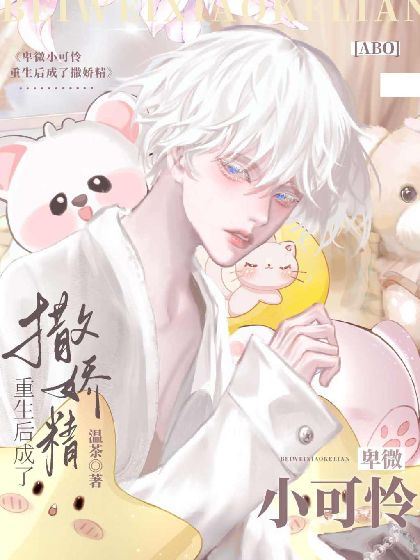
Poor Little Thing Reborn as a Spoiled Child [ABO]
+Add to Custom List
Sort
Add review
... Read More
I need to talk about the pacing around that phone message scene because the author absolutely murdered me with timing. We go from this explosive confrontation with Chen Yuan — everyone leaving, threats being made, the whole facade crumbling — and then suddenly it's quiet. Jiang Tang turns to look out the window. The weather is getting warmer. Days are longer. And his phone vibrates. Lu Yinghuai's profile picture changed. Again. This time it's a pale moon. Remember, Jiang Tang marked him as 'someone I like' on WeChat. And what does that someone send? A message about picking someone up — Teacher Xie Zan's medical team — then going back. Not coming back to Jiang Tang. Just 'going back.' And Jiang Tang's response? His fingertips trembled. He was so numb he couldn't feel the screen. Pressed the wrong three letters several times. Just… T: 'Okay.' Then after a pause, adds 'I'll wait for you.' The exhaustion after sending that message is devastating. 'His fingers loosened, and the phone fell to the ground.' And then Chen Yuan picks it up, reads the chat, and says 'You are sensible.' Like Jiang Tang's quiet devastation is just another performance for the household staff. The transition from the loud confrontation to this internal silence is masterful. The author lets the reader breathe for a moment before delivering the emotional gut punch. No dramatic music, no shouting — just a phone vibrating in a quiet room while a boy watches clouds cover the sky.
... Read More
The symbolism in this chapter is actually insane when you look back on it. The wooden carvings Sang Song made — obviously terrible, clearly new, carved on a whim — they represent how fragile these people's attempts at normalcy are. They're at a market stall trying to do something simple and human, and the moment they step into that mall, everything shatters. The ice that Lu Yinghuai creates literally covers up 'the restlessness in people's hearts' — the text says so directly. He doesn't just calm bodies, he freezes emotions. But ice is temporary. It melts. And the small yellow flowers metaphor he's holding in his head? Flowers in a deep fir forest, few and fragile, about to disappear. That's Jiang Tang's gland. That's their relationship. That's everything. And then there's the ball of light that transforms from a protective sphere into a scolding display screen — a guardian spirit that can't even properly protect its charge and has to fall back on verbal criticism. The isolation Webb of tree roots around the A+ Omega is another one worth noting: Lu Yinghuai doesn't create a shield, he creates a cage. He separates the target from everyone else. Control masked as protection. That theme runs through everything he does.
... Read More
There are so many symbols layered in this chapter I could write a whole essay, but let me focus on the most devastating one: the snow. In Jiang Tang's nightmare, the cage is scorching hot. Three days of heatstroke, fainted multiple times, woke up, repeated. And then at his lowest point—through the gap in the iron cage, he sees fine snow falling outside. This is the moment Lu Yinghuai's presence literally rewrites his reality. The snow isn't just weather; it's the opposite of everything that was hurting him. Cold where there was burning. Softness where there was iron. Peace where there was desperation. And what about the pendant? The puppy pendant represents childhood, innocence, something pure that was presumably taken from him during those three days. When Lu Yinghuai places it back in his hand, he's not just giving him an object—he's giving him back a piece of himself he thought was lost forever. Then there's the wound itself, which becomes this twisted symbol. Jiang Tang tears it open not out of self-hatred exactly, but because healing means losing the leverage he has over Lu Yinghuai's promises. The injury is his currency, and he's scared of being poor. And the pheromones—fir and ocean—these aren't just ABO worldbuilding details. They're emotional barometers. The fir scent calms him; the ocean freshens the space after. Nature itself becomes a language of care that words can't match. By the end, Jiang Tang looking at his own blood with satisfaction... that's the deepest symbolic cut of all. The boy who survived a cage learning that pain is the only thing he still controls. How do you heal from that?
... Read More
I keep coming back to how the author uses this restaurant scene to make everything feel claustrophobic even though it's technically elegant. The place is described as having several courtyards arranged in order, bluestone paths dotted with cobblestones, forsythia flowers in full bloom under streetlamp light—beautiful on paper, right? But Lu Yinghuai literally brings Jiang Tang into this hidden world where no one will interrupt them, where Jiang Tang can't escape his own trauma responses. The setting mirrors their dynamic: everything looks lovely from the outside but the interior is suffocating. And then there's the dialogue itself, which I think counts as part of the worldbuilding too. Lu Yinghuai makes up this entire excuse—"skin hunger disease"—to justify holding Jiang Tang. I love that the author didn't bother giving him a more sincere line here. It's selfish, ridiculous, and completely honest about what Lu Yinghuai actually wants. Meanwhile, Jiang Tang just blinks blankly and accepts it, because in his world, whatever attention he gets, he clings to. The chef serving food quickly is another small detail that hit me—this restaurant operates at a pace designed for comfort and indulgence, which is exactly what Jiang Tang has never experienced around food. Every detail conspires to remind you that Jiang Tang is an outsider in this warm, normal world.
... Read More
There's something almost cinematic about how this entire sequence unfolds in one claustrophobic space. An iron door that bangs open and hits the wall. A straw mat in the corner where Lu Yinghuai sits like a caged animal. Dim basement lighting that stings his eyes. The corridor footsteps — noisy, approaching — creating this unbearable sense of dread before anyone even appears. The imagery throughout is relentless. Blood on gray-white walls becoming 'a sticky dark red stain' that spreads like a living thing. Jiang Tang's white sweater soaking dark in the back, 'like a butterfly with broken wings' when his body hits the floor. I kept getting actual chills from lines like 'a wounded animal drenched by heavy rain' when they pour that bucket of cold dirty water on him. The writer doesn't just describe a basement — they construct an entire sensory nightmare. What's brilliant is how the worldbuilding bleeds into the action without any exposition dumps. We learn about Alphas and omegas and pheromone depletion purely through what's happening to these bodies in this room. Lu Danchen releasing his most aggressive pheromones, the scent of gasoline spreading through the air so thickly that even A-level Alpha bodyguards stumble back — the power hierarchy of this world isn't explained, it's FELT. Every character's body becomes a map of the social order. By the end I could practically smell that basement and I was not okay with it.
... Read More
This book has me by the heart and I'm not even mad about it. The most quietly devastating moment in this entire section isn't some grand romantic declaration or a tearful confession. It's the aftermath of a broken vase. Jiang Tang breaks something expensive, braces himself for the scolding—because that's what his life has taught him will happen—and Lu Yinghuai does something so radically unexpected that Jiang Tang doesn't even know how to process it. He starts mumbling about paying it back in installments like a person who has never been shown mercy doesn't know what to do with it. And Lu just... holds him. Releases soothing pheromones. Calls him "our Tang Tang." Sits on the sofa and talks to him like he's four years old and absolutely wonderful. The narration says "he never knew that it was possible to break things without being scolded" and I actually felt physical pain in my chest reading that. What makes this emotionally devastating isn't the romance itself—it's the trauma underneath it. Jiang Tang's instinctive response to kindness is suspicion. He asks Lu to stop treating him like a child, yes, but the real wound is deeper: he's terrified that if he lets himself believe he's worthy of this tenderness, he'll be devastated when it turns out he isn't. That line about being afraid Lu would take his request seriously and decide Jiang Tang is worthy of love? That's not a character flaw. That's a survival mechanism forged by years of conditional treatment. The romantic tension between them is so patient it almost hurts. Lu isn't rushing. He's not performing grand gestures for show. He's just consistently, stubbornly present in ways that slowly chip away at Jiang Tang's defenses. And the golf club scene adds this other emotional layer—Jiang Tang performing normalcy among strangers, hiding his exhaustion, trying to be brave. Then Jiang Zi Ang shows up and ruins the fragile peace, and Lu's reaction isn't anger, it's pure territorial protection. There's something almost primal about the way he surrounds Jiang Tang with his presence and his people without saying a word. I'm not okay. This author understands that love stories are most powerful when they're also about healing.
... Read More
I keep thinking about the asymmetry of everything between these two men and it's eating at me. Lu Yinghuai always thought Jiang Tang didn't like him. Always. He carried that assumption for a year in the basement, surrounded by betrayal and resentment, never knowing that the person he loved was out there taking bullets for his enemy just to keep him safe. Meanwhile Jiang Tang—Jiang Tang knew exactly how much Lu Yinghuai mattered and said nothing. Not once. Not even when Lu Yinghuai held him while he bled out. There's this one exchange that replayed in my head for hours: "Mr. Lu... can you hug me again?" That's it. That's all he asks for. Not forgiveness. Not reconciliation. Not even an explanation. Just a hug. And Lu Yinghuai gives it to him, holding this broken boy who sacrificed everything, whispering promises he can't keep—"Don't be afraid, let's go to the hospital... let's..."—because he finally understands and it's too late. The relationship dynamic shift here is devastating. Throughout the story, Lu Yinghuai was the powerful S-level Alpha, the one protected, the one in control. Jiang Tang was the fragile omega, the subordinate, the traitor. But by the end of this arc, the power flips completely. Jiang Tang was the stronger one. He made harder choices. He suffered more silently. And Lu Yinghuai—the one with all the physical power—could only hold him and watch him die. I also need to talk about Fang Mu. The guy who woke up and screamed at the wrong moment, who saw the blade fall, who then had to be the one to tell Lu Yinghuai the truth. He's the bridge between misunderstanding and clarity, and his role in this story is so crucial but underappreciated. And what about Lu Danchen? The A+ Alpha who thought he won, who tortured and manipulated and took everything, never realizing that every move he made was being counterplayed by a nineteen-year-old omega who just wanted the people he loved to survive. The grief scene at the end is where it all crystallizes. Lu Yinghuai's hair turning gray overnight, his posture collapsing—this isn't just sadness, it's the death of a man's entire worldview. The person he blamed, the person he wanted to hate, died loving him. And he'll never get to tell him that he loved him back.
... Read More
I need to talk about the symbolic weight of that blood-stained plush puppy pendant because it's the quietest and most devastating image in the entire passage. A child's toy. Something soft, something meant to comfort a child, found clutched in the hand of a dead twenty-year-old omega who gave everything and asked for nothing. The fact that it was stuffed and small and presumably something Jiang Tang held onto for comfort throughout his year of suffering—it transforms from prop to punctuation mark in one haunting beat. The pendant is the physical artifact of Jiang Tang's entire character arc. He was nineteen when he entered this war. Twenty when he died. Twenty and already carrying the weight of someone's survival on his shoulders, sleeping with a plush toy because even warriors need something soft to hold. The author doesn't announce the symbolism. Just drops it there, blood-stained and silent, and lets it do the work. Then there's the pheromone theme running through everything. In this world, scent is identity. Scent is power. Scent is connection. Jiang Tang's pheromones were always weak—so weak that he couldn't even go through a normal estrus cycle. The book establishes early on that he had to work for a year just to stimulate himself into being able to produce anything at all. And what does he do with that tiny, hard-won supply? He gives it all away. Not just the pheromones, but the gland itself. He cuts out the very thing that makes him who he is—his biological identity, his reproductive function, his essence—and offers it to the man he loves. It's the ultimate act of self-erasure as an act of love. And Lu Yinghuai's pheromones—the woody fir, the storm, the freezing wind that paralyzed his enemies—those represent protection and power and dominance. But they couldn't save Jiang Tang. They could stop bleeding temporarily. They could comfort a dying man. But they couldn't bring him back. Power means nothing when the person you want to protect has already made their choice. The bullet wounds are symbols too. Two bullets Jiang Tang took for Lu Danchen—one through the wrist, one he never actually needed to take because Lu Yinghuai would have died instead. The metaphor of being wounded for someone who doesn't know why you're bleeding is almost painfully universal. And the ending—the gray hair, the hunched back, the rain that won't stop. These aren't just descriptions of grief. They're the physical manifestation of a man who survived but didn't. Jiang Tang died so Lu Yinghuai could live, and Lu Yinghuai's living is the punishment. Every breath he takes is a reminder of every breath Jiang Tang no longer has.
... Read More
Okay so this chapter is just absolutely layered and I need to unpack it because there are so many things happening simultaneously that I almost missed them on first read. The dinner-to-car-to-bedroom arc seems surface-level sweet but it's actually carrying so much backstory weight. Jiang Tang has spent his whole life escaping an abyss and he literally cannot reject Lu Yinghuai—not because he's weak, but because every other option in his life has been terrible. His line 'I don't believe in good things without reason' is devastating when you think about his history. Meanwhile, the injury reveal is a masterclass in using the past to haunt the present. Lu Yinghuai sees Jiang Tang fall and gets caught in a hallucination—the blood-covered Jiang Tang from his previous life overlays the current moment. That split second where he couldn't tell reality from memory? I literally paused reading. Then the return to the present through that grip on his hand—'the warm touch pulled Lu Yinghuai out of the horrific hallucination'—chills. Really. And Jiang Tang, who is supposed to be the one who is disabled, who is supposed to be the vulnerable one, drops out of the wheelchair trying to help Lu Yinghuai. The role reversal is so sharp it made my chest hurt. He falls, he bleeds from his palms, and his first instinct isn't for himself—it's 'You are hurt!' The plot doesn't need big explosions here. The knife wound, the electric shock in the handle, the micro-generator detail—this is a world where weapons are customized to maximize suffering, and Lu Yinghuai treats it like a minor inconvenience. That's worldbuilding through understatement and it's brilliant.
... Read More
The dialogue in this excerpt is deceptively simple and I think that's what makes it so effective. Look at how almost no one says what they actually mean. Jiang Xuan: 'Jiang Tang is like this, like a piece of wood, Mr. Lu, please don't be offended.' Translation: my son is broken and I'm terrified you'll see through us. His wife pokes Jiang Tang's head and says 'Why don't you thank Mr. Lu!' — it's perfunctory, performative, a mother going through the motions of warmth while her eyes are scanning Lu Yinghuai's hand on the wheelchair handle like she's calculating threat levels. Meanwhile Lu Yinghuai's dialogue is laser-focused and cutting. 'Hair dryer.' — three words, completely ignoring the polite tea ceremony, and it tells you everything about his priorities. He doesn't want their hospitality, he wants to take care of Jiang Tang. And then 'I'm curious about what big mistake my little one made' — the term of endearment drops like a bomb in that room. The contrast between the Jiang family's stiff, evasive formal Chinese (translated, presumably) and Lu Yinghuai's direct, almost reckless bluntness creates this incredible vocal tension. You can hear the class difference, the Alpha privilege, the emotional transparency versus social performance. Even Uncle Chen's stammering 'Master... I, I am tired of cleaning' feels purposeful — it establishes that the household staff is equally terrified, that this cruelty is systemic, not just familial. The author's voice here is confident enough to let silence do the work too. Jiang Tang whispering 'Thank you, Mr. Lu' with those lowered eyelashes — that's not dialogue, that's a whole emotional arc in six words. I keep coming back to how natural this all feels despite being clearly crafted. No one sounds like they're reciting. They sound like people who are either hiding something or desperate to be heard, and those are the two drives that make fiction breathe.
... Read More
Okay, I need to talk about this bridge sequence because holy shit. The author just built tension like a damn spring being compressed inch by inch. You've got Jiang Tang crawling under that railing, thinking about how if he didn't have both legs disabled he wouldn't even be able to flip over - there's this cruel irony right there. Every movement gets him closer to the water. Closer to death. And then Sang Song is running, lost, crying into the phone, while Lu Yinghuai is apparently driving like he's lost his damn mind. But here's where it gets really clever - the fall itself isn't just dramatic, it's layered. Jiang Tang lets go and briefly thinks of Lu Yinghuai's embrace before he releases. That's the moment that hits you in the gut. He's thinking about being held by the one person who won't come save him. And then Lu Yinghuai SAVES HIM anyway. Of course he does. But the real plot twist isn't the rescue - it's the pendant revelation. Five years ago, Lu Yinghuai saved a child in a southern town. A year ago, he met that same child again, now dirty and beaten, asking if he remembered him. And that child was Jiang Tang all along. The pendant Lu Yinghuai stuffed into his bag - Jiang Tang has been carrying it this whole time,treasuring it, meaning to return it. Two near-invisible threads from the past suddenly snap tight in the present. That's not just good plotting, that's structural genius.
... Read More
The pacing in this batch is exceptional because it moves through so many emotional registers without ever feeling rushed. It opens at maximum tension — a phone call about a childhood trauma, a revelation about ruined potential, a teenager crumbling under the weight of inherited guilt. Chen Yuan's breakdown is rapid-fire and visceral, and Lu Yinghuai's cold, surgical delivery of the truth creates a pressure cooker atmosphere. Then, almost impossibly, the story deflates. Jiang Tang says forget it and the entire tonal register shifts. What could have been a revenge plot becomes something far more interesting: a meditation on what actually matters. The author takes the scariest moment — Lu Yinghuai ready to destroy a boy's family over a cup — and transforms it into the most tender moment by having Jiang Tang release him. From there, the pacing slows beautifully into the shopping sequence. It's episodic, almost slice-of-life: store after store, nothing found, growing discouragement, then the unexpected discovery. The rhythm of the mall scene mirrors Lu Yinghuai's emotional arc — initial determination, gradual frustration, then a sudden bright spot when they find the right place. The climax of the entire batch isn't the confrontation; it's the purchase. A simple act — choosing a cup — becomes the narrative peak because everything that preceded it has earned it. The chapter ends on an open, hopeful note rather than a dramatic one, which is a bold structural choice. It says: the conflict is resolved, the relationship is deepened, and now we move forward together.

Leave a comment

You must be logged in to leave comments. or
