Poor Little Thing Reborn as a Spoiled Child [ABO] - Reviews

Poor Little Thing Reborn as a Spoiled Child [ABO]
+Add to Custom List
Sort
Add review
... Read More
What does it mean to lose someone you've been with for one month? The text says it explicitly—"one month, three days and four hours"—and somehow that precision makes it hurt more. It's not vague. It's quantified grief. Shi Feicheng came with snacks and an excuse and a wink and Xie Zan saw right through it. But the real conflict isn't between Shi Feicheng and the "bastard" who broke Sang Song's heart. It's internal. It's Shi Feicheng wanting to cross a line he knows he shouldn't cross. It's Sang Song using humor as armor until the armor cracks and he's just... crying. And the external conflict? Lu Yinghuai vs. Sang Song over who gets to be closest to Jiang Tang? No. That's play. The real tension is Jiang Tang's fear—that kindness will vanish, that good things are temporary, that he has to earn them through caution. Every scene in this chapter raises the emotional stakes without a single raised voice. The highest moment of conflict is probably the hug between Shi Feicheng and Sang Song, where neither of them says what they're actually feeling, and the reader is screaming internally. This is what makes the story addictive.
... Read More
"It's the moon... I'm not dirty..." That's it. That's the line that destroyed me. Jiang Tang, half-conscious, wrapped in Lu Yinghuai's arms after almost dying, and his first thought is about the moon and cleanliness. Like his biggest fear wasn't death - it was being unclean. Unworthy. The pendant moment hits even harder when you realize Lu Yinghuai has been holding this object that meant something to Jiang Tang without knowing it. He just stuffed it in the kid's bag five years ago as an afterthought, something to pass time while waiting for a helicopter that never came. Meanwhile Jiang Tang has been treasuring it like a sacred relic. And Lu Yinghuai's tears. Oh god, his tears. He's crying on Jiang Tang's face, wiping rain that he realizes is actually his own tears. He's never hugged Jiang Tang this desperately since his rebirth. This man who joined the SA purely because he was S-level, who ignores everything except missions, who considers himself above emotional attachments - he's completely broken. The scene where he remembers saving the child, the dirty kid asking if he was remembered, the disappointment in those bright eyes... and now Jiang Tang is lying unconscious in his arms and he's sobbing. That emotional whiplash is something else entirely.
... Read More
There are two symbols in this chapter that I can't stop thinking about, and they're both about things that shouldn't exist but do anyway. First: the weightlessness. A grown man—just a little thinner—held in Lu Yinghuai's arms feels weightless. But it's not just physical weight. It's the weight of a SOUL. Lu Yinghuai feels like he's holding Jiang Tang's essence, his survival, his very existence. And the question hangs in the air: what happens when that weight becomes too much? What happens when Jiang Tang's past finally lands on top of him? Second: the watch. Jiang Tang chose it himself. It was the most expensive thing he could afford. He wanted to give it to Lu Yinghuai "if he still acted like a spoiled child and found an excuse to sleep with him." There's so much in that single sentence—Jiang Tang's self-deprecating humor, his desire for intimacy, his assumption that he needs to earn affection through compliance. And now the watch sits untouched on the bedside table, a symbol of love that might never be expressed. The missing person poster is the third symbol, and it's the cruelest of all. Twelve years ago, a boy disappeared. Twelve years later, he's sitting in a rich Alpha's house, still looking for himself.
... Read More
The dialogue writing in these chapters is doing some serious heavy lifting with very little effort. Take the exchange after the injection scene. Jiang Zi Ang offers to help, and Lu Yinghuai essentially shuts him down with: "Let me see it." One sentence. And then after looking at the medicine: "I'll take it to Xie Zan for testing. Don't inject it anymore." That's it. No explanation given to Jiang Zi Ang's face. Just decisive action. This tells you everything about Lu Yinghuai's character — he doesn't waste words on people he doesn't trust, and his instincts about Jiang Zi Ang being "not good" in both brain and methods are delivered as matter-of-fact observations rather than dramatic accusations. The text message conversation between Lu Yinghuai and Jiang Tang is also brilliantly done. It's so mundane on the surface — "You haven't slept?" / "Yeah." / "It's thundering outside." / "En." — but underneath, you can feel the entire subtext. Lu Yinghuai is trying to reach out in the only way he knows how right now, and Jiang Tang is responding with minimal effort but still engaging. The whole exchange feels like two people tiptoeing around something huge. And Jiang Tang's line: "Yes, so please lock the door tonight." said through clenched teeth while his face turns red and steam practically comes out of his head — the humor in this moment is perfect. It's the kind of dialogue that makes you laugh out loud because it's so authentically awkward.
... Read More
I need to talk about the puppy pendant moment because my heart physically cannot handle it right now. So Jiang Tang is having this full-on breakdown, reliving the worst three days of his life, and what does Lu Yinghuai do? He doesn't just sit there looking pretty. He takes the pendant off the bedside table and puts it in Jiang Tang's palm. "Give it back to me... Please, I will be obedient..." and then—BAM—the snow starts falling in his nightmare. The iron cage disappears and instead there's just this warm embrace. "The one who made him glad that he wasn't dead." Oh my god. THE ONE WHO MADE HIM GLAD HE WASN'T DEAD. I read that sentence three times. And then the next morning when Jiang Tang wakes up and realizes Lu Yinghuai's burn wound has already scabbed over? His first thought isn't gratitude, it's: "If I get better soon, Mr. Lu's promise will be invalid, right?" That's so painfully Jiang Tang. He would rather hurt himself than be a burden, would rather bleed on himself than owe someone. And the fact that he apologized to Lu Yinghuai FOR getting hurt? "Why does he apologize for everything?" Lu Yinghuai asks at one point and I nearly screamed. Their dynamic is this beautiful, devastating dance where one person keeps trying to give and the other keeps finding reasons to push it away. But then Lu Yinghuai kisses the corner of his mouth while eating breakfast and wipes food off his lip like it's nothing and I'm just—how do they do this to me? They're both so broken and so good to each other and I can't even.
... Read More
I need a minute. "He thought about it and finally came to a conclusion — he was not good enough to Jiang Tang." That sentence hit me like a truck. Like actually physically. Because Lu Yinghuai just lays it all out — he saved countless people, elderly, children, Alphas, Betas, Omegas. He was worthy of everyone EXCEPT Jiang Tang. And Jiang Tang, who never said a single word of love, was the ONLY ONE who stood by him when everyone else deserted him. That's the most painful kind of devotion. Silent, unacknowledged, unwavering. And now in this second life, Lu Yinghuai is wide awake to it all. The image of him standing outside the master bedroom door all night, too afraid to wake Jiang Tang, just... existing in the hallway like a guard dog... I can't. The memory of that smile — the ONLY time he ever saw Jiang Tang smile, right before he died in his arms, beautiful and dazzling, lasting only one second — this is the emotional core of the entire story. Everything else is built on top of this single, devastating moment.
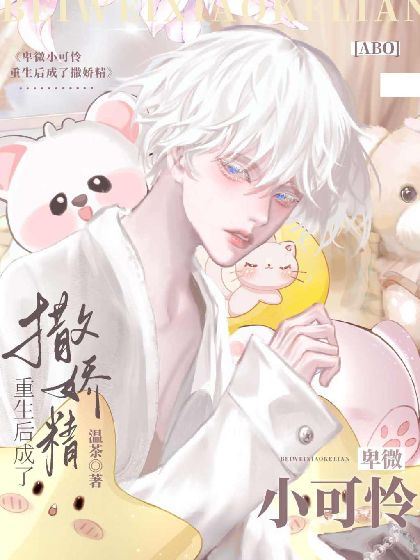
... Read More
Okay so the throwaway box moment at the beginning is actually genius plotting. Lu Yinghuai telling Fang Mu to dump it specifically IN FRONT OF THE JIANG FAMILY. That's not just petty, that's a power play wrapped in casual laziness. The author could've just had him throw it away but no, the location matters. It says everything about how he views his relationship with Jiang Tang versus everyone else. And then the Yao Yushu entrance mid-shopping trip? Classic third-actor interrupt. The whole setup with the sweet scent, the delicate appearance, the pheromone release to attract Alphas — this guy is playing the game hard. But Lu Yinghuai's reaction is the real plot twist here. "Who are you?" — not fake politeness, not awkward avoidance, actual genuine not-knowing. That cuts deeper than any dramatic confrontation would. The neck guard with the tracking chip is the quietest setup in the whole chapter and honestly the most ominous. The clerk explains it like it's normal consumer tech, but the implication is enormous. Location tracking, pheromone blocking, beauty AND practicality combined — Lu Yinghuai is building a cage and calling it a gift.
... Read More
Can we just talk about how efficiently this chapter reveals Lu Yinghuai's personality through contrast? With Jiang Tang he's soft — melting snow voice, peeling shrimp, desperately trying to craft the perfect gift even if his pheromone artistry is slightly clownish. With Chen Yuan he's pure ice. Same man, completely different frequency. That transition from 'little friend' to 'kid' gave me whiplash and I loved every second of it. But the real character depth came in the smallest moments. Like when Jiang Tang pets the light ball under the table and Lu Yinghuai just... pauses. He doesn't say anything. He just crosses his legs calmly and Xie Zan nearly chokes on his fish. The unspoken communication between these characters is where the writing shines. Lu Yinghuai knows exactly what's happening and chooses not to acknowledge it publicly, which says so much about how he manages his relationship with Jiang Tang — protective, careful, maybe a little calculating. And Jiang Tang himself — he's observing everything, reading the room, stealing glances at Lu Yinghuai's expression before deciding whether it's safe to keep petting the orbs. He's adapting to this world, learning its rules, and that growth is quietly happening. The Chen Yuan encounter also reveals something crucial: Lu Yinghuai has enemies from his past who think they hold leverage because of his brother. That 'my father is your brother's lifesaver' line is loaded and I have questions.
... Read More
The dialogue in this passage is cold surgical precision. Every line someone speaks is designed to wound, and what's terrifying is how naturally they do it. Yao Yushu's fake concern is the worst kind—"maybe you are also kept in the dark" delivered with that honeyed tone. He sounds almost sympathetic while systematically destroying Jiang Tang's life. And then he pivots to the blood transfusion reveal like he's sharing helpful information rather than confirming his husband's entire existence was a lie. The line about Omegas with incompatible pheromones being dangerous during transfusion is exposition wrapped in cruelty—Jiang Tang wasn't chosen because he was loved, he was chosen because his biology was useful. Lu Bufan's dialogue is even worse because it's so calm. "As long as you leave on your own initiative, we won't make things difficult for you." Translated: we've already made everything difficult, just don't make it inconvenient. And Jiang Tang's responses—"Okay." "What else?" "I have nothing to explain."—each one is a monument to emotional exhaustion. He's not arguing because he's already lost. The few lines he does speak carry the weight of someone who has stopped believing words can change anything.
... Read More
There are two scenes in this chapter that are stuck in my head and I can't stop going back to them. The first one is the flashback to Jiang Tang's escape at twelve years old. The whole village is quiet. He opens the door with blood-stained hands and is greeted by pale moonlight. He washes his hands in the stream behind the mountain and changes into those old bloodless clothes. The imagery is so clean and stark—just moonlight and water and a boy who has seen too much. It reads like a painting. And then the chapter snaps back to the present and we're in a brightly lit room with a computer screen and a phone buzzing with messages, and the contrast is brutal. The fluorescent glow of technology versus that cold natural moonlight. Another detail that got me: the description of Li Hu sending those voice messages. A boy much taller than other kids his age, thumb pressing the voice button, nail half-bitten off, flamboyant face with no trace of childish innocence. You can literally see him. The author doesn't just tell us these people are cruel—they show us the physicality of it, the texture of it. And the star-rated hotel in Yingshui City where whoever deleted the video is sitting, the dialog box suddenly popping up on their phone—that detail feels so deliberate, like the author is quietly mapping out a whole world that exists beyond Jiang Tang's immediate room.
... Read More
I keep coming back to the puppy pendant. Lu Yinghuai specially placed it next to Jiang Tang's pillow and Jiang Tang holds it while he wheels himself out of the room. It's such a small object but it carries so much weight—he literally carries it with him into the corridor where the next scene is about to happen. A token of safety that becomes a talisman he clutches while moving through danger. And then there's the wheelchair itself. It's not just a prop for Jiang Tang's disability—it's the sound that alerts Lu Yinghuai in the next room. Almost immediately, he recognized the sound. The wheelchair becomes a bridge between them, a way Lu can sense Jiang Tang's presence even without seeing him. The pheromone works the same way—it crosses walls, it lingers on fabric, it reaches Jiang Tang when words can't. These are all invisible connections that matter more than anything visible. And the video—that's another symbol I can't shake. Someone was recording Jiang Tang without his knowledge, capturing his silhouette for two seconds in a mall, and then the video gets deleted by someone on the other end. It's about visibility and control. Who gets to be seen? Who decides what stays and what disappears? Jiang Tang deleted it himself but the question hangs there: who was watching, and why...

Leave a comment

You must be logged in to leave comments. or
