Poor Little Thing Reborn as a Spoiled Child [ABO] - Reviews

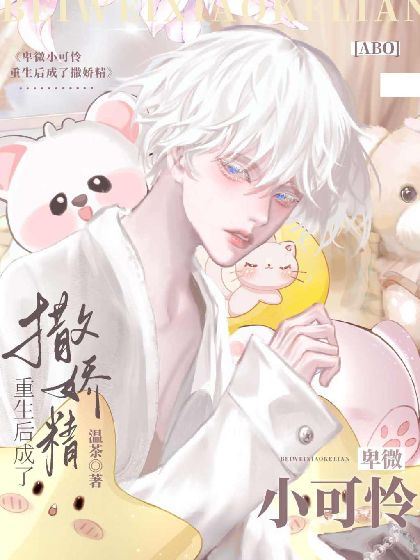
Poor Little Thing Reborn as a Spoiled Child [ABO]
+Add to Custom List
Sort
Add review
... Read More
Can we just take a moment to appreciate how perfectly written Lu Yinghuai's dialogue is? This man goes from feeding Jiang Tang strawberries like some domestic husband from a 90s drama to absolutely devastating romantic tension in three sentences. The 'I want to eat what's in the baby's mouth, preferably after chewing' line — I literally made a noise. A sound came out of my mouth. This is not a human reaction to fiction. But here's the thing that makes it work: it's SO Lu Yinghuai. It's teasing, it's slightly wicked, it's confident without being cruel. And then Jiang Tang's responses? 'Thank you for the consideration' muttered softly — that's the voice of someone who has learned to deflect with politeness, someone who uses formal language as a shield. When he says 'I didn't!' after being kissed, that's not rejection, that's panic. And the honorifics negotiation is genuinely brilliant character work. 'I won't use honorifics anymore, you... don't kiss me anymore!' Please. You do NOT get to negotiate your way out of being adorably flustered like that. The dialogue in this scene does double duty — it's sexy AND it reveals everything about their power dynamic. Lu Yinghuai knows exactly what he's doing. Jiang Tang has no defense. And the narrator's observation that Jiang Tang wanted to be kissed but didn't dare say it, wasn't used to it — that's dialogue subtext at its finest. The author trusts the reader to understand what's being said WITHOUT being said.
... Read More
I cannot stop laughing at Ding You. This man hears chaos, sees people suffering, and his immediate solution is to climb onto a table and announce "I'm S-rank! Don't panic!" Like... first of all, we can all clearly see you're not S-rank because the entire room is still on fire. Second, you immediately start violently coughing after saying this. The narrative itself is laughing at you. And Yao Yushu's response? Just “What are you doing? This is not the time to joke around.” Bro was trying his best. The man released the most concentrated pheromones he could manage and the result was 'not ineffective, at least it diverted some people's attention.' That is the literary equivalent of someone jumping off a building and the narrator going 'well, they fell slower than expected.' Meanwhile Lu Yinghuai doesn't say a single word of dialogue until he's already solved the problem. Just whispers a direction and reports it through the communicator. Cold. Calculated. Efficient. And Xie Zan's “Your communicator is ringing.” delivered in such a flat tone during an emergency is peak deadpan. The writing style during action scenes is mostly narration-heavy with dialogue dropping in like punches — short, sharp, and usually either panicked or eerily calm. No middle ground.
... Read More
Can we talk about how every line of dialogue in this section is doing at least three things at once? The author's dialogue writing is layered in a way that rewards close reading. Take Jiang Xuan's very first line: 'Xiao Lu is questioning your father-in-law?' He emphasizes 'father-in-law' like it's a weapon. But what he's actually saying is 'remember your place, you're the younger generation, you owe me.' The power play is entirely subtextual and Jiang Zi Ang falls right into it, trying to position himself as Jiang Tang's protector when he's clearly the abuser. Lu Yinghuai's dialogue, on the other hand, is brutally efficient. 'I'm here to take him home.' Six words that accomplish three objectives: establish ownership, announce intent, and dismiss everyone else in the room. No elaboration, no justification needed. And 'My assistant will contact you tomorrow' while the car window rises — that's not dialogue, that's a door slamming in verbal form. But the line that changed everything for me is 'I really like you.' Because up until that moment, Lu Yinghuai's entire voice has been sharp edges and controlled aggression. This line is soft. It's direct. It's almost uncomfortably honest for a character who has spent his whole life being an S-level Alpha who doesn't need to explain himself. The shift in register is so deliberate and so earned. It's the narrative equivalent of someone finally stopping wearing armor. Jiang Zi Ang's dialogue is also worth noting — specifically how he tries to frame his abuse as concern ('I'm doing this for your own good') and then almost slips and calls Jiang Tang a 'waste.' The way Lu Yinghuai makes him swallow that word is one of the most satisfying moments of dialogue-driven justice I've read in a while.
... Read More
Can we just talk about how much this man has suffered in complete silence? Jiang Tang shows up in a wheelchair, left hand injured, gland marked with needle bruises — and he's the one holding the syringe. The moment Lu Yinghuai asks 'what's wrong with you' instead of making his sarcastic quip, I could feel the shift in their dynamic. Lu Yinghuai still sees him as an enemy, but something in him refuses to stay cruel when Jiang Tang is crying. And then Jiang Tang whispers 'I'm sorry, Mr. Lu' — the first words he speaks that night — and it's so hoarse, so broken, that it undoes me. He calls him 'Mr. Lu' like he's maintaining some pathetic shred of professional distance even while preparing to sacrifice himself. The title itself is a wall. But the real gut-punch? Lu Yinghuai staring at Jiang Tang's bruised gland, seeing those black spots, and THEN Fang Mu gets thrown into the room — distracting him from the realization that's been right in front of him the entire time. Their entire relationship is built on missed signals and unread moments. By the time Lu Yinghuai understands what Jiang Tang did, the gun is already pointed at his head. The tragedy isn't just what happens in that basement — it's that they've been desperately trying to communicate across an impossible gap the whole time and neither of them knew the other was reaching out.
... Read More
I came for the drama and stayed for the car ride. Like, seriously — the highest tension in these five chapters happens while Lu Yinghuai is DRIVING and Jiang Tang is ASLEEP. No villains. No external threats. Just two people in a vehicle and the weight of everything unsaid between them pressing against the windows. The stakes here are internal and they're enormous. Jiang Tang's body is trying to survive something that nearly killed him. His pheromone system is in overdrive. He keeps asking for more marking, more proof, more permanence — and every time he does, there's this underlying terror that he's too much, that he's breaking someone who already saved him once. The text says he 'did not understand that it was normal' — meaning he thinks his needs are abnormal, that he's malfunctioning. That's the real conflict: not the physical danger, but the fear that you're damaged goods. Meanwhile Lu Yinghuai is fighting his own battle — the S-class Alpha instinct vs. the tenderness he's developed. His canine teeth tingle. He grits his teeth. He wants and he waits. The 'tingling sensation' in his canines is basically the author's way of showing us a predator holding back its teeth, and doing it voluntarily. That's the stakes. This man could take what he wants right now and Jiang Tang would give it to him — but the restraint IS the love story. And then they arrive at a cemetery at dusk and Jiang Tang wakes up and asks if he's hungry and the sun is 'like blood' across the horizon and I was NOT prepared for that emotional whiplash.
... Read More
Okay so this chapter had me absolutely losing it at 2 AM. The moment Jiang Tang tells Fang Mu 'it's already lost' and stares at that trash can—five kilometers away from his actual house—that's when I knew this author does family betrayal so well. The whole setup where Jiang Zi Ang personally disposes of Jiang Tang's things in random trash cans across the city?? That's not just petty, that's calculated psychological warfare. And then immediately after, bam, the video message with his adoptive parents hostage. The pacing here is chef's kiss—first you're sitting with this quiet devastation of him watching a trash can, then within three paragraphs he's on a call with someone threatening his family. The way the plot coils tighter and tighter... and the best part? Jiang Tang's reaction. 'Then kill them all bro.' Like he's ordering lunch. My jaw hit the floor. And then he blacklists the number because 'voice calls might leave evidence.' This guy is cold. I love it.
... Read More
Okay so this batch is basically three acts compressed into one delicious slice of narrative. First act: Lu Yinghuai presents Jiang Tang with these ridiculously adorable pheromone kittens. Plot device check — these light orbs aren't just cute decor, they're clearly going to matter later. I can already tell. Second act: the dinner date where everything seems domestic and sweet until Chen Yuan literally appears like a plot hammer dropped from the sky. Who sets up a meal and then walks into your past drama? Of course. And then the third act hits with that phone call at the end — "Hello? Brother?" — which basically screams that the Chen Yuan situation is about to escalate dramatically. The structure here is tight: gift-giving establishes romance, the dinner grounds us in warmth, the confrontation shatters it, and the phone call promises consequences. Also the way the light orbs keep rebelling against Lu Yinghuai throughout is a really clever running gag that doubles as foreshadowing — these things clearly have their own loyalty and they've chosen Jiang Tang. That's not nothing.
... Read More
The author wrote a whole poetic sequence during the marking scene and I am not okay. First there's the ice flower pheromone — cold, white expanse, then this sudden stirring of life beneath the frost, little yellow flowers breaking through the ice one after another. Full of vitality. This isn't just fancy description for atmosphere, this is Jiang Tang's pheromones literally describing his state: something dormant and frozen finally awakening. And then later when Lu Yinghuai bites him properly, the narration says "there was no grass in the extreme cold, only small yellow flowers swaying in clusters in the wind." I kept going back to this image because it's so specific and so emotional. The cold representing everything Jiang Tang endured — the suppression, the pain, the feeling of being frozen out — and these flowers are his body and spirit finally responding to warmth. Lu Yinghuai's pheromones acting as the thaw. It's almost too much. And before that, the scene itself is so tactile: the weakness in Jiang Tang's wrists, the tear-dampened eyelashes, the clumsy way he pulls Lu Yinghuai's arm around his neck, the loose shirt revealing collarbone. Every sensory detail pulls you into the room. You can feel the temperature shift from cold to warm. The author knows how to write atmosphere and I respect it deeply.
... Read More
This chapter does something I can't stop thinking about. It starts almost intimate—quiet, almost domestic. A kiss on the corner of the lips, good night, the smell of the quilt. Then it pulls back and we get this slow, methodical investigation of the video. Frame by frame. Confirming repeatedly. And then it shifts gears so hard I almost got whiplash—the video disappears, Li Hu's messages start flooding in, and suddenly we're in the middle of an emotional ambush. The pacing here is ruthless in the best way. The author doesn't let us recover from the mall video tension before hitting us with the blackmail, doesn't let us process the blackmail before dumping the entire trafficking backstory on us. It's overwhelming on purpose. We feel what Jiang Tang feels—like there's no room to breathe because there isn't any. And then the darkest moment hits, the desire to perish, and the author slams the brakes. A faint cold fragrance. The pheromone. And suddenly the pace slows down to this almost meditative quality—Jiang Tang collapsing against the headboard, the warmth of the quilt, the soft murmur of I'll sleep next to you. Then it speeds up again as he wheels himself into the corridor and Lu hears him. The chapter has this rhythm—fast, fast, fast, stop, fast—that mimics anxiety and relief and anxiety again. And it ends mid-movement, which is just cruel and perfect.
... Read More
I literally cannot get over the scene where Lu Yinghuai sees Jiang Tang's scars. Not just because it's devastating — though it IS — but because of HOW it happens. It's not some dramatic confrontation. It's mundane. Jiang Tang is changing clothes, Lu Yinghuai walks in, sees the marks, and instead of making it a big thing, he just... deals with it. With this quiet tenderness that feels earned after however many chapters of them figuring each other out. "You don't have to tell me where these injuries came from," Lu Yinghuai says. And then immediately follows it with "Tang Tang, no matter what kind of life you lived in the past, you have nothing to do with it in the future." This is the guy who in his previous life was apparently incapable of seeing what was right in front of him. Now he's doing the exact opposite — he's looking, really LOOKING, at every scar on Jiang Tang's body. And Jiang Tang! God, Jiang Tang just sits there thinking about how he could tell him everything but can't. The restraint! The self-censorship! "I wanted to conceal other things related to the two meetings with Lu Yinghuai, so he kept silent." What is he hiding?! And why does he still feel like he can't just BE honest with this man? The power dynamic here is fascinating. Lu Yinghuai has all the social power — he's a captain, he's an alpha, he's untouchable basically. But emotionally, Jiang Tang holds the cards because he's the one with the secrets. The past lives. The things he won't say. Who's really in control here?
... Read More
This scene in the hospital is so vividly described that I can literally see it frame by frame. Xie Zan takes Lu Yinghuai to "an empty room that looked like a laboratory." Instrument by the window. Test tubes, computers, monitors lining the other side. Empty space in the middle. The narration says it directly: "It's like entering another space, so clean and impersonal." Clean. Impersonal. That's the opposite of everything Jiang Tang experienced. The worldbuilding here is fascinating — this is a society where Omegas can be forcibly drained, where black clinics exist, where gland fluid extraction is a regulated medical procedure but also a weapon. The needle itself gets this almost ceremonial description: "The needle was very short but quite thick, and the tip of the needle reflected a cold light under the pale light." Cold light. Pale light. The color palette of this entire scene is stripped down — white, clear, transparent — which makes the MEMORY of Jiang Tang's deep red fluid feel even more violent and jarring. The author uses environment to contrast clinical safety against brutal reality.
... Read More
I need to talk about how sparse Jiang Tang's dialogue is in this entire chapter and how that SPARSENESS does more emotional work than any tearful confession ever could. Jiang Tang's lines: "Don't come over here!!!" (note the exclamation marks despite his voice being hoarse), "Go away," "You go," "Don't." Four commands. Four rejections. And each one cracks open a little more of his psyche. The first is panic—the adrenaline of someone who's been trapped and hurt and sees danger everywhere. The second is exhaustion—he's tired of fighting. The third is bargaining. The fourth is barely a word at all, just a plea wrapped in a consonant. Lu Yinghuai's voice is the opposite. He talks fast, he repeats himself, he promises and renegotiates in real time: "If you put it down, I'll leave" → "Promise that you will let it go after I leave!" This is a man who has learned that every word matters because he spent a lifetime saying the wrong things at the wrong time. But the dialogue that actually lives in my head now is this exchange: "Why are you crying?" "Mr. Lu..." "Are you feeling uncomfortable?" "Mr. Lu... I killed someone..." Four lines. Four beats. The repetition of "Mr. Lu" as Jiang Tang's anchor point—it's the first time in two lifetimes he's called him that in this context, and it sounds so small, so childlike, after everything. And Lu Yinghuai's response isn't a grand speech. It's three sentences: "No, he's not dead, it's not murder. Tang Tang did nothing wrong, Tang Tang is great." The simplicity is the point. He's not negotiating morality. He's building a wall around Jiang Tang's guilt so nothing can get in. Xie Zan's banter with Sang Song about recording the crying video is excellent comic relief, too. "The top Alpha is crying, add a more explosive title, do you think anyone will read it?" This man is already planning the clickbait. Of course he is.

Leave a comment

You must be logged in to leave comments. or