Poor Little Thing Reborn as a Spoiled Child [ABO] - Reviews

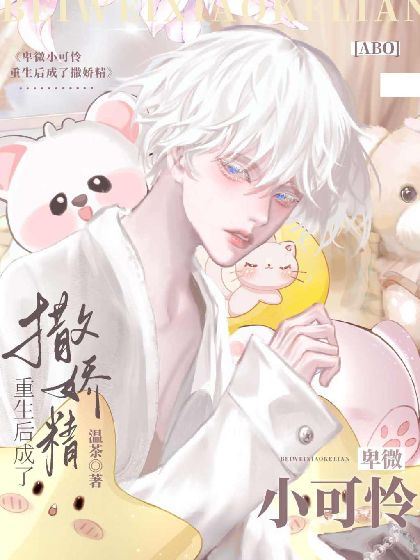
Poor Little Thing Reborn as a Spoiled Child [ABO]
+Add to Custom List
Sort
Add review
... Read More
Let me break down how the author structured this chapter because it's genuinely impressive. We open in medias res with Jiang Tang already having a panic attack—no setup, no warning, just immediate intensity. "His hands were covered with sticky sweat." Right there, we're locked in. Then the nightmare sequence takes up probably half the chapter, and instead of dragging, it PULSES. You can feel the rhythm accelerating as Jiang Tang descends further into the memory. The sentences get shorter, more fragmented: "He felt thirsty and his throat was dry and sore. He felt hot and breathless." That pacing choice mirrors exactly what's happening to him physically. Then—cut to morning. Sunlight. Gauze being removed. The wound healing overnight. And just when you think the emotional intensity has peaked, BAM, Jiang Tang reopens the wound. The structural pivot from victim to... well, self-saboteur is so jarring and perfect. The phone call with Gu Jingmo happening during breakfast while Lu Yinghuai casually feeds Jiang Tang water and wipes his face? That contrast between the political plotline and the intimate domestic moment is chef's kiss. The chapter ends on that note—"He felt no pain when the blood oozed out, only pleasure"—and I immediately clicked to the next chapter. No hesitation. The pacing here never gives you room to breathe, but it also never feels rushed. It's like the author knows exactly how much weight each scene needs to carry and delivers precisely that and no more.
... Read More
This chapter is basically a masterclass in how to control reader heartbeat through structural choices. It opens with something almost comedic — Fang Mu being told to throw garbage in front of the Jiang family's house. Light. Funny. You're smiling. Then immediately we cut to the car scene where Lu Yinghuai is holding Jiang Tang's cold hands, asking about relaxation spots, the whole domestic domestic energy hitting different. Then the restaurant scene — Fang Mu's internal panic at Lu Yinghuai's smile, the resignation letter drafted in two seconds, the escape — provides perfect comic relief after the sweetness. You breathe. Then the jealousy confession hits like a truck. The pacing slows down here intentionally. We sit with Jiang Tang's confusion, his genuine lack of experience with this kind of emotional demand, his awkward but sincere attempt to coax. This moment deserves space and the author gives it. The shopping scene escalates naturally from buying things to the Yao Yushu interruption. Each beat pushes the tension higher: the pursuit, the fake crying, the pheromone manipulation, the cold rejection, and finally the neck guard reveal. The chapter ends on the clerk's description of the tracking chip. Not a cliffhanger with dialogue, not an action beat — just information landing like a stone in water. The stakes shifted from romantic tension to something darker and the reader has no choice but to keep going.
... Read More
Okay, so the PTSD callback in this chapter is no joke. The author really pulled out all the stops with that pigsty flashback. Let me explain—Jiang Tang's nightmare wasn't just some generic bad dream, it was literally transporting him back to being locked in a cage for three days without food or water. "Let me out... I was wrong, let me out..." I had to pause and catch my breath after reading that. The way the narrative shifted between present and past was so seamless it was almost disorienting in the best way. Then Lu Yinghuai finding him curled up in that state—"He was so miserable that he wished he were dead more than once"—chills, actual chills. But here's where the plot twisted: Jiang Tang waking up the next morning and TEARING OPEN HIS WOUND on purpose? That moment where he felt "only pleasure" watching his own blood flow? That's not just character development, that's a full-blown red flag wrapped in tragic backstory. The narrative structure here is doing something clever—it's showing us how trauma loops. The cage, the heat, the darkness—it all comes back in cycles, and each time it gets harder for him to escape. I'm honestly not sure if Jiang Tang is going to keep sabotaging himself like this, or if Lu Yinghuai is going to figure it out. Either way, the plot is pulling in some serious emotional directions and I am HERE FOR IT.
... Read More
Jiang Tang's emotional arc in these chapters is heartbreaking and hopeful all at once. You see him go from curled up in shame after crying to actively touching Lu Yinghuai's abs like he's been wanting to do for ages. That shift is everything. The scene where Lu Yinghuai finds him staring at himself in the mirror, trying to remember how to smile—that's the kind of detail that makes you pause the book. And then the way Jiang Tang confesses, 'I like it so much that I want to say it several times'—wait, that's Lu Yinghuai's thought, but it shows how profoundly he's moved. The CP chemistry isn't just physical; it's about two people who've both been damaged finding a language that only they understand. When Jiang Tang burrows into his arms and says 'Please...brother,' I actually felt my chest tighten. It's not just submission; it's trust. And Lu Yinghuai's reaction—the '!!!'—shows he's overwhelmed too. Their emotional rhythm is like a dance: he pushes, she pulls back, then they collapse into each other. Perfect.
... Read More
The stakes in this chapter are legitimately scary because the author makes it clear that nobody is prepared for what happens. Ding You — supposedly S-rank — can't even handle a fraction of the pressure and ends up coughing himself into oblivion. The SA team members are all A-level at best, and their combined pheromone barriers only cover a few hundred people in a hall with thousands. Shi Feicheng is A+ but he's on the periphery trying to organize evacuation. Security personnel get broken through instantly. The system fails. Every single line of defense collapses and it's Lu Yinghuai — the guy everyone thinks has a disabled gland, the guy on probation, the guy who keeps saying he doesn't care — who had to solve it alone. But here's what makes it tense: we don't know his full power level yet. The text keeps hinting that his gland might not actually be disabled ('Why can he cont...') and the sentence just trails off. That incomplete thought is doing so much work. It means the reader is left wondering the same thing Yao Yushu is wondering — what is this guy actually capable of, and why is he pretending not to be? The A+ Omega caught in forced estrus adds another layer because now there's a ticking clock inside the ticking clock. The chaos isn't just about survival, it's about what happens when biology becomes a weapon and nobody has the power to stop it
... Read More
The basement scene. Just the basement scene. I need a moment. Let me back up because you're not going to believe how much emotional weight is packed into what could have been a throwaway paragraph. Lu Yinghuai sitting on that bloody straw mat, deciding to cuff only his feet because 'Jiang Tang seemed to like being hugged by him' — that line just destroyed me. It's so specific and so devastating. He's recreating his imprisonment voluntarily, but he's leaving his hands free for one reason: so he can still embrace the person he lost. That is a level of devotion that makes my chest physically ache. And then the reversal — he wakes up and his first thought isn't about the mission or his team or even his own injuries. It's purely, almost childlike in its directness: he wants to see Jiang Tang. The tenderness he shows in the Jiang family scene is what really gets me though. When he wraps the towel around Jiang Tang's wet hair and dries it himself? That's not just protection, that's worship. And Jiang Tang calling him 'Mr. Lu' with those lowered eyelashes, trying to suppress his discomfort — it's this heartbreaking contrast between how cruelly his family treats him and how gently Lu Yinghuai holds him. The power dynamic here is deliciously inverted. The S-class Alpha is the one completely undone by an Omega who can barely stand. 'What should he be reflecting on?' — said so casually but it carries so much rage underneath. I'm a mess.
... Read More
That moment when Lu Yinghuai told his friend Jiang Tang was his — not 'from the Jiang family' but 'mine' — gave me actual chills. This isn't just possessiveness, it's decades of abandonment finally met with someone who refuses to let go. Jiang Tang's character arc here is devastating and beautiful. He's spent so long internalizing abuse that when someone finally shows him kindness, his first instinct is still to apologize. 'I'm sorry' becomes his tic, his default setting, even when he does nothing wrong. The text says 'he wanted to explain, but he didn't know where to start' — and that hits like a truck. He's been conditioned to believe his discomfort is a performance, a pretense. No one ever believed he was actually hurt. What's fascinating is how both men's defenses work against each other. Jiang Tang's body rejects being touched by strangers — literally, physically — yet the moment Lu Yinghuai's pheromones wrap around him, something shifts. His defense system doesn't just lower; it seems to recognize a frequency it's been starving for. Meanwhile, Lu Yinghuai's explosive protective rage (the pheromones going wild, cutting open Jiang Tang's gown without hesitation) masks something quieter underneath: guilt. 'I'm sorry, I'm late.' He carries the weight of every moment he wasn't there. Xie Zan serves as the perfect foil here — he sees everything, judges nothing, and gets dragged into their orbit like the rest of us.
... Read More
The imagery in these chapters is absolutely cinematic. You've got the blue moon — which is wrong, not normal, signaling that something supernatural or fated is happening — and then the vision Lu Yinghuai has of snow flying through fir trees, pure white chaos everywhere except for the one warm body in his arms. It's like the entire world narrows down to that single point of contact. I also love the cold water detail: the green light ball reluctantly fetching water, the water already cold, the contrast between the heated pheromones in the room and that frigid glass. And the newly renovated house with no necessities — this is a new beginning, a blank slate they're trying to build on, but it still feels barren. The ice flower metaphor though is everything. Jiang Tang is described as a patch of small yellow flowers blooming under polar glaciers, so fragile that dew rolls off if a fir branch barely touches it. But then also capable of withstanding all wind and snow. That's the entire thesis of his character in one botanical image. He looks breakable but he's survived exactly that. The scene where Lu Yinghuai finds him after falling from the bridge, the black fog gradually dissipating as Jiang Tang hears that sleepy 'Tang Tang?' — I need a moment. That voice cutting through the darkness is probably one of the most visually evocative moments I've read in a while.
... Read More
This chapter is a masterclass in pacing control. It starts in media res with Jiang Tang already in that fragile, half-delirious state — no warm-up, no explanation, just straight into the emotional intensity. The marking scene unfolds slowly, almost painfully slow, with Lu Yinghuai hesitating and Jiang Tang pressing forward. You can feel every second stretching. Then the pheromone reaction hits and things accelerate — the bite, the second bite, the possessiveness taking over. And just when you think the chapter is going to stay in this intensely intimate headspace, the author pivots HARD with the phone ringing. Xie Zan's messages. The video call. The medical reveal. Boom. Everything changes. The transition from the bedscene to cold clinical information is jarring on purpose — it yanks you out of the warmth and drops you into worry. Then Lu Yinghuai turning off the video and going back to touching Jiang Tang's face? That circular structure from vulnerability to worry to tenderness is perfect. And the final line — Jiang Tang turning away because Lu Yinghuai's touch is slightly itchy — it's domestic and small after all that intensity. The author knows exactly when to compress time and when to expand it. No dragged-out scenes, no rushing through important moments. Every beat lands.
... Read More
Let me just say this: the author absolutely lost control of the gas pedal somewhere around chapter 134 and never let off. We go from helicopter rescue → rejected hospital trip → midnight suicide attempt → blood mixing → pheromone confession → crying breakdown, all within what feels like six hours of story time, and somehow it doesn't feel rushed at all. The pacing genius is in the silence between scenes. Lu Yinghuai bringing Jiang Tang home, decorating the space, parting his hair to soothe his gland—these quiet domestic beats act as pressure valves. The reader gets to breathe before the next emotional detonation. And then the splashing sound at 3am? Instant spike. No warning. Just Lu Yinghuai dropping his water cup and sprinting back. What's interesting structurally is how the chapter mirrors Jiang Tang's mental state. It begins with Lu Yinghuai's internal revelations—slow, reflective, almost dreamlike as he processes two lifetimes of misunderstanding. Then it accelerates into frantic action (the bridge jump, the helicopter). Then it drops into eerie quiet at the house. Then SHATTERS with the glass scene. The narrative pace literally matches Jiang Tang's fragmentation and reconstruction. The transition from the glass fragment falling ("a very crisp sound") to Lu Yinghuai rushing in is one of the tightest action beats I've read in this genre. No wasted words. Sound → action → consequence. And then immediately pivoting back to emotional tenderness with the finger interlocking. The chapter doesn't let you settle into one mood, which is exactly what these characters need—they're too destabilized to rest, and the prose reflects that.
... Read More
This hit different. I need to talk about this moment where all hell breaks loose with forced estrus pheromones flooding the mall, thousands of people panicking, Alphas losing their minds — and Jiang Tang? Completely unaffected. Because right when the first Alpha pheromone spreads, a ball of light appears beside him and Lu Yinghuai's pheromones release. ONLY for Jiang Tang. Not for the crowd. Not for Shi Feicheng who was literally organizing evacuation. Not even for Xie Zan who was right there. Only Jiang Tang gets the protection. That's not just loyalty, that's obsession disguised as casual indifference. And then later when Lu Yinghuai finally unleashes his full power, the text says "the roots of the trees that extended from nowhere were entangled into a web, isolating the A+ grade Omega directly." Isolated. Not saved. Isolated. Like his first instinct was to make sure nobody could reach that Omega, not necessarily to protect him from everyone else. And the small yellow flowers metaphor he's thinking about? "There are fewer and fewer small yellow flowers in the depths of the fir forest, and only a few were left, swaying in the breeze, so fragile that they seem like they will disappear at any time." That's him thinking about Jiang Tang's gland condition. He's mourning something already while pretending nothing's wrong. That's not a character, that's a tragedy waiting to happen.
... Read More
Lu Yinghuai asking about gland fluid extraction is one of the most chilling character moments I've ever read. Not because of what he's doing — but because of WHY. He's not just gathering information. He's trying to UNDERSTAND. He physically puts himself in the chair, lies down, lets a thick needle pierce his gland without anesthesia, and endures half an hour of agony just to simulate what Jiang Tang went through. The author describes it perfectly: "Lu Yinghuai felt like an animal waiting to be slaughtered." He's not some untouchable S-class Alpha here — he's vulnerable, exposed, trembling. And Xie Zan, his friend, just stands there watching with arms folded like this is normal. Their dynamic is so complicated. Xie Zan clearly cares but doesn't know how to express it, so he masks it with professionalism and dry remarks. Meanwhile Lu Yinghuai is over here voluntarily torturing himself because a memory of Jiang Tang's crimson gland fluid won't leave his head. The relationship between these three characters — Lu Yinghuai, Jiang Tang, and even Xie Zan as the observer — creates this triangular tension that's absolutely electric.

Leave a comment

You must be logged in to leave comments. or
