Poor Little Thing Reborn as a Spoiled Child [ABO] - Reviews

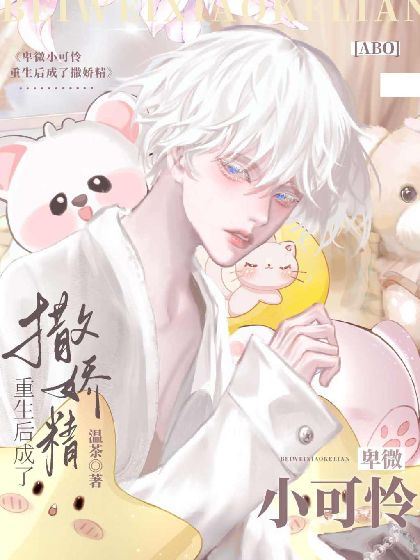
Poor Little Thing Reborn as a Spoiled Child [ABO]
+Add to Custom List
Sort
Add review
... Read More
The stakes here are both intimate and enormous. On one level, it's about whether Jiang Tang will trust again, whether Lu Yinghuai can protect him from external threats like the blackmail calls. But deeper down, the conflict is internal: Jiang Tang's fear of being vulnerable versus his need for connection, Lu Yinghuai's fear of losing him to his past self. The author raises tension masterfully by juxtaposing tenderness with danger. Right after their most vulnerable moment, Lu Yinghuai reads about hormonal mood swings—what if Jiang Tang's sweetness is temporary? What if it crashes back into depression? That scientific aside suddenly makes the entire relationship feel precarious. And then there's the unresolved plot thread: those strange calls. The reader knows trouble is coming, but we don't know when or how. It creates a low hum of suspense beneath the romance. I also love how the 'original owner' line reframes ownership as mutual responsibility. They're not fighting over possession; they're fighting for each other's survival. The emotional stakes feel higher than any physical threat.
... Read More
The author here is a menace. Absolutely a menace. You open this chapter and it's—wait, I'm sorry, let me start over. The author opens this section and it's funny. Like, genuinely hilarious. Sang Song calling Jiang Tang "little beauty" and interrogating Lu Yinghuai about abuse? I was laughing. Then two paragraphs later, Jiang Tang has a quiet moment of trauma about strawberries and I'm like—oh. Oh no. The tonal shift is so sudden it almost made me spit out my tea. And then Sang Song's breakdown with the cookies? The way he's crunching and muttering and then suddenly hugging Shi Feicheng and crying? The pacing there is masterful because it doesn't rush. It lets us sit in the discomfort. The author doesn't pull away. It goes from chaos to silence to grief and back again, and each transition feels earned. The chapter ends with Lu Yinghuai carrying Jiang Tang out and leaving space—a perfect structural beat. It's a door closing. Then the narrative cuts mid-sentence at the end. Not even a proper cliffhanger, just... a trailing off. And I had to read the next chapter immediately. Rude.
... Read More
The sensory details in these chapters are what make them stick with you. Let me paint the picture for a second—Jiang Tang sitting in his wheelchair, flaxen hair falling over his eyes so only his pale chin and blue lips are visible. That image is haunting. It's like a portrait of someone being slowly erased. And then the mirror scene. He looks at his dilapidated body in a floor-length mirror and tries to smile. The reflection is practically a ghost. The author doesn't describe grand landscapes or elaborate settings here, and honestly that's what makes it work. The world has shrunk to a single room, a single body, a single reflection. The blood on his hands, the tissue turning red—these are intimate, claustrophobic details. The air has Lu Yinghuai's lingering pheromone scent but it brings no comfort. That detail alone tells you everything about how the world has shifted: even the things that used to soothe him now fail. And then the bathroom scene, maneuvering the wheelchair quickly, the vomit splashing Yao Yushu's shoes. The contrast between physical degradation and social rudeness is jarring in the best way. This is a world where bodies are disposable and appearances are weaponized, and the setting itself feels complicit.
... Read More
I keep coming back to the rain imagery in these chapters. The text mentions 'that rainy night' multiple times — as if Lu Yinghuai himself isn't sure WHICH rainy night saved Jiang Tang, or whether it was ALL of them strung together. There's something deeply haunting about trauma memory being non-linear. You don't remember one rescue — you remember every single moment your life fell apart and someone picked up the pieces. Then there's the scabs. The repeatedly reopened wounds on Jiang Tang's neck. I initially read this as just ABO biology — Omega bodies reacting to permanent marks — but it's clearly MORE than that. The body remembers what the mind tries to forget. Every time Jiang Tang asks for another mark, he's basically saying 'prove this is real again.' The wound is the receipt. The pain is the proof. And the cemetery. The text goes out of its way to describe the location — not in the city, but at the edge of a county town, surrounded by forests and unnamed vegetable patches and plain iron sheds. This isn't a dramatic, windswept mountain graveyard. It's ORDINARY. That's the point, isn't it? Kong Yu isn't some legendary figure — they're just someone who mattered, buried somewhere nobody special visits. The prosaic details make it ache more. The cherry scene at the end with Lu Yinghuai admitting he lied about buying them... 'being worried that you'd be hungry is real.' Small honesty. Not grand declarations, just — I did a tiny lie so you'd feel cared for, and the care itself was the truth.
... Read More
The stakes in these chapters are so high I kept forgetting to breathe. On the surface, Lu Yinghuai is fighting his own biology — a susceptible period that's worse than ever, pheromones overwhelming his sanity, the urge to mark vs the knowledge that Jiang Tang just fell out of a bridge and is barely recovering. But the real stakes are internal, and they're brutal. Jiang Tang tried to kill himself. Not a metaphor, not dramatics — he literally threw himself off a bridge. And Lu Yinghuai knew enough to go find him in the dark, in the fog, with a blue moon overhead. The question hanging over everything is: can these two people who clearly love each other actually coexist without destroying each other? Lu Yinghuai's willingness to inject three抑制剂 doses just to be lucid when he proposes shows he understands the damage his intensity can cause. But Jiang Tang's fear is equally real — his reflex to cover his bleeding wrist, his immediate suspicion when Lu Yinghuai says he loves him, the way he negotiates his own vulnerability ('If I agree, can you mark it?') like it's a business deal. The conflict isn't resolved here, it's just survived. And that's what makes it so tense. Every tender moment has the shadow of the previous trauma behind it, and every promise is weighed against the possibility that it won't last. But god, the resolution lands because neither character is backing down from the other.
... Read More
I'm still thinking about the line: There were two lives between them. It arrived like a quiet thunderclap in the middle of what seemed like a mundane shopping trip, and it completely redefined everything that came before. Lu Yinghuai's internal monologue about the cup is one of the most emotionally sophisticated passages I've read in this genre. He doesn't just want a replacement — he wants to replace a singular existence with a paired one, to transform loss into continuity, to say with porcelain and glaze that they have a complete life now. The homophone detail (cup sounding like lifetime in the original language) is the kind of romantic gesture that feels culturally specific yet universally touching. And Lu Yinghuai's transformation from cold predator to devoted partner is rendered so subtly. One moment he's crushing a teenager with pheromone pressure, the next he's pushing a wheelchair through a mall searching for the perfect gift. The emotional range is staggering. Meanwhile, Jiang Tang's emotional maturity is deeply moving — he doesn't moralize, he doesn't play the saint, he simply releases Chen Yuan because he understands the weight of a father's livelihood versus the weight of a broken cup. Their relationship has reached a place where both of them see clearly, where love isn't about possession but about mutual recognition. When Lu Yinghuai says I want to use a couple's cup with my baby, it's not performative — it's the honest statement of someone who has just realized that his partner's comfort matters more than his own pride.
... Read More
I think I've found my favorite moment in this whole arc and I'm not even going to try to hide it. Let me just say it: Lu Yinghuai leaving his pheromone on the quilt is one of the most quietly devastating romantic gestures ever written and I am not okay. Jiang Tang pulls the quilt over his face and smells it like it's the only thing anchoring him to the earth. And later, when that darkness rises up inside him—when he's thinking let's die together, let's perish together—that cold fragrance enters his nose and he collapses against the headboard like melted ice. Lu Yinghuai doesn't even know he did this. He just kissed Jiang Tang on the corner of his lips and said good night and went to the next room, and somehow that faint remaining scent pulled Jiang Tang back from the edge. Meanwhile Lu is sitting in the next room hearing the wheelchair, sensing movement, restraining himself from following. He knows something is happening. He just can't act on it. And Jiang Tang is out there in the corridor with that puppy pendant Lu gave him, pressing his thumb against the door handle. These two are orbiting each other so close and yet the distance between them in this moment is devastating. I love them so much it hurts.
... Read More
Let's talk about Lu Yinghuai's attitude toward the Jiang family, because this is where the plot starts getting really interesting. He gifted Jiang Zhitao something — and when Jiang Tang tries to offer to give her a gift himself, Lu Yinghuai basically shuts that down. Not because he's being petty (okay maybe a little), but because the text explicitly says: 'If today's incident had not happened, Lu Yinghuai would have definitely given her a valuable gift, but now he hated all members of the Jiang family equally except Jiang Tang.' WHAT INCIDENT though. I need to go back and figure out what exactly happened to cause this shift. Because up until now, the Jiang family hasn't been the villain — or at least, not prominently enough for this kind of unified hatred from a guy who grew up envied and jealous. Something happened that made Lu Yinghuai see them as a threat to Jiang Tang, and that's a classic setup for a revenge subplot. The structure here is also doing some heavy lifting. We're getting flashbacks to the previous life interspersed with present-day caregiving scenes. The narrative isn't just moving forward — it's layering guilt onto guilt, revelation onto revelation. Every time Lu Yinghuai learns something new about Jiang Tang's inner world, it hits harder because we already know how it ended. The timeline isn't linear and it shouldn't be, because the whole point is that Lu Yinghuai is carrying information from a future that hasn't happened yet and using it to change things.
... Read More
I literally stopped mid-chapter when Jiang Tang said it. Not once, not twice—this is the first time he CLEARLY expressed his love for Lu Yinghuai. And he didn't do it with some dramatic, tearful monologue. He just leaned over and whispered it like it was the most natural thing in the world, right after eating fish.
... Read More
Okay so this chapter is basically the moment where everything cracks open, right? Like we've been building toward this and BAM — Lu Yinghuai just straight up tells the Alliance that he hurt someone because they touched his Omega, and he does NOT care about the consequences. This is huge for the plot because earlier Lu Yinghuai was this controlled, almost cold captain figure who followed every rule. But now? He's drawing a line in the sand. And what's wild is how casually he says it — "I accept the punishment" followed immediately by "I will make them disappear." That juxtaposition is chef's kiss. But then there's the whole past-life reveal happening underneath, which I think is the real plot engine here. Lu Yinghuai remembers things Jiang Tang doesn't know he remembers. In his previous life, Jiang Tang never said he loved him. Never dared. And Lu Yinghuai was too blind or stupid to notice. Now he's trying so desperately to do better, to explain himself, to not lose this chance. It's the plot's biggest dramatic irony — the reader knows something neither character fully shares yet. Also the Jiang Zi Ang injury subplot is simmering nicely. Nobody's dying, but the fact that it's serious enough for the family to complain to the Alliance means this isn't over. Someone's gonna come knocking. And honestly? I'm here for it. More conflict. More danger. Let Lu Yinghuai be a menace for our omega.
... Read More
The Chen Yuan confrontation is where this entire batch pivots from sweet domestic fluff to genuine danger and I was gripping my phone through it. What makes it work isn't just that Lu Yinghuai gets aggressive — it's the escalation. He doesn't just get angry. He grabs Chen Yuan by the collar and throws him forward. Not a shove, not a threat, a physical act of dominance that says 'you will face what you wronged.' And then the dialogue — 'Kid, do you have to apologize to my Omega?' — the word 'my' carries so much weight here. This isn't jealousy. This is ownership, protection, and something closer to reverence. But the real stakes come from Chen Yuan's desperate card: 'My father is your brother's lifesaver.' Suddenly the personal conflict becomes familial, historical, entangled. Lu Yinghuai's response — a cold smile that signals he's even unhappier than before — tells us this isn't a situation that gets resolved with an apology. And then the phone call. The hoarse voice on the other end waking up from sleep. 'Brother?' This is the escalation mechanism kicking in. Whatever Chen Yuan did, whatever happened in the past, the brother is being called. The stakes just went from interpersonal to family-level. What I love about how the author handles tension here is the contrast. The most violent moment comes right after the most tender one — Jiang Tang petting the light balls, Lu Yinghuai quietly enjoying it, Xie Zan suffering from secondhand sour energy — and then CUT to Chen Yuan being manhandled. The emotional whiplash is intentional and effective. We have no time to settle into sweetness before the world tilts again.
... Read More
The atmosphere in this chapter is unlike anything else. It's late night, the master bedroom has only a layer of gauze curtain, and moonlight is "softly sprinkling" into the room creating this almost dreamlike ambiguity. The author is doing something really smart here — using light and fabric to mirror the emotional state of these characters. Gauze curtains are translucent. You can see through them partially but not completely. That's basically Jiang Tang and Lu Yinghuai's relationship right now. Visible? Yes. Clear? Absolutely not. Everything is hazy, half-seen, filtered through layers of unspoken history and fear. And the moonlight — bright but cool, illuminating without warming. Just like Lu Yinghuai's touch in this chapter. He's physically close, holding Jiang Tang, but there's still this emotional temperature difference. Jiang Tang feels the warmth of his arms but not the full certainty of his commitment. Moonlight is perfect imagery for a rebirth romance where one person remembers everything and the other is still learning to trust. The hospital gown detail is also doing heavy lifting. Thin, uncomfortable fabric against skin already marked by scars. It's a setting detail that simultaneously tells us about Jiang Tang's physical vulnerability AND his emotional exposure. He's in a hospital gown in someone else's bed, and he still doesn't feel safe enough to ask that person to stay. That single detail contains an entire emotional landscape.

Leave a comment

You must be logged in to leave comments. or
