Poor Little Thing Reborn as a Spoiled Child [ABO] - Reviews

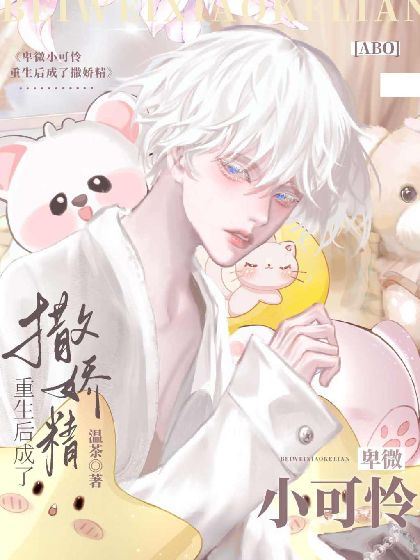
Poor Little Thing Reborn as a Spoiled Child [ABO]
+Add to Custom List
Sort
Add review
... Read More
Okay I NEED to talk about this scene because my heart literally cannot handle it. Jiang Tang crying himself to sleep while convincing himself he should be fine with just pheromones? That's not weakness, that's someone who has spent YEARS building walls around themselves and now doesn't know how to not have them up. And the worst part? He apologizes for CRYING. For being emotionally honest. Lu Yinghuai literally has to make him feel safe enough to fall apart, and even then Jiang Tang is still like 'I'm sorry I'm being pretentious.' I re-read that part four times. Four. Times. The line 'I know you will come back, I don't want to cry, but I can't help it...' is the kind of thing that makes you want to reach through the screen and shake him gently and say 'you don't owe anyone composure.' He's an Omega who just got permanently marked and his hormones are going CRAZY and he's been conditioned his whole life to endure silently, and here he is, finally letting someone see him break. Not performative crying either — he's doing it covertly, trying not to make noise, trying not to be a burden even in his sadness. That's trauma language, folks. And Lu Yinghuai? He figures it out. He realizes Jiang Tang used 'Mr. Lu' on purpose because he wanted comfort but didn't know how to ask for it directly. The man immediately abandons his teasing and goes to him. That's growth. That's attention. That's the kind of partner who actually LISTENS.
... Read More
This chapter does something interesting with pacing—it starts with the emotional climax of the romance arc (the marriage certificate discussion, the gland being healed, Tang Tang finally giving in) and then IMMEDIATELY pivots to domestic comedy with Xie Zan banging on the door and Sang Song arriving like a tornado. But here's what's actually smart about the plot structure: those rustling noises from the corner of the room. The text says the noise 'suddenly quieted down' when Lu Yinghuai glanced at the cabinet. Jiang Tang asks what it is, Lu Yinghuai says maybe a rat, and Jiang Tang internally deadpans at his own friend because obviously there's no mouse in a spotless house. I am CONFIRMED suspicious. Something is in that cabinet. The author is planting a mystery right in the middle of a fluffy domestic scene, which is honestly a brilliant misdirection technique—you lower your guard with all the sweetness and then sneak in a thread of genuine tension. Also, the marriage certificate plot point resolves a major conflict arc while the gland healing revelation recontextualizes everything that came before. Tang Tang literally cured him. That's not just romantic—it's narratively significant because it means their relationship has always been reciprocal in ways neither of them fully acknowledged until now.
... Read More
There's so much packed into these pages about identity, belonging, and what makes a person worthy of love. The central symbol is unmistakable: the mirror. Jiang Tang looks at himself and literally cannot produce a smile. His face has become inert, his tear ducts dry, his emotions walled off. This isn't just depression—it's the death of a self. He spent six years building an identity as Jiang Tang, son of the Jiang family, and in one conversation it's all reduced to a DNA report. But the deeper symbolism runs through the blood. He's literally giving his body for someone else's survival. The pheromone incompatibility detail isn't just worldbuilding flavor—it's the metaphor made flesh. His very essence is wrong for Yao Yushu, incompatible at a biological level, and yet he's expected to pour himself out anyway. The title of this whole ordeal is basically: you are valuable only as long as you're useful. And when the usefulness ends, or when someone more useful appears, you're just... excess. Jiang Tang's inability to cry, to smile, to feel normally—all of it points to a deeper question the book keeps asking: what is left of a person when everything they were told about who they are gets taken away? The final message from Lu Yinghuai, asking about dinner plans while his husband is being exiled, suggests that maybe the answer is nothing until someone chooses to see you again.
... Read More
There's this one image that won't leave my head. Jiang Tang in his dream, traveling under the moonlight, and someone waiting at the end of the road. He doesn't notice the bedroom door opening. He doesn't see Lu Yinghuai watching him approach. The dream is happening in real time. This is how the author writes longing—through dreams that double as confessions, through pheromones that speak what characters refuse to say out loud. Let me just say: the entire sleepwalking sequence is the most vulnerable thing that has happened to Jiang Tang in this book, and he doesn't even know it. He wakes up confused, embarrassed, hiding under a quilt like he's fourteen. But Lu Yinghuai? He's been cataloging every moment. The faded pheromone mark. The way Jiang Tang instinctively curled toward his Alpha's scent. The puppy pendant clutched in his hand even in sleep. Every detail is a data point in someone who is desperately, quietly falling apart. And the best part—the author never makes it melodramatic. No grand declarations. No dramatic music. Just a man tucking a blanket over another man and thinking, *he should be free.* That's it. That's the whole love story right there. Not possession. Not control. Freedom. I've read so many ABO stories where the romance is built on fate and biology and destiny, and this one keeps subverting that expectation at every turn. Jiang Tang's dependence on pheromones is described as something that 'didn't seem to apply' to him—and Lu Yinghuai is okay with that. He wants an equal, not a companion who needs him to survive. That's not traditional romance. That's something rarer. I just—I need a minute.
... Read More
Let me walk through how this chapter is constructed because the pacing is genuinely impressive. It opens with Jiang Tang's internal monologue—dense, heavy, reflective. We get his backstory weight, his gratitude, his self-doubt. This is the quiet before the storm, and it establishes the emotional baseline. Then the transition to the car ride is almost casual. Lu Yinghuai carries him, drives carefully, tells him to sleep. Three beats of domestic normalcy. Then—bam—he's in bed and Jiang Tang wakes up and immediately senses something is wrong. The shift from peace to alarm happens in a single paragraph. The blood on Jiang Tang's hand is the inciting incident of this whole sequence, and it triggers the fall, the hallucination, the 'Mr. Lu!' panic. From there, the author deliberately slows everything down. The wound-dressing scene takes up the majority of the remaining text, and within that single scene there are nested escalations: the banter about blowing on the wound, Jiang Tang's insistence on actually treating it, the reveal of the injury's severity, the memory of Jiang Tang's past trauma implied through his skill, the pheromone tension, the almost-loss-of-control moment, and the narrative aside about Lu Yinghuai's desires. By the time the chapter ends mid-sentence with Jiang Tang saying 'No, are you s—', the tension hasn't resolved at all. It's been compounded on every level. The cliffhanger isn't a physical danger cliffhanger—it's an emotional one. We've just witnessed Lu Yinghuai almost lose restraint and Jiang Tang still not understanding why. The chapter doesn't give us relief. It gives us the aftermath of almost-crossing-a-line and leaves both characters (and the reader) sitting with the discomfort of it. And the Uncle Chen subplot—peeking, getting glared at, pretending to work in the kitchen—is the perfect comic relief valve between the heavier moments. It gives us room to breathe without letting us forget that other people exist around them. Well-structured stuff.
... Read More
Lu Yinghuai's dialogue is so distinct and I am obsessed. The way he switches between tender and threatening in the same breath — "Don't you remember? Last night, a disobedient child threatened to hurt himself to drive me away. Guess what happened to him later?" followed by "He was bitten, very viciously" — that's not just dialogue, that's characterization in motion. You can hear his smile. And then immediately undercutting it with "But you still can't hurt yourself..." showing that underneath all that dominance is genuine fear of losing Jiang Tang. His line "I'm thirsty for skin, Tang Tang, can you let me hold you for a while?" is simultaneously raw, honest, and devastating. He doesn't say 'I want to mate you' or any of that — he asks for something so basic and human and it hits harder than any declaration ever could. Then there's Jiang Tang's voice, which is mostly fragmented and hesitant throughout these chapters: "I, you...", "Mr. Lu, if you like me, don't like anyone else in the future." He doesn't have the luxury of polished sentences because he's been through too much to trust his own words. The contrast between them is perfect — the alpha who can't stop talking versus the omega who barely dares to speak. And that final exchange where Lu Yinghuai asks "The baby is awake, right?" and Jiang Tang can't even formulate an answer, only nod — it's the most honest dialogue in the entire passage because it's almost wordless.
... Read More
That slap. Just one slap from Ding You to Yao Yushu and the entire power dynamic of every relationship in this scene flips upside down. Yao Yushu has spent the whole narrative operating on the assumption that Alphas will accommodate him, that his beauty and his status will shield him from consequences. He releases pheromones designed to seduce. He demands rides. He begs. And Lu Yinghuai — who could crush him physically in seconds — just... doesn't care. That's the real conflict here. Not a fight. Not violence. Complete indifference. 'I really wanted to help you just now. Although I didn't help you, you shouldn't say such things to alienate the relationship between me and my husband, right?' That line is the most violent thing in the entire chapter. Lu Yinghuai isn't angry. He's explaining. He's teaching. And Yao Yushu has never, in his entire privileged life, been taught anything by someone he considers beneath him. Meanwhile the stakes around Jiang Tang are escalating quietly but relentlessly. His glands are blocked. He needs surgery. He differentiated at thirteen — a child — and no one treated him. The author keeps reminding us that this is not a temporary inconvenience but a permanent injury with growing consequences. Every tired glance, every closed eye, every mention of scar tissue adds weight. And Lu Yinghuai's reaction to learning about Jiang Tang's condition — 'Can surgery on the most vulnerable part of the human body be a minor operation?' — that frown tells you everything. He's not worried about the procedure. He's angry that it's needed at all. The stakes aren't just plot mechanics, they're emotional promises to the reader that this character's suffering matters.
... Read More
Let's talk about stakes because they are NOT subtle here. In the previous life, Jiang Tang died. He was framed, abandoned, abducted, his legs were ruined beyond saving, and he ended up at a funeral where it rained like some tragic poetry nobody asked for. Now we're in a rebirth scenario where Lu Yinghuai is trying to change that outcome — but the threat is still real and present. The immediate conflict is the suspicious muscle relaxant injection. Jiang Zi Ang offers to help with the injection, knowing Jiang Tang has some resistance to hospitals, but Lu Yinghuai's gut says something is wrong. The medicine is just labeled "XXXX Injection" — no real details, no transparency. This is a man who has seen his companion die and now has every reason to be paranoid. His instinct to take it to Xie Zan for testing instead of letting Jiang Tang inject it could literally be the difference between life and death. But the deeper conflict is internal. Jiang Tang's emotional state is genuinely concerning — he has this flat, numb expression about everything, including his own health. When the doctor in the previous life told him his legs were beyond saving, he just said "Thank you" with zero emotional reaction. Is he holding onto hope? Has he already given up? The narrative deliberately keeps this ambiguous, and it makes every interaction between him and Lu Yinghuai charged with unspoken worry. The stakes keep rising. Jiang Tang owes money to the Li family that could come collecting anytime. His legs are injured. His brother is a confirmed betrayer who watched him get abducted and did nothing. And Lu Yinghuai is operating with the knowledge of a future tragedy that hasn't been prevented yet. Every chapter feels like a race against an invisible deadline.
... Read More
"It should be soon." Those three words from Lu Yinghuai about getting their marriage certificate hit me like a freight train and I had to put the book down for a second. The way the author handles dialogue in this section is actually remarkable. Every character has a completely distinct voice and you can tell who's speaking without seeing the name tag. Shi Feicheng is all casual banter and deflection—leaning against bars, making jokes about bets, trying to normalize the fact that he's analyzing Jiang Tang like a specimen. "If my Omega was this beautiful, I wouldn't bring him out either" —that line is so perfectly Shi Feicheng, charming but also deeply observant in a way that makes you wonder what he's actually feeling underneath all that ease. Lu Yinghuai's dialogue is where it gets interesting though. He's usually economical with words. "No gift." "If he likes it, he can buy it himself." But then there's this strange shift when he's talking to Jiang Tang—almost childlike in its simplicity. The contrast between how he speaks to his friend group versus how he speaks to Jiang Tang tells you everything about where his priorities live. But that exchange with Jiang Zi Ang at the end? The author doesn't even give us Jiang Tang's actual spoken response to much of it. Just "You're very noisy." Two words. And the narration says it felt like an ice-cold hand around Jiang Zi Ang's throat. That's not dialogue that's aggression wrapped in politeness, and Lu's reaction—just silently summoning six or seven Alphas without even activating his pheromone barrier—suggests he doesn't need to try. The power is just there, ambient, like weather. I also loved how Lu Danchen enters the scene with such calculated warmth. "Although he is your brother, he is my brother's Omega after all, so just give me some face." The word "face" doing so much cultural and relational work in one sentence. This author knows how to let dialogue carry subtext like a truck.
... Read More
The pacing here is wild. We go from Jiang Tang falling off a bridge, seeing a blue moon, possibly dying, to waking up in a weird new house with his alpha who went feral during a susceptible period, and then to a marriage proposal — all in one reading session. But it doesn't feel rushed because the author does something really smart: every scene escalate emotionally rather than just adding plot beats. The first part is pure tension and danger (the fall, the almost-loss), then it pivots to domestic intimacy (feeding water, the empty house), then to vulnerability (the confession, the抑制剂 injection), and ends on this deeply earned emotional climax. The chapter structure also works in our favor — we're given time to breathe between the high-intensity moments. Lu Yinghuai sending that desperate text to Xie Zan for抑制剂, crushing the phone immediately after, gives us a beat of comedy relief right before the heavier stuff. And Jiang Tang sleeping until noon the next day? Perfect pacing choice. It lets the reader exhale before the emotional payoff hits. The only thing I'd say could've used slightly more room is the transition from Jiang Tang discovering he was temporarily marked to his full acceptance — that shift happens pretty fast. But honestly, the cumulative emotional weight from previous chapters probably does the heavy lifting there.
... Read More
The way this chapter handles the relationship between Lu Yinghuai and Jiang Tang is absolutely destroying me. Like, the scene where Lu Yinghuai picks Jiang Tang up and Jiang Tang actually STRUGGLES? Pushes him away? That's not something Jiang Tang would normally do. He's always so compliant, so eager to please. But in that moment, his trauma completely overrides his desire to be good for Lu Yinghuai. He can't breathe. His whole body is screaming DANGER even though the danger is just a file folder. And then—the pheromones. Of course it's the pheromones that calm him down. It's almost cruel how effective they are. One whiff and he's back to blaming himself for being 'too willful.' That line wrecked me: "He wanted too much." Jiang Tang genuinely believes that having this happy life, having Lu Yinghuai love him, is something he doesn't deserve. That's the core wound running through everything. But Lu Yinghuai—oh my god, Lu Yinghuai. Holding Jiang Tang like he's holding a soul. The text says "How could a grown man who was just a little thinner be weightless when held?" and I literally stopped breathing. He knows asking would cost him Jiang Tang forever, and he chooses NOT to ask. He kisses Jiang Tang's lips and says "don't be afraid." That's not just romance. That's devotion.
... Read More
I need to talk about Jiang Tang because this character broke me. He is the absolute definition of 'quietly enduring suffering until someone notices.' This kid gets dragged into a forced marriage situation, gets sent to live with people who clearly resent him, gets bullied for six months, and what does he do? He sits in the corner, doesn't cause trouble, tries to be invisible. When Jiang Zi Ang tries to grab his hand, Jiang Tang's first instinct is to shake him off because he doesn't want to embarrass himself in front of Lu Yinghuai. He VOMITS from stress and his first thought is 'I'm sorry' not 'I'm in pain.' And Lu Yinghuai's reaction to him is everything. The way he kneels down, pats his back, wipes his mouth with his silk handkerchief — this is a man who has spent his entire life at the top of the food chain and yet he lowers himself to the ground for this one person. Then he slaps Jiang Zi Ang. Not a warning strike, not a threat — a full-on physical consequence delivered with surgical precision. 'You know you disgust him, so remember to avoid him in the future.' The man reads people like open books. Their dynamic is built on this gorgeous asymmetry — Jiang Tang thinks he's worthless and Lu Yinghuai knows he's treasure. And the heartbreaking part is that in the original timeline, Lu Yinghuai never figured it out until Jiang Tang's love was already deeper than anything he could offer. Now with the second chance, he's determined to love him properly. But can he reach a person who's spent half a year learning that staying small is the only way to survive?

Leave a comment

You must be logged in to leave comments. or
