Poor Little Thing Reborn as a Spoiled Child [ABO] - Reviews

Poor Little Thing Reborn as a Spoiled Child [ABO]
+Add to Custom List
Sort
Add review
... Read More
Okay so can we just talk about how Lu Yinghuai operates? The man has a disabled gland apparently — or at least that's what everyone thinks — but watch him drop an S-class pheromone blast that literally freezes the entire room with snow and fine ice. Then immediately acts like he's on vacation and doesn't owe anyone anything. "I'm on probation, why should I care?" My guy said this while standing there looking like a literal god among mortals. And then the worst part? He casually asks Yao Yushu if he's unwell in that gentle voice and Yao Yushu is just sitting there getting absolutely destroyed by it. Like bro you nearly caused a mass incident and now you're doing boyfriend check-in mode? The man has no self-awareness. Also Shi Feicheng has had a crush on Sang Song since childhood and Sang Song literally never noticed because he's too busy being an A+ Omega surrounded by admirers. That's such a quiet kind of pain. Everyone noticed except the person it matters to. Meanwhile Lu Yinghuai's little glowing ball of light thing keeps scolding him like an angry spirit pet. Who gave that creature permission to exist? I want answers.
... Read More
Okay I need to talk about how this entire sequence just absolutely wrecked me emotionally and narratively. Let me back up because the way the plot unfolds here is masterful manipulation on the author's part. We spend chapters seeing Jiang Tang as the supposed traitor—Lu Danchen's right hand, the omega who chose the enemy over his alpha. And then BOOM. Fang Mu drops the truth bomb: Jiang Tang wasn't betraying anyone. He was playing a dangerous double game, taking bullets for Lu Danchen, enduring everything alone so Lu Yinghuai wouldn't get dragged into it. He was seventeen when he started this suicide mission. The moment that hit me hardest was the surgical blade scene. Jiang Tang literally carving his own gland out to trigger a pheromone burst strong enough to wake Lu Yinghuai from his year-long coma state. The man was lying there, vision white, vitality fading, and his first thought wasn't survival—it was getting Lu Yinghuai's powers back. "Give him my gland" is the line that destroyed me. Not because it's dramatic, but because Lu Yinghuai says it with such desperate certainty, like he'd literally tear his own body apart to save someone else. And the timing! Jiang Tang knowing full well that extracting his own pheromones this way would kill him, and doing it anyway. He didn't even hesitate. The author doesn't waste a single moment on sentimentality—Jiang Tang just accepts his death as the price and moves forward. When he asks "can you hug me again?" at the end, he's not asking for salvation. He's asking for comfort in his final moments, and then he smiles—a genuine, bright smile—and dies in Lu Yinghuai's arms. The whole structure from betrayal to sacrifice to grief plays out like a knife twist. Each revelation adds another layer of tragedy on top of the last. By the time Lu Yinghuai sits on that balcony holding a blood-stained plush puppy pendant, I was completely shattered. The pendant detail alone—something so small and tender sitting in the aftermath of all that violence—says more than any monologue could.
... Read More
I don't know how the author does it but every character sounds completely different and it's incredible. Sang Song's dialogue alone is worth the price of admission. "Fluffy is the ultimate destination for tough guys!" —that line is so unhinged and so specific to his personality that I laughed out loud. Then he switches to "draw your sword, love rival!" and I was wheezing. But then two seconds later he's crying into a cookie and saying "you scumbag" and the tonal whiplash? Perfect. That's not inconsistent writing, that's character. Lu Yinghuai barely speaks but every line counts. "Swing." That's it. Two words and you get the full picture of his power and his willingness to indulge his friend. Shi Feicheng's silence is its own dialogue—his actions speak so loudly. "We've only been together for one month, three days and four hours." That's not something he says in the text but you can hear it in every word he doesn't say. And Jiang Tang's minimal dialogue is devastating in its economy. Every sentence he speaks reveals how guarded he is.
... Read More
Let me just say this once: the entire premise of this world — that your worth, your power, your very identity is encoded in invisible chemical signals — is such a sharp metaphor that it actually made me uncomfortable. Ding You is the central symbol here. He's described as someone who had his pheromones forcibly upgraded through some kind of injection, but his body couldn't handle it. He's called 'a failed experiment.' His face changes, becomes unremarkable, ordinary. The physical degradation mirrors the spiritual cost of pretending to be something you're not. Every time he shows up, you're reminded: this world rewards authenticity and punishes artifice, but the punishment is brutal. And then there's Jiang Tang — differentiated at thirteen instead of seventeen or eighteen, injured glands, no pheromones, essentially invisible in a society that measures human value by chemical output. 'No one found him because...' the chapter trails off there and I think that ellipsis is doing enormous thematic work. The implication is that society abandoned him precisely because he couldn't perform the biological function he was supposed to. The dual pheromone reveal with Lu Yinghuai is fascinating too — Douglas fir AND polar glacial sea salt. Two contrasting identities coexisting in one body. Maybe the message is that wholeness isn't about being one pure thing but about holding contradictions. The engagement broken, the forced differentiation, the surgical repair — all of these body-related plot points are really about autonomy. Who owns your body? Who gets to decide what you become? These questions haunt every scene.
... Read More
I keep coming back to the pheromone dynamic in this text because it's clearly doing way more thematic work than just worldbuilding texture. In a world where attraction, power, and submission are biologically enforced through scent, the ultimate act of rebellion is giving your pheromones away freely — not as domination, but as sacrifice. Jiang Tang draining his own body of pheromones to trigger Lu Yinghuai's Alpha response is literally giving his life force to save someone. The phrase 'using his own pheromones to stimulate your pheromones' — that's not just a plot mechanism, it's a metaphor for how love operates in this universe. You empty yourself into someone else until they can survive without you. And the bruised gland with black needle marks? It's a physical scar of devotion, a badge worn openly but only Lu Yinghuai has the context to read it. Throughout the scene, Lu Yinghuai notices the gland but can't process what it means — he's too trapped in his own pain, too conditioned to see Jiang Tang as an enemy. The symbolism layers onto itself: the very thing that makes Jiang Tang vulnerable (his omega biology) is also the weapon he wields, the proof of his loyalty, and the reason Lu Yinghuai ultimately breaks free. The gunshot becomes the final threshold. Blood on white fabric. Phrases like 'blood flower blooming under his collarbone' — even the violence is aestheticized into something almost beautiful, which makes it hurt even more. This story is about how the bodies of the oppressed become the battleground for love and survival simultaneously.
... Read More
Okay so I need to talk about Lu Yinghuai basically losing his mind over saying sorry. This whole plot device of him being reborn and realizing he messed up is classic but the way it plays out here? Chef's kiss. The scene where he just blurts out 'I was wrong' without even knowing what for is genuinely surprising. It shows how much his guilt has piled up—he doesn't even understand WHY he's apologizing, his body just reacts before his brain catches up. That's good character writing right there. And then Jiang Tang's response—'Your injuries are healing very quickly'—has this quiet surprise in it that reveals so much about their dynamic. Jiang Tang isn't even mad, he's genuinely noting this change. The wound healing overnight is such a small detail but it ties into the bigger mystery of the S-level self-healing ability, the pheromone disorder, and how Lu Yinghuai's 'incurable disease' seems to be improving. This is the kind of plot thread that makes you sit up and pay attention. And then there's the whole subplot with the ill-fitting clothes in the suitcase—garbage heap honestly, 'brand-name goods' that don't even fit him—and Lu Yinghuai's immediate reaction to throw them away and order new ones. The plot is layering these moments where Lu Yinghuai tries to make amends but Jiang Tang remains emotionally distant. How long can this push-and-pull sustain the narrative tension? I'm hooked.
... Read More
Okay, can we talk about how Lu Yinghuai handles the broken vase situation because this character absolutely cracked me open in the best way. Here's this guy who clearly has the power and resources to crush Uncle Chen for messing up his precious gift, but instead he immediately shifts all attention to whether Jang Tang is okay. And then he does the most ridiculous thing—sits there actually cooing "Tang Tang is good, vase is bad" like he's talking to a toddler. But here's what I noticed: Jiang Tang doesn't laugh. He just listens. And the narrative tells us the gloom in his heart dissipated a little. A little. Not gone. The man has clearly never been treated this gently in his entire life, and it shows. The most devastating line in this whole section is when Jiang Tang asks Lu to stop treating him like a child, and the narration drops this: "Jiang Tang was afraid that he would take it seriously and think that he was worthy of being loved." That single sentence explains everything about this man's trauma and self-worth. He can't accept kindness because deep down he doesn't believe he deserves it. Meanwhile Lu Yinghuai is over here trying so hard to make him feel safe and the gap between them is achingly wide. And then Jiang Zi Ang shows up ready to cause trouble and gets absolutely frozen by Lu's presence. I love that the narrator describes it as "an ice-cold hand strangling his throat"—this isn't even Lu trying hard, he just exists and people bend. What fascinates me is how Lu's protectiveness operates differently for each person. With Jiang Tang it's soft, almost embarrassing. With Jiang Zi Ang it's immediate danger. And with Uncle Chen? Cold dismissal. This man knows exactly how to calibrate his energy for whoever's in front of him, which makes me wonder whether he's truly this emotionally intelligent or just experienced enough to know what works.
... Read More
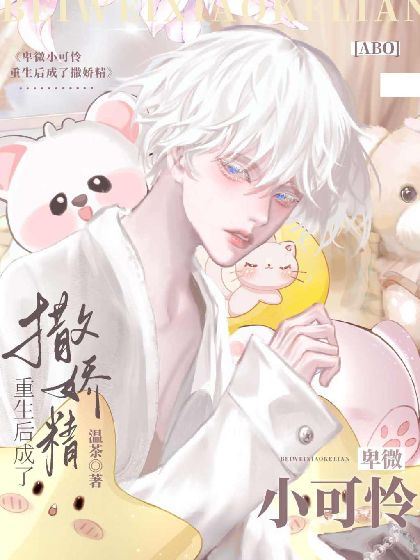
The central symbol of this entire passage is right there in the box: two pheromone orbs that Lu Yinghuai tried to mold into kittens, failed at holding the shape, but still managed to produce something tender and rebellious. I keep thinking about what that represents. Lu Yinghuai is an Alpha whose pheromones naturally take the form of soft, cute cats — and he couldn't even get them to stay that way. They kept reverting to balls. They threw fur everywhere (which, incidentally, is the one thing Jiang Tang isn't allergic to, which is apparently why Lu Yinghuai framed it as a selling point). These are creatures that literally cannot maintain the shape their creator intends for them, yet they're still undeniably adorable and deeply expressive. There's something vulnerable about that. An Alpha — powerful, feared, capable of turning a shopping mall into an ice cellar — crafting little cat toys for his Omega and failing at it. The fact that the cats choose Jiang Tang over him anyway is almost comically honest. The fur they shed is another layer. It's described as 'fine, shiny hairs' and the rebellion happens simultaneously — shaking it off while hissing at Lu Yinghuai. Even in resistance, these creatures are beautiful. Even in rejecting their maker, they're loyal to someone else. And then there's Chen Yuan's father, the 'lifesaver.' The theme of debt and obligation versus genuine care runs through everything here. Lu Yinghuai's family holds power through救命恩人 relationships, but with Jiang Tang, everything is voluntary. He gives gifts. He peels shrimp. He shows up. There's no ledger.
... Read More
I've been thinking about this chapter way too long and the symbolism keeps revealing itself. The yellow flowers breaking through ice — that's not just a pretty image, that's Jiang Tang's entire arc in miniature. He's been surviving in emotional permafrost for what feels like his whole life, and Lu Yinghuai's presence is the warmth that makes something grow again. But here's what really got me: the flowers only appear after the mark is inflicted. The pain comes first. The teeth breaking skin, the pheromones flooding in, the tears — and THEN the life stirs. The author is saying something honest here about how love and healing aren't gentle processes. They're violent in their own way. They break things open. Jiang Tang had to be marked, had to feel that pain, had to let someone else into his body before he could bloom. And the estrus reveal adds another layer — this biological drive that's been lying dormant, amplifying emotions, making him vulnerable and suspicious. His body was trying to tell him something all along. The recurring motif of dreams versus reality is also worth noting. Jiang Tang keeps asking to stay in the dream, not wanting to wake up. But the dream is where he finally gets what he's been starving for. Is the dream better than reality, or is reality about to catch up to the dream? I'm sitting here wondering what the author is really saying about whether people need to be broken open before they can be loved properly.
... Read More
The atmosphere in these chapters is suffocating and I love it. Let me paint the picture for you: a luxurious house that Jiang Tang has barely gotten accustomed to, where Chen Yuan has been secretly practicing being the young master, where the tea leaves are stored in a drawer Yao Yushu knows by heart but Jiang Tang doesn't. This is a house full of people performing roles, and Jiang Tang is the only one who doesn't have a script. The sensory details are so precise. 'A sweet milky aroma wafted into his face' when Yao Yushu enters — immediately establishing him as the preferred Omega, the one whose pheromones Alphas like. The kitchen where Chen Yuan hides, described as 'a place that Lu Yinghuai would never set foot in. It is very safe.' Safe from what? From the chaos of his emotions, maybe. Or just from the reality of a home he doesn't want. The weather mirroring Jiang Tang's inner state is classic but effective — cloudless day, then suddenly dark clouds rolling in, 'foreshadowing a heavy rain.' There's no moon in the dark. The afterglow of sunset disappears. The lighting shifts from warmth to gloom as the confrontation escalates and then collapses into silence. When Lu Bufan arrives, 'the sound of a car engine was heard outside the door, getting closer and closer until it stopped abruptly.' That engine sound is the ticking clock of impending doom. And Uncle Chen sweating while cleaning — 'he just didn't know if the sweat was from exhaustion or fear.' That single detail captures the entire power dynamic of this household in one sentence.
... Read More
This is a masterclass in pacing control. The chapter opens in media res of an emotional reckoning—we're already deep in Lu Yinghuai's memory of a death, the weight of 'sorry,' the trembling hug. Twenty lines in and I'm emotionally compromised. Then: Jiang Tang wakes up. Cut to sunlight, silk shirts, kiss marks, a slow walk downstairs. The tempo drops from heavy meditation to lazy morning movement. The author lets us exhale. The snow revelation happens almost as comic relief—the absurdity of indoor winter in May deflates any remaining tension. What follows is domestic comedy at a brisk pace: panic cooking, bird helpers, burnt eggs, a lesson in appliance operation. The romantic beat returns not with a bang but with a whispered 'Tang Tang is awesome' and a playful hostage situation over a fried egg. The chapter ends on 'send us some Love~' which is either a meta joke or a tonal button that feels earned because we've traveled from grief to laughter in roughly two thousand words. No dragging, no rushed emotional shortcuts. Every transition serves the reader's nervous system.
... Read More
I need to talk about Fang Mu because honestly? I didn't expect to care this much about the cook character but the way this whole side plot was handled was surprisingly layered. Fang Mu asking if he can come cook every day — that's not just about food, right? That's his way of saying thank you without saying thank you. His brother was in the hospital, critically ill, and Lu Yinghuai basically saved the kid. Paid everything, transferred him to a private hospital, gave bonuses on top of that. The scene where Fang Mu is kneeling on the hospital floor crying after the phone call hit differently. Middle of the night, no one else to turn to, and he remembers Lu Yinghuai said he could come to him if he had difficulties. That's the kind of detail that shows how much Lu Yinghuai's random kindnesses actually land on people. Xie Zan and Meng Jue showing up with a medical team that same night — these guys are built different. But what really got me is the contrast between Fang Mu's desperation and Jiang Tang's vulnerability in the same chapter. Two people, completely different situations, both leaning on Lu Yinghuai in their own ways. And Lu Yinghuai handles both with this quiet competence. He doesn't flaunt it, doesn't make it about him. Just... there. That's the kind of Alpha energy that makes me a believer.

Leave a comment

You must be logged in to leave comments. or
