My Husband Has Forgotten Me - Reviews

My Husband Has Forgotten Me
+Add to Custom List
Sort
Add review
... Read More
The stakes in this passage operate on at least four different levels simultaneously, and the author never lets you forget any of them. Level one: Chronosa is literally dying. She ingested a poison that her own body is fighting. She's feverish, weakening, and the text makes it clear this wasn't a calculated medical risk — it was reckless. She admitted it wasn't even a lethal dose, which means she was testing something, not committing suicide. But the danger is real and present. Level two: Anankeus's rut is beginning. He knows it. The text confirms it on the very next page. He's ordering himself away from her because he's afraid of what he might do, which means the conflict isn't just external — it's biological warfare happening inside his own body. Level three: The political stakes. Chronosa reveals she has a fiancé — Beelzebuth — and that he will come for her. She also drops hints about classified military formations and the fate of the previous High Priest Thracia. She's playing a game of information exchange, trading secrets for survival, and every word she speaks brings the war closer to their door. Level four: The deepest conflict, the one neither character has fully acknowledged yet. What does Anankeus owe to his duty versus what he owes to this woman who has repeatedly proven she will die rather than be controlled? When she asks him to pick between pity and contempt, she's really asking him to choose a side — and he hasn't chosen yet. The final image of her gone, the empty bed, the lingering scent... what happens when he finds her missing? The stakes just went from simmering to boiling and I am NOT ready for what comes next.
... Read More
The tension in these chapters is layered in the best possible way. On the surface level, there is the war — Saint Arboas's army is trying to reclaim Achedonia, and they just got wrecked in a battle that was clearly a trap. But the real stakes are inside Anankeus's head, and those are SO much more dangerous. Let me break this down. The military conflict: Beelzebuth has abandoned Achedonia, leaving behind an army of Satyrus to be sacrificed in a war of attrition. The Tersio formation is mentioned — something Chronosa apparently warned him about — and it is designed to turn a field battle into a siege-like advantage. If Saint Arboas charges forward, they walk into a meat grinder. The stakes here are thousands of lives, possibly the entire expedition. But the PERSONAL stakes are what kept me up at night. Anankeus cannot kill her. He has been ordered to, or at least the situation demanded it, and he simply could not do it. Now she has sworn to die before him — which means every battle, every encounter, is loaded with the possibility that she will actually follow through on that promise. He is fighting a war while simultaneously terrified of the moment when the person he cannot bear to kill might actually die. Then there is the Satyrus woman, whose life hangs in the balance. Anankeus gives her a reluctant promise to try to save her husband, but then immediately orders her to be killed when the time comes. He is playing both sides — showing mercy while preparing for execution. The suspense here is suffocating because we know he is a man who will follow through on his orders, even the ones that tear him apart. And the biggest cliffhanger of all: Beelzebuth is GONE. The Grand Duke has already left Achedonia. That means all of this — the battle, the casualties, the strategy — is being orchestrated by someone who is not even on the board. Who is pulling the strings? What is the endgame? The author leaves us hanging there and I am FUMING.
... Read More
The transition from Chronosa's emotional breakdown on that cold labor camp ground straight into Anankeus carving soldiers in half on the battlefield is... aggressive. Like, the author just pivots from one of the most intimate, quiet scenes in the entire novel to 'a body was sliced clean through the waist. Internal organs dropped with a sickening thud.' No warning. No gentle ramp-up. Just BAM, you're in a war scene. And what's wild is that Anankeus doesn't even feel anything about it. 'No particular emotion stirred within him. No unease at taking a life. No thrill.' He just... executes. The narrative voice here shifts completely — from the lingering, melancholic prose of the labor camp to something almost clinical and detached. It's jarring, and I think that's intentional. The book refuses to let you settle into any single emotional register. You're mourning Chronosa one paragraph and then you're processing the casual brutality of war the next. But here's what I appreciate about the pacing: the labor camp sections breathe. They DON'T rush. Winter twilight, the slow march of time, Chronosa sitting still with her knees drawn up — the author lets silence exist on the page. Then when the battle comes, it arrives with the violence of something that's been building since the first chapter. Chapter 54 through 60 feels like the calm before a storm that's about to absolutely level everything. The structure is basically: suffering → quiet hope → shattered hope → war. And we're all just sitting here holding our breaths.
... Read More
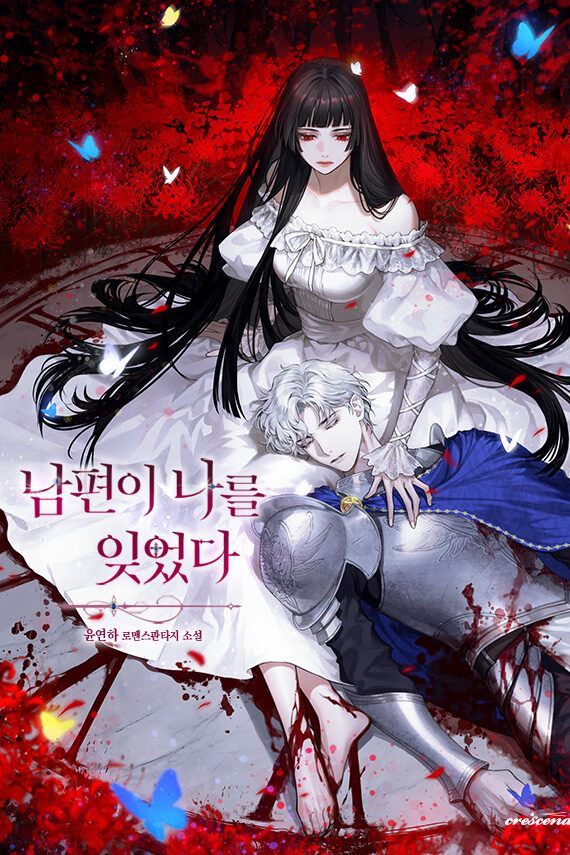
Let me just start by saying: the author's ability to turn an interior space into a psychological landscape is unmatched. This entire sequence takes place in what should be a grim prison cell—a pitch-black room, an iron door, a woman chained and mutilated—and yet it becomes something almost mythological. The first image that hits you: "a mystical blue butterfly fluttered its wings." Right there. In a dungeon. A BLUE BUTTERFLY. This is the visual motif that carries through everything. Blue against black. Delicate against brutal. Life against death. And that butterfly doesn't just appear once—it becomes the book's visual shorthand for Chronosa herself. Fragile, luminous, out of place in this dark world, and ultimately destroyed when Anankeus can't bear to look at it anymore. Then the illusion takes over. Chronosa speaks one word—Desire—and the room transforms: "the pitch-black room was replaced by a sea of crimson spider lilies in full bloom." Spider lilies. The flowers of the underworld in East Asian mythology. Flowers that bloom at the boundary between life and death. THIS is the metaphor the author chose for their encounter. Not roses, not anything romantic—HELL FLOWERS. And they bloom in full, dazzling, terrible beauty across the entire floor of that prison cell. The fact that this is an ILLUSION, projected from Chronosa's mind onto Anankeus's perception, makes it even more powerful. She's weaponizing beauty. She's turning her own desire into a trap made of flowers. And the sensory details throughout are INSANE. The "intoxicating scent" that wraps around them like a haze. The contrast of Anankeus's "callused and hardened from a lifetime on the battlefield" hand against her "unbearably soft" cheek. The sound of a belt being fastened in the silence. The rustle of silk. The winter light streaming through a crack in the window later when she's lying alone, small and still, in that "unlikely sliver of pristine winter light." The author doesn't just describe settings—they describe HOW the setting FEELS on the skin. The feast scene afterward is also remarkable in its grotesque contrast: a cold, untouched banquet meant for soldiers who earned it, placed before a woman who won't eat. Anankeus thinks, "This should've gone to the soldiers who've endured so much. How did such luxury end up before a woman who won't even eat?" The opulence is almost obscene in its uselessness. It highlights how wrong this situation is—war rages outside, men die, and in this room, the only exchange happening is between two broken people who can't decide if they're enemies or something else entirely. Every scene in this passage is constructed like a painting where the foreground is intimacy and the background is violence. You can't separate them. The world itself seems to be holding its breath.
... Read More
Let me just say upfront: the stakes in this batch are NEUROLOGICAL. I mean that literally and figuratively. Every conflict operates on at least two levels, and sometimes three. On the surface level, the stakes are political: Can the Holy Nation take Belphegor? Will Anankeus betray his newfound captive to the Emperor's agenda? The answer to both seems to be heading toward yes, and that's what makes it terrifying. But the real conflict—the one that keeps me up at night—is internal. Chronosa is trapped between two impossibilities: she can't go home (her father ordered her to die), and she can't stay here (the Emperor wants her broken). Her only remaining option is death, but even that has been denied to her. Every method she tries is intercepted. She is, for the first time in her life, completely powerless. Anankeus's conflict is equally devastating but plays out differently. He's a man who has never questioned his purpose. He's loyal to the Emperor, devoted to the Holy Nation, trained from birth to hate demons. And now he's being asked to violate every principle he's ever held—not through force, but through manipulation. The Emperor frames it as trust, as duty, as patriotism. "Treat her kindly. Let her glimpse a world she's never seen." This is gaslighting at the highest level, and Anankeus knows it. He just doesn't know how to refuse without refusing everything. The stakes escalate further when you consider Chronosa's body. She's in her Season of Frenzy—that biological imperative is WAGING WAR inside her while her mind is at peace with death. The Emperor is essentially weaponizing her own biology against her. Every hour she spends in that room, fighting starvation while her body demands warmth and touch and... something... is an hour of compounded torture. And then there's Talata, who stands to lose everything. Her father is dying or dead, her sister is a prisoner who wants to die, and she's the only one left standing in the Emperor's court. The military defeat at Gulgalta has shattered her identity, and the only role she has left is "the daughter who plays the fool." What happens when the fool stops performing? The suspense here isn't about whether Anankeus will comply—it's about how much of himself he'll lose in the process. And whether Chronosa will find a reason to live that doesn't involve waiting for him to break.
... Read More
I'm still processing the hunger strike scene. Like—Chronosa tried to slit her wrist with a meal knife, hung herself with a scarf, and drowned herself in winter. THREE ATTEMPTS. And Anankeus just... watches this report and clicks his tongue like it's mildly annoying? That's not coldness. That's someone who doesn't know how to respond to despair that mirrors his own. The moment that got me the hardest was when he forces water down her throat. She's so weak she can't resist, and half of it spills out. And then she coughs like she just survived a battle. But the real battle was happening inside her—starving herself to death because living felt worse. And Anankeus, this warrior who has never known defeat, is helpless against a woman who refuses to eat. "Are you planning to starve to death like this?" he asks. Not with pity. Not with anger. Just... confusion? Like he genuinely doesn't understand why someone would choose death over captivity. And that's heartbreaking, because it means he's never had a reason to choose anything but obedience. Her reaction when he finally addresses her—lifting her head, meeting his gaze through tears—there's something so tender about that moment. Even in ruins, even broken, she looks at him. And he sees it: "Her teary gaze, ragged with suppressed sobs, was beautiful. Even her sorrowful eyes seemed to emit that unbearable scent." The scent keeps coming back, by the way. It's described as seductive, maddening, unbearable. But is it really about attraction? Or is it the smell of desperation, of a body fighting its own biology—the Season of Frenzy raging inside her while her mind is determined to die? The text blurs the line between desire and suffering so deliberately that I couldn't tell if Anankeus is repulsed, aroused, or just overwhelmed. What stays with me most is the final exchange. She signs: "The negotiations have failed. The Great Lord has abandoned me. Is that not the end of the story? What more do you need?" This woman has been betrayed by her father, broken by war, stripped of her voice and her mobility, and she still thinks logically. She's calculating her worth and finding it zero. And Anankeus—Anankeus clenches his fist. Not because he's angry. Because he feels something he can't name. I need to know if he becomes the person she needs, or the person the Emperor wants him to be. Because right now, those two roles are in direct conflict, and I'm invested in watching which one wins.
... Read More
The stakes in this section are MULTILAYERED and absolutely suffocating. On the surface: Chronosa is a prisoner who just proved she can touch a holy sword that should have killed her. The Holy One wants her dead or compliant. The demons want their princess back. Saint Arboas wants a prophet. But the REAL stakes are underneath. Chronosa stands between two definitions of herself — the weapon her father forged, the 'monster moulded by the horrors of war' that Anankeus sees her as, and this third option she creates by choosing her own death. 'My body may be bound by you, but my life—my death—is mine to choose.' She's not just defying the Holy One. She's defying her father's command, defying destiny, defying the entire narrative that her worth is determined by what others need her to be. And Anankeus? His conflict is quieter but maybe more painful. He's carried her, protected her, felt this unnamed surge in his chest that he can't label. And he can't stop her from walking into the temple. He can't stop her from choosing death. He sits there, legs crossed, watching her bleed out, and then she wakes up and he's still there. What does that mean for both of them? The political stakes are escalating too — the mention of Arcadia Ishtar, the captured high priests serving as slaves, the looming war between nations. Every personal choice these characters make has geopolitical consequences. Chronosa's death-or-life decision isn't just personal rebellion; it's a detonation that will reshape everything. I'm terrified of what happens next and I can't stop reading.
... Read More
Can we just appreciate how Beroi speaks? 'My lady, you're cold, aren't you?' 'Oh, you know I've never been sensitive to the cold. But you always were, weren't you...' That's it. That's the whole exchange. Two sentences between nanny and mistress and you get an entire history of their relationship. Beroi notices everything. She strips off her own outer garment without hesitation, covers Chronosa, and when the overseer yells at her she just... drops everything and gets back to work. No drama, no performative loyalty. Just action. And later, when someone points out that Chronosa has a fever, Beroi's response is just 'She's in the Pleasure Era.' Short. Heavy. She doesn't elaborate because she doesn't need to — the other woman understands immediately. That's good dialogue. That's characters who share context and history and don't need to explain themselves to the reader. Even the Sard woman's dialogue carries so much weight with so few words: 'One day... do you think we'll be able to return to Arcadia?' That trailing off, that tentative hope — it's devastating because it's so small. She's not asking for revolution or freedom. She's asking if she can go HOME. And the narration answering with silence is the most powerful response imaginable. Talata's voice is another animal entirely — all threat and grotesque grins, 'It all depends on what you do. You know that, right?' — but it's Beroi's quiet competence and restrained love that I find myself returning to. The author knows exactly when to let dialogue carry emotion and when to let silence do the talking. That's craft.
... Read More
Holy. This opening hit me like a freight train. One moment it's Gulgaltha — villagers dancing, celebrating the season of revelry, all warm and bright — and the next, the Holy Kingdom's army shows up and absolutely torches the place. The contrast between the festive scene and the brutal invasion is *chef's kiss*. The author doesn't just tell us people died; we get the sensory details — the 'crackling sound of burning corpses,' the 'overwhelming stench of g*re' — and it made me physically uncomfortable in the best way. Then there's this tiny butterfly fluttering toward the flames and landing on Chronosa's shoulder. A living creature drawn to death in a world gone mad. I immediately knew this story wasn't going to be light fare. The plot moves at breakneck speed from there. Baal's sacrifice, the flight through the forest, the capture — it all happens in what feels like two breaths. But here's what I loved: Chronosa isn't just a passive victim. When she throws herself in front of the blade to save the demon prisoners, that's when I sat up straight. She's reading Talata, calculating that the High Priestess won't risk killing a hostage who's more valuable alive. That's not naivety — that's cold strategic thinking from someone who's been through hell and came out the other side. And then the father's response. "Die with honor, Protogenoi Chronosa." I have never wanted to throw a book at a wall harder than I did right then. The Grand Duke would rather let his daughter die than negotiate? The plot is already twisting every expectation I had, and I'm completely hooked.
... Read More
Let's just sit with this for a moment. Chronosa saves the prisoners at Gulgalta. She actively throws herself in danger, risks everything. And her own father's response is to tell her to DIE rather than let her be rescued. Not 'we'll figure something out' — not even 'I love you, stay safe.' Just a cold, sovereign, military calculation: one life versus an entire citizenry. She should have been dead. But the Sea God's High Priestess couldn't kill her, so now she's a slave in enemy territory with a fever that's going to get worse. Meanwhile back in Arcadia, the Grand Duke sits on his throne having made the most logical decision imaginable and the most unforgivable one possible. This is the kind of plot twist that recontextualizes EVERYTHING. Every warm memory of father-daughter moments you might have had about Chronosa? Gone. Replaced by this hollow smile she gave when receiving the death order. But here's what keeps me up at night — the narrator keeps telling us what Beroi and Chronosa know privately about that command. Something underneath the literal words. The author is planting seeds here. I'm not saying anything specific but... something is being hinted at that neither the other prisoners nor we readers fully understand yet. And Chronosa's internal monologue about the enemy who keeps saving her life while her own father wants her dead? That's not just emotional flavor. That contrast is structural. The narrative is setting up a collision between duty and desire, between the man who won't let her die and the father who ordered it. When these two lines of conflict meet, it's going to be catastrophic. In the best way possible.
... Read More
I need to talk about Ishtar. JUST ONE NAME and Chronosa's entire body reacts. The Holy One mentions her casually, like she's some historical footnote, and Chronosa—who hasn't shown emotion in over ten days since Anankeus started caring for her—SNAPS upright. Her cracked lips move on their own. 'You... know my mother?' The text says it was 'the first time the woman, who had remained as silent and still as the deep sea, had displayed such a sharp reaction.' But compare that to how she receives the news: she doesn't cry, she doesn't scream. She just... stops. A quiet ripple in an ocean of grief. And the Holy One, this manipulative old man, he reads her like a book. He knows exactly what button to press. Ishtar died on the battlefield twenty years ago when Chronosa was three. Three years old and giggling at the messenger because she didn't understand death. The narrator describes her mind as 'white parchment' at that moment. And now Chronosa is about to follow the same path — her father telling her to 'die with honor,' the same words that shaped both their fates. The parallel is crushing. Chronosa choosing to bite down and bleed out rather than serve as anyone's instrument? That's not despair. That's her mother's legacy talking. She'd rather die on her own terms than be another pawn. And when she smiled radiantly while dying, while blood stained everything white around her — that wasn't defeat. That was the most defiant, beautiful act of love I've ever read. Love for herself, for her own autonomy, for the mother she barely remembered but whose blood runs in her veins.
... Read More
The pacing in these chapters is MASTERFUL and I need to dissect it. We open with the courtyard — raw, visceral, brutal. Bloodied priests moaning with tears of blood, a winter wind carrying the scent of sorrow. The reader is STILL REELING from that intensity when suddenly — warm air, orange glow, tea, snacks. The Holy One smiles gently and invites Chronosa to sit. It feels almost cozy. AND THAT'S WHEN YOU KNOW SOMETHING TERRIBLE IS COMING. The author lets the calm stretch. We get worldbuilding through dialogue — Ishtar's history, the thirteen holy swords, the political dynamics between Belphegor and Saint Arboas. It's information-heavy but never drags because every detail is laced with menace. The Holy One's gentle voice, his patting Talata's shoulder, the way he 'absently strokes his beard' — it's all domestic until it isn't. Then the sword scene. THE SWIFT TRANSITION from warmth to terror. One moment he's offering her tea, the next he's holding out a sheathed sword and the atmosphere SHATTERS. 'The moment she did so, the Holy One's smile vanished. A heavy silence instantly engulfed the temple.' That's a paragraph-level pivot that changes everything. And then Chronosa's death — it comes in waves. She speaks philosophy, Talata gets angry, slams the table, and Chronosa is already bleeding. The pace ACCELERATES from there. Crimson clot, collapsed body, the radiant smile, the last words echoing silently. Then: blackness. Then eyelids trembling. Then crimson eyes opening to Anankeus's face. The cliffhanger lands perfectly because we just spent three pages mourning her and now she's ALIVE. My heart can't take this author.

Leave a comment

You must be logged in to leave comments. or
