My Husband Has Forgotten Me
+Add to Custom List
Genres:
Novel Info
  • Author:
  • Status:Ongoing

Summary

... Read More

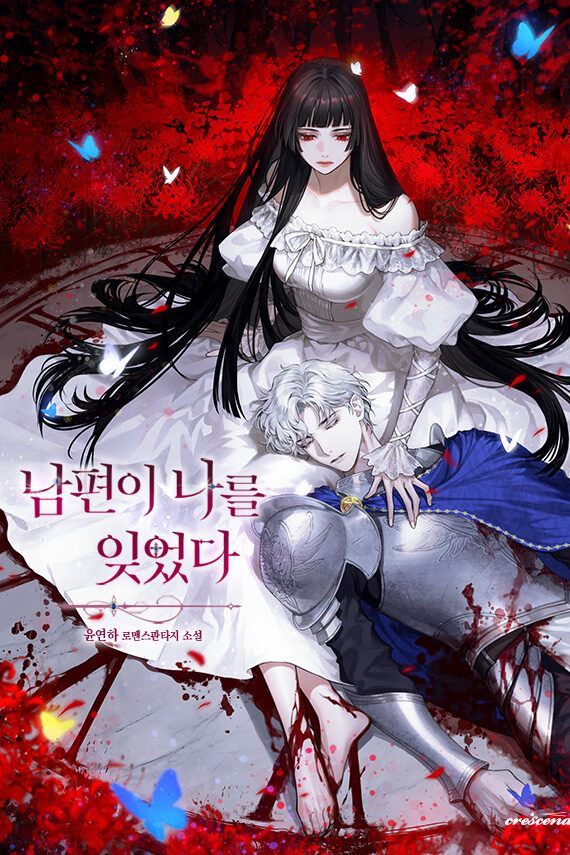
Chronosa is the sole princess of Belphegor, the most formidable fortress in the Demon Realm of Arcadia. During the Season of Revelry in the border town of Gulgaltha, her sanctuary is shattered by a sudden invasion from the Holy Nation of Arboas. Her knight, Baal, sacrifices his life to buy her time as the town burns. Chronosa attempts to flee with her nanny, Beroe, but they are intercepted by Anankeus, a High Priest of the Holy Nation, and his sister, Talata. Anankeus recognizes Chronosa through her physical traits and royal attire, identifying her as the Grand Duke's daughter. Despite Beroe's desperate pleas, the Holy soldiers capture Chronosa, who has been physically mutilated with severed vocal cords and Achilles tendons, rendering her mute and unable to walk properly.

Talata brings the captured princess before the walls of Belphegor, demanding the Grand Duke's surrender. The Grand Duke, an undefeated war hero, coldly orders Chronosa to die with honor rather than compromise the safety of his people. Heartbroken yet resolute, Chronosa attempts to take her own life by seizing Talata's holy sword, but Anankeus intervenes, stopping her suicide. He recognizes that her will to live, despite her father's abandonment, makes her a valuable political asset. Anankeus forcibly removes Chronosa from the battlefield, taking her prisoner to the Holy Nation's capital, Zion. The Holy Emperor, Perihelion, rewards Anankeus for his service by granting Chronosa to him as a slave, specifically during her Season of Frenzy, intending for Anankeus to break her spirit and extract information about Belphegor's secrets.

In Zion, Chronosa refuses to submit to her captors. She engages in a prolonged hunger strike and makes multiple suicide attempts, including starvation, hanging, and drowning. Anankeus, tasked with keeping her alive to extract intelligence, force-feeds her water and later food that he has chewed beforehand, a humiliating act designed to crush her dignity. Chronosa remains defiant, communicating through lip-reading and internal monologue. She reveals that her mutilations were inflicted by her own father to protect state secrets, implying she was kept as a living vessel of information rather than a cherished daughter. Despite the physical agony of her rut and the psychological torment, she maintains her loyalty to the Demon Realm.

The dynamic shifts when Chronosa is brought before the Holy Emperor. She speaks of her mother, Ishtar, a legendary general who died in war, and displays a deep knowledge of the Holy Nation's history and politics. When presented with a holy sword, a relic that chooses its own master, Chronosa accepts it without rejection, shocking the Emperor and his priests. This anomaly suggests she may possess a divine connection or legitimacy that complicates her status as a mere prisoner. However, the confrontation takes a violent turn when Chronosa, enraged by the religious insults and the hypocrisy of her captors, attacks Talata. In the ensuing struggle, Chronosa is fatally wounded, dying with a serene smile, having rejected the dominion of her enemies over her life and death.

Chronosa's body lies still as Anankeus watches, his usual composure fractured by the events. The Holy Nation has lost its hostage, and the secrets of Belphegor remain buried. The encounter has exposed the deep ideological and biological chasm between the two races, as well as the personal costs of a thousand-year war. Anankeus is left grappling with the aftermath of Chronosa's defiance, while the political landscape of both the Holy Nation and the Demon Realm faces uncertainty. The death of the princess marks a turning point, potentially escalating the conflict and altering the fates of those who survived the encounter, particularly Anankeus, whose loyalty and emotions have been tested beyond their limits.

Latest Release
DateGroupRelease
2026-10-03dusk blossoms c97
2026-10-03dusk blossoms c96
2026-10-03dusk blossoms c95
2026-10-03dusk blossoms c94
2026-10-03dusk blossoms c93
2026-10-03dusk blossoms c92
2026-10-03dusk blossoms c91
2026-10-03dusk blossoms c90
2026-10-03dusk blossoms c89
2026-10-03dusk blossoms c88
2026-10-03dusk blossoms c87
2026-10-03dusk blossoms c86

Community Reviews

Rating(0 / 5.0, 40votes)
5 stars
0(0%)
4 stars
0(0%)
3 stars
0(0%)
2 stars
0(0%)
1 stars
0(0%)

Popular reviews

... Read More
The stakes in this passage operate on at least four different levels simultaneously, and the author never lets you forget any of them. Level one: Chronosa is literally dying. She ingested a poison that her own body is fighting. She's feverish, weakening, and the text makes it clear this wasn't a calculated medical risk — it was reckless. She admitted it wasn't even a lethal dose, which means she was testing something, not committing suicide. But the danger is real and present. Level two: Anankeus's rut is beginning. He knows it. The text confirms it on the very next page. He's ordering himself away from her because he's afraid of what he might do, which means the conflict isn't just external — it's biological warfare happening inside his own body. Level three: The political stakes. Chronosa reveals she has a fiancé — Beelzebuth — and that he will come for her. She also drops hints about classified military formations and the fate of the previous High Priest Thracia. She's playing a game of information exchange, trading secrets for survival, and every word she speaks brings the war closer to their door. Level four: The deepest conflict, the one neither character has fully acknowledged yet. What does Anankeus owe to his duty versus what he owes to this woman who has repeatedly proven she will die rather than be controlled? When she asks him to pick between pity and contempt, she's really asking him to choose a side — and he hasn't chosen yet. The final image of her gone, the empty bed, the lingering scent... what happens when he finds her missing? The stakes just went from simmering to boiling and I am NOT ready for what comes next.
... Read More
The tension in these chapters is layered in the best possible way. On the surface level, there is the war — Saint Arboas's army is trying to reclaim Achedonia, and they just got wrecked in a battle that was clearly a trap. But the real stakes are inside Anankeus's head, and those are SO much more dangerous. Let me break this down. The military conflict: Beelzebuth has abandoned Achedonia, leaving behind an army of Satyrus to be sacrificed in a war of attrition. The Tersio formation is mentioned — something Chronosa apparently warned him about — and it is designed to turn a field battle into a siege-like advantage. If Saint Arboas charges forward, they walk into a meat grinder. The stakes here are thousands of lives, possibly the entire expedition. But the PERSONAL stakes are what kept me up at night. Anankeus cannot kill her. He has been ordered to, or at least the situation demanded it, and he simply could not do it. Now she has sworn to die before him — which means every battle, every encounter, is loaded with the possibility that she will actually follow through on that promise. He is fighting a war while simultaneously terrified of the moment when the person he cannot bear to kill might actually die. Then there is the Satyrus woman, whose life hangs in the balance. Anankeus gives her a reluctant promise to try to save her husband, but then immediately orders her to be killed when the time comes. He is playing both sides — showing mercy while preparing for execution. The suspense here is suffocating because we know he is a man who will follow through on his orders, even the ones that tear him apart. And the biggest cliffhanger of all: Beelzebuth is GONE. The Grand Duke has already left Achedonia. That means all of this — the battle, the casualties, the strategy — is being orchestrated by someone who is not even on the board. Who is pulling the strings? What is the endgame? The author leaves us hanging there and I am FUMING.
... Read More
The transition from Chronosa's emotional breakdown on that cold labor camp ground straight into Anankeus carving soldiers in half on the battlefield is... aggressive. Like, the author just pivots from one of the most intimate, quiet scenes in the entire novel to 'a body was sliced clean through the waist. Internal organs dropped with a sickening thud.' No warning. No gentle ramp-up. Just BAM, you're in a war scene. And what's wild is that Anankeus doesn't even feel anything about it. 'No particular emotion stirred within him. No unease at taking a life. No thrill.' He just... executes. The narrative voice here shifts completely — from the lingering, melancholic prose of the labor camp to something almost clinical and detached. It's jarring, and I think that's intentional. The book refuses to let you settle into any single emotional register. You're mourning Chronosa one paragraph and then you're processing the casual brutality of war the next. But here's what I appreciate about the pacing: the labor camp sections breathe. They DON'T rush. Winter twilight, the slow march of time, Chronosa sitting still with her knees drawn up — the author lets silence exist on the page. Then when the battle comes, it arrives with the violence of something that's been building since the first chapter. Chapter 54 through 60 feels like the calm before a storm that's about to absolutely level everything. The structure is basically: suffering → quiet hope → shattered hope → war. And we're all just sitting here holding our breaths.
... Read More
Let me just start by saying: the author's ability to turn an interior space into a psychological landscape is unmatched. This entire sequence takes place in what should be a grim prison cell—a pitch-black room, an iron door, a woman chained and mutilated—and yet it becomes something almost mythological. The first image that hits you: "a mystical blue butterfly fluttered its wings." Right there. In a dungeon. A BLUE BUTTERFLY. This is the visual motif that carries through everything. Blue against black. Delicate against brutal. Life against death. And that butterfly doesn't just appear once—it becomes the book's visual shorthand for Chronosa herself. Fragile, luminous, out of place in this dark world, and ultimately destroyed when Anankeus can't bear to look at it anymore. Then the illusion takes over. Chronosa speaks one word—Desire—and the room transforms: "the pitch-black room was replaced by a sea of crimson spider lilies in full bloom." Spider lilies. The flowers of the underworld in East Asian mythology. Flowers that bloom at the boundary between life and death. THIS is the metaphor the author chose for their encounter. Not roses, not anything romantic—HELL FLOWERS. And they bloom in full, dazzling, terrible beauty across the entire floor of that prison cell. The fact that this is an ILLUSION, projected from Chronosa's mind onto Anankeus's perception, makes it even more powerful. She's weaponizing beauty. She's turning her own desire into a trap made of flowers. And the sensory details throughout are INSANE. The "intoxicating scent" that wraps around them like a haze. The contrast of Anankeus's "callused and hardened from a lifetime on the battlefield" hand against her "unbearably soft" cheek. The sound of a belt being fastened in the silence. The rustle of silk. The winter light streaming through a crack in the window later when she's lying alone, small and still, in that "unlikely sliver of pristine winter light." The author doesn't just describe settings—they describe HOW the setting FEELS on the skin. The feast scene afterward is also remarkable in its grotesque contrast: a cold, untouched banquet meant for soldiers who earned it, placed before a woman who won't eat. Anankeus thinks, "This should've gone to the soldiers who've endured so much. How did such luxury end up before a woman who won't even eat?" The opulence is almost obscene in its uselessness. It highlights how wrong this situation is—war rages outside, men die, and in this room, the only exchange happening is between two broken people who can't decide if they're enemies or something else entirely. Every scene in this passage is constructed like a painting where the foreground is intimacy and the background is violence. You can't separate them. The world itself seems to be holding its breath.
... Read More
Let me just say upfront: the stakes in this batch are NEUROLOGICAL. I mean that literally and figuratively. Every conflict operates on at least two levels, and sometimes three. On the surface level, the stakes are political: Can the Holy Nation take Belphegor? Will Anankeus betray his newfound captive to the Emperor's agenda? The answer to both seems to be heading toward yes, and that's what makes it terrifying. But the real conflict—the one that keeps me up at night—is internal. Chronosa is trapped between two impossibilities: she can't go home (her father ordered her to die), and she can't stay here (the Emperor wants her broken). Her only remaining option is death, but even that has been denied to her. Every method she tries is intercepted. She is, for the first time in her life, completely powerless. Anankeus's conflict is equally devastating but plays out differently. He's a man who has never questioned his purpose. He's loyal to the Emperor, devoted to the Holy Nation, trained from birth to hate demons. And now he's being asked to violate every principle he's ever held—not through force, but through manipulation. The Emperor frames it as trust, as duty, as patriotism. "Treat her kindly. Let her glimpse a world she's never seen." This is gaslighting at the highest level, and Anankeus knows it. He just doesn't know how to refuse without refusing everything. The stakes escalate further when you consider Chronosa's body. She's in her Season of Frenzy—that biological imperative is WAGING WAR inside her while her mind is at peace with death. The Emperor is essentially weaponizing her own biology against her. Every hour she spends in that room, fighting starvation while her body demands warmth and touch and... something... is an hour of compounded torture. And then there's Talata, who stands to lose everything. Her father is dying or dead, her sister is a prisoner who wants to die, and she's the only one left standing in the Emperor's court. The military defeat at Gulgalta has shattered her identity, and the only role she has left is "the daughter who plays the fool." What happens when the fool stops performing? The suspense here isn't about whether Anankeus will comply—it's about how much of himself he'll lose in the process. And whether Chronosa will find a reason to live that doesn't involve waiting for him to break.
... Read More
I'm still processing the hunger strike scene. Like—Chronosa tried to slit her wrist with a meal knife, hung herself with a scarf, and drowned herself in winter. THREE ATTEMPTS. And Anankeus just... watches this report and clicks his tongue like it's mildly annoying? That's not coldness. That's someone who doesn't know how to respond to despair that mirrors his own. The moment that got me the hardest was when he forces water down her throat. She's so weak she can't resist, and half of it spills out. And then she coughs like she just survived a battle. But the real battle was happening inside her—starving herself to death because living felt worse. And Anankeus, this warrior who has never known defeat, is helpless against a woman who refuses to eat. "Are you planning to starve to death like this?" he asks. Not with pity. Not with anger. Just... confusion? Like he genuinely doesn't understand why someone would choose death over captivity. And that's heartbreaking, because it means he's never had a reason to choose anything but obedience. Her reaction when he finally addresses her—lifting her head, meeting his gaze through tears—there's something so tender about that moment. Even in ruins, even broken, she looks at him. And he sees it: "Her teary gaze, ragged with suppressed sobs, was beautiful. Even her sorrowful eyes seemed to emit that unbearable scent." The scent keeps coming back, by the way. It's described as seductive, maddening, unbearable. But is it really about attraction? Or is it the smell of desperation, of a body fighting its own biology—the Season of Frenzy raging inside her while her mind is determined to die? The text blurs the line between desire and suffering so deliberately that I couldn't tell if Anankeus is repulsed, aroused, or just overwhelmed. What stays with me most is the final exchange. She signs: "The negotiations have failed. The Great Lord has abandoned me. Is that not the end of the story? What more do you need?" This woman has been betrayed by her father, broken by war, stripped of her voice and her mobility, and she still thinks logically. She's calculating her worth and finding it zero. And Anankeus—Anankeus clenches his fist. Not because he's angry. Because he feels something he can't name. I need to know if he becomes the person she needs, or the person the Emperor wants him to be. Because right now, those two roles are in direct conflict, and I'm invested in watching which one wins.
See all reviews

Custom lists

See all custom Lists