My Husband Has Forgotten Me - Reviews

My Husband Has Forgotten Me
+Add to Custom List
Sort
Add review
... Read More
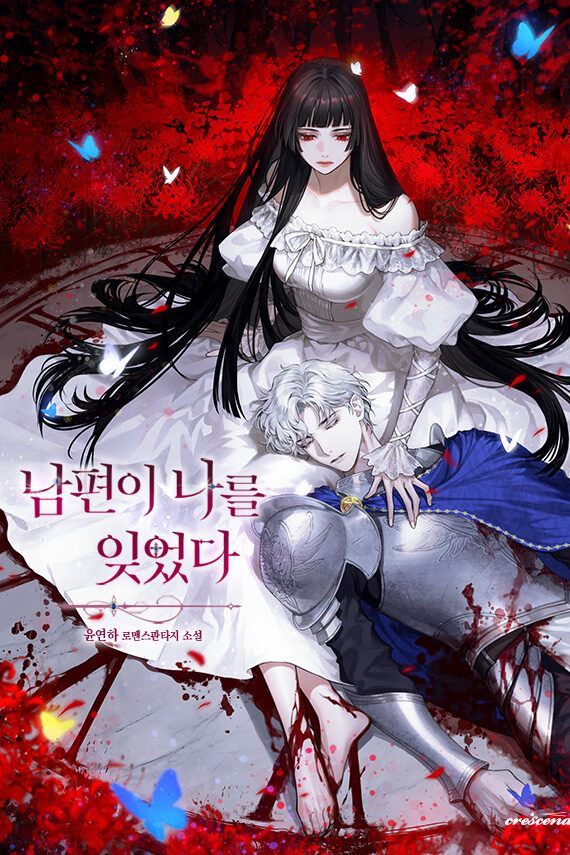
Let's talk about the central question of this entire arc, because it's not just a romance scene—it's a philosophical minefield disguised as heat. Chronosa keeps repeating this word: betrayal. Betray her country, betray her people, betray herself. But Anankeus reframes everything when he says "this is nothing more than the heat of rut—an overwhelming sexual desire brought on by it." He's essentially arguing that giving in to biological instinct isn't a moral failure. It's natural. It's animal. It's the same logic the Holy Nation uses to justify their own practices. But here's where it gets dark—and I mean genuinely disturbing in the best way—the text keeps flipping this argument. Is it really just instinct? Or is Anankeus giving her this justification so he can have what he wants without guilt? The narration itself wavers. It says "perhaps it began the moment their eyes first met in Gulgalta" and "he had liked those eyes"—so was it always there, this wanting? Or did the rut unlock something that was already rotting beneath the surface? The "tainted grail" metaphor is the key image here. Chronosa offers herself like a corrupted chalice, and Anankeus drinks without hesitation. A grail is sacred. A tainted grail is sacred knowledge that has been defiled. Their union isn't just physical—it's sacrilegious in the context of their war. The book keeps asking: at what point does survival become complicity? When does instinct override loyalty? And the most terrifying question of all—does it even matter if the reason is real or manufactured, as long as she wants it in that moment? The blue butterfly is also symbolic, obviously. It flies toward danger it doesn't understand. It beats its wings against a railing it can't cross. It's Chronosa. Or maybe it's fate itself, blind and beautiful and leading them both toward something they can't undo.
... Read More
There's a scene — actually several scenes — where the sensory details are so thick you could cut them with a knife. Let me start with the first time we really get inside Chronosa's feverish state: "That detached eyes that observed the world without interest, that feverish body, that scent — so sweet it could dull the senses. It slowly drove one mad." The word "dull" here is doing heavy lifting. It's not just describing attraction; it's describing a systematic erosion of judgment, of reason, of everything Anankeus has built his identity on. And then the metaphor that follows: "The thing that drives him mad could vanish at any moment, like grains of sand slipping through his grasp. It feels as if it might vanish without a trace, like the dew at dawn, fleeing towards death without a hint of regret." This is written like poetry. The comparison of her to dew — beautiful, ephemeral, disappearing without regret — it reframes everything about her character. She doesn't fear death. She doesn't fear him. She is literally slipping away and he can't hold onto her, and that terror is palpable. Then there's the room itself. The blue-winged butterfly that appears near her. The cold winter breeze that makes the fallen book pages flutter. The hollow thud of his fist on the bed. Every scene has this almost cinematic quality where the environment reacts to the emotional temperature of the moment. Even the absence of her in the final scene — the empty bed, the lingering scent — carries more weight than most authors achieve with pages of description.
... Read More
The image of blue butterflies scattering when Anankeus enters that room—where's that from, and why does it matter? I keep thinking about it. Butterflies are traditionally symbols of transformation, of the soul, of fragility. But these butterflies are blue, which in this context feels deliberate. Blue is cold. Blue is distant. Blue is the color of something beautiful that shouldn't exist in a place this barren. And then there's the holy sword itself. The fact that it chose Chronosa—a demon—as its master, and rejected Anankeus, a holy warrior, is loaded with meaning. The sword represents legitimacy, divine right, the idea that power belongs to those who are truly worthy, not those who are merely born to it. Chronosa may be a demon, but she is the daughter of Belphegor, and the sword recognizes her bloodline in a way it never recognized Anankeus's faith. The Season of Frenzy is another symbol I can't stop turning over. On the surface, it's a biological mechanism—an animalistic cycle that demands release. But the text keeps framing it as something more: a time when "females search for males to cool their burning heat." The word "search" is doing heavy lifting here. It's not just instinct; it's a hunt. And the Emperor is assigning Anankeus the role of prey AND predator simultaneously. The barren room—completely empty, no furniture, no decoration—is the ultimate symbol of Chronosa's situation. She has been reduced to nothing. No voice, no mobility, no food, no water (until Anankeus forces it). The emptiness of the room mirrors the emptiness she feels. And yet, the fact that she survives there at all—refusing to eat, refusing to live, but still breathing—is also a kind of triumph. The room cannot claim her because she won't give it the satisfaction. The repeated imagery of blood is striking too. Blood-stained sword. Droplets of blood. Blood-soaked hair. Blood on the edge of the blade that won't wipe clean. Blood is life, but it's also violence, sacrifice, and inheritance. Chronosa bled trying to kill herself. Anankeus bled trying to stop her. The Emperor's plans are soaked in the blood of a thousand years of war. And Talata's hair—"blood-soaked pink hair scattered unnaturally in the wind"—pink is such a violent color against the imagery of blood. It's like the text is saying: this girl is stained by violence she didn't choose, and it's changed her fundamentally, even if no one else can see it.
... Read More
Okay so let me just start by saying I absolutely did NOT see this coming the first time I read it. I had just finished a whole chapter of this simmering cold war between Anankeus and Chronosa and then—BAM—the blue butterfly shows up AGAIN and leads him to her like some kind of tragic omen? The pacing here is masterful. The author builds this massive wall of distance between them, you know? Every time he almost reaches out, she pushes back. And then the rut hits her ALL at once and watch how quickly the plot pivots—she goes from standing on that railing ready to fall to literally begging him not to abandon her. The way the chapter shifts from cold, snowy isolation to this heated, desperate surrender is chef's kiss. What really got me though was the moment she says "I don't want you" while simultaneously NOT pushing his hand away. That contradiction is EVERYTHING. She's fighting herself so hard, trying to hold onto her identity even as her body betrays her, and the scene pivots so naturally from hostility to intimacy that I literally gasped out loud. And then AFTER all that emotional devastation, she ends up falling asleep in his arms and he's this gentle stranger touching her hair like she's something precious? The subversion of the "enemies to lovers" arc in just these few chapters is insane. Who let this author write like this? Also can we talk about how the Holy Sovereign keeps lurking in the background like a shadow? The moment where Chronosa thinks "Solon is watching you. You'd best give up" — that's an external threat that doesn't go away even during this vulnerable scene. The plot never lets us relax.

Leave a comment

You must be logged in to leave comments. or
