Improper Relationship - Reviews

Improper Relationship
+Add to Custom List
Sort
Add review
... Read More
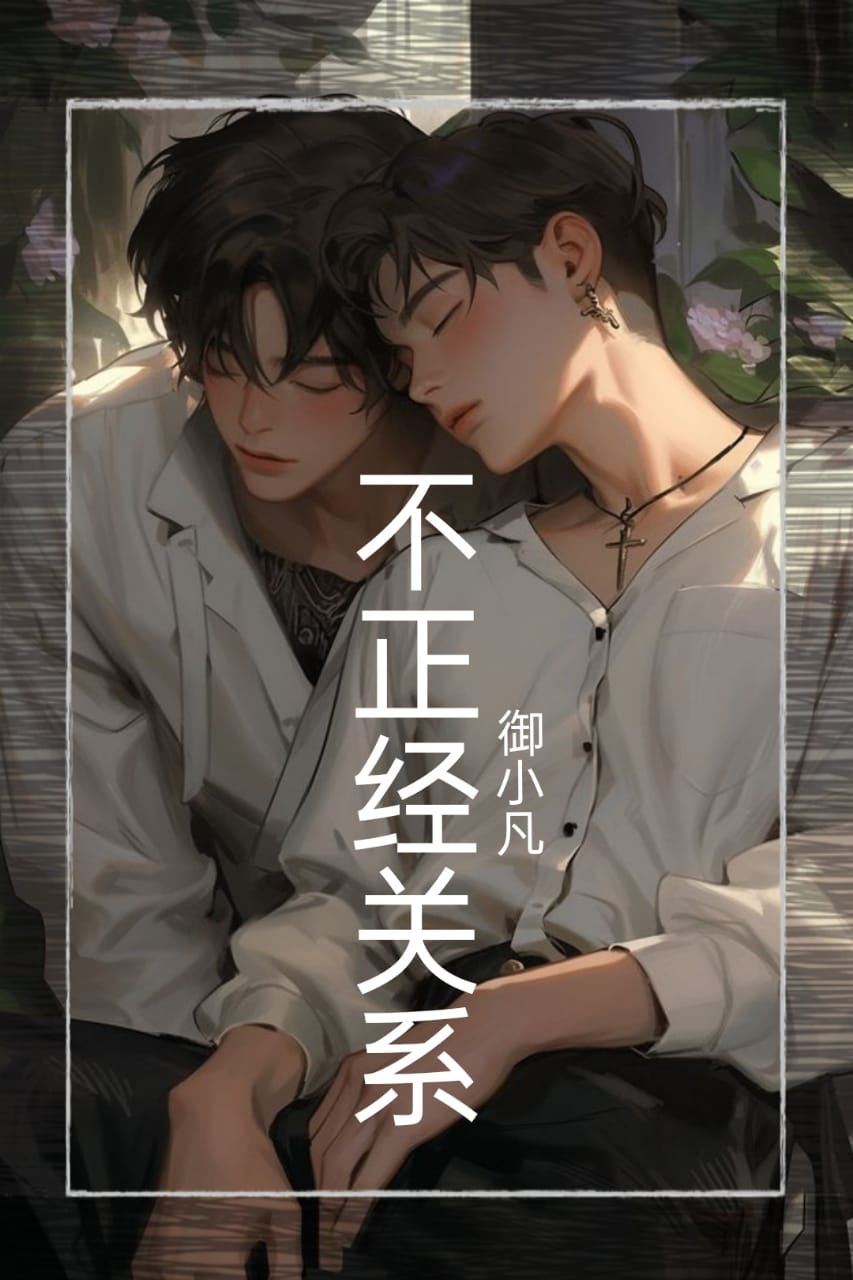
"The abrupt black spot among the splendid colours, with the self-knowledge of being out of place, gradually fades away in different scenes. The distorted sense of loneliness that almost tore out of the canvas, but it has to be smeared with the colours next to it. It was blurred, pretending to be nonexistent." I need to sit with this description for a minute. Yan Hai'an's paintings — they're literally about him. That black spot is HIM pretending he's fine, that it doesn't hurt, that he's blending in when really he's the most visible thing on the canvas. The loneliness is SO CLOSE to tearing through the paint but he's actively smearing it into the background colors, making it look like it belongs when it doesn't. And then Sun Yan notices it. Sun Yan, who "still doesn't understand you people who are engaged in art," somehow understands THIS painting. Maybe because he recognizes the same kind of hiding in himself. The cigarette scene right after — two men sharing smoke on a terrace, both pretending they don't care, both deeply caring — it mirrors the painting perfectly. The warmth and the aching loneliness existing side by side. Mo Yisheng's painting called "Triumph" after "Sunset" — can we talk about the symbolism HERE? Sunset means ending, Triumph means victory, but at what cost? And the title of the whole novel is "Improper Relationship" — nothing about these characters is proper, nothing is simple, and yet the emotions are so devastatingly pure.
... Read More
The structural violence of this chapter is no accident—it's deliberate, and it works. We open mid-scene, practically in media res, with Yan Hai'an half-asleep and reaching for Sun Yan. No setup, no context. You're thrown directly into the intimacy. Then the author gives us that little translator/asides box with Sun Ling and Sun Yan's internal commentary—'I haven't fucked him yet. I only reserved him first, okay?'—which is basically the narrative winking at you and saying 'yeah, things are about to go WRONG.' The transition from bed to restaurant is handled with just three asterisks. That's it. Three stars and we're across town. This is such a smart pacing choice because it mirrors how Sun Yan's mind works—he's racing ahead, leaping from one emotional state to another without processing, and the jump-cut structure replicates that velocity. Then the actual conversation unfolds in this brilliant rhythm: tension → release → tension → release. Sun Yan holds his hand (tension). Yan Hai'an tells him to sit (release). They order food (false release). Yan Hai'an drops the 'only physical needs' bomb (MASSIVE tension spike). Sun Yan coughs tea everywhere (comic relief/compression). Sun Yan pivots to proposing a formal arrangement (unexpected release that's actually MORE tension). Yan Hai'an counters with health guidelines and exit clauses (the coldest possible ending to an emotional scene). And the chapter ends on 'Hurry up, it's almost 9 o'clock'—which is both a mundane observation and an emotional cliffhanger. What happens at 9? Where are they going? What does this mean for them? The author leaves you hanging on the most casual possible note, which is honestly the most effective kind of hook because it makes you want to immediately turn the page to find out if those two are okay. The pacing here is like a rollercoaster designed by someone who really understands how anxiety feels—long dips, sharp drops, and moments where you're just sitting there wondering if you'll ever catch your breath again.
... Read More
The tension in these chapters is what I'd call 'quietly suffocating.' Nobody is yelling. Nobody is dramatic. And yet everything feels like it's on the edge of collapsing. Let me map out the stakes: MO YISHENG'S CAREER: Li Qing has basically drawn a line in the sand. Join the association or lose her protection. Chairman Wang is circling. The art world operates on connections and credentials, and Mo Yisheng has neither—but he also won't play the game. The stakes aren't just professional; they're existential. As Li Qing puts it, 'he's not that famous yet.' Translation: the clock is ticking. YAN HAI'AN'S LOYALTY: He's caught between Li Qing (who helped him and Mo Yisheng survive financially for two years) and Mo Yisheng (who he clearly cares about deeply). Every conversation he has with Li Qing is a negotiation where he's already lost if he agrees, but can't afford to refuse outright. 'How could Yan Hai'an not know this kind of relationship? But Mo Yisheng didn't agree with it so what could he do?' This is the central conflict—how do you protect someone who refuses to be protected on your terms? YAN HAI'AN AND SUN YAN: A completely different kind of tension. Sun Yan's offer of 'what do you want?' implies he thinks their relationship is transactional. Yan Hai'an's furious response reveals he's been questioning this dynamic internally. The stakes here are about identity and boundaries—what kind of relationship do THEY have, and who gets to define it? The most chilling moment isn't a confrontation—it's Li Qing's casual delivery of what is essentially a death threat to Mo Yisheng's career, wrapped in the tone of someone discussing afternoon tea. 'I won't take the initiative to mention anything to Wang Yuhu's side. But if he asks, I can't help it.' She's telling Yan Hai'an that she will not initiate the destruction, but she won't stop it either. Neutrality as weapon. And through all of this, Mo Yisheng is somewhere riding his bicycle, completely unaware that his entire world is being negotiated around him like he's a painting being appraised.
... Read More
This batch is a masterclass in pacing control and I need to talk about it. The chapter opens with what feels like a quiet, almost domestic scene — Yan Hai'an and Mo Yisheng in a car, talking about family affairs. Very low key. Very deceptive. And then BAM, three paragraphs later the ground has opened up and suddenly everyone's life is different. The author doesn't rush the reveal. Yan Hai'an teases it ('haven't you always wanted to know? Who am I dating?') and lets the suspense build for a full paragraph before delivering. Mo Yisheng's wrong guess acts as this perfect comedic beat that also makes the actual reveal hit even harder. You lower your guard right before the punch lands. Then here's the thing that really impressed me — instead of staying on the high emotional note, the author immediately pivots to something almost slapstick with the SUV scene. 'SUVs are indeed more suitable for certain sports' — how do you go from an emotional coming-out confession to that in the same chapter and make it work? It works because the tension needed to release somewhere and the author chose humor over melodrama. Smart. Then immediately after, cutting to the next morning with Liang Tian and Su Yin — a completely different mood, different characters, a different kind of tension. The chapter keeps reinventing itself. I couldn't look away.
... Read More
Yan Hai'an asks 'Are you going to throw dead bodies?' and Sun Yan replies 'Isn't it safer to bury them directly under my garage?' I am LOVING that this book can seamlessly pivot from 'oh sweet domestic caring for the sick artist' to 'I'm being kidnapped by a billionaire with a serial killer sense of humor' in three sentences. The pacing here is also suspiciously good. We start with tender caregiving — tucking in blankets, turning off lights — then Yan Hai'an is immediately thrust into the logistics of being both a caretaker AND a合格 agent, and then Sun Yan pulls him into a modified car and drives into the night. The painting delivery was supposed to be a one-time transaction between former acquaintances, but Sun Yan's reluctance to let Yan Hai'an leave after dropping it off? That's a plot turn disguised as a casual invitation. And the condom box in the glove compartment. Let me just sit with that for a moment. The author is absolutely playing 4D chess with foreshadowing and I am here for it.
... Read More
Can we just take a moment to appreciate how natural the dialogue is in this section? I know that sounds like a low bar but hear me out. Sun Yan: 'I think this kind of thing which is good for body and mind should be done five or six or seven times a week.' Yan Hai'an, holding a disposable toothbrush: 'I don't have time. And I can't afford the excessive spirit. Once a week is almost enough.' Bro. They are discussing their sex schedule the way colleagues discuss quarterly targets. The banter is so casual and lived-in that you forget this is fiction. And then Sun Yan hits him with 'next week is really bad timing since I'm going to France' and Yan Hai'an just casually drops 'I'm also going on a business trip next week' like they're coordinating calendars not avoiding emotional conversations. The author's narrator voice is also doing a lot of heavy lifting here. Lines like 'the atmosphere was eerily harmonious' carry so much weight with such understated delivery. Eerily. Not beautifully. Not perfectly. EERILY. The author knows these two are dodging something enormous and refuses to name it. And then Sun Ling's dialogue is completely different—bubbly, slightly awkward, desperate for connection. 'Let's try a bowl' versus Sun Yan's clipped practicality versus Yan Hai'an's constant deflections. Each voice is distinct and I could tell who was speaking without tags. Also the translator note where the translator basically apologizes for messing up a character's gender in chapter 18? I respect that level of transparency. Makes me trust the translation more even though I'm reading English. The author's aside at the end—'Sun Ling: I also broke my own heart'—is pure comedic relief but also genuinely sad. This family is a mess and they know it.
... Read More
So the title of this whole novel is 不正经关系 — Improper Relationship. And I've been turning that over in my head since reading this chapter. What makes a relationship improper? Is it the physical arrangement without commitment? The power imbalance? The fact that they keep talking around it instead of through it? Or is it something else entirely? I think the real theme here is about language itself — what can and cannot be said between two people who are terrified of being honest. Sun Yan offers wine from France, a bottle with no name, no logo, no branding. It's precious precisely because it doesn't announce itself. It just is. And Yan Hai'an accepts it without overthinking, saying 'thank you' — the most proper, most polite response possible, covering up whatever real feeling is underneath. Then there's the morning light. Not darkness, not shadow — daylight. They're exposed. And instead of pulling away, they stay. Sun Yan asks if Yan Hai'an is feeling better, rubs his head, offers to let him sleep more. These are the sentences that aren't being said out loud: I missed you. I was worried. I don't want you to go. I'm learning how to be soft with you and I don't know how to do that yet so I'm doing it through small gestures instead of words. The ending cuts off mid-action. Sun Yan gets out of bed and the text stops. An unfinished sentence. An incomplete moment. That's the whole book right there — relationships built on things that almost happen, almost get said, almost resolve. The impropriety isn't in what they do. It's in what they can't yet bring themselves to name.
... Read More
I have to talk about Sun Yan's emotional journey here because it is absolutely simmering underneath every line. The translator even drops a note about how Sun Yan will become more interested in Yan Hai'an and then get jealous of Yan Hai'an's attention to Mo Yisheng — and honestly, reading this chapter, I can see it brewing. The whole hot spring scene is loaded with unspoken tension. Sun Yan watches Yan Hai'an with this intense, almost predatory curiosity. He notices everything — the water droplets tracking down Yan Hai'an's jaw, the goose bumps on his skin, the way his body responds to the cold air. And yet he pushes it away because of Mo Yisheng. 'As long as he thinks of Yan Hai'an's having feelings towards Mo Yisheng, Sun Yan feels very sick of it.' That line hit me like a punch. It's not just attraction — it's frustration, possessiveness, and self-denial all wrapped into one. And then Yan Hai'an, so carefully polite, so measured in his responses, slips away before Sun Yan can really corner him. The way he wraps himself in that bath towel and leaves without looking back — I wanted to shake both of them. This slow burn is doing something extraordinary, building chemistry through what is NOT said rather than what is. I'm already obsessed.
... Read More
There's something deeply symbolic about being buried alive together, isn't there? These two who spent the previous night complaining about the cramped space between their bed and desk — now that same space becomes their only protection. The thing they resented becomes the thing that saves them. It's almost like the universe is saying: the closeness you fought against was always the point. And the physical weight — Yan Hai'an literally on top of Sun Yan, shielding him, bleeding through his clothes — it's such a visceral metaphor for everything about their relationship. He carries the burden. He takes the hits. And Sun Yan, underneath, is the one who feels everything most acutely, who can't stop trembling even when he's the one being protected. The blood is another thread — 'wet and felt very slippery.' Sensory, unavoidable, real. You can't intellectualize blood. It forces presence. And Sun Yan's reaction to it triggering the memory of his parents' death in that plane accident? That's not random. It connects past loss to present terror, showing us that his fear isn't just about this moment — it's about every time something he loves has been ripped away. The earthquake isn't just a plot device. It's an inevitability — the ground shifting under people who've already learned how unstable everything can be.
... Read More
Okay can we just PAUSE and talk about how Mo Yisheng functions in this entire passage despite barely being in it? He's referenced, discussed, worried over, manipulated around—but he never actually appears. And yet every single emotional decision in these chapters orbits around him. Yan Hai'an keeps daisies because they remind him of something gentle. He worries about Mo Yisheng's exhaustion ('He just finished a painting some time ago. He is very tired.'). He absorbs Li Qing's threats without flinching because he knows Mo Yisheng 'can't get past his own level' and won't compromise his art for the circle. He sighs at the end about Mo Yisheng's 'heartless character' being 'enviable' when he just rides his bicycle wherever he wants. All of this is love language. Not romantic love language necessarily, but the kind of intimate care that comes from knowing someone so deeply that you become their buffer against a world that doesn't understand them. The most devastating line for me was Yan Hai'an thinking about Mo Yisheng at the art meeting: 'This is also a habit of Mo Yisheng. He always wants to relax the nerves that have been highly tense. His relaxation method is to ride a bicycle around or walk around to ease his mind. Not to mention this kind of party that he is most tired of.' Yan Hai'an knows him. He KNOWS him. He knows the bicycle is Mo Yisheng's coping mechanism. He knows parties exhaust him. And he protects that knowledge by being the one who shows up to the parties instead. Meanwhile, Li Qing is treating Mo Yisheng like an asset to be managed and invested in. Chairman Wang is treating him like a certificate to be authenticated. Only Yan Hai'an treats him like a person who gets tired and needs to ride his bike. The daisies. The bicycle. The wilting flowers. Everything in this text is about someone trying to protect something fragile in a world that only values what's shiny.
... Read More
The dialogue in this section is doing something really clever and I want to unpack it. On one side you've got Yan Hai'an at the bar with Li Xi, where everything is layered. Li Xi asks 'do you already have someone in your heart?' and Yan Hai'an deflects with 'It sounds like you are very experienced.' That's not an answer, that's a counterpunch wrapped in a deflection. He never confirms, never denies — he just redirects. And Li Xi's response 'at this age, who hasn't lost a few loves?' sounds casual but it's basically Li Xi giving Yan Hai'an permission to keep his secrets while also making it clear Li Xi isn't going anywhere. Then at the gallery, Yan Hai'an switches voices completely. He's nudging Mo Yisheng whispering 'Actually, I've always wanted to ask Chairman Wang for advice' while putting on this performative humility that the narration quietly judges: 'Yan Hai'an nudges Mo Yisheng, who was chatting happily with He Ling, and keeps saying...' The word 'keeps saying' is the author's way of side-eying Yan Hai'an's performance. Meanwhile Wang Yuhu's dialogue is all smooth bureaucratic padding — 'today's young talents have more opportunities,' 'I want to see more young people show up' — the kind of speech that sounds meaningful but means nothing. And Li Qing's exposition dump about the art market being brutal? That's not just worldbuilding, that's her character speaking: she's survived ten years in a dying industry through sheer pragmatism, and her dialogue carries the weight of someone who has seen every illusion stripped away. The contrast between Yan Hai'an's calculated charm and Mo Yisheng's near-silent resistance creates this whole emotional voltage between them that doesn't need a single romantic line to be felt.
... Read More
I need to talk about how the plot pivots in these chapters because it is surgical. Mo Yisheng leaves—not as a defeated person, but as someone reclaiming agency. He burns his paintings (we learn later) and walks away. That's a character arc completion right there. Then Yan Hai'an goes full vigilante on He Ling, which feels impulsive but is actually the logical endpoint of everything we've seen—this guy has been holding resentment like a live wire. But the real plot twist drops a month later. He Ling admits his award-winning work was plagiarized. He doesn't name the real painter. He looks haggard, like he's on something. Yan Hai'an is genuinely confused—"Is he trying to be funny?"—but Sun Yan knows exactly who made it happen because of course he does. Sun Ling was pulling strings on his end. What's brilliant is the structural parallel: Mo Yisheng burned his own paintings to escape the circle's toxicity, and now He Ling's entire artistic reputation is being dismantled from the inside. Two different responses to the same poison. The author is setting up a where-will-Yan-Hai'an land question that I am NOT ready for. Is he going to follow Mo Yisheng's path of walking away, or is he going to keep burning bridges until there's nothing left? Either way, I'm locked in.

Leave a comment

You must be logged in to leave comments. or
