Improper Relationship - Reviews

Improper Relationship
+Add to Custom List
Sort
Add review
... Read More
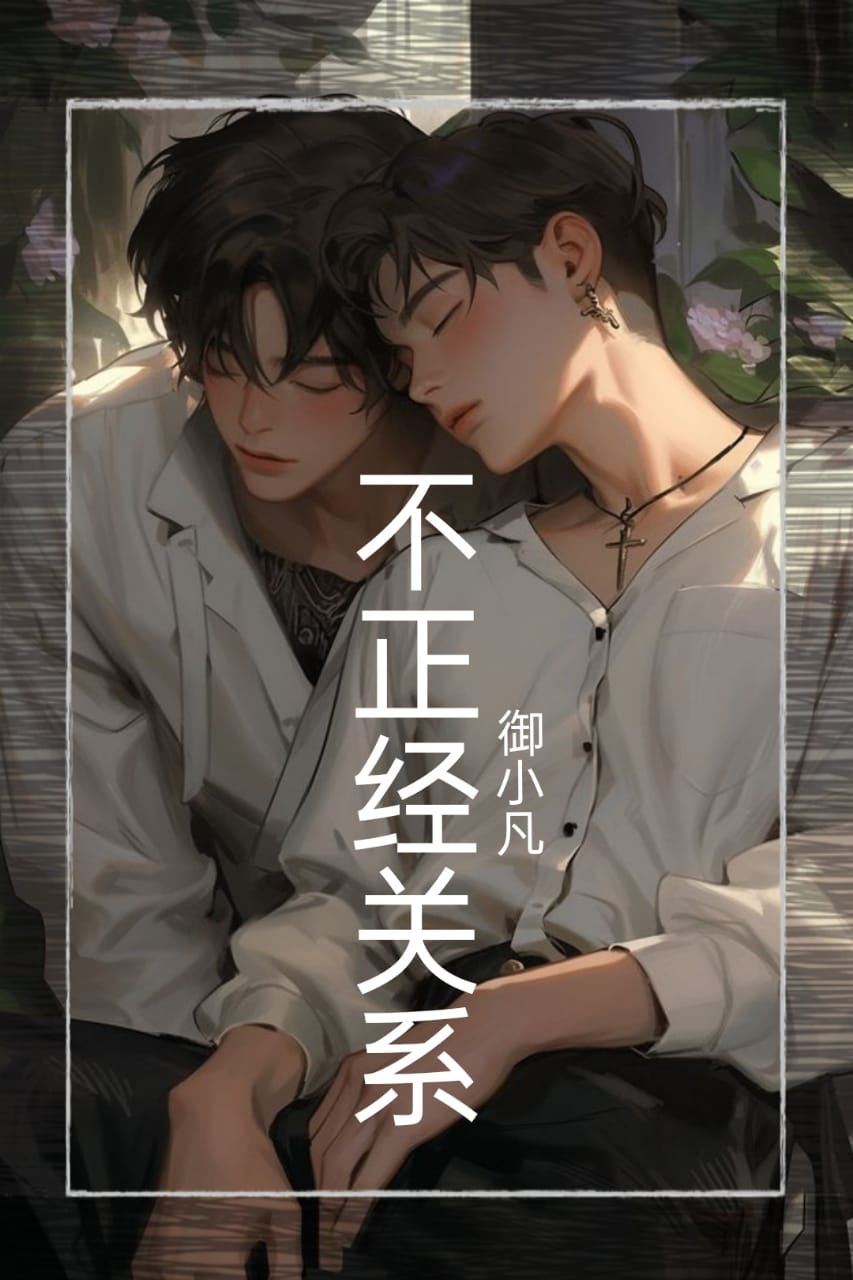
THIS SCENE. THE DINER SCENE. I need to talk about it because my brain is still spinning. Sun Yan shows up out of nowhere—calls Yan Hai'an, waits outside illegally parked, throws money at a traffic ticket—and brings him to dinner. Halfway through the meal he asks 'What do you want?' and Yan Hai'an's internal monologue immediately goes to: name a price. But here's what I love: Yan Hai'an doesn't actually WANT anything from Sun Yan in a transactional sense. He's rich enough. He's not desperate. So instead of accepting or declining, he goes on the offensive with this beautifully calibrated sarcasm: 'Mr. Sun, I didn't expect you to be so unconfident in your skills and figure. But I want to tell you this honestly. I'm very satisfied with you as the bed partner. You don't have to use other things to make up for such a guilty conscience.' Let me just... that is peak Yan Hai'an energy. Polite words, sharp edges underneath. He's calling out Sun Yan's implied assumption that sex needs to be compensated, while simultaneously making it clear that HE (Yan Hai'an) doesn't operate on that wavelength. And Sun Yan's reaction? Sprays food on Yan Hai'an's face. Then 'OK, I was wrong. I was wrong. Don't get angry.' Which is both hilarious and slightly pathetic. This man clearly didn't expect to be read THIS hard. But the real relationship gold is in the narration: 'They got to know each other a lot better. It was as if they were going to play a game of basketball together instead of going to bed together.' This one sentence tells us everything about how their dynamic has shifted—from pure physical to something that now includes actual companionship. Basketball buddies who also sleep together? That's... weirdly wholesome in a very specific way. Yan Hai'an admits he's 'a little angry' but also 'not that angry.' The fact that he's even processing this level of nuance about his anger tells me this relationship is more complicated than either of them probably wants to admit right now.
... Read More
Okay so this whole scene? Yan HAI'AN just absolutely DESTROYS Sun Yan emotionally and I am SHOOK. Like, here's this guy who clearly has feelings for him—who's literally holding his hand at breakfast, who came up with this whole elaborate 'healthy, equal and happy relationship' pitch like a nervous kid asking someone to prom—and Yan Hai'an just looks at him and goes 'I went to bed with you for fun. Only physical needs.' The description of Sun Yan's reaction is *chef's kiss*. He SPITS OUT HIS TEA. The author writes that 'this cup of tea burned down the tip of his tongue and scalded his throat. It was as if his entire chest had been stabbed with a torch.' Okay but THAT'S the metaphor for the whole scene right there. The physical pain is the emotional pain. And then Sun Yan just... laughs it off? 'I misunderstood. I apologise.' Like a wounded animal showing its teeth to hide that it's bleeding. But here's what gets me—the NEXT thing Sun Yan does. Instead of storming out or crying or whatever, he doubles down. He gets MORE formal, more careful with his words. 'Since we had a good experience last time, we can develop a healthy, equal and happy...' I cannot stop thinking about how heartbreaking it is that his instinct when hurt is to TRY HARDER to please the person who just hurt him. And then Yan Hai'an, who apparently cares about him more than he's letting on, softens and starts negotiating terms like they're signing a business contract instead of defining a relationship. The tea pouring, the chopsticks, the Babao Duck being described layer by layer while these two are basically laying their hearts on the table—it's all so quietly devastating. And that final line from Sun Yan 'Hurry up, it's almost 9 o'clock' after Yan Hai'an finishes eating?? The implication. The subtext. The sheer amount of unsaid things between them. My heart.
... Read More
Okay so let's talk about the way this race scene escalates and then completely derails into something else entirely. The author sets up what looks like a standard daredevil racing sequence — you've got the underground meet, the flashy girl stirring things up, the two cars revving — but then Sun Yan doesn't just win. He doesn't even stop at the finish line. He drives past it. That's the kind of plot beat that makes you slam the book shut and just stare at the ceiling for a minute. It's not about winning anymore. It's about proving something to himself, or to Yan Hai'an, or maybe just to the void. And then the immediate tonal pivot from adrenaline to intimacy is bold as hell. One second they're skirting the edge of a cliff on a mountain road, next second Sun Yan is pinning Yan Hai'an against the seat and kissing him like he's been holding his breath for months. The plot doesn't slow down for feelings — it crashes through them. That's brave storytelling. Most authors would give you a tender moment, a conversation, a "so what are we?" scene. Instead we get: race, kiss, sex in a car, morning after confusion. The cause-and-effect chain is visceral, not verbal. The real twist though? Yan Hai'an waking up the next morning going "why did I sleep with Sun Yan?" That's the emotional landmine the whole chapter was building toward. He came in questioning, dazed, scared — and ended up completely undone without ever having a single honest conversation about what this is. That's not a plot hole, that's the point. Their whole relationship runs on action, not words.
... Read More
What makes this chapter work on a conflict level is how the stakes operate on multiple frequencies. Externally? A business trip to S city is set up, which creates physical separation anxiety. Internally? These men are fighting something much bigger - their own inability to articulate what they want from each other. Sun Yan pulling Yan Hai'an back by the hand when he tries to leave? That's the central conflict crystallized: the tension between independence and connection, between self-preservation and vulnerability. And Yan Hai'an's obsession with those three weather posts? That's conflict manifested as compulsion - he can't stop seeking information about Sun Yan's inner world even when he tells himself he doesn't care. The stakes feel enormous precisely because nothing life-threatening is happening. These are men who've survived violence, betrayal, hardship - and yet they're undone by a touch of lips and a held hand. The translator's note about the mouth cannon reveals another layer of conflict: desire vs propriety, physical vs emotional intimacy, the body's knowledge vs the mind's resistance. Even Su Yin represents stakes - he's navigating professional loyalty vs personal investment in his boss's happiness. Every interaction contains miniature conflicts that resolve into moments of connection, then reset. The chapter doesn't give us catharsis; it gives us continuation. And that's what keeps you turning pages - not drama, but the quiet, persistent argument between two people who keep choosing each other anyway.
... Read More
'He pointed to the fruits and snacks on the flower bed.' This detail keeps playing in my head. After Yan Jin lets loose all that anger and resentment, Yan Hai'an just... points to snacks on a flower bed like nothing happened? It's such a mundane, almost absurd gesture that makes the whole scene feel so real. You can picture it—the late night, the hotel exterior, this teenage boy standing there shaking with suppressed emotion while his much more successful older relative calmly offers him fruit. There's something deeply cinematic about that image. And then Yan Jin wiping his eyes with his sleeve and running back to the hotel with a plastic bag of snacks. I mean—this isn't some dramatic movie moment with swelling music. It's quiet. It's awkward. It's a child who wanted to yell but ended up accepting fruit instead. The translator even added a note about 'Xiao Jin' which showed how much Yan Hai'an actually cares despite everything. These small environmental details ground the whole story. The plastic bag, the flower bed, the car waiting nearby—it all feels lived-in rather than staged.
... Read More
So Li Qing pulls Yan Hai'an aside after the meeting and things go from 'fine, let's chat' to 'I need you to get Mo Yisheng to join an association by Friday' faster than I can say 'narcissistic art broker.' Let me break down why this scene works so well structurally. First, we get the setup: Chairman Wang wanted Mo Yisheng in the association, Li Qing went out of her way to make that happen by 'coaxing' Wang Yuhu into being the introducer, and now Mo Yisheng has flat-out refused. Li Qing is put out—not because she cares about Mo Yisheng's feelings, but because her social maneuvering was wasted. Then comes the pressure campaign wrapped in sweetness. She starts with gratitude ('you wouldn't have been able to make a living without our help') and pivots straight to threat disguised as casual conversation: 'Maybe he can get away with it for now, but he's not that famous yet.' Translation: your artist friend has maybe two years before the bubble bursts unless he plays nice. The line that got me was her final ultimatum delivered like she's discussing weather: 'I won't take the initiative to mention anything to Wang Yuhu's side. But if he asks, I can't help it. Get him to join an association.' Oh, so you're basically saying if you don't comply, I'll expose that I wasn't the one pushing this and let Chairman Wang come down on Mo Yisheng directly? Brilliantly cruel. And Yan Hai'an just sits there absorbing it with a 'friendly smile' while internally having a headache. The plot tension here is delicious—you can feel the noose tightening around Mo Yisheng even though he's not in the room. Then immediately after all this, Sun Yan calls. As if the universe needed to layer on another complication before the chapter ended.
... Read More
chapter 47-50 is a masterclass in what i call 'emotional hangover pacing.' you know how after a really intense night - party, fight, whatever - the morning feels both infinite and nonexistent at the same time? that's exactly what this chapter reads like. the first scene with the phone call and smashed phone gives you that punchy, immediate adrenaline rush. bang, bang, bang - conflict, confrontation, destruction. then it cuts to morning and suddenly everything is slow, sticky, uncomfortable. every line of dialogue between yan hai'an and sun yan feels like walking through wet concrete. and then the restaurant scene? the silence between them stretches and stretches and then boom - sun yan drops the li qing revelation like a brick. that's the structural pivot of the whole chapter. the author could have rushed through the meal, had them talk about feelings immediately, but instead we get them eating fish in silence while two people wrestle with completely different versions of the same truth. yan hai'an thinks li qing played him. sun yan knows li qing played everyone including herself. and the fact that sun yan deliberately WITHHELD that information until now - that's not foreshadowing, that's character. the pacing here isn't about what happens, it's about what's held back
... Read More
I keep coming back to that set of three abstract paintings. Sun Yan looks at them and immediately guesses they're NOT Mo Yisheng's work. Think about how significant that is — Mo Yisheng is a painter, this is his studio, and someone walking in can tell his art isn't on the wall. Sun Yan reads visual art the way other people read room temperature. It's a power move disguised as casual observation. And what are these paintings? Chaotic color saturation that doesn't feel lively at all. Thick lines hooked chaotically from lower left to upper right. Black patches — like someone was venting, chopping grief or rage into the canvas. They're everywhere in this chapter visually, looming over every scene like silent witnesses. The paintings are basically the emotional skeleton of this entire arc. Mo Yisheng won't confirm or deny that he didn't paint them, which means either he did and won't say, or someone else did and it means something he can't explain. Also the subplot with Li Qing's insider office gathering happening next week? That's a loose thread I need answered. What's happening there? Why is Yan Hai'an considering pulling Mo Yisheng along? Is he trying to protect him or expose him? The author is stacking these questions like dominoes and I'm here for it.
... Read More
The stakes in these chapters are quietly skyrocketing, and I love it. On the surface, the conflict is low-key: a family dinner, a birthday prep, a shared bedroom. But the underlying tension is razor-sharp. Yan Hai'an is walking a tightrope. If he reveals the truth, he risks his family's rejection, their disappointment, possibly losing the warm, if suffocating, home he left. If he stays silent, he lives a lie, watching the man he loves be relegated to the role of 'best friend' or 'godson.' The external conflict is represented by Yan Haijian, whose 'complicated eyes' suggest he suspects more than he lets on. He's the wildcard. Then there's the looming threat of the birthday tomorrow—a public family event where the pressure will be even higher. The author makes you care deeply because the stakes are personal, not world-ending. It's about identity, love, and belonging. The physical conflict is minimal, but the emotional violence is real. When Sun Yan whispers that crude line about being hard, it's a risk. If Yan Hai'an reacts too visibly, if his face flushes, if his voice cracks—the whole fragile house of cards could collapse. Yet, he has to stay calm. The tension is maintained through this constant, vibrating fear of exposure, making every ordinary interaction feel like a bomb waiting to go off.
... Read More
'It's already too late to think about it.' — said right before getting into a potentially lethal race. That line is the thesis statement for the entire pacing structure of these chapters. Nothing is given time to be thought through. Everything is felt first, processed never. The author uses a brilliant accelerando structure here. We start slow — Sun Yan driving, arriving at the meet, the awkward setup with the girl. Then the race begins and the prose itself seems to speed up. Shorter sentences. Fragments. 'The blood in his whole body paused for a second for this, followed by a frantic rapid flow.' That's not just what's happening to Yan Hai'an — that's how the writing moves. You're not reading about adrenaline, you're experiencing it on the page. Then — the kiss. The sex. And then the immediate cut to morning. No epilogue to the night, no reflection, no 'and afterwards they talked about it.' Just: 'Hiss...' and Yan Hai'an waking up in pain. The structural choice to end on confusion rather than resolution is what makes this chapter stick with you. The reader is left hanging in the same uncertain space Yan Hai'an occupies. That's pacing as emotional manipulation, and it works.
... Read More
What gets me about this passage is how Sun Yan handles Yan Hai'an's breakdown. Most people would lecture, or get annoyed at the panic. But Sun Yan just holds his shoulder, says “You calm down!” and then later puts his hand on Yan Hai'an's clasped hands. That's not performative sweetness - it's someone who's actually paying attention. And Yan Hai'an? He's usually so composed, but when he finds out about He Ling using Mo Yisheng's painting, he goes from pale to trembling to muttering “What's going on” to cursing under his breath. The guy who plans everything, who arranges tours and restaurants - suddenly he can't even make a phone call because no one picks up. That moment when he's frantically calling Mo Yisheng and “no one picked it up” - that's the kind of detail that makes you feel his helplessness in your bones. But here's what I can't stop thinking about: Sun Yan telling him “Mo Yisheng is an adult. He has long been responsible for everything he does.” That's both comfort and truth. Sun Yan isn't enabling Yan Hai'an's guilt - he's gently reminding him that he's allowed to let go of what isn't his to carry. And then Mo Yisheng himself - “His heart had always been filled with fantasies. They are unrealistic, simple and beautiful.” The guy who painted “Dinner” and apparently let He Ling use it. Yan Hai'an says “I doted on him so much that he doesn't know that people's hearts are sinister.” That line - it's not just about Mo Yisheng. It's about how protecting someone can blind you to their vulnerability.
... Read More
'Like a deer is ramming the heart'—the Chinese idiom translated here is such a vivid image, and the narrator immediately undercuts it: the deer may have already been killed by one hit a long time ago. This is the thematic thesis of the entire passage compressed into one sentence. Yan Hai'an has been running from desire his whole life, constructing a careful emotional architecture where nothing dangerous can get in. He chose Mo Yisheng precisely because Mo Yisheng was safe—'a painting which is beautiful and pure, so he won't be able to hurt him.' The symbolism of the wrist being both wounded and caressed is doing enormous thematic work here. Sun Yan caused the injury and now tends to it. The perpetrator becomes the healer. And that apology—uncharacteristic, unguarded, almost awkward in its delivery—represents the death of the 'deer,' the end of the old defensive mechanism. The recurring motif of touch throughout this batch (grabbing the wrist, massaging the bruise, kissing the skin, burying his face in a palm) contrasts with Yan Hai'an's history of keeping physical and emotional distance. The body remembers what the mind tries to forget.

Leave a comment

You must be logged in to leave comments. or
