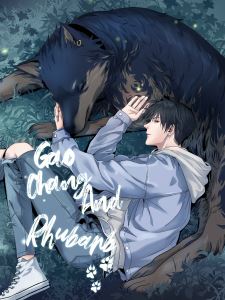
The dialogue in this section is brutal and I mean that in the best way possible. Every character speaks like they have something to lose or something to prove, and none of them are hiding it.
Zheng Guochao's voice is immediate and recognizable: "You son of a—! Why didn't you open the door earlier? Didn't you hear Zongwen shouting outside?" The sentence fragments, the raw accusation, the way he circles back to the same grievance—it's perfect. This isn't a man articulating complex grief. It's a man using grief as a club.
Gao Chang's replies are different. Shorter. Colder. More surgical. "Would I still be standing here alive if I'd opened the door?" Three words less than the other guy's explosion, but each one lands like a hammer. He doesn't yell. He cuts.
Then you have the village chief, Zheng Guobang, who is the human equivalent of lukewarm water: "Village chief, please be fair." "Both sides." "Let's look at it from both sides." This guy is so committed to being neutral that he becomes an enabler of violence. His dialogue has no spine. He talks around the issue the way water flows around a rock—constantly, patiently, pointlessly.
And the supporting villagers? They're the Greek chorus you love to hate: "That beast refused to open it!" "This wretched thing is just an ungrateful wolf!" They don't even have individual voices. They're a mob speaking as one throat, and that's intentional. The author is showing you what happens when a group decides one person is responsible for collective tragedy.
Auntie A-Shan's line is the softest in the whole passage and it works because everything else is so sharp: "Gao Chang, don't be angry, okay? Your Uncle Guochao just lost his son—his heart's aching. Don't hold it against him." Translation: shut up and accept your punishment so we can all go back to pretending everything's fine. The performative empathy is disgusting and realistic.
Gao Chang's final legalistic takedown—"You were the one who struck first. Even if Rhubarb bites you to death today, it's still self-defense"—is the best dialogue beat in the entire chapter. He shifts from surviving to strategizing in one sentence. The man is not just enduring the post-apocalypse. He's learning to play it.