Summary

... Read More

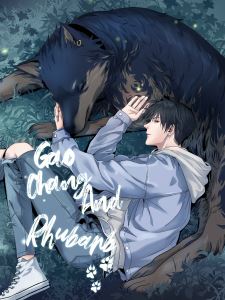
Gao Chang was a young man who lived a solitary and unfortunate life. Orphaned at a young age, he was stigmatized in his rural village as a "broom star," a person whose presence brought death to his relatives. After his grandmother passed away, he moved to the city to live as part of the urban underclass, working odd jobs and enduring a mediocre existence. His life ended abruptly when a mysterious celestial event turned the sun blue, causing humanity and animals to descend into a manic, destructive frenzy. In this post-apocalyptic chaos, Gao Chang died from an infected foot wound after being forced to forage for food in a lawless world.

Upon his death, Gao Chang found himself reborn seventeen years in the past, returning to his body on the day he had originally abandoned his sick puppy, Rhubarb. Remembering the horrors of his previous life and the inevitable apocalypse caused by the blue sun, he resolved to change his fate. He rescued Rhubarb, hiding the dog from the villagers who wanted it destroyed due to fears of the SARS outbreak. This act of redemption was not merely altruistic; Gao Chang sought to correct the guilt he had carried for decades and to ensure he had a companion in the coming trials.

As Rhubarb recovered, a shocking revelation occurred: the puppy could speak and identified itself as a descendant of the Inugami, a clan of divine dogs with cultivation abilities. Rhubarb explained that its recent illness was a result of absorbing an ancient inheritance. To secure the dog's loyalty and gain access to the cultivation techniques necessary for survival, Gao Chang coerced Rhubarb into a marriage ceremony. Under the guidance of the dog, Gao Chang began practicing the Inugami cultivation method, which promised longevity and enhanced physical capabilities. He also decided to drop out of college, choosing instead to stay in the village where resources were more readily available, and to prepare for the disaster that he knew was approaching in ten years.

To fund his preparations, Gao Chang utilized his mahjong skills, which had been sharpened by his cultivation, to win money from local players. When funds were still insufficient, Rhubarb revealed the location of buried ancient copper coins in the bamboo forest. The pair dug up the coins, and Gao Chang traveled to a nearby city to sell them through antique shops. By mixing genuine antiques with carefully forged fakes, he amassed over fifty thousand yuan, a significant fortune at the time. This capital allowed him to improve his living conditions and begin stockpiling essential supplies.

After his grandmother passed away, exactly as she had in his previous life, Gao Chang felt a profound sense of loss but also a renewed determination. He used his earnings to build a secret underground storage tunnel beneath his home, reinforcing it with bricks and hiding the entrance. He planted medicinal herbs, honey locust trees, and spice plants around his property to ensure self-sufficiency. Gao Chang’s focus shifted entirely to survival preparation, knowing that when the blue sun returned, only those with strength and resources would endure. The story follows his meticulous planning and the evolving partnership with Rhubarb as they brace for the impending collapse of civilization.

Latest Release
DateGroupRelease
2026-09-26knoxt c9
2026-09-26knoxt c8
2026-09-26knoxt c7
2026-09-26knoxt c6
2026-09-26knoxt c5
2026-09-26knoxt c4
2026-09-26knoxt c3
2026-09-26knoxt c2
2026-09-26knoxt c1

Community Reviews

Rating(4 / 5.0, 65votes)
5 stars
23(35%)
4 stars
20(31%)
3 stars
22(34%)
2 stars
0(0%)
1 stars
0(0%)

Popular reviews

... Read More
There's something deeply symbolic about this blue sunlight that I can't stop thinking about. On the surface, it's an apocalyptic force—killing people, turning them into monsters. But the text explicitly says the sunlight 'doesn't look dangerous; in fact, it's quite beautiful.' That contrast between beauty and death is the whole theme right there. The disaster isn't ugly and grotesque; it's gorgeous. It lures people in. They become complacent because it looks safe. And that's what kills them. The blue sunlight represents how threats often come disguised as something normal, even attractive. People saw nothing wrong with it. They went outside freely. They let their animals out. Until it was too late. Gao Chang's darkness is the counter-symbol. That windowless room that was once stuffy is now salvation. He's the only one who understands that what appears safe can be lethal. His meditation, his preparation—they represent knowledge as survival. In his previous life he didn't know. Now he does. That's the whole point: awareness changes everything. Even the Inugami bond with Rhubarb carries weight here. In a world where human relationships are fracturing—people refusing to help each other, families torn apart by panic—Gao Chang's loyalty to his dog becomes almost sacred. One partner for life. No remarriage. This divine rule that seems almost archaic takes on new meaning when the world is ending. Commitment becomes a form of resistance against chaos. And Zheng Zongwen—the 'pride of the village,' the good student, the promising one. His death isn't just plot convenience. It symbolizes how quickly civilization crumbles. Knowledge, goodness, potential—all meaningless against the blue sun.
... Read More
'If he had to say, then there were one or two regrets.' One regret being a dog he shared milk powder with. That's it. That's the sum total of this boy's entire life and it's a puppy he met in high school. I read that line and I actually felt physically sad. Everything about Gao Chang's emotional history screams loneliness. Mother died giving birth. Father died when he was three. Grandma was his only relative and she died too. The village called him a broom star—a person who brings death—and everyone avoided him. Even the adults who bullied him as a kid? They weren't being mean, they were terrified. They wanted him gone. So what did he do? He found a way to make himself impossible to ignore. He sat on a stool and screamed his grief at people's houses until they gave him space. That's not anger. That's a child begging to be seen. And in the city, finally, nobody cared about his family tree. Nobody asked about his ancestors. He was invisible in the best way. He sold cosmetics, dated the department flower, lived a normal college life. For the first time he was just Gao Chang, not the cursed boy. But now? Back to being alone in a dark room with an infected wound and no one coming to save him. The emotional core of this story isn't the apocalypse. It's one boy who just wanted someone to stay. And honestly, that hits harder than any zombie attack ever could.
... Read More
This chapter is such a tight little knot of cause and effect, isn't it? Gao Chang remembers Zheng Guochao giving him tomatoes — that's the setup — and then later he can repay with rice and salt — that's the callback, the payoff. Classic reciprocal kindness loop. But then the author slams the door on the further escalation: asking him to risk his life for Guochao's son? Nope. That line — that refusal — is where the plot actually breathes. It's not just a character moment; it's a structural pivot. Up until now, the story has been building this web of mutual obligation, and here we see Gao Chang consciously deciding which threads he will and won't pull. If he'd opened that door and let those people in, the chapter ends with a body count instead of a moral stance. The author could have gone either way — heroics or horror — and chose the quieter, more honest option. That restraint is what makes the plot feel real instead of manufactured. You can feel the weight of every unpaid debt and every line drawn in sand. One wrong step and Gao Chang dies. He knows it. We know it. And still he hesitates, still he calculates. What a good turn.
... Read More
Okay so this whole sequence where Gao Chang locks himself in and the village turns to hell is genuinely chilling. The stakes aren't just physical survival anymore—they've shifted into something way more sinister, which is exactly how you know the author knows what they're doing. "If someone—or something—sneaked in, it'd be a serious problem." This line hits different now. Before it was just a practical concern. Now? It's a threat hanging over the reader's head like a guillotine blade. But what really got me was the confrontation scene. Zheng Guochao coming at Gao Chang with a hoe in a courtyard soaked in blood—blood literally everywhere—and the fact that murder doesn't feel like a big deal anymore in this world? That's world-building through conflict, not exposition. The stakes escalated from zombies/madness outside to violence among the survivors inside. And honestly? That's scarier. Because you can't lock yourself away from people who already think you owe them your life. "Let me finish him off with one swing of this hoe, and our village will finally be clean." This isn't grief speaking. This is something else. The man has gone from mourning to killing in about thirty seconds flat. And no one stops him—not even the village chief, who just stands there saying both sides, both sides, while a murder is about to happen. That's when Rhubarb steps in and everything shifts. The dog snaps the hoe in two and suddenly the power dynamic flips. But the real tension here isn't whether Gao Chang will survive the encounter—he clearly will. The tension is: what happens next when the survivors realize they can't just blame one person and move on? Gao Chang's line about self-defense and the police coming? He's not just defending himself physically. He's trying to impose order on a world that's lost it. Perfect timing, really. Let's see who's more guilty: you for attempted murder, or me for failing to intervene. The irony is suffocating.
... Read More
I picked this up expecting some generic zombie apocalypse junk and instead got hit with something so carefully constructed I didn't want to stop reading. The pacing is no joke. We open mid-crisis—Gao Chang is already injured, already feverish, already accepting that he might die. No slow buildup, no boring exposition dumps. Just throw us into the darkness and start pulling back the layers. The chapter structure works in waves. First we get the immediate threat (the wound, the fever), then the world rules (blue sun, manic creatures), then the social collapse (hoarding, robbing, dead cities), then we go personal with his backstory. Each section raises the emotional temperature before dropping us into the next beat. And that backstory section? The way it moves from his orphaned childhood to the village bullying to his creative rebellion (howling at neighbors' houses—this kid had spirit) to college to the dog? It flows like water. No section feels wasted. The foraging danger details come right after the community routine, which makes sense because it explains WHY they stick together and WHY his isolation is so dangerous. By the time we reach the end of this excerpt and learn about the little black dog following him home from evening study, I was completely wrecked. The author knows exactly when to hit you and when to let you breathe. This is craft.
... Read More
The pacing in these chapters is absolutely relentless and I respect it so much. Let me walk you through the structural choreography because the author is a wizard at this. Chapter starts at 3 PM with Gao Chang leaving the senior center with extra money—immediate hook, we're already invested in his hustle. Then he encounters Zhou Ming, gets invited to night mahjong, refuses with a grandma excuse, and we get a full exposition dump on why youth gambling is dangerous. That's not padding—that's WORLD-READING. We learn about the characters' socioeconomic context without it feeling like an info-dump because it's filtered through Gao Chang's very specific, survival-minded consciousness. He's afraid of death because he's already died once. Every calculation he makes is weighted with secondhand experience. Then the scene transitions to the vegetable market—time passing, the day winding down, the scarcity of food mirroring the scarcity of opportunity. Back home, dinner scene with Grandma, warmth and comedy, the bone explanation. Then RHUBARB TALKS. From a mundane domestic scene about feeding a sick dog to supernatural revelation in THREE PARAGRAPHS. That is elite-level pacing. The author doesn't pause to let the reader breathe before hitting them with the biggest plot twist yet. And the cherry on top? Rhubarb can't even USE the talk function properly because he's too weak from fever. The escalation of stakes is perfectly calibrated—he could talk, which is amazing, but he's still going to die if Gao Chang can't figure out the medicine situation. Internal conflict and external conflict operating on parallel tracks. The chapter ends on a cliffhanger with Rhubarb trailing off about reaching a certain level of cultivation, and I immediately needed the next chapter. No filler, no dead air, every scene pushes the story forward while simultaneously deepening character and world.
See all reviews

Custom lists

See all custom Lists