Fallen Idol Group - Reviews

Fallen Idol Group
+Add to Custom List
Sort
Add review
... Read More
I need to talk about the one scene that played out like a movie and I can literally SEE it. The CEO's office. The stack of candid photos spread across the table. Two young men walking in thinking it's a normal meeting and instead finding evidence of their most intimate moments displayed like forensic exhibits. "The photos showed them kissing inside a car, with the villa they had secretly lived in together visible in the background." That background detail — the villa visible in the photos — is doing so much heavy lifting. It's not just evidence of a kiss; it's proof of a life they built outside the industry's gaze. A home. And the CEO looking at those photos isn't just seeing scandal, he's seeing something he can leverage. The entire power dynamic of the entertainment industry laid bare in one scene. The worldbuilding here is brutal and realistic. Zuige Entertainment's strict policies, the precedent of firing idols for dating, the unspoken rule that non-straight artists have to publicly identify as straight or bisexual, the fear of canceled endorsements and damaged reputations — this isn't fictional drama, this is extrapolated from real industry mechanics. The author doesn't need to info-dump because every policy mention comes attached to human consequences. And the contrast between that sterile office and the remote villa they shared — one space that represents everything pressing down on them, the other that represented freedom. The villa was their only world that was theirs alone, and even that wasn't safe.
... Read More
There are symbols stacked in this chapter like layers of an onion and I need to unpack them. First: the abandoned school. Ronggang No.36 Middle School. A place that was once 'top-tier' and is now empty. What does that represent? The group themselves—once at the peak, now operating in the ruins of their former glory? Or more personally, the members' shared past, a place they all grew up in but can't openly discuss? The fact that it's Qingming Festival—a day for remembering the dead—and they're standing at the gates of a forgotten school feels intentional. The production team chose this location. Qiu Hao knows something. The questions dig up buried memories. This isn't accidental atmosphere. Second: the planes. Zhu Lianzhen's belief that "if you eat a hundred planes, you can make a wish" is either the most beautiful piece of childlike magic I've ever encountered or it's deeply symbolic about wishing for things that are out of reach. A plane is distant, uncatchable, and Koty pretends to grab one and shove it in his mouth like it's real food. They were adults doing this. What does that say about how they relate to their own desires? Do they treat wishes as something to pretend-eat because actually getting them feels impossible? Third: the quiz buttons themselves—A, B, C, D. Choice. The illusion of control. They press buttons thinking they're making decisions, but the answers were pre-written by fans, some fabricated entirely. How much of their shared history is really theirs versus how it's been curated and performed for an audience? Ji Yunting's Qzone post was reposted ten thousand times. His most vulnerable moment became content. That's a theme I think the author is circling around carefully. The most haunting image isn't the fighting or the embarrassment—it's the screen revealing the CORRECT answer after they've already committed to theirs. Truth coming after the choice is made. Can you un-press a button?
... Read More
I need everyone to pause and discuss the bowl of clear water beside Tan Qing's dish at the hotpot table. I'm still not over it. Every time Tan Qing picks something from the boiling pot, he dips it in the clear water to wash off the red oil. This detail appears almost casually in the text, but it hit me like a truck. Why does this matter? Because earlier in the story, Zhu Lianzhen established that he has sensitive stomach issues or dietary restrictions related to spicy food. Tan Qing REMEMBERS. Tan Qing has always remembered. And now he's sitting across from him at a hotpot restaurant, quietly adapting his eating habits without saying a word, while Zhu Lianzhen is busy overthinking his entire life via social media buttons. The romantic tragedy here is devastating in its simplicity. These two people clearly still care about each other deeply—they've been together for years, they know each other's bodies, preferences, fears—but they're positioned like two magnets that can't touch. Every gesture of care is either unseen (the midnight visit) or unacknowledged (the clear water bowl). The sweetness and the angst are perfectly balanced at a ratio that made me simultaneously want to ship them harder and throw the book across the room. There's also this one moment—"A question mark formed in Ah-Xu's mind"—where the assistant is theorizing about what might have happened during those hours in Zhu Lianzhen's room. The fact that both characters (and the reader) are imagining the most dramatic scenarios while the actual reality was probably Tan Qing just... watching him sleep... is peak romantic comedy horror. And Zhu Lianzhen's inner monologue about whether he should follow Tan Qing back? "A man should have some grace." Then thirty seconds later: "Unfollow! Must unfollow!" This boy is emotionally whiplash incarnate and I love him so much.
... Read More
Okay so let me just start by saying—this chapter had me SCREAMING internally. The whole "QingZhen: True Affection" trending topic is such a perfect plot device because on the surface it's just idol CP culture doing what it always does, but underneath it's actually unraveling years of carefully buried history between Zhu Lianzhen and Tan Qing. And the way Pei Qiao discovers they unfollowed each other?! She's completely oblivious to the drama she's accidentally exposing. She asks them point-blank whether they were ever in a relationship, and Zhu Lianzhen—rude, honest Zhu Lianzhen—opens his mouth to confess they broke up. I literally gasped. Then Tan Qing saves him with this perfectly calm "I've always been single," and squeezes his wrist. That tiny gesture carried more narrative weight than half the dialogue in this entire chapter. It's clear Pei Qiao has no idea what she's walking into. She's already used to Acemon members falling out and treats it like no big deal, which makes her instruction to them to follow each other on Weibo and do fanservice absolutely delicious to read. The sub-plot with the stalker being dealt with also ties back to this whole CP thing—those old photos were apparently part of the chaos, and now they're supposedly wiped clean. But the earphone incident at the end? That's not done. Tan Qing found them, posted a Lost and Found notice, and Zhu Lianzhen is sitting there going insane trying to figure out whether Tan Qing knows they belong to him. The author is layering these revelations like an onion and I am HERE for it.
... Read More
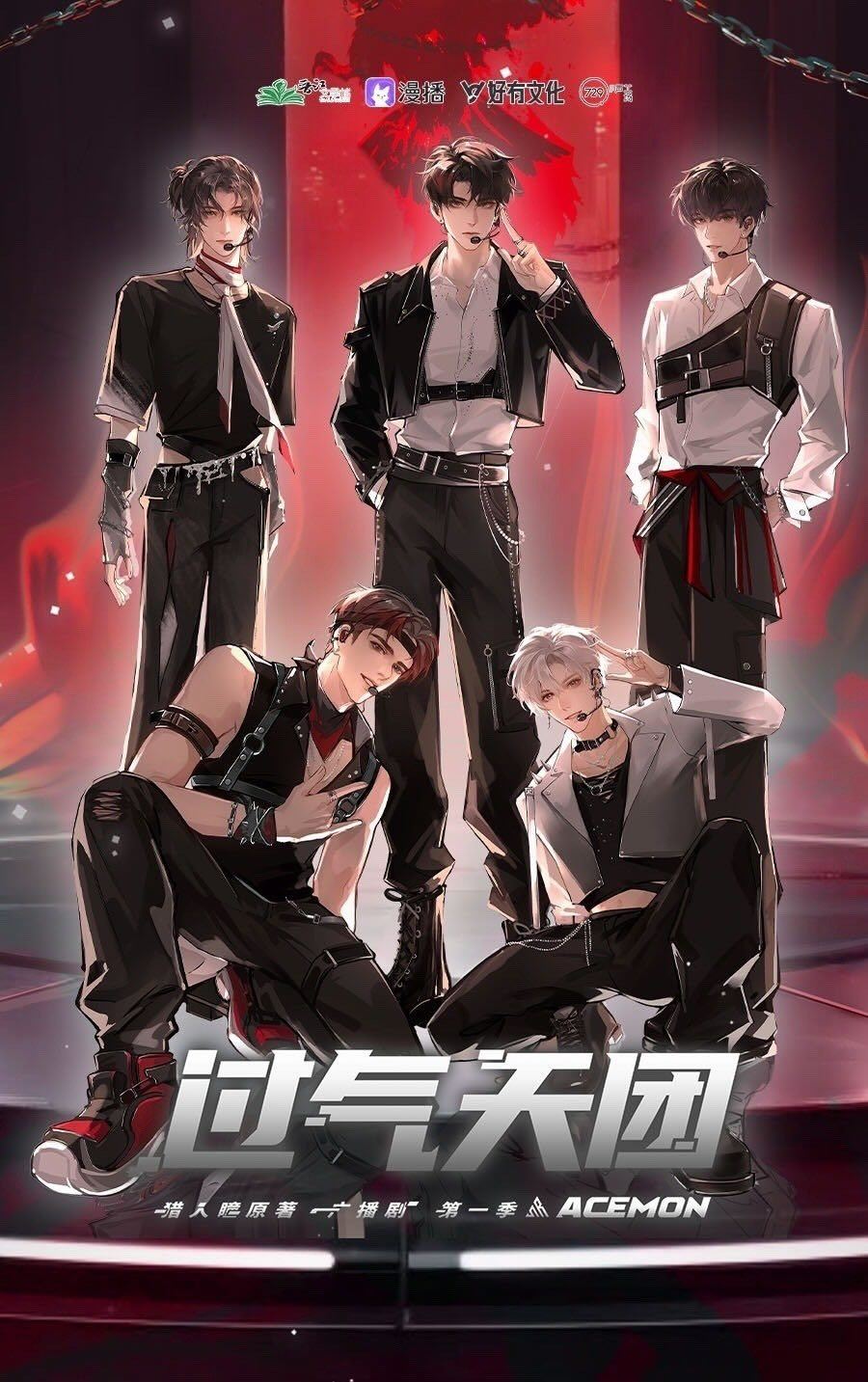
Okay, I need to talk about this scene in Tan Qing's study because it is absolutely devastating and I am still processing. So Zhu Lianzhen walks in and basically sees a museum of his own affection displayed all around him—the perfumes, the 3D puzzles, the vinyl records. All things he'd given Tan Qing over the years, preserved like sacred relics. And Tan Qing's reaction? He just... casually mentions it. "When you were passionate, it was like you didn't know when to stop." As if he's commenting on the weather. As if keeping every single gift isn't the most quiet, monumental thing Zhu Lianzhen has ever witnessed. And then there's the memorial photo behind the shelf. The way Tan Qing stops him but is too late, and then just says "Don't worry about it. There's just nowhere else to put it"—that line hit me like a truck. Tan Qing doesn't make a big deal out of anything, especially not his own mother's memory. He treats it like clutter, like something inconvenient. But the fact that it's hidden behind a pull-out shelf in a room filled with gifts from Zhu Lianzhen? That's not an accident. That's Tan Qing's entire emotional language: everything buried, everything protected, nothing said outright. The flashback to their trainee days really cements this dynamic too. Zhu Lianzhen was dismissive, cold even, and Tan Qing took the blame without flinching. "Xiao Zhu's right. It was my own lack of common sense." He shields his abuser. Of course he does. That's who he is. He absorbs every sharp edge and never redirects it back. And Zhu Lianzhen—still can't quite process that he was the jerk in that story, still defending himself internally while the narrative shows us exactly why Tan Qing ended up alone in the snow.
... Read More
I need to talk about the pacing of this section because the author absolutely knows what they're doing. We go from a full-page flashback about Zhu Lianzhen's childhood—his dance competition in America, his rebellious streak, the parents' dialogue about destiny and stubbornness—to the arrival of Fu Rong (ANDROGYNOUS ENTRANCE DRAMA), to the group forming, to Tan Qing joining, and then BOOM we're right into the magic trick confrontation. It should feel rushed. It should be exhausting. But somehow it flows like water. The secret weapon here is the transition. You know that moment when Tan Qing hands Zhu Lianzhen the pear juice and Zhu Lianzhen says "I'm not drinking that" and Tan Qing shoves it into his hand anyway? That tiny beat of physical comedy? It's the exact pressure release valve the whole chapter needed. The tension had been building paragraph by paragraph, and suddenly the author just... deflates it with a gesture. No dialogue, no explanation, just pear juice being aggressively offered. And then the ending—"Sorry about tha"—getting cut off mid-sentence? I actually stopped reading and stared at the page for a second. The author is basically saying: you want resolution? Too bad. Here's a moment of vulnerability and you can sit with it. That's masterful pacing. The reader wants the apology to land fully but the chapter just walks away, and you're immediately desperate to turn the page.
... Read More
So Zhu Lianzhen's tooth decides to wail at the worst possible moment, right when the narrative is trying to establish that heavy, unspoken tension between him and Tan Qing. Classic author move—physical pain as emotional mirror. The plot threads here are so tightly woven: fan culture toxicity (those genderbending debates over Fu Rong are unhinged), workplace dynamics (Pei Qiao terminating that dating show contract on Ji Yunting's behalf without consulting him—total power play), and this slow-burn post-breakup awkwardness that plays out across three different scenes in a car, dental clinic, and livestream. What I loved: the subplot about Acemon's variety show being finalized. On the surface it's just industry news, but it's really about these people trapped in a machine they can't control. Ji Yunting's ‘I specifically checked this time' line hit hard because we know it means nothing—he still gets saddled with the consequences of decisions made without him. And Zhu Lianzhen dodging eye contact with Tan Qing while simultaneously cataloguing every reflection in the window? That's plot propulsion disguised as mundane detail. The reader knows exactly what's happening without a single dramatic confrontation.
... Read More
The stakes in this chapter operate on two levels and the author refuses to let you rest on just one. On the surface there's the immediate, physical danger—Zhu Lianzhen is hallucinating, his perception of reality is crumbling, and there's this looming threat of people literally transforming into Koty. But then the author pivots the entire conflict inward and downward into that scar. A slash wound, three to four centimeters, on the inner arm. How did it happen? A prop during a gala rehearsal apparently—but the fact that Tan Qing is the one who notices it, the one who asks, changes everything.
... Read More
The central conflict of these chapters isn't just about whether Tan Qing visits his father. It's about something far more destabilizing: what does it mean when the foundation of your entire life narrative turns out to be a lie? Let's look at the layers. On the surface: Tan Qing must decide whether to see his dying father. Simple stakes—he either goes or he doesn't, and either choice carries regret. But Zhu Lianzhen immediately sees deeper: Tan Qing's pattern of never saying no, his accommodation of everyone, even people who don't deserve it. If he goes, will he be performing forgiveness for an audience? If he doesn't, will he carry that guilt forever? The external conflict (media, hospital protocol, Tan Xiao's naive hope) mirrors the internal one. But then the father reveals: Tan Qing is not his biological child. And suddenly ALL the stakes shift. Why did the father abandon him for twenty years? Was there a reason—shame, guilt, fear of exposure? Did Tan Qing grow up believing he was loved and wanted when actually his presence was tied to some secret his father carried alone? The tragedy isn't just that they're strangers now—it's that Tan Qing spent his whole life trying to be good enough for a father who may have always known he didn't truly belong. The ending of this passage leaves us with a question that reframes everything: when Tan Qing finally decides whether to go to the hospital, will he be going as a son, or as someone who just discovered he was never really a son at all? The stakes just became existential. I'm not okay with this.
... Read More
Can we just take a moment to appreciate the comedic timing in this text because the author is a comedian disguised as a romance writer? Zhu Lianzhen: "Who just shows up in someone's bedroom at midnight to watch them sleep and actually does nothing? That's way too…" He trails off. Too ambiguous. And Tan Qing, stone-faced, delivers the line of the century: "I should've harvested a kidney before I left." I literally fell out of my chair. The deadpan delivery, the absolute nonchalance, the way it completely deflates the sexual tension that's been building like a dam about to burst. This man has been caught in a lie for months and his response is a surgical strike of dark humor. But then the dialogue does something even more brilliant. Watch the mishearing sequence: "I'll wash it clean for you." "You'll lick it clean?!" "I said I'll wash it clean for you." "Is something wrong with your hearing today? Want me to say it a few more times?" Tan Qing is DRUNK but still got the last word. He turned Zhu Lianzhen's own flustered imagination against him and then topped it with a genuinely flirtatious offer that Zhu Lianzhen completely missed because he was too busy being offended about his haute couture shirt. The narrative voice also deserves a medal. It stays firmly anchored in Zhu Lianzhen's head—the internal grumbling, the rational analysis, the moments where he's clearly overthinking but can't stop. Lines like "Someone really drunk wouldn't be this articulate" and "A bit of liquid courage, and now he's talking back?" are so perfectly observant and so deeply unreliable at the same time. The author's voice balances sharp wit with genuine emotional intelligence. Every joke lands because it's earned by the character dynamics, never just padding for laughs.
... Read More
There's a reason this whole passage orbits around vampire imagery and I don't think it's accidental. Tan Qing plays a vampire—an immortal creature who chooses to surrender his immortality for a moment of connection. That's basically the emotional thesis of the entire story condensed into one stage performance. He gives up something eternal for someone temporary. And Zhu Lianzhen, the hunter who fails his mission and becomes the prey, gets blindfolded because he can't face the height. Both of them are performing roles that contradict who they think they should be. The blindfold is such a rich symbol too—Zhu Lianzhen can't see where he's going, he's falling through the air trusting nobody, and yet the audience turns it into this romantic fantasy. Meanwhile Tan Qing, who sees everything (he spotted Zhu Lianzhen in a crowded venue, he remembers every detail of that performance), uses his vision to control the narrative on stage. Then there's the blood. Zhu Lianzhen deliberately smears it further than planned as petty revenge, and instead of making Tan Qing look messy, it makes him look like art. His sabotage backfires because you can't ruin something that beautiful. The story keeps asking: what happens when our attempts to protect ourselves or sabotage others actually reveal the truth instead? Koty says it flatly at the end—watching from a fan's perspective, they kinda match. But neither of them will admit it out loud. They're all vampires in this house, feeding on something neither of them will name.
... Read More
The atmosphere in these chapters is absolutely palpable. The northern winter night — described as so cold it makes your face stiff — immediately sets the mood. You can feel the chill. And then you get into that warm car, the heater blasting, and it's this incredibly intimate space. Two people who haven't been alone together like this in years, trapped in a metal box, and the warmth only makes the emotional coldness between them more stark. I love how the author uses the car's interior as a character itself. Simple. Clean. No decorations. The same car where a stalker fan once took secret photos of them — a detail that adds this whole layer of history and violation to the space. Zhu Lianzhen hates this car for that reason, but Tan Qing has grown attached to it. Of course he has. The one place that holds their shared history is the one place Zhu Lianzhen can't stand to be in. The lighting too — those passing headlights that briefly illuminate Tan Qing's face while he's looking straight at Zhu Lianzhen, and then darkness swallows it again. This visual motif of partial illumination, of seeing someone clearly for a fleeting moment before everything goes dark, is the entire visual language of their relationship. And the song playing on the speakers — mundane, everyday, the kind of detail that grounds the scene in reality before everything becomes so charged. The author knows exactly when to fill the silence with sound and when to let the quiet do the work.

Leave a comment

You must be logged in to leave comments. or
