Assistant Lin Has Something To Say [BL] - Reviews

Assistant Lin Has Something To Say [BL]
+Add to Custom List
Sort
Add review
... Read More
Let's talk about the ending because my heart is NOT okay. He Jian Shan is at home, working late, checks his phone, sees Lin Hui's casual 'almost done heading home' message, opens social media—and there it is. Min Jia's cheerful post about 'Ma Jie' with a video that pans past Lin Hui for exactly one second. He Jian Shan recognizes him instantly. And then. Silence. Not anger. Not a text. Just... silence. What is he feeling right now? Possessiveness? Hurt? Curiosity about why Lin Hui was disguised? Annoyance that Min Jia posted it? All of the above, I'm sure. And Lin Hui, sitting in that karaoke room, checking his phone, seeing no reply, deciding it's time to leave—completely unaware that the man he's building a life with just watched him on camera and chose not to respond. The stakes here are so quietly enormous. This isn't about dramatic betrayals or external enemies. It's about two people who are finally figuring out how to be vulnerable with each other, and a single social media post threatens to unravel months of careful emotional honesty. The author has been building this tension invisibly through every warm moment, every domestic gesture, every whispered secret—and then in three paragraphs at the end, flips the entire emotional board. I need the next chapter immediately.
... Read More
These chapters are drenched in symbolism, and I'm still picking my way through it. The bursting pipe and frozen pipes—a domestic catastrophe caused by neglect, mirroring the corporate neglect of Lin Hui's contributions. The colorful flowers Lin Hui photographs, sent into the void of He Jian Shan's attention, represent beauty and vitality that the boardroom tries to freeze out. But they're also fragile, seasonal, easily forgotten. Then there's the '1'—not just a reply, but a numeral, a placeholder, a bare minimum of acknowledgment. It's the symbol of a relationship operating on reduced bandwidth, surviving on scraps of connection. The resignation itself is a symbolic severance: Lin Hui isn't just quitting his job; he's stepping out of the shadow where he's been standing for four years. And He Jian Shan's response—freezing operations, exposing shareholder conflicts, asserting Lin Hui's indispensable role—isn't just strategy; it's a symbolic restoration of value. He's saying, 'You were never just support; you were half the whole.' The theme here isn't love versus career; it's visibility versus erasure. How much of yourself can you pour into someone's success before you disappear? And when you finally step out of the frame, what happens to the image they built? The book asks these questions without ever giving a neat answer. It leaves us with frozen faces on screens, with flowers sent into silence, with a single digit that holds more weight than paragraphs. That's the kind of storytelling that stays with you.
... Read More
There is a scene in these chapters that I cannot get out of my head and I don't even know why it affects me this much. After the annual meeting, everyone leaves. The magic show is over, the band has packed up, the employees are starting their three-day holiday. And Lin Hui stays behind helping Annie with follow-up tasks. He walks back up to the 12th floor and the building is quiet. Not just quiet—devoid. The lights are dimmed, the noise of hundreds of people has evaporated, and there's this hollow resonance in the corridors. And then he hears voices. He Zhao's voice, unusually loud at night, echoing through the empty building with this buzzing quality that the author describes perfectly. The contrast between the two scenes—the dazzling banquet hall full of spotlights and laughter and clinking glasses, versus the dark office corridor where a father is dismantling his son's dreams—is devastating. One moment the world is bright and warm and full of noise. The next it's cold fluorescent and the only light comes from under a slightly ajar door. The author doesn't describe the corridor at all beyond that single detail of the ajar door and the muffled voices. That restraint is masterful. It forces you to lean in, to strain to hear what Lin Hui is hearing, to become a conspirator in this private moment. And the band performance scene itself—'The Answer' song, the spotlight on He Jianchuan, the crowd going wild while his own father sits stone-faced—that visual of a young man glowing under lights that his father cannot reach or control is so vividly painted. You can see it. You can hear it. The worldbuilding here isn't about elaborate settings; it's about how the author makes ordinary spaces feel charged with meaning.
... Read More
So this is the ending, and I have thoughts about how the author handles pacing in these final pages because honestly it's kind of bold. You know how most novels end with either a big dramatic confrontation or a sweeping emotional crescendo? This one ends with... an office door slamming from the wind. Zhao Xiao Xiao knocking something over. Annie promising coffee. Generic workplace noise. "Downstairs, a door slammed loudly—probably blown shut by the wind." This is GENIUS pacing because the author is telling us: life goes on. The story isn't about epic events—it's about the accumulation of ordinary moments that somehow become extraordinary. The tension throughout the entire novel was built on whether these two would ever just... be normal together. And now they are. So the pacing slows down to match that normalcy. "At 9:00 AM, Wan Zhu's workday officially began." The clock time. Specific. Mundane. Real. Then the final line: "Just like any other day." But we KNOW it's not any other day, and that dramatic irony—the reader knowing what the characters are just casually living—is what makes this ending hit so hard. The author trusts us to feel the weight of eight years in a sentence that表面上 reads like nothing special. Some people might find this anti-climactic. I found it perfect. Eight years of emotional storytelling condensed into a single page of ordinary life. That's confidence.
... Read More
Okay, let's talk about how these five chapters are STRUCTURED, because the author is playing 4D chess with pacing and I am HERE for it. Act One: The Dinner Scene. Quick, tense, almost comedic on the surface. Xue Pei makes observations, Lin Hui interrupts He Jian Shan, there's underlying panic about their secret relationship. But the real tension isn't what's said—it's what's SUSPENDED. He Jian Shan opens his mouth to explain something, Lin Hui cuts him off, and the chapter pivots. This is classic author misdirection: make you think the conflict is external (will Xue Pei figure it out?) when the real conflict is internal (why is Lin Hui so afraid?). Act Two: The Car Ride. The pacing SLOWS down. No more workplace dynamics, no more third parties. Just two men in a car, the scarf moment, and then the birthday flashback that stretches across years. The flashback is the structural masterstroke here—it recontextualizes everything we've seen. He Jian Shan wasn't always going to be this open and vulnerable. He became this way BECAUSE of Lin Hui. The car ride connects past and present seamlessly: He Jian Shan mentioning the scarf triggers the memory, which explains the scarves, which leads back to the present moment. Act Three: The Walk Home. Short, almost dialogue-free in places. Just wind, darkness, and two men figuring out what love actually feels like. The pacing here is deliberately quiet—no drama, no interruption, just the cumulative weight of everything that came before landing in a single conversation. And then BOOM: "I still miss you." The reader has been gently carried through three distinct emotional landscapes, and the final line hits because every previous scene has been building toward it. The chapter transitions are also worth noting. The shift from Xue Pei's apartment to the car to the street feels natural, almost dreamlike. Time compresses and expands depending on where the emotional weight sits. Dinner is fast and sharp. The car is slow and reflective. The walk is suspended in something between present and forever. That's why I couldn't stop reading—not because of plot twists, but because the author understood that the most exciting thing in a romance novel isn't what happens next, but HOW MUCH it means.
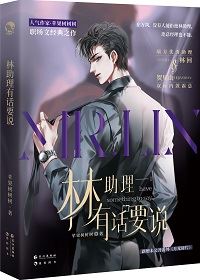
... Read More
Okay so. So He Jian Shan found out Lin Hui was a beneficiary of the Honey Jar Fund. And the way this lands—the sheer weight of it—I am shook. What kills me is that Lin Hui knew about the fund's dark origin. He knew about Yao Qianyi. He knew the pen wasn't just a gift, it was some twisted artifact from He Jian Shan's trauma. And he still chose it. Still chose to carry that pen around for years without ever telling the person who gave it to him. "Since the Honey Jar Fund started, only one person has ever chosen the gift package. That was me. You didn't harm anyone, including me." Lin Hui says this so calmly. Like his entire life has been shaped by something He Jian Shan accidentally set in motion, and he's just... okay with it. Not resentful. Almost tender in how he absolves He Jian Shan. But He Jian Shan can't accept it. "We can't just ignore the wrongs because they coincidentally led to a good outcome." And that's the tragedy, isn't it? Both of them are carrying this guilt like it's theirs alone. Lin Hui carried the secret for years. He Jian Shan carries the belief that his pain tainted something beautiful. Neither of them could see the other side until this exact moment, standing behind a wintersweet tree in a village that neither of them really understood. Also can we talk about how Lin Hui literally came into He Jian Shan's life because of something He Jian Shan wanted to give strangers? The universe has a sense of humor I genuinely cannot deal with.
... Read More
Okay, so I need to talk about He Jian Shan because this chapter absolutely laid his character bare and I am shook. Here's this guy who built an empire through ruthless pragmatism, who crushed opponents without blinking, and yet the ONE thing that makes him lose his cool is people using Lin Hui as a weapon against him. Think about that. Four years ago he fought a battle over the same red line and here we are again. The fact that he refused every PR suggestion to "handle it softly" says everything about where his loyalties lie. He'd rather face down his own shareholders than let Lin Hui carry blame alone. And the scene where he turns to Lin Hui after the meeting and says "We need to talk" — I swear my heart did a thing. He's been standing with his back turned, suppressing restless emotions, and Lin Hui just... observes him. Quietly. Like he knows exactly what's happening behind that composed CEO facade. Then he deflects immediately to the Ninghai project like it's nothing. But we know it's not nothing. No one knows He Jian Shan like Lin Hui does. The shareholder dynamics are fascinating too. They don't care that he's gay, obviously — they care that his VP is gay and that he's willing to burn political capital to protect him. Is Lin Hui worth that fight? That's the question hanging over every boardroom conversation. And honestly, I think He Jian Shan already knows the answer even if the shareholders don't.
... Read More
There's a detail so small I almost missed it on first read but it hit me like a freight train on the second. When Lin Hui hears that Ninghai needs to be finalized by March, he says: 'March is good, a season when spring is in full bloom.' Let me sit with that for a moment. This is a man who was dragged through scandal four years ago, who watched someone die because of circumstances connected to his partner, who has spent years operating in shadows and silence and compromise. And now, facing a renewed assault on his reputation, he finds himself thinking about March. About spring. About renewal. The entire chapter is saturated with imagery of exposure and exposure's consequences — surveillance cameras, leaked videos, public scrutiny, shareholders peering into private lives. Everything is about making the hidden visible. But He Jian Shan refuses one thing: he will not let their love become content. 'It's the most precious thing in my heart, not a commodity for others to rate and discuss.' That line shouldn't work as thematically as it does but it absolutely does, because it's the story's thesis statement compressed into one sentence. March is coming. Spring is coming. The Ninghai project is coming. After two years of negotiations, leadership changes, revisions, delays — everything is moving toward a moment of becoming visible. Not just the project, but the relationship, the truth about Zhou Donghui, Lin Hui's contributions finally acknowledged on record. The symbolic weight of a man saying 'spring is good' while standing in the eye of a scandal storm is not accidental. I don't think the author wrote that without knowing exactly what they were doing.
... Read More
I want to zoom in on one specific moment because the author wrote it with such visual precision that I literally had to pause and re-read it. He Jian Shan is standing with his back to Lin Hui inside the office. That's it. That's the scene. No elaborate description, no weather, no ambient details — just two men in a room and the weight of everything unsaid between them. The camera is fixed on He Jian Shan's silhouette, and Lin Hui is watching him. Calmly. Reader is watching them both watching each other in this triangular gaze that's somehow louder than any dialogue. Then He Jian Shan turns and says 'We need to talk.' What follows is actually brilliant scene construction because the 'talk' isn't romantic at all — it's about the Ninghai project leadership. But the scene still THROBBES with subtext. You can feel it. The reader knows something is coming, some confession or crisis, and instead of delivering drama, the author pivots to boardroom logistics. It's almost comedic in how effectively it buries the emotional avalanche under spreadsheets and timelines. But then — boom — 'I have the most suitable candidate.' Cut to black. The sentence literally breaks off mid-word. We don't get to see what Lin Hui proposes or how He Jian Shan reacts. The scene ends on an incomplete thought and I have never wanted to turn the page faster in my entire life. The author understands something crucial here: the most powerful scenes aren't the ones with the most description, they're the ones where the setting itself becomes a pressure chamber and every silence is loaded with meaning.
... Read More
The goldfish are the symbol that haunts me most. Three goldfish in an aquarium—such a small, contained world. They represent everything Yao Qianyi was: beautiful, delicate, trapped in glass, swimming in circles, performing for an audience that couldn't truly see her. And the aquarium itself? He Jian Shan brings it to her. He literally carries her last desire into the room where she dies. The glass shatters, and that shattered glass becomes the instrument of her suicide. The very thing she loved becomes the thing that kills her. There's something almost poetic about that, if poetic is the right word for something so horrifying. The pen is another symbol that keeps echoing. An AS Muse pen, a gift from a lover, given to a son on his birthday. It represents the intersection of all these tangled relationships—the affair, the marriage, the betrayal, the child who was just a pawn in everyone's game. A writing instrument meant for creating something, used instead to deliver a love letter that destroyed a family. And the dance. Yao Qianyi was 'born for dance, yet also trapped by it.' That duality—she was defined by her art, and her art became her prison. When He Zhao cut off her performances, he didn't just punish her; he removed her entire reason for existing. For someone whose identity was wrapped up in movement and grace, being unable to dance was worse than death. These symbols aren't subtle, but they're so effective that I can't stop thinking about them.
... Read More
The dialogue in this section is surprisingly sharp and layered. What I love is how each character's voice feels distinct even when they're just making casual conversation. Lin Hui's 'Shouldn't you reflect on that?' when people scatter around He Jian Shan—there's this playful accusation underneath, like he's both amused and slightly offended by how intimidating his boss is. And He Jian Shan's response of 'I didn't do anything' with such genuine innocence? Chef's kiss. But the line that's going to haunt me is: 'General Manager Lin, you're much slicker with words than I am.' That's He Jian Shan essentially saying 'you're flirting with me and I notice and I'm not mad about it' while appearing to give a neutral observation. The subtext here is dripping—literally, because right after that Lin Hui's face flushes red all the way to his ears. And the conference room exchange where He Jian Shan says 'Assistant Lin, congratulations'—the text explicitly calls this 'an unspoken flirtation between lovers.' That's masterful. The author doesn't need to spell it out; the reader just understands exactly what's happening beneath the formal language.
... Read More
"Like all lovers, you can ask me to do anything." That line. Right there in the middle of the wind and the cold and the laughter, He Jian Shan just drops that and I cannot recover. It's casual, it's confident, it's THE MOST ROMANTIC THING YOU CAN SAY TO SOMEONE AND HE SAYS IT LIKE HE'S COMMENTING ON THE WEATHER. And Lin Hui's response — "Can I?" — spoken softly, like he still can't quite believe it. After all that time of suppressing his feelings, of pretending he was just an assistant, of never daring to ask for anything beyond duty... this moment where he gets to say yes to everything, and his first instinct is to ask for a hug. Not even a romantic line back. Just: hug me. Hold me. Let me feel real. The author's voice in this passage is so distinct from the office scenes. The work dialogue is clipped, formal, all the "you" and business-speak. Then you hit this outdoor scene and the language opens up, gets warmer, gets longer sentences that breathe. It's like the prose itself falls in love. I also need to talk about the WeChat exchange. The way He Jian Shan responds so briefly — [There's only one thing you need to arrange] — versus Lin Hui's thoughtful scrolling through movie lists and review websites. Their communication styles tell you everything about how they show love. He Jian Shan delegates the emotional labor because he trusts Lin Hui's taste; Lin Hui invests carefully because this is the first time he's arranging something for someone he loves without it being required. And the flower joke! "Don't tell me there's a bouquet of flowers in the co-driver's seat" — Lin Hui knows He Jian Shan well enough to assume he considered it. And He Jian Shan's visible faltering is just perfect. He's smooth in public but completely inexperienced in romance. What a pair.

Leave a comment

You must be logged in to leave comments. or
