Assistant Lin Has Something To Say [BL] - Reviews

Assistant Lin Has Something To Say [BL]
+Add to Custom List
Sort
Add review
... Read More
I need to talk about how the pacing in these chapters absolutely wrecked me in the best way. It starts slow and personal — your friend's account of the bar night, told in this breathless, excited voice. You're reading along thinking okay, fun story, charming anecdote. And then the Weibo post goes viral, and suddenly the narrative engine kicks into a completely different gear. The shift from the personal story to the public spectacle happens so smoothly that you don't even notice you've crossed a threshold. One moment you're in your friend's head, the next you're reading forum threads and news comments, and the perspective expands outward like ripples in water. Each ripple goes deeper and darker. What's crazy is how the tension never lets up. Just when you think the story has settled — okay, Lin Hui is a subordinate, mystery solved — the surveillance video explodes everything open again. And then the forum thread about the dead employee hits like a gut punch. The author is basically playing whack-a-mole with revelations, and each one lands harder than the last. The forum section especially is brilliantly paced. You start reading it almost casually, the way you'd scroll through comments, but each reply chips away at the comfortable narrative you'd built. Comment 6 drops the information about He Jian Shan rushing back from abroad. Comment 7 notes that LH was never disciplined. Comment 8 suggests it wasn't Wan Zhu protecting him — it was HJS. By comment 13, you're sitting there realizing that everything you thought you knew about this story has been flipped upside down. The structure essentially mirrors how internet investigations actually work — you start with a spark, follow the breadcrumbs, and end up somewhere you never expected. And the pacing makes you feel like you're discovering things in real time rather than being told about them.
... Read More
Honestly, the moment that got me wasn't any big dramatic confrontation - it was the whole scent-guessing scene. You know how some couples can just... finish each other's thoughts? These two are there. Lin Hui noticing He Jian Shan doesn't like strong smells, that memory of hotel lobbies and frowning, it's these tiny details that make their relationship feel real. "Hmm, there's a bit of sweetness, a hint of mint, and the smell of fish..." and then He Jian Shan just pulls him close and they're this warm, domestic unit. It's not flashy romance, it's the kind of love where you remember someone's sensitivities and build your world around them. And Lin Hui's whole thing about his brother - he's protective but also giving him space. When he mentions he didn't want to show off yesterday, that's him caring about how things look for his family. The half-brother dynamic with He Jian Chuan is interesting too - different moms, don't look alike, but there's this underlying protectiveness. "They are half-brothers from different mothers, it's normal not to look alike" - that comment online really struck me. It's like the world is always trying to categorize them, but they just keep doing their thing. What I love is how He Jian Shan handles everything. When the PR call comes in during holiday, he doesn't panic. He just makes the call, handles it, then comes back to their fish and LEGO. That's the kind of partner who has your back without making it a drama.
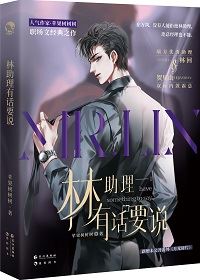
... Read More
Okay can we talk about how devastatingly tender this whole confession sequence is? Like, the author just casually drops in this line about love being subtle—'even though it's been loved for so long, it still so hard to express'—and I'm already wrecked. Lin Hui saying 'I love you' for the third time, voice choking up, and He Jian Shan immediately understanding it's not about the words themselves but the weight behind them... honestly? This hit me different. The way Lin Hui had been building up to this, rehearsing what he'd say at the cinema, planning out holding hands like it was some elaborate project proposal—and then He Jian Shan just quietly knew all along. That moment when their eyes meet across the conference room during the promotion announcement? I literally gasped out loud. But honestly? The orange scene is what got me. Not the dramatic confessions, not the public announcement—just two guys standing by a window peeling an orange, sharing it silently, carrying that citrus scent back into a room full of colleagues. He Jian Shan could've just said thanks. Lin Hui could've told him to buy some mints. Instead, they stood there together, sharing fruit like it was some intimate ritual. That's the kind of quiet romance that stays with you.
... Read More
I need to sit with this winter motif for a minute because it's doing SO MUCH work. Winter in this novel isn't just a season — it's the emotional landscape of Lin Hui's entire experience with He Jian Shan. Cold, distant, beautiful but painful to endure. And then He Jian Shan appears and winter becomes warm. Not because the temperature changed — because Lin Hui is now wrapped in someone else's scarf, someone else's jacket, someone else's heartbeat. The scarf is such a loaded object. It's worn by He Jian Shan, transferred to Lin Hui, and becomes part of the embrace. It's intimate without being sexual. It's practical — yes, it's cold outside — but it's also deeply personal. You don't lend your scarf to just anyone. And when Lin Hui says winter is wonderful, he's not talking about the weather. He's talking about the fact that his secret crush has materialized into something tangible and warm and real. Then there's the movie called Time Traveler. A 2.6 rating. Obscure. Probably about longing for something you can't have, about seeing a different version of events unfold. I'm not even going to pretend I've seen it but the symbolism is so thick you could cut it with a knife. Two people who spent months apart ( flights, schedules, missed connections) finally choosing to watch a movie about time together. And the pale winter sunset — Lin Hui sees He Jian Shan standing in it and thinks all the light and warmth is drawn to him. He Jian Shan IS the sun in this metaphor. Not just warm, but gravitational. Lin Hui orbits him, always has, and now finally they're in the same space. The author is building a whole winter romance mythology and I am HERE for it.
... Read More
Right after the softest couple moment ever, He Jian Shan's mood literally switches from romantic to murderous in two seconds flat. 'They won't just apologize and get off lightly. I'll bankrupt them, making sure everyone involved trembles at the sight of a computer.' The man goes from 'guess how soon I'll be home' to full corporate execution mode and the pivot is so seamless it's terrifying. This is what happens when you threaten the people he loves—he doesn't yell, he doesn't threaten publicly, he quietly dismantles entire organizations. The stakes here are layered: there's the public scandal with the fake rumors, the media company that orchestrated the surveillance leak, and underneath it all, the personal violation of someone trying to control the narrative around Lin Hui. He Jian Shan's response shows he's playing chess, not checkers. And the compensation money? 'Too dirty for charity. We'll spend it—maybe a car or a watch?' The casual way he turns an attack against them into funding their life together is peak power move. Meanwhile Lin Hui just casually throws out 'I'll cover the rest' while patting his own chest. New shareholder energy. This man has never been threatened in his life.
... Read More
Okay so first of all, the way He Jian Shan handles the whole boyfriend thing is *chef's kiss*. Like, he doesn't just show up with some generic wine—he picks something thoughtful, gets a bookstore card, and actually asks Lin Hui about his friends' preferences. That line 'I only have a talent for being Lin Hui's boyfriend' though? I literally screamed into my pillow. It's such a specific kind of devotion that's not loud or dramatic but just quietly, consistently there. And then the desk kiss? Classic, but it works because we've spent enough chapters watching these two build this slow-burn tension that when they finally just... touch? It feels earned. The friendship dynamics are interesting too—Luo Ting and Gu Wenli aren't just side characters giving advice, they're genuinely awkward, trying to navigate meeting your partner's world for the first time. That moment where Luo Ting is internally dying while pretending to be a good host? Relatable. I think what really got me was how love isn't just romantic here; it's in the small gestures. He Jian Shan assembling LEGOs because he noticed the daughter's set was broken. He didn't make a big deal about it, just quietly fixed it while the adults talked. That's the kind of detail that makes you feel like these people actually live somewhere. And Lin Hui's reaction—just smiling, sending WeChat messages under the table—shows how comfortable he is. Not every relationship needs grand gestures. Sometimes it's about showing up with the right wine and remembering how your partner plays cards.
... Read More
The pacing in this section is masterful. The author gives us what looks like a simple card game and turns it into a ticking clock. Every round builds tension without rushing. Seven beats six. Lin Hui wins. But then he lies about misreading it, and suddenly the consequence isn't losing—it's the sip He Jian Shan should've had. That's the first turn, the first real escalation, and it's so clean. Notice how the author controls our breathing through sentence length. When the room is bright and the game is happening, the sentences are longer, more elaborate—dialogue tags, actions, reactions. But once the lights go off? The prose shortens. Gets tighter. The physical descriptions become almost clinical: "Neither spoke, neither touched, but their breaths intertwined." That period after "intertwined" is doing heavy lifting. It's a full stop in a moment that should be flowing. The middle section—the actual seduction—moves differently again. The author slows it down to almost unbearable slowness. He Jian Shan "took his time, like the slyest hunter coaxing his prey." That simile isn't just decorative; it's a pacing marker. We're in hunting mode now. No more games. No more cards. The tension has collapsed from potential energy to kinetic energy. And the exit! The car ride with that little tease about the spacious car and Lin Hui's hand on He Jian Shan's thigh—that's the denouement. It's funny, it's light, but it's also a promise. The chapter ends on that note and you know exactly what comes next. Perfect structure. Three acts of escalating intimacy wrapped in one continuous scene.
... Read More
Okay so let me just say — President He Jian Shan is absolutely ruthless in the most endearing way. Like, the author literally drops this little author's note right in the middle of everything where she reveals that he's been subconsciously flirting since the Changning days when he said Lin Hui quitting horticulture was everyone's loss but his fortune. EVERYONE. And Lin Hui had no idea. No idea at all. What I love most is how He Jian Shan operates differently in public versus private. In the office he's this polished, efficient机器 who signs documents without looking up, but then with Lin Hui he becomes cheeky and expressive and genuinely engaged — not performative, just driven by actual emotion. That distinction matters so much. It's the difference between someone who's good at talking to crowds and someone who's capable of real intimacy. He Jian Shan is both, which should be unfair but isn't. And Lin Hui? His self-awareness about being a burden is both heartbreaking and relatable. He thinks his presence increases He Jian Shan's workload, that he should be more useful. Classic insecure partner energy. But then he pushes back at the date thing — not because he doesn't want it, but because he genuinely worries He Jian Shan is overextending himself. That's not a burden, that's someone who cares. Their dynamic is so healthy honestly. He Jian Shan explicitly says don't mix personal and work, but then immediately bends his own rule because this matters. Lin Hui doesn't fold — he negotiates, he pushes back, he sends thoughtful WeChat messages to arrange their date. They're both showing up.
... Read More
The dialogue between Lin Hui and He Jian Shan in this batch is Absolutely Ridiculous and I love it. Let me just quote a bit: "Do you want to know what I thought when I first met you?" "Not telling." "Hey! That's not fair—I demand to know!" THEY'RE SPECTATORS WHO WROTE THIS. Who talks like this in real life, honestly. But then there's Min Jia, and her voice is SO distinct. She's blunt, efficient, says things like 'I won't waste your time, Lin Assistant' and 'owing him a favor is very different from owing you one.' She's playing chess while everyone else is playing checkers. And Ma Rufang—I loved her entrance. 'You look a bit like—' 'A big star! Gu Jianran!' The author's handling of comedic timing in dialogue is chef's kiss. The humor doesn't come from jokes; it comes from character. Lin Hui's exasperated sighs, He Jian Shan's lazy grins delivered through actions rather than words, Min Jia's pure transactional warmth. Every character has a voice that would be recognizable even blindfolded.
... Read More
There is something remarkably cinematic about how this chapter constructs its spaces. The bar "Hua Li" isn't described in any conventional worldbuilding way — no elaborate decor notes, no menu descriptions — but it feels incredibly real because of the social choreography within it. We know everything we need to about this place through behavior: the manager knowing which bands do and don't drink, the security being called before anything escalates, the way the crowd shifts from booing to chanting to cheering like a living organism. But the image that won't leave me is Lin Hui walking into that harsh bar atmosphere in a simple white shirt, and the narration telling us it felt like spring had arrived with him. Winter outside, spring in his clothes, and the bar lights rearranging themselves around him. This isn't just aesthetic — it's thematic positioning. Lin Hui operates on a different wavelength than this environment. He doesn't fight the darkness; he changes the temperature of the room just by entering it. Then there's the contrast with "Xu" — introduced not as a visited location but as a legend. One of Jinghua City's most famous bars, notoriously picky, where the currently popular "Red Queen" band started. It exists in the story mostly as aspiration and power structure. He Jian Shan being a shareholder there means something enormous — it places him in an entirely different social stratum than the working musicians at "Hua Li." The physical distance between these venues maps directly onto the class and status distance between the characters. And the ending — the crowded bar exit, phones being raised, the sudden shift from intimate to exposed — captures that modern urban loneliness perfectly. You're surrounded by people but every moment of connection can be captured and flattened into content.
... Read More
Oh my god, let's talk about this title. "Assistant Lin." He Jian Shan says it and I just—how can someone repeat three words like that and make it sound like a promise and a threat at the same time? The way he lingers on it, almost affectionate, almost mocking—it's so perfectly He Jian Shan. This man doesn't do anything halfway, and the fact that he sat down across from Lin Hui like he owned the place, like this was some kind of chess match where both of them knew the board but nobody was going to admit it out loud? Chef's kiss. And Lin Hui—this man is a menace in the most charming way possible. He doesn't flinch when He Jian Shan enters. Doesn't run. Sits back down. Then tells him "I want this one too" while touching his leg under the table like it's absolutely no big deal. Who does that? Who casually threatens sexual violence through card games? Actually wait—He Jian Shan lets him have the card. That's the thing. He could've taken it. He chose to let Lin Hui win, and then Lin Hui pretends he misread a 7 as a 9. Two men playing pretend in front of witnesses who are watching like they're at a goddamn theater. Ma Rufang genuinely doesn't understand what's happening. She asks what's special about that card and I wanted to grab her by the shoulders and shake her. It's not about the card, lady. But here's what gets me—the red tie. Lin Hui remembers picking it out that morning, tying it himself while sitting on the bed. He has this moment of tactile recall, this ghost of intimacy from earlier in the day, and then he uses that memory as a weapon. He tugs the tie to pull He Jian Shan closer. That's not flirtation—that's strategy. This man is playing 4D chess and he's been playing it since dawn.
... Read More
Let's talk about this scene's architecture, because the author really built something special here. We open in a private room of a club—already a liminal space, not quite public, not quite private. The lighting is bright enough to see everything but dim enough to pretend. Then Lin Hui hits the switch and it becomes something else entirely. The decorative ball lamp overhead casting "a hazy and dreamlike glow"—that image has been stuck in my head for days. The sensory details are what make this scene breathe. "The faint scent of perfume and alcohol lingered in the air, mixing into an odd fragrance that wasn't particularly pleasant, but reminded them—this was still a public place." I love that the narrator itself acknowledges the contradiction. They're in a private room but they're not alone. Min Jia and Ma Rufang are just outside the door. The stakes of being caught, even partially, create this electric tension that makes every touch feel riskier. And the transition from bright lights to dim—that click of the switch is practically a scene change. The author uses lighting as a structural device here. Bright light = performance, pretending, the card game as theater. Dim light = truth, desire, the moment when the game stops being a game. When He Jian Shan steps into that half-darkness, the rules change. Even the car at the end matters. "This thought amused Lin Hui"—the narrator knows He Jian Shan has a traditional side, won't act recklessly in public. But the car becomes another transitional space, another private public place. Lin Hui deliberately places his hand on He Jian Shan's thigh and acts nonchalant about it. The author keeps building these spaces where desire can hide in plain sight.

Leave a comment

You must be logged in to leave comments. or
