Assistant Lin Has Something To Say [BL] - Reviews

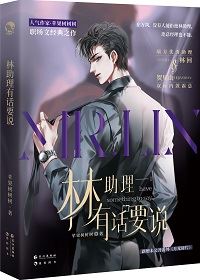
Assistant Lin Has Something To Say [BL]
+Add to Custom List
Sort
Add review
... Read More
The contrast between settings in these chapters is masterful. You've got the Wan Zhu building, unnervingly quiet, mid-level leaders 'treading on thin ice,' the workflow suddenly jammed—a corporate ecosystem held in paralysis. Then you cut to Lin Hui's apartment, forced indoors by a burst pipe, sending pictures of a flower market bursting with color. The New Year is approaching, streets fill with 'festive and peaceful atmosphere,' but inside Wan Zhu, it's tense, cold, controlled. The scene where He Jian Shan scrolls through Lin Hui's flower photos while ignoring shareholder calls is pure visual storytelling. The vibrant, competing colors on his screen versus the sterile, urgent environment he's orchestrating—it's a dichotomy that speaks volumes. Even the video conference scene is rendered with cinematic precision: 'everyone's faces in the video frames frozen.' Not just their expressions—their assumptions, their control, their entire worldview. The author uses setting not as backdrop but as active emotional temperature. The frozen pipes, the frozen network, the frozen shareholders—they're all mirrors of the same stalled momentum. And Lin Hui's choice to stay at home, avoiding 'some trouble,' is a quiet rebellion against the very architecture that once defined him. It's worldbuilding that breathes.
... Read More
STOP. I am not okay. This line right here—'I was wrong. I'll never keep anything from you again'—came out of Lin Hui's mouth after literally a week of separation and I felt my entire chest collapse. After seeing He Jian Shan's stunned face when the resignation news broke, Lin Hui couldn't bear it again. He chose honesty. He chose them. And He Jian Shan's response? Not anger, not suspicion, just... patting his back gently and saying 'I know. I understand everything.' The emotional maturity in this relationship is insane. These two have clearly done the work. The apology doesn't come with conditions. The forgiveness doesn't come with scorekeeping. 'I miss you' → 'I know.' Just two words but they carry a lifetime of knowing each other. And then the doorbell rings three seconds later and He Jian Shan is literally at the door with flowers. The romance isn't in grand declarations, it's in the mundane magic of someone showing up exactly when you need them. This is the kind of love story that makes you believe in things.
... Read More
This chapter is a masterclass in pacing control. Let me break down why it works so well. It starts with a minor conflict—the gift situation—but resolves it quickly through humor and character interaction. Then transitions smoothly to the journey, arrival, and social awkwardness. Each beat serves a purpose: establishing He Jian Shan's thoughtfulness, showing Lin Hui's comfort level, introducing the friends' dynamic, building toward dinner as a climax of sorts. What I notice is how the author uses scene breaks and activity shifts to maintain momentum. They don't linger too long on any single emotion. After the initial awkwardness at the door, they move inside, then tea, then cards, then dinner, then cleaning up, then LEGOs. It's like a dance—each segment leads naturally to the next without feeling rushed or dragged. The poker game section is particularly brilliant pacing because it serves multiple functions: reveals backstory (the nickname 'Zhi Zhi'), deepens friendship history, provides comic relief, and allows He Jian Shan to engage on familiar terms. By the time dinner arrives, everyone's already relaxed, so the emotional beats land harder. And that ending? Assembling LEGO while adults chat? Perfect pacing choice. It gives us intimacy without forcing it, domesticity without sentimentality. The chapter doesn't have a traditional cliffhanger, but it leaves you wanting more precisely because it's so complete yet so open-ended. Life continues after this visit. Relationships evolve. That's sophisticated storytelling.
... Read More
These two: "Don't drop them on my carpet, pick them up and throw them in the trash." "Got it, got it, the boss's meeting still hasn't ended, huh?" I'm dead. Li Feng Hai clipping his nails in Annie's office while waiting for He Jian Shan to finish whatever dramatic boardroom scene is happening? Perfect comic relief that also tells us everything we need to know about the power dynamics. And his line about how the shareholders 'usually not involved in actual operational management, just know how to insert relatives to make money' - that's the kind of dialogue that makes you go 'yes, exactly.' He sees through everyone. The back-and-forth between him and Annie has this natural rhythm, like they've been working together forever. Meanwhile, He Jian Shan's dialogue is all polished and calculated - 'Wan Zhu wouldn't be where it is today without the investment and help from all shareholders' - but then his internal thoughts are completely different. The contrast between his public voice and private feelings is what makes this relationship feel lived-in rather than scripted.
... Read More
Let me get philosophical for a minute because this wintersweet tree dialogue is NOT accidental symbolism and I will die on this hill. Lin Hui explains why his grandmother planted wintersweet instead of another peach tree: "When fate ends, planting another peach tree wouldn't bring back the old one. So why not let a different flower accompany us instead?" This is the thesis statement of the entire novel, folks. Accepting that what was lost cannot be replaced, and choosing to let something new grow in its place anyway. The wintersweet blooms in cold weather. "The colder it gets, the more it insists on blooming." Lin Hui grew up without parents, raised by a grandmother who taught him this philosophy, and now he's standing next to a man whose greatest wound comes from maternal love that turned toxic. Both of them are wintersweet trees in their own way. And the Honey Jar Fund itself—deceptively sweet name, born from a lie to cover another lie. The juxtaposition is brutal. A program designed to simulate maternal warmth is funded by money tied to He Jian Shan's trauma around his own mother. He sent gifts to strangers representing love he couldn't process himself. "The pen, worth ¥49,500, was the last thing Yao Qianyi had left him, embodying, in his memory, the price of maternal love." A pen that costs ten times the cash option. Something He Jian Shan included not because he wanted to give something sweet, but because he couldn't let go of the object that represented his trauma. And Lin Hui—the only person who ever chose the gift package—carried that pen every day for years without knowing its full meaning. How many layers of miscommunication does it take before two people finally understand each other?
... Read More
Okay CAN WE talk about this scene by Ming Yue Lake?? The way He Jian Shan just goes for it—reaching for Lin Hui's hand like it's nothing, then getting rejected because ‘there are too many people.' And Lin Hui's response isn't angry, it's practical. He's thinking about shareholders, PR departments, year-end busy season. Meanwhile He Jian Shan is over here just wanting to hold hands with the person he likes and honestly I'm screaming. But then—the moment. When Lin Hui puts on that hood and gives him this fleeting kiss on the face. ‘A brief kiss that made He Jian Shan sincerely think Lin Hui was adorably crazy.' That line!! I love how the POV keeps shifting microscopically between them, letting us feel both the rejection AND the secret compliance. They're literally hooking fingers together then pulling apart like some sort of romantic tag game. And the university flashback! ‘Don't listen to his nonsense, I never dated in college.' Meanwhile Luo Ting is out here dropping knowledge that dozens of people pursued Lin Hui. The emotional subtext of that confession—was it true? Was he protecting himself? Was he waiting for someone like He Jian Shan?—it lingers without answer. What gets me is the guilt. Lin Hui feels guilty just existing in this secret romance. He Jian Shan keeps saying ‘I'm just an ordinary person' like he needs permission to want affection. The CP chemistry works because neither of them is performing dominance; they're both just… tired people trying to connect. And that final exchange about blue manhole covers? Pure vulnerability dressed as curiosity.
... Read More
I need a minute. The scene at the bridge — you know, where Lin Hui is pointing out all these changes, all these memories turning into something else — and then he just says it casually, "I love summer" and He Jian Shan is just... frozen. Because he remembers that first conversation on his balcony. That whole monologue Lin Hui gave. "I especially, especially love you." And then the author just writes: "If he could, he would have Lin Hui live in his gaze forever." That's it. That's the sentence that destroyed me. Not some grand declaration. Not even a kiss. Just He Jian Shan wanting to preserve a moment so completely that time itself would stop. But then the real emotional gut punch comes later, at the grave. Lin Hui talking to his grandmother like she's sitting right there. "I don't have to travel alone anymore." "I have a home again." And He Jian Shan just... holding his hand. Not saying anything because there's nothing to say. The wind carrying his words away. Spring telling her. This is the kind of romance that doesn't need fireworks. It just needs two people who understand exactly how much the other has suffered and choose to stay anyway. The pen moment earlier — Lin Hui turning a knife into a rose — that's literally what this relationship is. He transforms something sharp and dangerous into something beautiful just by being there. I'm not okay.
... Read More
What strikes me most is how many layers of performance are happening here. He Jian Shan performs for the shareholders. Lin Hui performed by resigning publicly (or did he?). The host performs professional detachment before asking the most personal question possible. Even Li Feng Hai performs casual indifference while clipping his nails. But the real symbolism is in what's NOT said - the flowers on He Jian Shan's phone, the house he bought for Lin Hui, the way he twirls his pen while listening to people treat his partner like a company asset. There's this recurring tension between public image and private loyalty that feels bigger than just this romance subplot. The shareholders represent everything that reduces people to their utility, while He Jian Shan's entire arc seems to be about refusing to play that game. And Lin Hui's resignation - whether genuine or strategic - becomes this act of reclaiming himself from being just another resource to be managed. 'Brothers still settle accounts clearly' might be the thesis statement right there.
... Read More
This chapter is drowning in sensory details that carry thematic weight. The whole scent-guessing scene isn't just romantic fluff - it's about identity and belonging. Lin Hui can't name the fragrance, but he can describe it: sweetness, mint, fish. It's abstract, personal, impossible to pin down. Just like their relationship - you can't define it in words, you just know it. And the privacy theme is huge here. Lin Hui's trauma from four years ago, his desire to keep things private, the online speculation about He Jian Chuan's identity - it's all about who gets to tell their own story. "They are half-brothers from different mothers, it's normal not to look alike" - that comment reduces them to categories, but they keep existing outside those boxes. The fish they're cooking, the LEGO they're playing with, the New Year plans - these are symbols of normalcy, of choosing your own rhythm in a world that wants to consume you. When He Jian Shan says "Our scents are the same, collectively—Home," he's claiming belonging on his own terms. Not public, not performative, just... theirs.
... Read More
Okay so this whole arc around the Ninghai project is basically the plot's ticking clock, and I love how the author uses it to force both characters into these impossible corners. Lin Hui volunteering for the project isn't just a career move—it's a calculated escape hatch that simultaneously solves multiple problems at once. He gets out of being a pawn, he protects He Jian Shan from shareholder manipulation, and he sets up his own return path. The structure here is really clever because every time you think He Jian Shan has the upper hand in this conversation, Lin Hui flips it. He starts defensive, claiming he can handle things alone, and by the end he's revealing he already made the resignation announcement without telling him. That's a proper narrative twist—readers expect the confession scene to end with He Jian Shan accepting it or still refusing, but instead Lin Hui just... does it anyway. The flashback to Fan Yu's office is also smart plotting because it shows us the machinery behind the decision before we see the emotional aftermath. It turns what could have been a single dramatic confrontation into two layers: the strategic plan and the personal cost. Though honestly, I'm a little worried about whether all these pieces will actually land. Lin Hui's plan assumes the shareholders will just accept his resignation and let him come back later through the project, but that feels like it depends entirely on He Jian Shan delivering on whatever promises he makes. If the board fights him, everything unravels.
... Read More
Okay, so Lin Hui finally snaps and hands in his resignation, and I thought, 'Here we go, the classic breakup-before-the-big-battle move.' But what hits me is how the plot then pivots to He Jian Shan's side of the boardroom war. The author doesn't linger on the melodrama; instead, they cut straight to He Jian Shan freezing all shareholder transactions, calling the video conference, and laying out exactly why Lin Hui was indispensable. It's a smart structural choice—take away the emotional center and watch the machine sputter. The tension isn't built through cliffhangers but through bureaucratic leverage: 'postpone everything,' 'conduct thorough reviews,' 'reduce all projected profits.' The plot feels like a chess game where the resignation isn't an end but a triggered trap. And that line, 'He's not just an assistant; in fact, he's half the general manager of Wan Zhu,' lands like a tactical reveal. It reframes everything we thought we knew about Lin Hui's role. The narrative arc here isn't about whether they'll get back together—it's about whether the power structure will buckle under the weight of its own dependence. I'm left wondering if the author is setting up a larger conflict where personal loyalty becomes the ultimate currency. Because honestly, who walks away from a position that holds that much institutional knowledge? Nobody. That's why the plot grips you—it's not just romance, it's a systemic unraveling.
... Read More
The dialogue in this batch is deceptively casual and I love it. Take the office scene where Zhao Xiao Xiao yells "Assistant Lin! Over here—come get your red envelope!" and the whole crowd joins in. This is such natural workplace banter — you can hear the specific energy of a Chinese company New Year tradition, the competitive teasing, the way people rally around someone. And Lin Hui's response: "You've all got some nerve, teasing the boss. Wait until I head to Ninghai in March—let's see who's going to look out for you then." That's not a scripted line, that's someone actually reacting in the moment, slightly flustered but deflecting with humor. Then the exchange with He Jian Shan about the gift. Lin Hui guessing it's a watch and saying "something symbolic, like 'every second of your life with me'?" and He Jian Shan responding "Creative. I'll keep that in mind for next time" — this is flirtation disguised as workplace conversation and it's so good. The subtext is doing ALL the work. And the white roses moment. Lin Hui says nothing when He Jian Shan walks in, just "Morning, President He." So understated but loaded with meaning because of everything that just happened. That restraint in dialogue is what makes the moments land harder. The narratorial voice is also doing interesting things — like the paragraph about how holidays fly by faster than anything, or how "every heated meeting" recorded their love. These aren't character thoughts exactly, they're more like the narrator leaning in to whisper something to the reader. Very cinematic.

Leave a comment

You must be logged in to leave comments. or
