Assistant Lin Has Something To Say [BL] - Reviews

Assistant Lin Has Something To Say [BL]
+Add to Custom List
Sort
Add review
... Read More
Let me just say this: the family dinner at Qiushan Garden is one of the most tense scenes I've read in a romance novel, and there's not a single weapon in sight. The stakes are incredibly personal. He Jian Shan has spent years building distance from his family. He Zhao is his father — a man who made choices that shaped their entire relationship, or lack thereof. And now Lin Hui is entering this space, and everyone knows it. The unspoken question hanging over every awkward sentence and redirected title is: Will they accept him? Can they? But here's what makes it work — the author flips the perspective. Lin Hui is the one who should be nervous, right? He's the outsider, the newcomer, the person meeting his partner's family for the first time. Instead, he realizes that everyone else is more anxious than he is. And that realization calms him down. It gives him power. Not power over them, but power over his own fear. The internal conflict for He Jian Shan runs deeper though. He's choosing, consciously, to bridge a gap he spent years widening. The text says he went "out of his way to have an open dialogue" — for Lin Hui's sake. That's a massive stake. He's risking old wounds reopening, not for himself, but for someone he loves. And then Jiang Qing pulling Lin Hui aside. Classic dramatic setup. The reader expects confrontation, a secret revealed, maybe a family threat. Instead? Gratitude. Her son has decided to pursue music. His father agreed. The conflict has already been resolved — the family just didn't know they were relieved yet. The author understands that the highest stakes aren't always the loudest ones. Sometimes they're a mother thanking you quietly in a study while her husband tries not to stumble over basic sentences at the dinner table.
... Read More
That one word. That single syllable. He Jian Shan says "sweet" after licking his thumb and I physically cannot—I am on the floor. The absolute audacity of a man to taste wine on someone else's lips and then comment on it like he's a food critic at a Michelin restaurant. And Lin Hui's reaction? His hand trembling. His breathing fragmenting. The way he tilts his head back like he's drowning and He Jian Shan is the only air supply. The author really understood something here about desire—that it's not about urgency, it's about patience. He Jian Shan takes his time. He's described as "the slyest hunter coaxing his prey" and that imagery just sits with me. Because this isn't aggression, it's anticipation. Every touch is deliberate. Every pause is calculated. And Lin Hui—god, Lin Hui is suffering beautifully. His legs weakening, his breathing uneven, he's holding himself upright only because He Jian Shan's hand is on his waist. The kiss at the end is where it all snaps. "Like a storm"—that's the line, and I needed a moment. Because up until then it's been this slow burn, this game of almosts and not-quites, and then He Jian Shan just stops playing and takes what he wants. He "captures" Lin Hui's lips and entwines their tongues searching for "every drop of sweetness." That word again—sweet, sweet, sweet. It's like He Jian Shan is memorizing the taste of him. And then the throat bite at the end. The author writes it almost casually—"nibbled on Lin Hui's throat"—but after everything that came before, it lands like a thunderclap. "Thanks for the treat, Assistant Lin." The possessiveness in that line. The final claim. I'm not okay.
... Read More
This chapter structure is a masterclass in controlled pacing. You've got three distinct movements: First, the Luo Ting exposition—dense with backstory but deliberately static. Nothing happens except information transfer. Yet it works because we're learning about Lin Hui's grief, his grandmother's death, his solitude. The silence between them afterward does the emotional heavy lifting. Then the transition to Ming Yue Lake feels almost jarring—a cut from memorial to pleasure, from past to present. But it's necessary. We need air after that heaviness. The lake scene operates on a completely different tempo: quick exchanges, physical comedy (the hand-reaching, the rejection), then this slow build toward intimacy. The university flashback disrupts both timelines—it's a third temporal layer that somehow feels most alive. Those canteen stories, the peanut milk, the tomato courting rituals—they're scattered like memories themselves, not linear.‘We all got to share it too, hahaha.' That laugh breaks the nostalgic spell just enough to keep us grounded. What impresses me is how the author uses physical proximity to control pace. By the lake, sentences get shorter, actions quicker—the retracted hand, the hidden kiss, the finger-hooking. But when they talk about feelings? Everything slows down. ‘If I say, I never really felt tired, would you believe me?' That question hangs in the cold air like it has nowhere to land. The chapter ends mid-thought, trailing off on that blue manhole cover detail. Not a cliffhanger, not a resolution—just… continuation. Which is honestly the most honest pacing choice possible. Real conversations don't end neatly. Neither does falling in love.
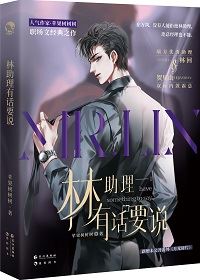
... Read More
The opening description of this section is chef's kiss. Winds carrying fruits and utensils as symbols of abundance—that's such a vivid cultural detail that immediately grounds us in a specific place and tradition. And then the rain. So much rain. It's basically a character in itself. The balcony scene where Lin Hui feels the heater's dry warmth while standing in the rain, that temperature contrast is doing so much work emotionally without being said outright. There's also the domestic morning scene that reads like a film: Lin Hui waking up curled into He Jian Shan's arm, the way He Jian Shan tucks the blanket around him when he feels the cool breeze, the sounds from the next room—brushing teeth, shower, rummaging in the kitchen. These sensory details make the world feel lived-in and real. And then we cut to the office, which has its own atmosphere: the elevator, the 12th floor, Annie gossiping, Zhao Xiao Xiao summoning people to meetings. The contrast between the intimate bedroom world and the formal office world is striking. Lin Hui walking into work with damp hair and a different kind of charm, people noticing immediately—that shift from private to public space adds so much texture. The meeting room scene at the end where He Jian Shan sits in the main seat watching Lin Hui approach is almost cinematic in how it captures the tension of new intimacy in a professional setting.
... Read More
The internet gossip thread in this chapter is genuinely hilarious. 'Maybe the person replacing him is someone he chose.' 'Am I the only one who wants to know how they fell in love?' The netizens are out here writing fanfiction about their own bosses and I am HERE FOR IT. The forum format gives the whole thing this wild meta-layer where characters exist both inside the story AND as subject matter for fictional internet drama. And then there's He Jian Shan's voice—'do you like the version where I propose to you on a yacht filled with red roses while He Jian Chuan plays our love song on guitar?' Absolutely deranged. Absolutely perfect. He's mocking the rumors while simultaneously leaning into them, and Lin Hui's deadpan 'Why is He Jian Chuan involved?' is the best comedic timing in modern fiction. I laughed out loud. The WeChat messages with He Jian Chuan screaming 'Aaaahhhhhh' across the screen—this character lives to cause chaos and I respect it enormously. His voice is so distinct from He Jian Shan's controlled warmth. You can hear the difference even through text.
... Read More
There's something haunting about the way this author handles memory and place. The village isn't just a backdrop — it's a living archive. The bridge that needed fixing, the river where people used to catch crayfish, the drying field that was full of haystacks in summer and is now growing vegetables. These aren't decorative descriptions. Each location is a palimpsest, layers of time pressed into the same physical space. The most cinematic moment has to be that sequence at the former drying field. Lin Hui closes his eyes and the world transforms — sun melting cold, warm wind, heat of summer air, himself as a kid sweating and running, a bird swooping overhead. It's written like a film reel playing behind his eyelids. The author doesn't tell us Lin Hui is nostalgic; they make us experience the sensory memory alongside him. I could practically feel the wheat stubble underfoot. Then there's the grave scene — wintersweet flowers scattered over soil, paper offerings from a previous visit, the cold winter air mixing with fragrance. This is atmosphere at its finest. No dialogue needed. Just the visual of He Jian Shan placing those flowers, the sparse paper remnants, the tree looming above. It feels like a painting. Quiet, dignified, aching. And Qiushan Garden? The contrast is deliberate. Warm indoor lighting, the claustrophobic comfort of a family dinner, the study where Jiang Qing pulls Lin Hui aside. The garden itself seems to hold its breath during that meal. Every setting serves the emotional state of the characters. Nothing is accidental.
... Read More
I need to talk about Lin Hui and He Jian Shan because something fundamentally shifted in these chapters and I am not okay with how casually the author handled it. For eight years, Lin Hui sat at that annual meeting and stared at He Jian Shan from below the spotlight, treasuring those stolen moments of visual contact. Eight years of loving someone who kept him at arm's length, who let him be useful and visible but never claimed him. And then THIS year, He Jian Shan rearranges his seating so Lin Hui isn't trapped next to him all evening getting interrupted by toast-after-toast. He gives him the space to actually eat. To actually breathe. And he sends him this message like it is nothing. Like moving the goalposts of an entire decade-long dynamic isn't a big deal. But here is what got me: the 'girlfriend' thing. When He Jian Shan says 'don't keep your girlfriend waiting' and then corrects to 'boyfriend' in the WeChat thread—that is not clumsy. That is He Jian Shan testing water. He is seeing what happens when he pushes that boundary, when he lets the joke hang there. And Lin Hui's response? He gets flustered but he doesn't pull away. He texts back in formal register mid-panic. That is the thing—I've been tracking how Lin Hui's language shifts depending on his emotional state, and the formal 'you' coming out when he's overwhelmed is such a precise character detail. Then He Jian Shan sends 'I miss you' right at the end. Not in a dramatic way. Just casually, like it belongs there. Like after eight years of silence, this is just... normal now. And I think that might be the most romantic thing I have ever encountered in fiction.
... Read More
Let's talk structure for a second because this chapter is built like a house of cards and we all know one card is about to fall. He Jian Shan arrives in rain. Goes to Lin Hui's house. Gets dried off. Gets fed. Casual conversation about dinner, about airline food, about being lazy. All normal. All safe. Then he walks into the study. Then he sees the bookshelf. Then he pulls out the pen. That's the pivot point. Everything before was setup—warmth, comfort, domestic ease. Everything after is investigation. Because that pen is a question he can't unask. Worth nearly fifty thousand yuan. Brand new. Not his. Given between lovers or to express admiration. And Lin Hui's reaction. Frozen. Unnatural. Saying 'kind of.' Then choking on water. Then changing the topic. Every evasion is a confession. Every distraction proves he's hiding something. The chapter ends with Lin Hui talking about Running with the Wind—a minority group that worships the wind, an annual spring event, obstacle race running against the wind. Cut off mid-sentence. Like his explanation got winded. Like he's running out of time. What's the actual plot here? Two men. One house. One pen. One secret that connects to neither of them directly but changes everything between them. He Jian Shan owns an identical pen. Birthday gift when he was ten. Who gave him that one? Is there a parallel? Is there a history neither of them has named? The plot isn't the pen. The plot is what the pen reveals about everything they haven't said. And the fact that Lin Hui liked him for too long, so long that courage disappeared—that's not backstory. That's the engine driving every scene forward.
... Read More
Okay so let me just — the way this plot unfolds is genuinely brilliant. It starts with what feels like a completely standalone scene, right? A friend at a bar getting harassed, this mysterious white-shirted guy swoops in, buys everyone drinks, flips the whole situation. Classic hero moment. You're sitting there thinking this is just a fun little anecdote your friend wants to share, maybe even romantic in that JJ novel way the commenter noted. But then. Then the author completely recontextualizes everything. The viral post, the blurred faces, the leaked photos — and suddenly this random act of heroism is revealed as something entirely different. Lin Hui isn't some elegant stranger, he's a corporate slave stepping up for his boss's brother, possibly even working overtime. The face-slap moment you were cheering for gets this incredibly bitter aftertaste. And then the surveillance video drops — He Jian Shan wrapping his arm around Lin Hui's waist, kissing his cheek — and the entire narrative launches into a completely different direction. What was a lighthearted gossip piece about a handsome savior transforms into a deep dive into Wan Zhu Group's dark history. That dead employee. The workplace bullying cover-up. The wife who apologized under pressure. The fact that He Jian Shan rushed back from abroad specifically to handle it. The nested structure here is masterful — the bar incident is just the surface, the viral post is the next layer, the forum investigation is the deepest layer, and each one peels back something more disturbing. The plot doesn't just have twists, it has revelations that reframe everything that came before. How many times do you read a scene and later realize it was actually about something completely different?
... Read More
Okay so let me just say this: the way the annual meeting scene unfolds is one of the most satisfying pieces of storytelling I have read in a while. You think you are watching a straightforward workplace drama, right? He Jian Shan gives a speech, people toast, everyone is fine. But then he looks at Lin Hui. And smiles. That single moment completely shifts the entire axis of the scene. It is so small but the plot implications are massive. From that point on, every WeChat message between them carries this electric double meaning because now we know He Jian Shan has been deliberately orchestrating the shift in seating arrangements for him. 'You can finally enjoy your meal this year.' Five words. Five words that recontextualize eight years of careful distance. The author is playing 4D chess here. And then the second act hits when He Jianchuan shows up unannounced at the annual meeting. This wasn't supposed to happen—He Zhao thought he had crushed that band, told his son to disband it. But no, He Jianchuan pulled a classic fait accompli move. He invited himself to Wan Zhu's stage and made his father watch from the front row with zero ability to stop it publicly. That is a gorgeous plot turn because it flips the power dynamic in one scene. He Zhao goes from being the omnipotent patriarch to looking powerless in his own company celebration. And the author doesn't even need to show him losing his temper—he just sits there, sour-faced, drinking, while everyone else cheers. The silence is louder than any explosion. Then the cherry on top: Lin Hui overhears the confrontation later that night. He Jian Shan's office door slightly ajar, He Zhao exploding about the broken promise. It ties the two family threads together in this quiet hallway moment that feels like the calm before something much bigger breaks. The plot is building this slow pressure cooker and I am genuinely terrified and excited about what happens next.
... Read More
Okay I need to process what I just read because my chest is genuinely tight. Not because of anything dramatic or traumatic — but because of how quietly devastating some of these moments are. He Jian Chuan's realization that his brother and Lin Hui share an entire world he's not part of. He comes back from his set, excited, nervous, rubbing his hands together like a kid — and he walks in on them sitting side by side, sharing a phone, existing in the same frequency. And the text doesn't even exaggerate it. It just says he felt "quite superfluous." That word choice is a knife. He's grateful Lin Hui helped him. He apologizes for the expense. He's being incredibly gracious. But he also just lost his brother for a few minutes and he knows it. And then the other thread — the romantic one, which is developing so slowly it's almost invisible. Lin Hui calling He Jian Shan "President He" and the narration telling us it "had gradually taken on a special meaning." Special meaning. That's the entire romance in four words. They've been together for years, the address was standard, and now it's become something else. And He Jian Shan's response — not answering the fun question, immediately bringing up the guy who was staring at Lin Hui — that's jealousy dressed as casual inquiry. He's testing the water. The most quietly beautiful moment though? When He Jian Chuan asks why they didn't drink and Lin Hui says they came to listen to him sing. Not because of the incident. Not because they don't drink. Because the performance itself was the point. That's love language, and I am not okay.
... Read More
The opening of this sequence is WILD. Lin Hui SHOUTS at He Jian Shan — voice so loud the wind seems to pause — about not being able to just follow your heart and accept or reject or play around. And then they just... laugh. Together. In the wind. With He Jian Shan smoothing his hair. That pivot from intensity to tenderness is masterful pacing. The author doesn't linger on the argument; she uses it as a springboard into the most intimate scene of the whole chapter. One beat they're conflicting, the next they're sharing heartbeats. It mirrors exactly how their relationship works — intense, honest, quickly resolving into something softer. Then the author does something incredibly bold: she switches to the most mundane thing possible. A schedule. Week by week, day by day, meeting by meeting. Wednesday, Thursday, Friday, Saturday, Sunday. It reads almost like an itinerary. And yet — AND YET — it's fascinating because the conflict is embedded in the bureaucracy. Every line about Ninghai and Lincheng and Wan Zhu Group is actually about: how much of He Jian Shan's life can Lin Hui access? How much is he willing to give up? The transition from the cold wind scene into the office scene is jarring by design. It forces you to recalibrate — from poetic romance to corporate realism — and that friction IS the point. Their love exists in both worlds simultaneously. Then back to warmth. The Saturday date setup, the drive to the cinema, the waiting in the corner, the Pale sunset. The pacing slows again, breathing room after the schedule section. And it ends almost mid-sentence with Lin Hui about to say something — "Lin Hui p..." — which is such a classic web novel cliffhanger technique. You want more. Immediately. Right now. The author's control of tempo across these four chapters is remarkable. She knows when to rush (the shout), when to slow (the schedule), when to ache (the winter embrace), and when to tease (the unfinished line). This isn't accidental — it's craft.

Leave a comment

You must be logged in to leave comments. or
