Summary

... Read More

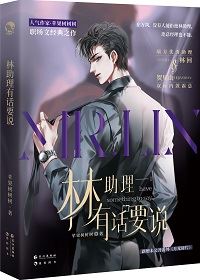
Lin Hui has spent years working as the personal assistant to He Jian Shan, the powerful and disciplined chairman of Wan Zhu Group. Their professional relationship is marked by Lin Hui’s meticulous competence and He Jian Shan’s stoic reliability. However, beneath this formal exterior lies a profound secret: Lin Hui has harbored deep romantic feelings for his boss for many years. He has watched over He Jian Shan, managed his life with precision, and admired him from a distance, never daring to reveal his true emotions. He Jian Shan, in turn, appears to be entirely consumed by his work, living a solitary existence defined by duty and responsibility. To Lin Hui, He Jian Shan is an untouchable figure, a luxury item he fears handling too roughly, leading him to suppress his own needs and desires in favor of supporting his employer.

The dynamics between them shift unexpectedly when He Jian Shan initiates a movie invitation. Initially, Lin Hui interprets this as a casual social outing, unaware of the deeper implications. The evening ends with heavy rain, creating an intimate atmosphere that forces both men to confront their bottled-up emotions. In He Jian Shan’s home, Lin Hui discovers an expensive fountain pen, sparking curiosity and mild jealousy regarding its origins. Tension mounts as they share dinner, and eventually, on the balcony, He Jian Shan reveals that he has fallen in love with Lin Hui. He confesses that he was drawn to Lin Hui long before either acknowledged it, tracing their connection back to their first meeting in the rain. This confession shatters Lin Hui’s assumptions, transforming his role from subordinate to lover in a single night.

Following the confession, the couple begins navigating a new phase in their relationship. They move past the initial shock and enter a period of intense dating and emotional adjustment. Lin Hui struggles with insecurity and fear, worrying that his long-standing unrequited love might become a burden to He Jian Shan. He also grapples with the fear of public scrutiny due to the nature of their relationship. Despite these anxieties, He Jian Shan remains steadfast, insisting on giving Lin Hui the same courting rituals he believes others enjoy. He plans dates, including a cinematic outing where they simply sleep together, and dinners with breathtaking views, demonstrating his commitment to building a genuine connection rather than just fulfilling a romantic obligation.

A significant turning point occurs when Lin Hui visits his old university friend, Luo Ting, and his wife, Gu Wenli. During this visit, Gu Wenli diagnoses Lin Hui’s hesitation, pointing out that he treats He Jian Shan like a fragile treasure rather than a partner. She urges him to embrace the relationship fully and stop living in fear of the future. Inspired by this advice and the support of his friends, Lin Hui begins to open up. He invites He Jian Shan to meet Luo Ting and Gu Wenli, integrating his professional and personal worlds. The meeting is awkward but ultimately successful, strengthening Lin Hui’s resolve to be vulnerable with his partner.

As the year concludes, Lin Hui and He Jian Shan attend the Wan Zhu Group annual conference. During the event, He Jian Shan personally announces Lin Hui’s promotion to Deputy General Manager, publicly acknowledging his value and securing his professional standing within the company. This gesture symbolizes the merging of their romantic and professional lives, validating Lin Hui’s contributions. Later, during a walk by Ming Yue Lake, Lin Hui finally finds the courage to express his true feelings. He tells He Jian Shan that he has loved him for a long time, erasing the lingering doubt and asymmetry in their emotional history. The revelation brings them closer, solidifying their bond as they face the future together, moving from a relationship built on secrecy to one grounded in mutual acceptance and open love.

Latest Release
DateGroupRelease
2026-09-26knoxt c26
2026-09-26knoxt c25
2026-09-26knoxt c24
2026-09-26knoxt c23
2026-09-26knoxt c22
2026-09-26knoxt c21
2026-09-26knoxt c20
2026-09-26knoxt c19
2026-09-26knoxt c18
2026-09-26knoxt c17
2026-09-26knoxt c16
2026-09-26knoxt c15

Community Reviews

Rating(3.9 / 5.0, 128votes)
5 stars
35(27%)
4 stars
41(32%)
3 stars
51(40%)
2 stars
1(1%)
1 stars
0(0%)

Popular reviews

... Read More
The contrast between settings in these chapters is masterful. You've got the Wan Zhu building, unnervingly quiet, mid-level leaders 'treading on thin ice,' the workflow suddenly jammed—a corporate ecosystem held in paralysis. Then you cut to Lin Hui's apartment, forced indoors by a burst pipe, sending pictures of a flower market bursting with color. The New Year is approaching, streets fill with 'festive and peaceful atmosphere,' but inside Wan Zhu, it's tense, cold, controlled. The scene where He Jian Shan scrolls through Lin Hui's flower photos while ignoring shareholder calls is pure visual storytelling. The vibrant, competing colors on his screen versus the sterile, urgent environment he's orchestrating—it's a dichotomy that speaks volumes. Even the video conference scene is rendered with cinematic precision: 'everyone's faces in the video frames frozen.' Not just their expressions—their assumptions, their control, their entire worldview. The author uses setting not as backdrop but as active emotional temperature. The frozen pipes, the frozen network, the frozen shareholders—they're all mirrors of the same stalled momentum. And Lin Hui's choice to stay at home, avoiding 'some trouble,' is a quiet rebellion against the very architecture that once defined him. It's worldbuilding that breathes.
... Read More
STOP. I am not okay. This line right here—'I was wrong. I'll never keep anything from you again'—came out of Lin Hui's mouth after literally a week of separation and I felt my entire chest collapse. After seeing He Jian Shan's stunned face when the resignation news broke, Lin Hui couldn't bear it again. He chose honesty. He chose them. And He Jian Shan's response? Not anger, not suspicion, just... patting his back gently and saying 'I know. I understand everything.' The emotional maturity in this relationship is insane. These two have clearly done the work. The apology doesn't come with conditions. The forgiveness doesn't come with scorekeeping. 'I miss you' → 'I know.' Just two words but they carry a lifetime of knowing each other. And then the doorbell rings three seconds later and He Jian Shan is literally at the door with flowers. The romance isn't in grand declarations, it's in the mundane magic of someone showing up exactly when you need them. This is the kind of love story that makes you believe in things.
... Read More
This chapter is a masterclass in pacing control. Let me break down why it works so well. It starts with a minor conflict—the gift situation—but resolves it quickly through humor and character interaction. Then transitions smoothly to the journey, arrival, and social awkwardness. Each beat serves a purpose: establishing He Jian Shan's thoughtfulness, showing Lin Hui's comfort level, introducing the friends' dynamic, building toward dinner as a climax of sorts. What I notice is how the author uses scene breaks and activity shifts to maintain momentum. They don't linger too long on any single emotion. After the initial awkwardness at the door, they move inside, then tea, then cards, then dinner, then cleaning up, then LEGOs. It's like a dance—each segment leads naturally to the next without feeling rushed or dragged. The poker game section is particularly brilliant pacing because it serves multiple functions: reveals backstory (the nickname 'Zhi Zhi'), deepens friendship history, provides comic relief, and allows He Jian Shan to engage on familiar terms. By the time dinner arrives, everyone's already relaxed, so the emotional beats land harder. And that ending? Assembling LEGO while adults chat? Perfect pacing choice. It gives us intimacy without forcing it, domesticity without sentimentality. The chapter doesn't have a traditional cliffhanger, but it leaves you wanting more precisely because it's so complete yet so open-ended. Life continues after this visit. Relationships evolve. That's sophisticated storytelling.
... Read More
These two: "Don't drop them on my carpet, pick them up and throw them in the trash." "Got it, got it, the boss's meeting still hasn't ended, huh?" I'm dead. Li Feng Hai clipping his nails in Annie's office while waiting for He Jian Shan to finish whatever dramatic boardroom scene is happening? Perfect comic relief that also tells us everything we need to know about the power dynamics. And his line about how the shareholders 'usually not involved in actual operational management, just know how to insert relatives to make money' - that's the kind of dialogue that makes you go 'yes, exactly.' He sees through everyone. The back-and-forth between him and Annie has this natural rhythm, like they've been working together forever. Meanwhile, He Jian Shan's dialogue is all polished and calculated - 'Wan Zhu wouldn't be where it is today without the investment and help from all shareholders' - but then his internal thoughts are completely different. The contrast between his public voice and private feelings is what makes this relationship feel lived-in rather than scripted.
... Read More
Let me get philosophical for a minute because this wintersweet tree dialogue is NOT accidental symbolism and I will die on this hill. Lin Hui explains why his grandmother planted wintersweet instead of another peach tree: "When fate ends, planting another peach tree wouldn't bring back the old one. So why not let a different flower accompany us instead?" This is the thesis statement of the entire novel, folks. Accepting that what was lost cannot be replaced, and choosing to let something new grow in its place anyway. The wintersweet blooms in cold weather. "The colder it gets, the more it insists on blooming." Lin Hui grew up without parents, raised by a grandmother who taught him this philosophy, and now he's standing next to a man whose greatest wound comes from maternal love that turned toxic. Both of them are wintersweet trees in their own way. And the Honey Jar Fund itself—deceptively sweet name, born from a lie to cover another lie. The juxtaposition is brutal. A program designed to simulate maternal warmth is funded by money tied to He Jian Shan's trauma around his own mother. He sent gifts to strangers representing love he couldn't process himself. "The pen, worth ¥49,500, was the last thing Yao Qianyi had left him, embodying, in his memory, the price of maternal love." A pen that costs ten times the cash option. Something He Jian Shan included not because he wanted to give something sweet, but because he couldn't let go of the object that represented his trauma. And Lin Hui—the only person who ever chose the gift package—carried that pen every day for years without knowing its full meaning. How many layers of miscommunication does it take before two people finally understand each other?
... Read More
Okay CAN WE talk about this scene by Ming Yue Lake?? The way He Jian Shan just goes for it—reaching for Lin Hui's hand like it's nothing, then getting rejected because ‘there are too many people.' And Lin Hui's response isn't angry, it's practical. He's thinking about shareholders, PR departments, year-end busy season. Meanwhile He Jian Shan is over here just wanting to hold hands with the person he likes and honestly I'm screaming. But then—the moment. When Lin Hui puts on that hood and gives him this fleeting kiss on the face. ‘A brief kiss that made He Jian Shan sincerely think Lin Hui was adorably crazy.' That line!! I love how the POV keeps shifting microscopically between them, letting us feel both the rejection AND the secret compliance. They're literally hooking fingers together then pulling apart like some sort of romantic tag game. And the university flashback! ‘Don't listen to his nonsense, I never dated in college.' Meanwhile Luo Ting is out here dropping knowledge that dozens of people pursued Lin Hui. The emotional subtext of that confession—was it true? Was he protecting himself? Was he waiting for someone like He Jian Shan?—it lingers without answer. What gets me is the guilt. Lin Hui feels guilty just existing in this secret romance. He Jian Shan keeps saying ‘I'm just an ordinary person' like he needs permission to want affection. The CP chemistry works because neither of them is performing dominance; they're both just… tired people trying to connect. And that final exchange about blue manhole covers? Pure vulnerability dressed as curiosity.
See all reviews

Custom lists

See all custom Lists