After becoming the protagonist’s inner demon - Reviews

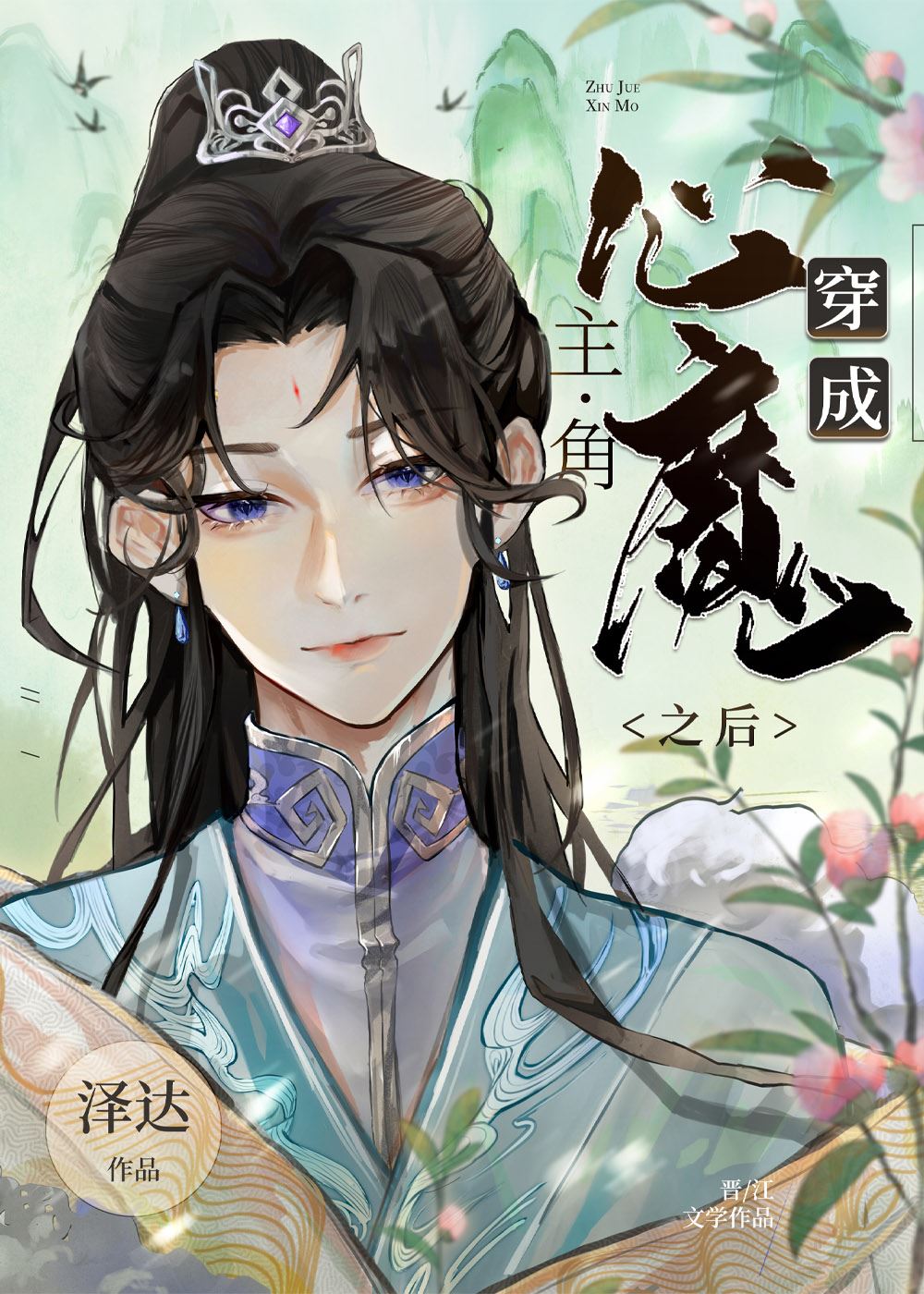
After becoming the protagonist’s inner demon
+Add to Custom List
Sort
Add review
... Read More
"Chu Jinglan, Yushan Sect is planning to send people to bully us!" … "…Noted. Why do you sound so eager about this?" I literally made a noise that was half-laugh half-sneeze reading this. The contrast between Xiao Mo's performative excitement and Chu Jinglan's pure deadpan exhaustion is comedic gold. These two have such distinct voices and the author knows it. Xiao Mo's dialogue is always slightly elevated—exclamation points, questions, theatrical delivery. Even his serious analytical moments come wrapped in enthusiasm. "What kind of expressions should we use later? Of course, most of the performance will depend on you." He's already directing the scene in his head before the actors show up. Chu Jinglan operates in monosyllables and trailing ellipses. His full sentences are rare currency. When he DOES speak at length—like explaining why the nails and hammer came from inside the hut, or dismantling an old barrel—it's because practicality forced him out of his shell. His voice drops when he's irritated or tired, which is basically always. Song Xuan is the most linguistically flexible character. He can pivot from casual gossip to sharp analysis in the same paragraph. "To be honest, I think we should try a different approach" has this careful cadence—he's not just suggesting, he's positioning himself as someone who thinks about systems and reputation, not just survival. Jing Lei's dialogue is PHYSICAL. He uncorks flasks. He slaps tables. He roars like an ox and kicks people. His words are accompanied by bodies. When he says "Get lost—just follow my usual rules," the kick is the punctuation. The narration itself is also doing something interesting here—watching the three Yushan disciples try and fail to stay intimidating while simultaneously being distracted by how good-looking the newcomers are. That's such a specific comedic beat and it lands because the narrator lets us IN on the joke without winking at us directly. The author's voice has this dry warmth throughout. It never mocks its characters, even when they're being ridiculous. That's why the humor works instead of feeling mean.
... Read More
I keep coming back to this one moment and I don't know how to process it. When Xiao Mo says 'I've never eavesdropped on your inner thoughts'—that's it, that's the whole thing. He says it so casually, almost dismissively, and yet the subtext is just... dense. Like, he's acknowledging that he COULD do it. That the capability exists. That he's chosen not to exercise it. That's simultaneously the most threatening and the most tender thing this character has ever done. And then Chu Jinglan's response: 'Don't you think saying that makes it sound even more like you're using mind-reading on me right now?' He's half-joking but he's also genuinely uncertain. Their entire emotional landscape is built on this razor's edge where affection and threat are indistinguishable. I love that Xiao Mo then pivots to 'most of the time, I can tell what you're thinking just by looking at your eyes.' Which is basically him saying I pay attention to you, I watch you, I notice things about you—and wrapping it in something that sounds clinical and detached. That's their love language apparently. Cold analysis dressed up as observation. Also the fact that Xiao Mo describes himself as having 'a clear separation from Chu Jinglan's emotions' but then immediately contradicts it by noting he can read Chu Jinglan's thoughts from his eyes? The man is lying to himself and we all know it.
... Read More
The conflict layers in these chapters are absolutely delicious and I need to talk about the Mu Jian and Su Baimo situation because the stakes here are NOT trivial. On the surface, Mu Jian is telling Dai Zisheng he can't protect Su Baimo in the second layer because he's not ready for third-tier beasts yet. But read between the lines—Mu Jian's reluctance isn't about danger. It's about not wanting to be responsible for Su Baimo at all. And Dai Zisheng, who clearly CARES about Su Baimo, is trying to prove he can handle it. That's a brotherly rift brewing and we're watching it happen in real time. Meanwhile, the external stakes are equally clear: fourth-tier demonic beasts are worth TEN mid-grade spirit stones per core. Xiao Mo just came from the Lower Realm with NOTHING and he's looking at potentially LIFE-CHANGING wealth if he can survive long enough to hunt them. The Immortal Alliance explicitly tells Foundation Establishment cultivators they're "forbidden" from the second layer with a casual "your life is your own responsibility" warning. Death is an everyday commodity in this forest. But the internal conflict? That's where it gets real. Chu Jinglan is walking around in a golden mask with someone ELSE's consciousness piloting his body. Xiao Mo makes decisions for him, comments on his appearance, and Chu Jinglan just... accepts it? There's something deeply unsettling about having your body hijacked by a roommate who critiques your fashion choices. The trust—or lack thereof—between these two is a ticking bomb waiting to go off. And then there's Zi Jiao, completely detached from everything, kicking pebbles and complaining about masked people. The guy just wants a nap while his entire sect is arguing over whether someone lives or dies. The contrast between his apathy and everyone else's intensity creates this weird tension that makes you wonder—what happens when Zi Jiao decides he DOES care? Because right now, everyone is invested in something: money, survival, loyalty, romance. He's the only one who isn't. And that's going to matter.
... Read More
Okay so let's talk about the mechanics of this reveal, because the author is playing with narrative misdirection in such a smart way. Chu Jinglan walks in expecting... something. Maybe a trap, maybe a plot twist. The door is 'slightly ajar,' Xiao Mo's voice is already inside, and instead of whatever he anticipated, there's this glowing orb that stops three inches from his face and then BURSTS. No destruction. Just light. Like fireworks made of spirit energy, turning into fireflies. That's not a combat move—that's a celebration. And the fact that Mo Zhi, Yan Chun, and Chu Xia are all behind him cheering... the plot deliberately sets up tension and then deflates it in the most satisfying way. It's like the author is saying, 'You thought this was going to be dangerous? No. It's his birthday.' The structural pivot from Chu Jinglan's paranoia to shock to confusion to finally sitting down and eating those noodles—that's a complete emotional arc in one scene. And the fact that he finishes every last drop of broth? That's the real plot twist. Not the orb, not the fireworks, but the quiet fact that someone broke eighteen years of his birthday tradition just by existing. What happens next with Xiao Mo's relationship to all of this? The author's leaving us with Chu Jinglan offering to throw Xiao Mo a banquet next year, which feels like the beginning of something major. I need to know where this goes.
... Read More
Here's what's fascinating about this passage: the highest-stakes moment isn't about the inner demon tribulation or Chu Jinglan's fate or even the system's rules. It's a ten-year-old kid being told to get out of someone else's house for wanting to look at a book. Xiao Mo's external conflict is clear — he needs points, he needs to cultivate, he's trapped in this body with this host and these plot constraints. But the internal conflict? That's the real story. He's someone who 'bore grudges but never tormented himself over them' — which reads to me like someone who survived by learning not to expect anything from anyone. The flute represents hope, and hope is apparently dangerous because it makes you vulnerable to disappointment. The stakes of buying that flute aren't 'will he become stronger' — they're 'will he finally give himself permission to want something.' And the system offering to replicate any manual for free, Xiao Mo's immediate practical response, his calculation about whether it's 'too much trouble' to rewrite someone else's fate — it all circles back to the same thing. He protects himself by keeping everything at arm's length. Even kindness. I'm not OK.
... Read More
I need to talk about this one moment because it has been living in my head since I read it. Xiao Mo turns into a tiny Inner Demon and perches on Chu Jinglan's shoulder, and Chu Jinglan — for reasons I still can't fully process — decides he should probably smile back at him. Like he's actively trying to figure out the mechanics of a genuine smile. And he fails. So hard. His whole body tenses up, his shoulder stiffens, his lip twitches, and Xiao Mo immediately panics thinking he's sick again. This is THE kind of scene that defines a relationship. It's not dramatic confessions or grand gestures. It's two people who clearly care about each other deeply, trying to navigate a moment of warmth and both of them just… failing in the most human way possible. Chu Jinglan has apparently never smiled sincerely for anyone before. That line hit me like a truck. And Xiao Mo, tiny as he is, immediately assumes the worst because he's so used to Chu Jinglan hiding his pain. What killed me was the ending of that exchange — Chu Jinglan just deflates, shoulders slumping, and completely changes the subject. He can't do this. He doesn't know how. But the fact that he TRIED, even clumsily, says everything.
... Read More
I need to talk about Xiao Mo because my heart literally cannot handle this character. So Chu Jinglan is at Wan Yu's grave — completely broken, stripped of everything, holding her blood-stained hairpin like it's the most precious thing in the world. And who's beside him? Xiao Mo. Leaning against Chu Jinglan's side. 'Two weakened beings supporting each other.' I genuinely sniffled at that line. Remember: Xiao Mo was hurt, recuperating inside Chu Jinglan's spiritual sea for half a day, still in pain. But the moment Chu Jinglan starts to rise, Xiao Mo reaches out to support him. Not to give advice. Not to say 'you can do it.' Just... to be there. To hold him up. And then the death threat scene hits. Chu Jinglan decides to go after the Chu family. Xiao Mo's response? 'If we couldn't win, we would die together.' No hesitation, no 'but consider your options,' no dramatic pep talk. Just: I'm going where you're going, even if it kills us both. That is not a sidekick. That is a soul bond written in blood. But can we also talk about Wan Yu for a second? Because the way Chu Jinglan treats her memory is devastating. He cleans her gravestone himself — wipes dust off the cheap stone with his sleeve, like she's still someone he needs to care for. Even though she's gone. He tells her 'Mother... I'm leaving' before departing, and says he'll return with their enemies' blood as an offering for her peace. THIS MAN LOVED HER AND HE WILL BURN THE WORLD TO AVENGE HER. And Xiao Tao! Little Xiao Tao bribed corpse carriers with her own silver just so Wan Yu could have a proper solitary grave instead of being dumped in an unmarked mass grave. She tried to give Chu Jinglan money too and he REFUSED. The human decency in this entire bloody mess is what got me. Then there's Su Baimo, tugging Dai Zisheng's robe corner, acting all fragile and pitiful. But Dai Zisheng felt something was OFF. And honestly? Neither of us trust Su Baimo right now. His grief feels performative and I can't tell if he's a friend, a fake friend, or something worse.
... Read More
Okay, so let me just say — Su Baimo is the most fascinating character in this whole scene and I have SO many thoughts about him. The way he walks beside Chu Jinglan, carrying that food box, looking like some kind of fragile spring flower in the mountain breeze... and then the narration just SLAYS us with the truth: "only one heart had opened to love; the other remained as straight as an iron tree, refusing to bloom no matter what." I literally laughed out loud because that is such a brutal, perfect description of Chu Jinglan. He is NOT playing along. He pretends not to notice the glances, he deliberately parts ways at the crossroad, he delivers the engagement cancellation like it's a weather report. And Su Baimo? Oh, Su Baimo is a performer. A goddamn thespian. The tear, the forced smile, the "You didn't say it's impossible, so I'll take that as there's still a chance" — THIS IS THE KIND OF MANIPULATION THAT SHOULD COME WITH A WARNING LABEL. Xiao Mo literally calls him out: "Impressive, impressive. His skill in matters of the heart is truly unmatched." But here's what gets me — the narration also says "If one didn't know how fickle-hearted he was, most people would have been moved." That's the terrifying part. Su Baimo is genuinely good at this. And Chu Jinglan knows it. The fact that Chu Jinglan stays completely expressionless throughout the whole thing? That's not just coldness, that's discipline. That's someone who sees right through the performance and refuses to be affected by it. Meanwhile, the Inner Demon's reaction to even being associated with Su Baimo? "the idea of being associated with Su Baimo was so horrifying to the demon that the mist ball had a knee-jerk reaction." Even the supernatural entity is like absolutely not.
... Read More
The stakes in this section are layered in a way that most authors would kill for. On the surface: a secret realm with first-to-ninth grade monsters, seven days of survival, potential death. Standard cultivation novel stuff. But the REAL stakes are underneath, and they're so much more devastating. Xiao Mo KNOWS what's coming. He knows about Chu Jinglan's mother. He knows about the Mu Mountain Secret Realm's dangers. He's been preparing for this moment alongside Chu Jinglan for a month—attending lectures, reviewing scrolls—and he's carrying knowledge that Chu Jinglan doesn't have. This is DRAMATIC IRONY at its most painful. We watch Chu Jinglan stride confidently into the realm, aura harmonious, reaching Nascent Soul stage soon, surrounded by disciples who follow him because he's the strongest. And we KNOW he's walking toward something that will change everything. The chapter establishes the rules clearly: no outside interference during the seven days. This means Chu Jinglan is truly alone inside, despite having followers. His mother's love—symbolized by those osmanthus cakes—cannot protect him. The engagement to Su Baimo hangs in the balance. His cultivation progress is on the line. And Xiao Mo, who has become something more than just a system-guided inner demon, has to watch it all happen. "Assuming it was another of the inner demon's whims, Chu Jinglan paid it no mind." This line breaks me. Chu Jinglan still doesn't fully grasp the depth of Xiao Mo's concern. He attributes the unusual behavior to demon whims. The gap between what Xiao Mo FEELS and what Chu Jinglan UNDERSTANDS is the central conflict driving these chapters, and it's SO much more compelling than any monster fight could be. Xiao Mo's hands are clenched. Not from fear of the realm. From fear OF THE REALM FOR CHU JINGLAN. That's the stake. Not survival. Loss. The certainty that something beautiful is about to shatter, and the complete helplessness to stop it.
... Read More
Let me tell you about the osmanthus cakes and why they matter more than you'd think. Osmanthus flowers bloom in autumn. They're fragile. They're seasonal. They represent reunion and nostalgia in Chinese culture—and also, crucially, they represent something that CANNOT LAST. The cakes are white like snow, fragrant, soft. Beautiful. Temporary. Chu Jinglan eats them as his mother's gift, and he doesn't know that in three days, the source of that gift will be gone forever. The osmanthus is a symbol of maternal love, yes, but also of impermanence. Of beauty that exists precisely BECAUSE it won't last. And Xiao Mo knows this. That's why he can't eat. That's why the meal's aroma fails to entice him. He's watching Chu Jinglan consume something beautiful while standing on the edge of loss, and there's nothing he can do about it. Then there's the flute. "The tiny demon figure had no mouth, so the flute sound was wrapped in black mist, still relying on the misty breath to produce sound." This is HUGE. Xiao Mo is a creature without a voice, expressing grief through music that sounds DISCORDANT to everyone else. Chu Jinglan hears noise. He doesn't hear sorrow. But WE do. We understand that the ugly sound IS the feeling—a grief too big for words, for mouths, for a body that doesn't exist anymore. And the realm itself—opening once every thirty years, for those under nineteen, allowing no outside interference for seven days—it's a metaphor for the brutal passage of time and the isolation of growing up. Chu Jinglan is about to enter a space where he'll face danger alone, where his mother's protection can't reach him, where the bonds he has now will be tested. The realm IS life, condensed into seven days of trial. "Xiao Mo began playing his flute again." Three days of wailing. Three days of holding back tears that have no tears to become.
... Read More
There's this one image that won't leave my head. Chu Jinglan after the twentieth trip, his breathing heavy, face flushed, looking like steam is rising off him even though the cleaning spell keeps him dry. And Xiao Mo is right there beside him, having eaten half the Licorice Blossoms, staying steady, never pulling ahead, never falling behind. The emotional weight of this chapter isn't in dramatic confessions or tearful moments. It's in the quiet stuff. The way Xiao Mo begins to understand why Jing Lei designed this grueling task—it's a test of willpower, sure, but also a test of companionship. Can you endure not just the physical pain but the monotony, the loneliness, the desire to just stop? Having someone there changes everything. When Chu Jinglan says 'After this, we won't stop again,' it's not just about momentum. It's a promise. To Xiao Mo, to himself, to whatever comes next—they're finishing this together. And when he asks Xiao Mo to walk ahead of him on that final stretch, it's the most vulnerable he's been all chapter. Not because he needs help, but because he wants Xiao Mo there. The text says 'perhaps it was just an idle thought born in passing with no deeper meaning behind it.' Lies. Everything about these two is layered with meaning they're too polite to name out loud.
... Read More
There's something underneath all of this that I can't quite shake, and I think it has to do with the question of whether anyone is supposed to exist at all. The secret realm was originally built as an arena for battling inner demons. That's the foundational metaphor: the cultivation world's greatest trials happen within. But Xiao Mo IS the inner demon. He's not someone's inner demon to be battled—he IS the demon, and he's been forced into a host body that doesn't want him. The realm's purpose mirrors his existence: he is a trial that someone else has to endure. The phrase that haunts me most is "No parents, just a burden!" This isn't just noise during meditation—it's the core wound. Xiao Mo wasn't born; he was attached. He didn't choose this body, this world, this existence. And the voices tell him repeatedly that he's unnecessary. The inner demon who should be conquered is the one suffering the conquest. Xiao Mo's isolation is symbolic on multiple levels. Physically, he's separated from his host—a demon cut from its demonizer. Psychologically, he's cut off from his past life, his present connections, and any visible future. Socially, he's the kind of being that everyone wishes didn't exist. The text says "Isolation can drive one mad" as though it's stating a universal law, but for Xiao Mo it's not a risk—it's his current condition. The leaf flute is the symbol that broke me. He wraps a leaf in dark mist and tries to play music. The instrument he loves—the flute—is trapped in the sea of consciousness, inaccessible. What he has instead is a piece of vegetation and his own spiritual energy. The music is "squeaky, sputtering," intermittent and piercing, and "silent to all." He's creating beauty in a context where beauty has no audience, no purpose, no witnesses. And yet he keeps trying. That's not just persistence—that's the stubborn assertion that something exists worth expressing, even when the expression produces no sound. The blood-red darkness during his meditation attempts represents the inner demon's own toxic environment. When the voices turn the darkness red and the air thick, it's not the realm changing—it's Xiao Mo's psychology made visible. The cultivation world operates on the principle that inner states manifest externally, and here we see a consciousness so burdened by rejection that even his own mind becomes hostile terrain. "Wouldn't it be better if he died?" The question isn't just shouted by vague voices—it echoes the realm's own logic. The secret realm is collapsing. The disciples will die. The beasts are appearing where they shouldn't. The entire world is becoming a place where things that shouldn't exist are dying. Xiao Mo's personal struggle mirrors the cosmological one. They're the same story told at different scales. And then the wind. Just wind. On the beast's back, rushing past, clearing his foggy mind. Nature doesn't care about his existential crisis, and maybe that's the only mercy available. The world continues whether he exists or not—and perhaps that's both the tragedy and the only thing keeping him going.

Leave a comment

You must be logged in to leave comments. or