Summary

... Read More
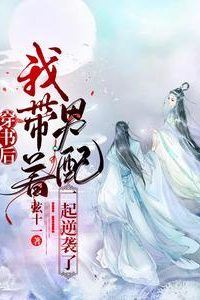
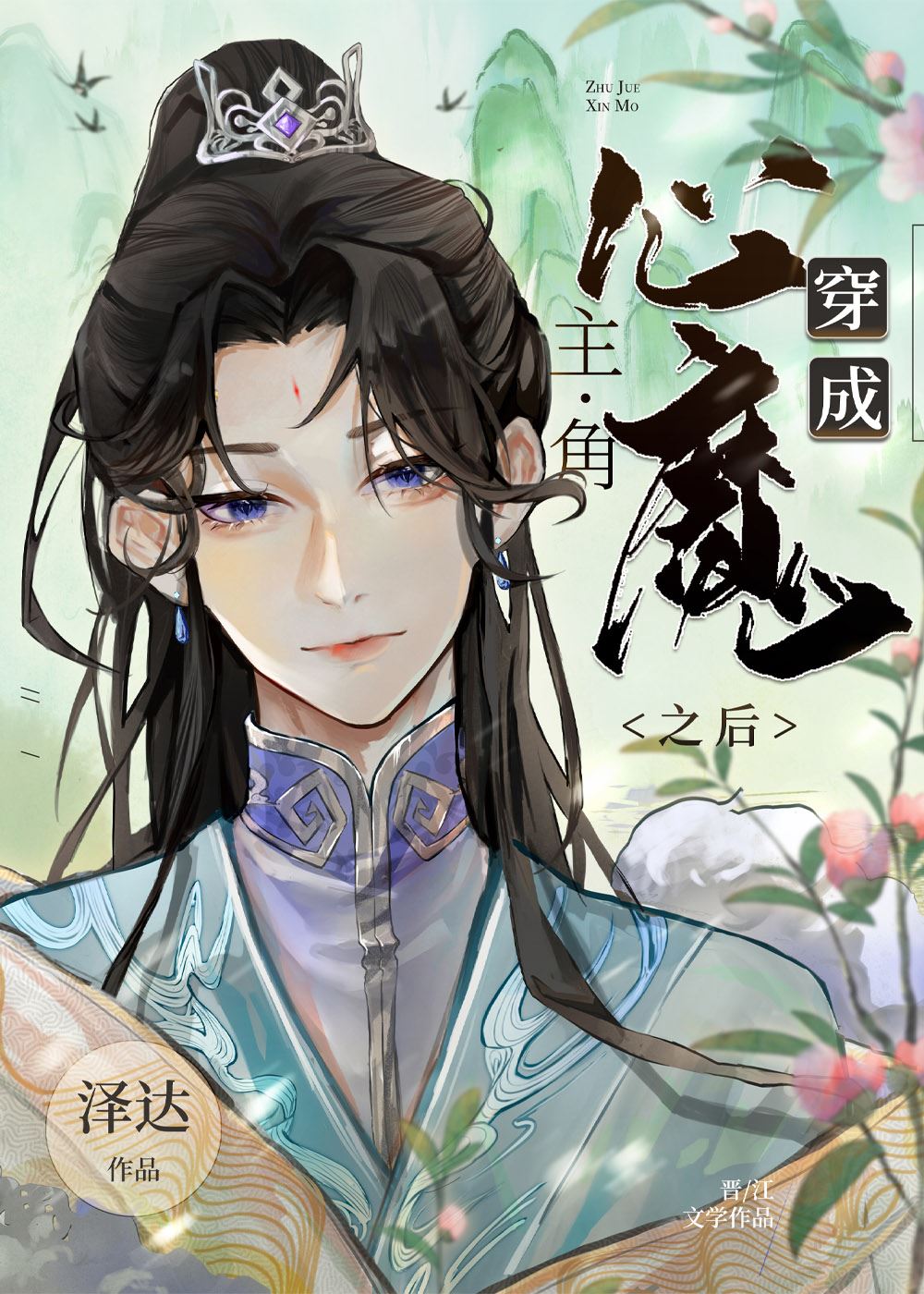
Xiao Mo is a seventeen-year-old university freshman who leads a difficult life after being abandoned by his irresponsible parents and bullied by relatives. During his final summer vacation, he reads a melodramatic cultivation novel titled "The Moonlight of the Cultivation World" and becomes furious at the character Chu Jinglan, a genius cultivator who wastes his extraordinary talent and life on an unfaithful protagonist named Su Baimo. In a fit of indignation, Xiao Mo writes a lengthy critical review online before going for a walk along a riverbank to clear his head. While reflecting on the absurdity of Chu Jinglan's fate, he hears a splash and discovers a child drowning. Without hesitation, Xiao Mo jumps into the water to save the boy, pulling him to safety.However, just as Xiao Mo attempts to climb out, an unseen force drags him underwater. As he suffocates and loses consciousness, he is pulled into a transmigration system. The system informs him that he has died and has been chosen to become the "inner demon" of Chu Jinglan in the novel's world. Xiao Mo initially struggles with the news of his death but eventually accepts his new reality, driven by a desire to live a brilliant life that defies those who looked down on him. His primary mission is to exist as Chu Jinglan's inner demon, causing him psychological distress to accumulate points, which can be used for cultivation or items. The ultimate goal is for Chu Jinglan to eventually kill Xiao Mo to prove his Dao, a event that Xiao Mo intends to face with minimal effort, planning to sleep through most of the narrative until that final moment.Xiao Mo is transported into Chu Jinglan's sea of consciousness, a desolate landscape featuring a withered tree and a silent lake. Because he is currently at the same cultivation level as Chu Jinglan (peak Golden Core), Xiao Mo can only manifest as a floating ball of black mist, though he retains the ability to form a human image within the consciousness space. He begins by constructing a comfortable courtyard in his designated territory. Meanwhile, Chu Jinglan, a prodigy born into the powerful Chu family, is deeply troubled by the sudden appearance of this inner demon at such a low cultivation stage. He spends three days researching ancient texts and experimenting with his spiritual sense, eventually managing to enter his own sea of consciousness.Upon entering, Chu Jinglan encounters Xiao Mo, who resembles him but possesses a more alluring, demonic appearance due to a red lotus mark. Their initial interaction is hostile; Chu Jinglan attempts to strike Xiao Mo with his sword, but the blade passes through harmlessly. Xiao Mo taunts Chu Jinglan, deliberately provoking him to gain points for the system. Chu Jinglan, unable to destroy the inner demon, withdraws to reality to formulate a plan. He discovers that Xiao Mo is obsessed with the scent of food and uses this weakness to torment the demon during meals, finding a small measure of satisfaction in their mental battles. The dynamic between them establishes a pattern of constant verbal sparring, with Xiao Mo treating his role as a burdensome job and Chu Jinglan viewing the inner demon as a vexing obstacle to his cultivation and peace.The plot thickens when Su Baimo, Chu Jinglan's fiancé and the novel's protagonist, arrives seeking Chu Jinglan's help. Su Baimo claims to have rescued an injured stranger, Dai Zisheng, a disciple of the Huanjian Sect. Xiao Mo recognizes Dai Zisheng as one of the many love interests in the original story who would become devoted to Su Baimo. Curious about how the story might change if the credit for saving Dai Zisheng were shared, Xiao Mo deliberately goads Chu Jinglan into staying behind and helping with the care of the injured boy, rather than leaving immediately as he originally intended. This interference disrupts the original plot, setting the stage for further complications as Xiao Mo continues to navigate his new existence while Chu Jinglan tries to maintain control over his life and cultivation destiny.

Latest Release
DateGroupRelease
2026-09-26knoxt c148
2026-09-26knoxt c147
2026-09-26knoxt c146
2026-09-26knoxt c145
2026-09-26knoxt c144
2026-09-26knoxt c143
2026-09-26knoxt c142
2026-09-26knoxt c141
2026-09-26knoxt c140
2026-09-26knoxt c139
2026-09-26knoxt c138
2026-09-26knoxt c137

Community Reviews

Rating(4 / 5.0, 344votes)
5 stars
117(34%)
4 stars
106(31%)
3 stars
116(34%)
2 stars
5(1%)
1 stars
0(0%)

Popular reviews

... Read More
There is this one moment—just one—and it completely reframes everything between these two. Chu Jinglan watches Xiao Mo conjure that silver-threaded floral mask and his internal monologue goes: he notices the Inner Demon has a bit of vanity. Not arrogance. Not pride. Vanity, in the way someone might notice a stray thread on a coat. He catalogues how Xiao Mo is dressed differently every time he sees him, and today even the mask is meticulous down to every detail. And then Chu Jinglan thinks about what Xiao Mo's face beneath it would look like—breathtakingly beautiful, vivid, flamboyant—and here's the thing that caught in my throat: he says it won't be similar to his own. He imagines a completely different visage. Why would he think that? What does that say about how he sees himself versus how he sees Xiao Mo? And then Xiao Mo just… doesn't play the flute in public. He hears Chu Jinglan's three words—We're almost there—and immediately says Oh, then I won't play. No performance, no attention-seeking. Just compliance. That's not weakness. That's trust. The children are behind them making comments about masks and Chu Jinglan doesn't even engage. He just doesn't comment. Classic. But also—he noticed. He always notices.
... Read More
Okay, I have to address the single most cinematic image in this entire batch because my brain will not let it go. Xiao Mo lying prone at the edge of Chu Jinglan's bed, with daylight filtering through the window paper, gilding his body in this hazily golden light. The text literally says: "The closed window shutters couldn't keep out the light. Daylight filtered through the window paper, hazily gilding the inner demon's body, giving this scene an indescribable air of tender affection." Tender affection. Applied to an INNER DEMON. An evil entity with a red lotus mark between his brows, no heartbeat, no breath, looking more beautiful and alluring than the host himself. And the narrator describes this visual like it's a painting. Like it's a Renaissance piece where the boundary between divine light and demonic presence has completely dissolved. What's devastating about this scene is the contrast. You've got this golden, almost holy warmth coming through the paper windows, and in the center of it lies a creature that shouldn't exist — not breathing, not alive, yet performing the most human gesture imaginable. Supporting someone's head. Feeding them water. Watching over them with this intense, quiet gaze that the text describes as "intently yet gently." The sensory details are doing so much heavy lifting here. Chu Jinglan's face is "pale and weak" with "a last trace of youthful innocence on his cheeks" — the text literally tells us he looked like a real ice cube, "more like frost that could crumble at a touch rather than solid ice — not intimidating at all." His hands were bandaged from when he saved Xiao Mo. His dantian is destroyed. He is a broken thing lying in a room where the servants only come once in the evening. And the light coming through the window makes it look beautiful. Makes it look almost peaceful. This is the author showing us that even in complete ruin, there can be something unbearably beautiful — not because the suffering isn't real, but because someone is witnessing it without looking away. Then Chu Yusheng kicks the door open and everything shatters. The golden light still there. The tenderness still hanging in the air. But now poisoned by the sound of footsteps and flattery and the voice of the new Young Master announcing himself. The scene transition from sacred silence to vulgar intrusion is so brutal I actually had to put the book down for a second.
... Read More
I keep coming back to the sensory details in this chapter because they do so much heavy lifting without the author ever raising their voice. "The light fell on Xiao Mo's water-colored robe" — that's it. That's the line. Three beats and suddenly you can SEE them: Chu Jinglan lying in bed, barely awake after seven days, and Xiao Mo sitting nearby in this pale robe catching the light. It's domestic in a way that makes the whole situation feel even more fragile. Like if the light shifts even slightly, this moment breaks. And the quilt! So many times Xiao Mo is interacting with the bedding — pulling it up, his fingers pressing on the edge of the bed, the clothes wrinkled by his own grip. This creates this claustrophobic sense of confinement. Chu Jinglan can barely move, Xiao Mo's range is limited to a twenty-li radius. They're both trapped, just in different ways. The bed becomes this整个世界 for them, and yet within those walls, something genuine is happening. The courtyard itself — I love how the outside world is filtered through what reaches Chu Jinglan rather than showing us the grand estate directly. We learn about the family head's indifference through servants' reports, we learn about Wan Yu's condition through Xiao Mo's scouting trips, we learn about Chu Xiaoshi's medicine through what was accepted versus what was kept. The world exists at the edges, pressing in but never fully visible. It makes the courtyard feel like a pressure cooker. "Seven days." Two words that carry so much weight. Seven days of Chu Jinglan unconscious, seven days of Xiao Mo alone in this courtyard making decisions about whether to interfere with storyline characters, seven days of Wan Yu being cared for by a maid because nobody else remembered her. Time passing matters here — it's not just plot exposition, it's the accumulation of loneliness. The visual of Xiao Mo turning away, facing the sky, saying casual things while his voice wavers — this is cinematography-level writing. I can see every frame.
... Read More
The medicine in this passage isn't just a plot device—it's a symbol of control disguised as care. Wan Yu takes it daily, and it suppresses her cultivation, keeps her manageable, turns her into a patient problem rather than a person. But it's also what Chu Jinglan insists on, what the family deems necessary. The line between protection and imprisonment blurs until it vanishes. And then there's the poison in Chu Jinglan's food—the “poison” Wan Yu administered, which Xiao Mo initially assumes is lethal. But it's not. It causes pain, yes, but not death. And that's the theme right there: the toxicity of familial love. Wan Yu's actions are cruel, but they're also desperate. She wants her son near her, even if her mind can't express it safely. Chu Jinglan endures the pain because he'd rather have her attention than none at all. The real poison isn't in the food—it's in the cycle of abuse, betrayal, and distorted affection that binds them. Xiao Mo's presence as an inner demon mirrors this too. He's part of Chu Jinglan, yet separate. He can observe but not fully intervene. He's like love itself in this family: intimate, inescapable, and often painful. The recurring motif of “delicious” cooking versus actual poisoning? That's the story's thesis in miniature. Nourishment and harm from the same source. How do you survive that? Chu Jinglan hasn't figured it out yet. Neither have I, honestly.
... Read More
I need to appreciate how the author structurally sets up this entire scene before pivoting hard. First half: treasure rain descends, Xiao Mo goes full hoarder mode collecting pouches, Chu Jinglan finds some genuinely impressive stuff (Heart-Guard Mirror?! Profound-tier jade?!), the blind bag explanation scene with the kids, everyone sitting in a circle opening loot together. This is warm, breezy, almost slice-of-life cultivation content. The pacing here is deliberately relaxed - the treasure rain lasts only 'half a cup of tea' so the whole event feels like a brief burst of excitement rather than an extended arc. Then the word 'Meanwhile' hits implicitly and we're suddenly watching someone block a sword strike with a magical artifact mid-argument. The transition is so smooth you almost don't notice it until you're already tense. One moment we're worrying about whether Xiao Mo can hold all those pouches without dropping them, the next we're wondering if Chu Jiao is actually going to follow through on that killing intent. What's smart about the pacing is that the treasure rain itself serves as both a plot device AND a structural divider. It brings everyone together physically but also exposes the fractures underneath. The pouches that seem like pure loot actually become the catalyst for internal sect conflict. And the chapter ends mid-tension with Mu Jian's expression darkening - no resolution, no breathing room. Perfect cliffhanger structure.
... Read More
There's a weird poetry to this chapter that I can't quite shake. The spiritual treasure rain itself is such a rich symbol - it falls indiscriminately on everyone regardless of merit. Good people and bad people both reach up to catch it. The leading sects distribute wealth like benevolent gods, but the rain doesn't discriminate between those who deserve it and those who will misuse it. Chu Jiao catches poison disguised as opportunity, just like the disciple caught a pouch and got a sword swung at him for it. Then there's the white spiritual jade Chu Jinglan finds. Pure, untapped potential - enough material for a flute AND protective talismans. It's beautiful stuff, meant for creation and protection. And Chu Jinglan immediately envisions what he'll craft: a flute for Xiao Mo, talismans for everyone. The jade becomes a symbol of what cultivation SHOULD be about - building up, protecting, caring for your people. Contrast that with the swirling darkness in Chu Jiao's heart. Same energy, opposite direction. Where the jade creates, the darkness consumes. Where Chu Jinglan uses his resources to strengthen others, Chu Jiao would destroy a fellow disciple over a pouch. Two paths branching from the same moment - the treasure rain reveals who people truly are when they think no one's watching. Even the Heart-Guard Mirror is symbolic. A mirror that deflects fatal blows. Chu Jinglan found it and planned to keep it for himself - protection. But the real danger in this chapter isn't coming from outside. It's already inside Chu Jiao, and no mirror will save him from that.
See all reviews

Custom lists

See all custom Lists