Your Fangs Are Perfect for Biting My Glands - Reviews

Your Fangs Are Perfect for Biting My Glands
+Add to Custom List
Sort
Add review
... Read More
Okay, let's talk about Cheng Che for a sec because this guy is somehow both intense and ridiculously soft at the same time and I am HERE for it. He waits for Zhou Zhou under a streetlamp after finding out his lights are off — not because he has to, not because it's practical, but because he WANTS to see him. And then the line where he says he didn't reply to WeChat so he's punishing himself by standing there experiencing what it feels like to wait for someone? That is NOT something a typical alpha character would say in this genre. That's self-aware, almost vulnerable, and completely disarming. He takes Zhou Zhou's backpack without being asked, offers to walk him home, says the words 'let's go back home' and just... watches him. The whole energy shift from Chapter 34 where Zhou Zhou is stressed about chemistry grades to this scene where Cheng Che is just... being tender is wild. And Zhou Zhou? He's over here doing mental math about how to tell him he's an omega, working up courage, building up this impenetrable shield — while Cheng Che is just standing there holding his bag like a simp in the best way possible. The asymmetry between them is everything. One is terrified of rejection, the other is literally writing himself a punishment for texting too slowly.
... Read More
The chapter title 'A Paper Box' is so casually devastating I can't even. You'd think it's just describing an object but it becomes this entire metaphor for Zhou Zhou's emotional state—a cheap container for things he can't bear to throw away but can't bear to keep either. The pacing in these chapters is masterful. It starts with Wen Ran's confession in the hospital, which is heavy and slow and aching, then shifts to Zhou Zhou's social media post which is brief and almost breezy, and then Chapter 77 opens with the family dynamics—almost light, domestic, before crashing back down with the paper box scene. That tonal whiplash is intentional. The author lets you breathe between the heavy scenes, which makes the heavy scenes hit harder. The transition from the hospital to half a month later, then back to school, feels natural. There's no rushed recap, no 'previously on' energy. We just slide into Zhou Zhou's routine—returning to Omega Center, wearing the neck guard, avoiding questions. The scar revelation with Wen Ran at the end of the passage works as a structural cliffhanger without being cheap. It doesn't need a 'to be continued' because the image of that scar is more haunting than any question mark ever could be.
... Read More
I need to talk about the stakes in this chapter because they're simmering beneath every scene and I am NOT ignoring it. On the surface, nothing 'happens.' Zhou Zhou gets marked, deals with a few annoying Alphas, carries some papers, receives a love note. But underneath? The entire social ecosystem of this school just shifted. Zhou Zhou's conflict is internal and external simultaneously. Internally: he's adjusting to having a partner who won't stop touching him, checking on him, claiming him. Externally: the Alpha community is watching, gossiping, and Yu Yang is... something. The author doesn't spell out what Yu Yang feels, but that moment where he stares at the flower pots while Cheng Che has Zhou Zhou pinned against a bookshelf? That's not neutral. That's pain. That's jealousy wearing a mask of indifference. The stakes here are social survival. Zhou Zhou can't predict when Cheng Che is going to grab him by the collar in public. He can't control what other Alphas think. He's walking on thin ice, and the ice is cracking every time someone looks at him differently. His outburst about head-pats isn't just territorial—it's a statement of war against the old social order where he was just one Alpha among many. But the real tension comes from what Cheng Che is risking. He's an Alpha in a school environment, openly marking his partner, slipping notes during class, making scenes. He's not hiding. That takes a kind of courage that makes the quieter moments—the heartbeat in a silent classroom—feel Earnest and fragile. What happens when someone decides Zhou Zhou isn't acceptable? When Yu Yang stops pretending he doesn't care? The chapter ends on a note that feels almost TOO peaceful. I have a bad feeling about that flower-pot-staring boy.
... Read More
Let me just say this once: whoever wrote this chapter sequence deserves to have their reading experience similarly destroyed. The pacing from chapter 39 into 40 is BRUTAL in the best possible way. Chapter 39 ends with them essentially making out against a wall—hot, tense, charged—and then chapter 40 opens with Jin Wuqi literally complaining "it hurts" in that soft, breathy voice that basically functions as an aphrodisiac for the reader. The escalation is relentless. There's no breather. No "let's go eat and talk about our feelings." Just pure momentum carrying them from the elevator to the apartment to the bedroom in what feels like thirty seconds of narrative time but takes pages to process emotionally. And then—cut. Right there. In the dark, with the jacket coming off, with Yu Yang looking like a work of art in the faint light—and that's it. That's the chapter. The structure here is almost cruel in how efficiently it builds and then abandons you at the highest point. This is how you write a chapter that guarantees people will lose sleep waiting for the next update.
... Read More
The pacing in these chapters is masterful because it moves in waves, not直线线. Chapter 87-88 opens with Zhou Zhou waking up disoriented, then spirals downward through panic (the suppressant drawer scene), then almost comedically—two knocks on the door, Cheng Che appears holding a bag, expressionless. The tension here is unbearable because you're waiting for the confrontation, and then Cheng Che just... takes the syringe and throws it away. No yelling. No drama. Just 'Have you washed up? Are you hungry?' This is such a confident narrative choice. The author could have had Cheng Che berate him, could have had Zhou Zhou beg, could have had a whole emotional breakdown. Instead, the author chooses care as the pivot point. Then Chapter 88 shifts gears completely—we're now on the bed, Cheng Che confronting him with 'Why are you still taking suppressants now?' and the dialogue accelerates toward intimacy. The chapter ends with 'It's me. Only me. Zhou Zhou, I'm yours.' and we cut to Chapter 89. The structure here is: isolation → panic → rescue → confrontation → confession. Four beats in two chapters, and each one lands because the author trusts the reader to sit with discomfort. The suppressant scene alone is a pacing masterpiece—Zhou Zhou crouching, trembling fingers, heart beating too fast, breath coming rapid—then TWO KNOCKS. The abrupt interruption is everything.
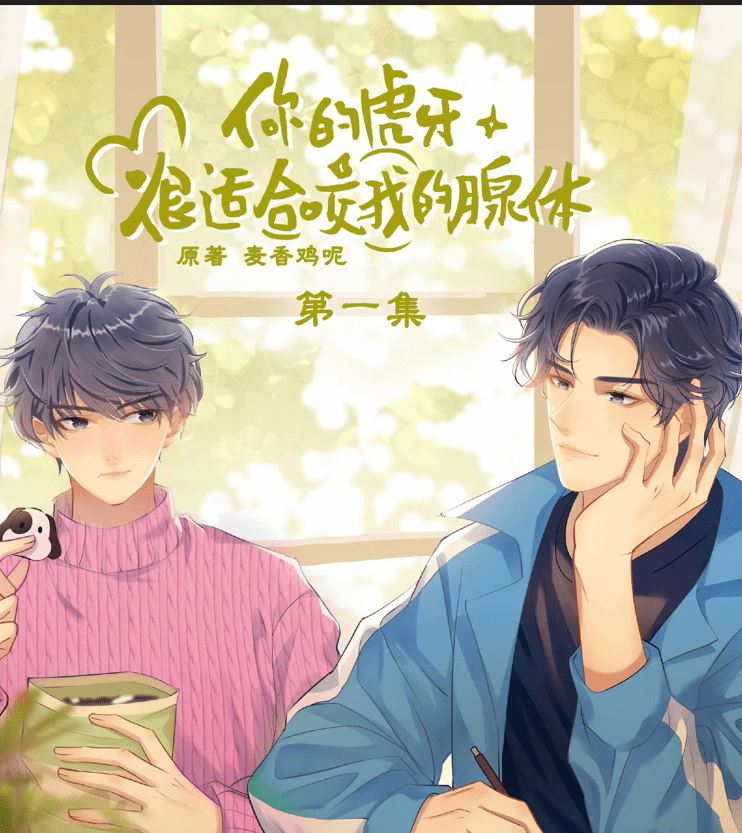
... Read More
I want to talk about how the author weaponizes time in this chapter. The entire crisis unfolds across what, maybe twenty minutes of real time, but the chapter makes it feel like an eternity. How? By fragmenting it. First you get the heat hitting in real time — the fever, the ringing ears, the blurred vision. Then the bracelet countdown. Then those TEN-SECOND gaps between calls. Ten seconds of Zhou Zhou crawling to the bed. Ten seconds of him considering the third number he hasn't even inputted. Ten seconds of thunder and rain and memory overlap. The author is basically pressing pause on the worst moment of his life and holding it there. And then Cheng Che's section. Immediate shift — he's already moved, already driving, already knowing. The pacing flips from slow dread to urgent motion. One moment Zhou Zhou is drifting in and out of consciousness, the next Cheng Che is unscrewing the door lock and his glands are reacting before his brain even processes what he's seeing. The rush of that chapter transition mirrors exactly how Cheng Che feels — no hesitation, just go. But then inside the room, the pacing slows again. Zhou Zhou is too far gone to process anything rationally. He thinks Cheng Che is a hallucination. He pushes him away. The author keeps the urgency but removes the clarity, which is honestly more realistic than any clean dramatic reunion ever could be. Heat doesn't give you neat emotional moments. It gives you confusion and tears and begging. The chapter ends with that rain image echoing from months ago, which is a structural full-circle moment disguised as atmosphere. Beautifully done, even if it wrecked me.
... Read More
Okay so I need to talk about how this whole sequence is basically a narrative event disguised as a romantic interlude. Chapter 48-50, we go from blow-drying hair to bathtub soaks to morning-after porridge, and somehow the plot keeps moving forward even though nothing externally dramatic is happening. That's actually impressive writing. Cheng Che turns 18 during this stretch, and the narrator casually drops that he lost his virginity. Lol indeed, as the translator said, but what struck me is how the story treats this milestone — it's not made into some huge dramatic confrontation or conflict. It just... happens. And then they eat congee and go back to sleep. The plot here is literally the relationship deepening in real time. There's a line that says, "In this world, many things are cruel and demanding. But only in front of someone you love can joy and sorrow be genuine and meaningful." That's basically the thesis statement for the entire novel condensed into one sentence. The external world may be full of omegas, alphas, glands, and social hierarchy, but the core engine of this story is just two people learning how to be vulnerable with each other. And honestly? That's better than any fake plot twist.
... Read More
This chapter does something really clever with its pacing — it starts slow and quiet, this gentle classroom scene where Zhou Zhou is trying to study and Cheng Che is napping, and then it slowly ramps up the tension until the entire middle section becomes this breathless confession sequence that reads like one long held exhale. But here's where it gets interesting: instead of resolving the tension with a romantic payoff, the author pulls the rug out. Zhou Zhou kisses Cheng Che, Cheng Che's pheromones spike, and then — nothing. Cheng Che just wakes up and goes back to work. The romantic high comes crashing back down to whatever this normal study session is. It's almost frustrating, and that frustration is exactly what makes you want to keep reading. Then the chapter ends with Zhou Zhou posting on his alt account at 10:18 PM, screaming into the void about how he kissed him and said 'be good' and confessed, and getting a LIKE from a mystery user @5bcc. THE CLIFFHANGER. I read that last line and immediately had to check if there was more. Who is @5bcc?! Is it Cheng Che?! Of course it's Cheng Che, right?! Right?? The translator even breaks the fourth wall with a joke about hating chemistry, which is a nice tonal shift before the final hit. The structure here is deliberate — build anticipation, deliver the emotional peak, then leave you hanging with a mystery that's almost more addictive than the romance itself.
... Read More
Let me just appreciate one sentence from this text because the author deserves all the praise: 'It seemed to spread outwards from the glandular region, like dye spreading on pristine skin, forming a blush that extended down his neck. It almost looked like a flower blooming from beneath his pink sweater.' I am not a literary person but this sentence made me stop reading and just sit with it for a full minute. The way the author describes the physical effects of pheromones on Zhou Zhou's body — the warming glands, the flush spreading from his neck down, the pink tint on his ears — it's so visual and so intimate at the same time. You can literally see the blush growing in real time, and it's happening while Cheng Che is right there grading papers, occasionally glancing at him. The classroom setting itself is also doing a lot of work here. Two Alphas (well, Zhou Zhou pretends to be one) sharing a desk, textbooks spread out, the sound of a pen tapping on paper. It's such an ordinary, everyday scene that makes the romantic tension hit even harder. There's something about studying chemistry together while secretly in love that feels both mundane and incredibly specific to this world. The minty sake pheromone description is another standout detail — it gives the scene this sensory layer that goes beyond just visual. You can smell it through the page.
... Read More
Let's talk stakes because this text is layered with them and most readers probably gloss over how genuinely tense everything is. On the surface, the conflict is simple: Zhou Zhou failed chemistry again and the teacher is furious. But the subtext is a tsunami. The college entrance exam is approaching—this is presumably a make-or-break moment for his future, and he's actively choosing to play Gomoku during class instead of studying. Why? Because his mental energy is consumed by something else entirely: the obsessive need to figure out Cheng Che, to navigate this impossible situation of hiding his true identity while simultaneously wanting to be seen by the person he desires. The external conflict (teacher vs student, academic failure vs institutional consequences) mirrors the internal conflict (authentic self vs performed identity, desire vs survival). Every time Zhou Zhou tries to play the long game with Cheng Che, something else in his life collapses. The 18-point test paper isn't just a joke—it's evidence that his double life has real costs. He can't maintain both fronts. And Cheng Che? He's positioned as both observer and potential threat. He notices everything—the fake sweetness of the orange, the inconsistency in Zhou Zhou's stories—and yet he hasn't reported anything. That's a suspense thread I'm incredibly invested in. When will he cross from silent observer to active participant? And what happens when Zhou Zhou's carefully constructed facade finally cracks under the weight of its own impossibility?
... Read More
I cannot get over how Cheng Che is described in this text. He's this intense, controlled alpha who can't stop thinking about Zhou Zhou — and yet the moment Zhou Zhou initiates, even just a soft kiss, Cheng Che completely surrenders. The narrator literally says Zhou Zhou is "innocent yet seductive" and that this allure has "tormented Cheng Che to the point of surrender." But here's what I love: Cheng Che isn't portrayed as some dominant figure who takes control. He's desperate. He's trembling. He wants to hold onto this kitten forever and not let go for even a second. And Zhou Zhou? He's barely aware of the effect he has. He's just being himself — blushing, silent, biting his lip — and Cheng Che is completely wrecked by it. Their dynamic isn't about power; it's about mutual devastation. Every touch between them feels like it's burning both of them alive. The scene where Cheng Che changes the sheets after their bath while Zhou Zhou is half-asleep? That's care. That's devotion. That's the kind of detail that tells you this isn't just lust — it's love wearing a very specific kind of skin. "Thank you, my little strawberry." I'm not okay with that line. I'm genuinely not okay.
... Read More
Okay so Cheng Che is honestly one of my favorite types of characters and I need to talk about this. He walks into the room while Zhou Zhou is doing homework, sees that healing wound on his neck gland, and what does he do? He licks his own fangs. Not a word, just this slow deliberate lick and the text says 'the sharpness of his teeth felt an itch.' I literally gasped. This man is a complete menace but he packages it in such a cute package. Then he goes to the kitchen, washes grapes, brings them back in a transparent glass bowl, and sits in the exact chair Zhou Zhou just vacated. The contrast is everything. He's this dangerous Alpha who could bite right there and then but instead he's sitting there checking physics homework. 'You got it right,' he says, 'but don't skip too many steps.' And then—pat pat—'Good boy, come sit on my lap.' The shift is so seamless it's almost scary. One moment it's academic advice, the next it's hands around your chest peeling grapes while pressing his face against your ear. What I love is that Cheng Che genuinely seems to believe these two things are connected, like caring about Zhou Zhou's grades and wanting him on your lap are the same impulse. And Zhou Zhou knows this. He KNOWS this. He just sighs internally and gives in every single time. The power dynamic here is fascinating because on the surface Cheng Che has all the power—the Alpha, the one who marked Zhou Zhou, the one who can release pheromones at will. But Zhou Zhou keeps showing up. He keeps doing his homework. He keeps pretending to be annoyed when really he's been waiting for this exact pattern all along. Every time Cheng Che asks 'Hungry?' with that suggestive double meaning, Zhou Zhou plays along instead of shutting him down. That's not weakness—that's choice. And that's the whole relationship in a nutshell.

Leave a comment

You must be logged in to leave comments. or
