Your Fangs Are Perfect for Biting My Glands - Reviews

Your Fangs Are Perfect for Biting My Glands
+Add to Custom List
Sort
Add review
... Read More
The opening scene is gorgeous in its sensory detail. 'City A washed clean by the heavy rain'—this image appears right after Zhou Zhou confirms what happened last night, and I think it's doing double duty. The rain mirrors his emotional state: washed out, dripping, raw. But what really strikes me is how the worldbuilding here operates through BODY sensations rather than exposition. We learn about the ABO ecosystem through Zhou Zhou's hot skin, throbbing glands, trembling legs, the sweat beading through his pores. The text describes 'fine beads of sweat seeped through his skin' and 'the wounds on his glands, bitten open, throbbed faintly, yet strangely yearned to be bitten open again.' That word choice—yearned—is doing so much work. It's not just physical; his body remembers and wants what his mind is too proud to ask for. Then there's the lingering alpha pheromones described as 'like a deadly aphrodisiac.' The environment itself becomes antagonistic. I also love how domestic this all gets—the bread and milk already waiting, the peeled banana, Cheng Che's quiet supervision. It's this bizarre contrast: highest biological urgency and most mundane breakfast ritual happening simultaneously. The bedroom becomes both a sanctuary and a prison during heat, and the air conditioner running but doing nothing against the internal fire—that detail is so vivid.
... Read More
I need to discuss Cheng Che's line about boundaries and I am still not over it. Zhou Zhou accuses him of being quiet and aloof before they were together, and Cheng Che's response is absolutely brilliant misdirection: he says back then he wasn't her boyfriend yet, so any forward behavior would have been sexual harassment, and then he deadpans 'I do have boundaries.' Zhou Zhou internally rolls her eyes and correctly identifies that his boundaries are probably 'not as deep as the Mariana Trench,' which is the kind of specific comparison that made me laugh out loud. This exchange reveals everything about their power dynamic. Cheng Che is self-aware enough to reframe his past restraint as moral virtue, which is either impressive or deeply manipulative depending on your perspective. And Zhou Zhou, bless her, sees right through it but is too tired to fight about it. She literally thinks 'none of the outcomes is good for me' when considering confronting him. That is not a healthy relationship assessment, friends, but the author is clearly playing with this tension intentionally. The shower scene that follows is also telling—Zhou Zhou can barely keep her eyes open, Cheng Che is playing with her hair while reminding her about unfinished homework, and the domestic intimacy is there but so is the underlying control. He knows her schedule, he knows her exhaustion, he picks the phone up himself. This is a relationship where love and dominance are uncomfortably intertwined, and the author is not shy about showing it.
... Read More
The title of this novel is "Your Fangs Are Perfect for Biting My Glands" and honestly, every chapter reinforces what that title promises on a symbolic level. The gland-biting motif isn't just a physical act within the ABO universe — it's a metaphor for trust, for vulnerability, for the moment when two people decide to let their guards down completely. Cheng Che's pheromones are described as minty sake — sharp and intoxicating at the same time. Zhou Zhou's presence has the same effect on him. The text literally says, "Even the freshest pheromones turned into flammable gas at this moment. Even the slightest touch could devour Zhou Zhou crazily in flames." This isn't just erotic description; it's thematic language about how love transforms everything it touches. And then there's that repeated image of softness: Zhou Zhou curled into a ball, Cheng Che's gentle gaze, the warm bath towel, the fluffy hair in the morning. In a world that's supposedly built on dominance hierarchies and biological imperatives, these characters keep choosing tenderness. The night before becomes the morning after, and nothing has changed except that they're more sure of each other. That's the real story here — not the glands or the fangs, but the quiet revolution of two people deciding that love is worth the risk of being seen.
... Read More
I started reading this expecting another quick chapter and ended up fully emotionally compromised at an ungodly hour. Let's talk about WHY this works so well structurally. The author opens with Cheng Yan arriving at the hospital and immediately dropping the bomb: Zhou Zhou damaged his glands, took two doses of suppressants, might need surgery. Boom. Chapter one, first paragraph, emotional nuke. No warmup. Just straight into the fire. Then instead of resolving anything, the chapter does something I genuinely appreciate—it stretches the tension. We get the doctor's explanation (lingering dread), Cheng Che on the floor (agonizing stillness), the wait through the night (suspended time), and THEN the family arrives. Each beat lands differently. The transition from emergency room to ICU to dawn is handled so smoothly too—time passing feels real, not skipped over carelessly. The translator note here is also clever meta-commentary: "the wife-chasing-crematorium will begin soon." The author knows exactly what kind of pain she's feeding us and she's savoring it. What I found brilliant was how the chapter ends—not with confrontation, not with answers, but with Zhou Zhou asking for porridge. After all that intensity, after the near-death experience and the self-mutilation and the terrified family standing vigil, the emotional resolution is just... a quiet moment about food. Zhou Moning promising to make his dad's walnut and red date porridge. It deflates the tension perfectly and leaves you aching for the next chapter. The pacing here is surgical.
... Read More
'Did you eat all the peanut candy I gave you last time?' That line. That absolutely devastating line. Right after Wen Ran has just laid bare his entire ruined life, his guilt, his apology, his admission that he's a rat in the gutter—and Zhou Zhou asks about PEANUT CANDY. It's the most Zhou Zhou thing ever. It's also the most human thing. Instead of grand speeches or dramatic forgiveness, he reaches for the small, safe, specific thing they shared before all this happened. It's way more powerful than anything he could've said about feelings. Wen Ran's voice is equally distinct. His speech is fragmented, self-deprecating, full of hedging: 'I really didn't know,' 'I admit defeat,' 'It's not good.' He always undercuts himself. Even when he's giving Zhou Zhou the exam notebook, he says 'If you don't need it, you can throw it away' like he's already expecting rejection. The narrator's interjection about malice and kindness—'No one is better than anyone else—malice remains malice, and kindness does not mean never making mistakes'—is the author's voice breaking through, which I actually loved. It frames the whole moral ambiguity of the story without preaching. And Zhou Moming's dialogue is terse, practical, slightly evasive. 'Yes.' That's all he says to Jian Yan. Perfect.
... Read More
I keep coming back to the peanut candy in Wen Ran's hand. That image has been sitting in my brain since I finished this chapter. He's holding it while muttering to himself about not being worthy of friendship. What is that candy? Is it a gift from someone? Something he bought himself and feels guilty about? The author doesn't explain, and I think that's the point — some objects in this story carry meaning that the characters themselves can't articulate. They're physical anchors for emotions that are too tangled to name. Then there's the bubble tea motif, which runs through this entire chapter like a quiet thread. First Cheng Che buys it for Zhou Zhou as part of their日常 ritual. Then Jin Wuqi turns it into a joke — "Today might not work. My bubble tea has already been bought by someone else." Which is both playful and kind of sharp, like he's marking territory without quite saying so. And then Yu Yang arrives with TWO cups, having somehow anticipated this exact moment. Bubble tea becomes this vessel for connection, for rivalry, for care, for everything that happens between people who can't just say what they mean directly. The sunset at the end operates on a completely different frequency. It's described as an oil painting — artificial, composed, beautiful in a way that feels curated rather than lived. And right there, with that manufactured beauty surrounding them, is Zhou Zhou offering cola to Wen Ran while Cheng Che waits. Three people, three different relationships to this moment, one golden sky. It's almost too much. That's the thing about this book — it collects these small symbolic moments the way you collect receipts, and suddenly you realize you've been holding onto something heavy the whole time.
... Read More
Can we just take a moment for the title of this novel? 'Your Fangs Are Perfect for Biting My Glands' — that is the most aggressively romantic title I have ever encountered and I love it. But let's talk about the actual emotional tension in these chapters because it is NEARLY VISIBLE. Zhou Zhou is going through something. His suppressants are wearing off early, he's been exposed to Cheng Che's pheromones constantly, and he's displaying all these 'uncontrollable signs of a hidden longing' without even understanding why. He just knows he feels an itch deep inside him. The way he looks at Cheng Che — those bright apricot-shaped eyes, moist and pleading, looking like a little dog begging for something — it's so vulnerable. And Cheng Che? He notices EVERYTHING. He asks if Zhou Zhou has a fever. He notices his heart rate. He notices his pheromone concentration increasing. Both of them are hyper-aware of each other's bodies and neither will admit it directly. That scene where Zhou Zhou buries his face in Cheng Che's chest and Cheng Che's hand hangs in the air for a long while before finally coming around to embrace him back? I literally gasped. That hesitation. That's someone who wants to hold someone back but is fighting themselves about it.
... Read More
Cheng Che's voice in this section is so distinct because of what he OMITs. When he finds Zhou Zhou about to inject himself, he doesn't ask 'What are you doing?' or 'Why would you—' or any of the dramatic lines I would have written. He just 'squatted down, took the syringe from Zhou Zhou's hand, covered the syringe's cap, and threw it into the trash can.' Not a word. The silence here is louder than any dialogue. Later, when Zhou Zhou is crying about the scars, Cheng Che's response is almost casual: 'Painful. But not as painful as yours.' This is a man whose entire personality seems to be carved from restraint. But then—when things get heated, his language shifts entirely. 'Where does it feel good?' becomes conversational, almost playful, maintaining connection even during intimacy. And the final line, 'Zhou Zhou, I'm yours,' is devastating because Cheng Che rarely yields. The contrast between his practical caretaking (making breakfast, buying condoms, leaving early to avoid scaring Zhou Zhou) and his rare verbal surrender creates a voice that feels entirely unique. Zhou Zhou's dialogue, meanwhile, is fragmented—'It's not that...' trailing off, his emotional state too fragile for complete sentences. The author uses broken speech to show his vulnerability. 'Everywhere feels good' is almost childlike in its simplicity.
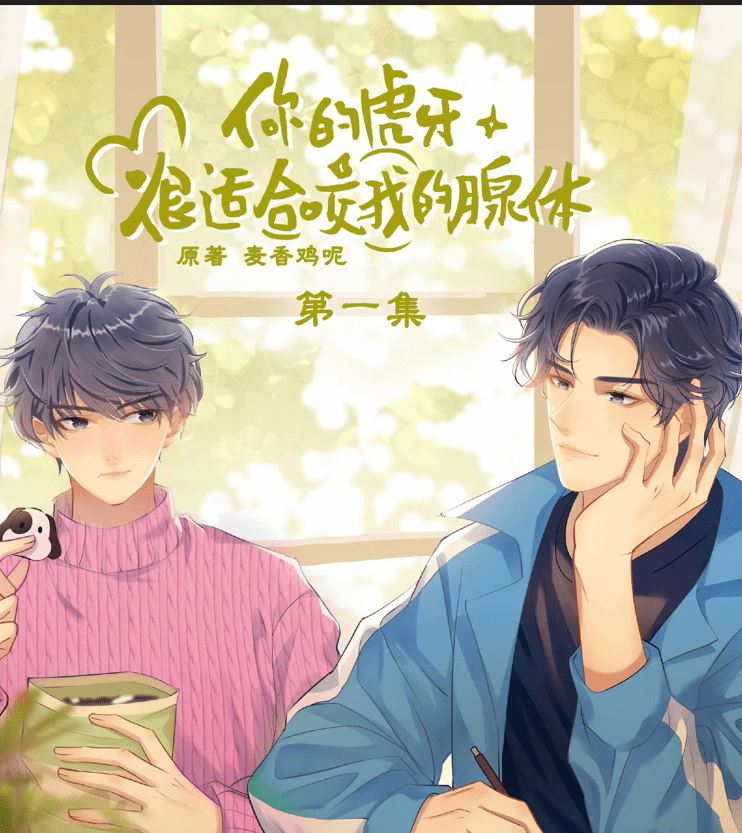
... Read More
"Young people, don't be too hasty." Yu Yang says this with a straight face after witnessing Cheng Che and Zhou Zhou's near-public make-out session and I nearly fell off my chair laughing. Because this man—who is secretly sleeping with Cheng Che's COUSIN—has the absolute audacity to play relationship sage. The self-awareness is zero. The shamelessness? Immaculate. The text makes it crystal clear that Yu Yang is internally screaming about this situation. He even considers slapping himself for giving advice he obviously isn't following himself. And the worst part—the funniest, most devastating part—is that he's worried about the family dynamics. Will Cheng Che have to call him "brother" now? Will Zhou Zhou too? His internal monologue about suddenly having "two more little brothers" and concluding "life is good" is such a character-revealing moment. This guy is completely chaotic and morally compromised but also weirdly content with his own chaos, which makes him strangely endearing. Meanwhile between Cheng Che and Zhou Zhou, there's this whole dynamic shift happening. Zhou Zhou used to be shameless when they weren't together—bothering Cheng Che all the time—but now that they're actually a couple, he's the one who's nervous and cautious. Cheng Che flipped the script entirely. He's the bold one now, grabbing waists in study rooms and cornering Zhou Zhou in hallways. Zhou Zhou thinks he misread Cheng Che at the beginning when Cheng Che only offered a handshake instead of a kiss, but really Cheng Che was just playing hard to get or maybe genuinely surprised by the directness. That moment where Cheng Che covers his own eyes during the kiss? That's not coldness, that's him barely containing himself. The detail about him always closing his eyes when kissing while Zhou Zhou stays open-eyed and watches him is such a small thing but it tells you everything about who's in control and who's captivated in each moment.
... Read More
Can we just take a moment for Zhou Qiao because THIS is how you write a sibling who actually feels real? She's furious, she's threatening to call their dad, she's calling Zhou Zhou a damn Omega to their face — and then immediately makes the phone call to get the suppressant anyway. That contradiction IS the character. She says 'get lost you damn Omega' while literally solving his problem. That's love, that's family, that's not written like some Hallmark gesture but actual messy sisterhood. And then there's the whole brother-in-law backstory she drops like a grenade — this guy pretended to be an Omega to deceive her 'sisterly feelings'? The betrayal runs both ways now, doesn't it? Zhou Zhou learned their little pickup tactics from their own tragic romance. Meanwhile Yu Yang is over there treating Zhou Zhou's confession like a horror story — 'the world has gone crazy' — which is honestly the most Yu Yang reaction possible. This friend group dynamic is doing SO much work. Every relationship reveals something different about Zhou Zhou: fierce with Qiao, casual with Yu Yang, obsessed with Cheng Che. Layers upon layers.
... Read More
Let me just say this: the pacing in these chapters is either masterful or absolutely cruel, and I can't decide which. The college entrance exam takes up actual real-time in the narrative. Three days of rain, three days of exams, and the author makes us EXPERIENCE the wait alongside them. It's deliberate. It's agonizing. I found myself actually wanting to skip ahead and then feeling guilty about it, which I think is exactly what the author wanted. "Zhou Zhou forgot how he got through it. He just felt like everything was tense and chaotic." This paragraph right here - it's short, it's vague, it's intentionally understated. And it works because we've already spent so much time in the buildup that the actual exam feels like it passes in a blur. Smart structural choice. Then the rooftop scene hits and the pacing slows right back down. Jin Wuqi and Cheng Che standing on a balcony after rain, smoking, talking about leaving... the author hits the brakes hard after the exam rush. It gives you space to breathe and process. The transition from the school scenes to Chapter 79 "Hometown" is jarring in a good way. It signals a shift - the exam is over, the next phase begins. Yu Yang's scene with Jin Wuqi is quick and snappy, almost comedic, which provides necessary relief before we dive back into Cheng Che's heavier emotional state. One thing I will say - the author is NOT rushing the reconciliation. And honestly? Thank god. Every time I get impatient, the story reminds me that these people are carrying guilt, regret, and years of complicated history. The slow pace isn't filler - it's the POINT.
... Read More
I have never related to a character's internal conflict this hard in my life. Zhou Zhou literally lays it out: 'I want to be with you every day, see you after class, and spot you in the hallway with just a glance. But there's no need to be so fixated on these things, right? The cost is a bit too high.' AND THEN HE SAYS IT IS WORTH IT. Not in a dramatic way, not with big declarations — just this quiet, matter-of-fact admission that slides right past my defenses. He's not blind. He knows the stakes. He's about to take the college entrance exam, his future is on the line, and he's still choosing this. Choosing Cheng Che. Choosing the risk. The part that wrecked me though was when Zhou Zhou says being an alpha 'felt easier' before because his mind was just filled with determination to pursue Cheng Che. Now that he's matured, now that he has to think about consequences and decisions and the real world — that's when the fear creeps in. Love gets louder when you're older and you actually understand what you could lose. That's not weakness, that's just... growing up, and it hurt to read because it's so true. And Cheng Che? He doesn't pressure him. He doesn't make Zhou Zhou feel guilty for being afraid. He just squeezces his hand and says 'Just make the decision that makes you feel the most at ease.' That is THE standard for romantic partnership right there. I'm not okay.

Leave a comment

You must be logged in to leave comments. or
