Your Fangs Are Perfect for Biting My Glands - Reviews

Your Fangs Are Perfect for Biting My Glands
+Add to Custom List
Sort
Add review
... Read More
I want to talk about how every single line of dialogue in this text is basically a landmine waiting to detonate. Take Jin Wuqi first. His voice is unmistakable—lazy, layered with double meanings, always performing. When he says 'Is it boring for you?' after Yu Yang refuses the yacht, he's not asking. He's testing. When he asks 'Do you not have even the slightest feeling toward me?' while leaning against the car, the word 'hmm' at the end of his later lines is calculated softness. It's coquettish on purpose. The translator even flags it: 'The ending note sounded slightly coquettish and pleasing. That 'hmm' completely left Yu Yang bewildered.' But the real dialogue mastery is in what Yu Yang doesn't say. 'I don't know what you mean by doing this.' 'Could you please find someone else?' 'Let's settle the compensation. And there's no need for further contact.' Each line is a boundary he draws, and each one Jin Wuqi steps over without breaking stride. The dialogue between them is less a conversation and more a siege. Then there's the Yu Yang who screams 'Just do it if you're so horny' mid-kiss. This is the same boy who spent the previous ten minutes insisting he wasn't shy and wanted things to be strictly professional. The whiplash is the point. His dialogue before the kiss is stiff, formal, almost comically polite for someone clearly unraveling. After the kiss, he whispers 'goodbye quickly and ran off.' The transition from 'Mr. Jin' to speechless flight tells you everything about a character whose mouth has been a defense mechanism that just failed spectacularly. And Zhou Zhou's internal dialogue in Chapter 30? Pure stream-of-consciousness panic. 'Did Cheng Che kiss him to comfort him? Would Cheng Che be angry if he knew Zhou Zhou was an omega and had been deceiving him?' These aren't questions—he's interrogating himself. The author writes his anxiety as rapid-fire speculation with no answers, and it reads exactly like how an actual overthinking person processes a life-altering moment. No decoration. Just raw, unfiltered cognitive spiral.
... Read More
I came for the slow-burn romance and stayed because this book is actually building a genuine conspiracy around them. The stranger on WeChat—likely that Beta who previously pursued Cheng Che—has photos of them hugging in a study room. 'Do you want to see photos of you and Zhou Zhou?' What kind of opening line is that even?! This person is either extremely brave or extremely stupid. But here's what's clever about the author's pacing: the blackmail thread doesn't interrupt the romantic tension, it amplifies it. Every time Cheng Che touches Zhou Zhou in this chapter, we're subconsciously aware that someone could be watching. The kiss scene becomes infinitely more dangerous because of that looming threat. The stakes just went from 'will they or won't they' to 'if they do, people will find out and it could ruin their lives.' The photo itself is interesting too—only Zhou Zhou's profile is captured, face buried in Cheng Che's embrace. The photographer was trying to expose them but only got a partial image. That incompletion mirrors the entire relationship: we keep seeing fragments, never the full picture. And Cheng Che knows exactly who sent it, which means he's been living with this threat the whole time and hasn't told Zhou Zhou.
... Read More
Let me just say this — the pacing in these chapters is masterful. The author takes their TIME. We start with Zhou Zhou being thoroughly chaotic, asking to kiss Cheng Che's hand, licking it, saying 'Sweet,' and then instead of immediately escalating, the scene just... breathes. Cheng Che processes. He rubs his temple. He turns away. He asks if there's something bothering Zhou Zhou. And Zhou Zhou, completely missing the social cue, just keeps going — asking to hug. The escalation is so gradual you barely notice it happening until Zhou Zhou is already buried in Cheng Che's chest. Then the real pacing genius is what happens AFTER the hug. Instead of a big dramatic confession or physical escalation, we cut to a social media post at 21:43. Zhou Zhou alone in his room, replaying the entire day in his head, calling himself shameless. That pivot from the most intimate moment to someone scrolling through their phone at midnight is such a realistic portrayal of how these moments actually land. It's not instant fireworks — it's the long aftermath, the overthinking, the embarrassment. Chapter 22 starts with a basketball game preview and I'm already hooked.
... Read More
Let me explain why this chapter is genuinely tense despite having no action scenes, no violence, and no world-ending threats. Zhou Zhou is sitting in a classroom with a secret. He's an Omega now — something he himself didn't even know was coming — and he's trying to manage the reveal to the one person whose opinion matters most. Every second of waiting is torture because the stakes aren't just about whether Cheng Che will accept him; they're about whether Zhou Zhou can survive being seen as his true self by someone he likes. And there's another layer of danger that makes this even more high-stakes: the ABO world itself. Zhou Qiao literally tells him: "If you go to the school playground right now and shout 'I'm an Omega', 99% of the Alphas in your school will come rushing towards you." This isn't just social anxiety — this is literal survival. His new Omega identity makes him vulnerable in ways he's still processing. The pink sweater isn't just fashion; it's a signal, a declaration, a risk. Every choice he makes about how to reveal himself carries real consequences in a world where Alphas have biological imperatives that can override reason. The external conflict (Omega biology, social dynamics, the risk of exposure) and the internal conflict (who am I now, can I be loved as myself) are completely interwoven. That's what makes this chapter so gripping — it feels dangerous even though nothing physically threatening is happening. The tension is in the silence between heartbeats, in the zipper of a jacket, in a boy hoping the 1% is the right person.
... Read More
Can we just talk about the cookie scene because I am SCREAMING. This is dialogue doing SO much work without anyone saying what they actually mean. Zhou Zhou offering the bear-shaped cookie, Cheng Che saying no, Zhou Zhou eating it himself while naming all the animal shapes - monkey, chicken, pig, horse, puppy - and then Cheng Che going 'Give me one' and specifically requesting the PUPPY-shaped one. The subtext is absolutely WILD here and I'm convinced Cheng Che is doing this on purpose. Zhou Zhou's interpretation: 'He's really fond of puppies!' He thinks Cheng Che is sentimental. Meanwhile Cheng Che literally wanted the puppy cookie and earlier said he's fine with cats too. And we know from the narration that Cheng Che sees Zhou Zhou as both a 'wildcat' AND an 'obedient little puppy.' The cookies are a coded conversation and Zhou Zhou is COMPLETELY MISSING IT while also somehow hitting every mark. This is peak rom-com writing disguised as literary fiction. Then the question: 'What kind of Omega do you like?' 'Honest ones.' And Zhou Zhou's internal panic about lying about being an Alpha. The conversation goes from silly animal cookies to the most tense moment in the book in like three lines. The author doesn't even give us Cheng Che's reaction - just ends on 'Just that requirement? Zho' and I've been living in my car ever since. The casualness of this dialogue is what makes it devastating. Nobody is shouting, nobody is confessing. They're talking about cookies and the ground is literally opening up underneath them.
... Read More
What I love about these chapters is how the world building sneaks up on you through action rather than exposition. We get the alley setting naturally—dark, dangerous, somewhere Zhou Zhou shouldn't be alone. The school has a back wall that people climb over. There are cameras conspicuous enough that Yu Yang immediately calculates they'll get caught. The beta training area exists as a separate building with its own entrance registration system. Class 11 of betas has thirty-something students doing quiet self-study. A cafeteria incident happened previously with surveillance footage. None of this is explained, it's just the texture of daily life in this world. The alpha/beta dynamic shapes everything—Su Han feels Cheng Che's presence even though betas aren't affected by pheromones, which tells you the power hierarchy is so ingrained that just an alpha walking into a beta classroom is enough to make someone's breath catch. The college entrance exam looms as a constant pressure behind every decision. And those text messages from Zhou Zhou—"no more alpha pheromones on me"—you realize the attack was designed specifically to expose Zhou Zhou to overwhelming pheromone exposure, which is a detail that makes the whole world feel coherent and brutal in its logic.
... Read More
Can we just appreciate how distinct Zhou Zhou sounds? His internal monologue is a whole genre. 'I'm truly a slave to love' — he says this while studying chemistry, and it's the most authentic thing I've read all year. His voice oscillates between self-deprecating humor, genuine wonder, and raw vulnerability so quickly that you never quite know which one will land next. Compare his energy to Cheng Che's dialogue, which is practically nonexistent — two sentences in the entire tutoring scene. 'What's the matter?' 'Sure.' 'Start memorising for now.' Deadpan. Efficient. The contrast is the point. Cheng Che speaks in actions (warming milk, providing error sets, gazing gently), while Zhou Zhou speaks in spirals. The narrative voice itself lives somewhere between them — it's close third person, firmly anchored in Zhou Zhou's head, but it occasionally floats outward to observe him (like noting that he 'felt like he was a model for love walking on a tightrope'). That line! The narrator is winking at us too, the same way the translator does with their little '*Hehe.*' note. There's a communal laughter happening here between author, narrator, and reader — we're all in on the joke that Zhou Zhou is suffering beautifully. And his dialogue with Cheng Che? The 'Alright, alright' repetitions feel so natural, like real speech patterns of someone who's being coached and is both compliant and internally dramatic. This is how you write a protagonist you can't stop listening to.
... Read More
Okay so I need to talk about this scene where Zhou Zhou watches Cheng Che walking away after the candy moment. Let me just say this: I literally stopped reading and stared at my screen for a solid minute. The way the author writes these two feels like they built a whole universe out of silence and small gestures. Zhou Zhou gives Cheng Che a strawberry-flavored candy and casually propositions him for a weekend dessert date — and Cheng Che just... takes it. Thinks for a moment. Says sure. That pause. That moment of consideration. What was going through his head? Was he actually considering whether he wanted to go out with Zhou Zhou, or was he playing it cool? The ambiguity is delicious. But then Zhou Zhou's little internal victory dance — pumping his fist, punching Yu Yang's shoulder repeatedly — that's the kind of detail that makes me love this character. He's this openly romantic, slightly chaotic energy and Cheng Che is... what exactly? Calm. Collected. Watching from behind like a shadow. I keep thinking about Cheng Che seeing Zhou Zhou hand out that candy. Did he know Zhou Zhou would be excited about it? Did he see the whole thing? And then there's the Jin Wuqi-Yu Yang situation brewing underneath. Yu Yang trying to handle a ten-million-yuan claim with pure deadpan responsibility while Zhou Zhou is over there shipping him with the owner. The contrast between how Zhou Zhou handles relationships (loud, hopeful, explosive) and Yu Yang (stoic, overwhelmed, trying not to throw a bicycle) says everything about who they are. I also can't stop thinking about Cheng Che's comment to Zhou Zhou: "Remember to check the homework when you get back." Domestic. Casual. The kind of thing couples say. Zhou Zhou's whole face lighting up like he just won the lottery. These two are so intertwined and I'm just here watching from the outside screaming.
... Read More
Okay so this section is actually doing SO MUCH with two separate but interconnected mini-arcs and I need to talk about both because they're genius. First, the whole setup of Zhou Zhou trying to strategize his pursuit of Cheng Che while simultaneously hiding his Omega identity is adorable and tense at the same time. He's literally doing the mental gymnastics of 'I can't reveal myself too fast but I also can't pretend to be an Alpha forever' and the reader is just sitting there like PLEASE JUST TELL HIM ALREADY. The narrative is playing with dramatic irony beautifully here—we know what Zhou Zhou is hiding, we watch him perform this careful act, and then BAM, he's caught mid-takedown of Yu Yang by the very person he's trying to impress. That moment when Cheng Che calls out 'Zhou Zhou' and the narration shifts into pure internal panic? Chef's kiss. The plot doesn't even need a dramatic event to create tension—it's just the everyday horror of getting exposed by your crush. Then there's the second thread, the chemistry test disaster. Eighteen points. EIGHTEEN. He was playing Gomoku during class. The fact that his previous low was 23 and now he's broken his own record in the worst direction possible is comedic gold, but it also sets up this looming pressure—the college entrance exam is coming, and the teacher is PISSED. This subplot isn't just comic relief; it's stakes. It's showing us that Zhou Zhou's world has real consequences and real pressures beyond his romantic scheming. The two threads are converging in a way that feels organic—his academic negligence mirrors his emotional naivety, and both are going to catch up with him. I'm genuinely curious how the author balances keeping him likable while he keeps making these chaotic decisions.
... Read More
I need to talk about how Cheng Che's internal voice carries this whole novel, because it's genuinely one of my favourite things about it. His thoughts aren't polished or literary—they're raw, observational, almost conversational. When he describes Zhou Zhou's eyes as "extremely clear and beautiful almond-shaped" or says Zhou Zhou looks like a "beautiful and fierce little wildcat," these aren't narrator descriptions. They're Cheng Che's voice, and it's unmistakably HIS. The dialogue between characters is sparse but punches hard. The couple card exchange at the dessert shop—Zhou Zhou insisting they're just friends, Cheng Che's internal reaction to the unnecessary honesty—that's peak naturalistic writing. Real people don't just decline a card politely; they over-explain because they're scared. Zhou Zhou's deflection is so human. And then there's Zhou Zhou's accidental confession while Cheng Che was pretending to sleep: "those fangs of his look like it's just perfect for him to bite into my gland." This line is EVERYTHING. It's intimate, it's physical, it's almost shy—and it's also Cheng Che's turning point. He literally runs his tongue over his own canine and smiles. Not a dramatic reveal, not a confession back, just a private moment of delight. "Whether you're an Alpha, Beta, or Omega, I like you. It's about you as a person. Not your gender." Cheng Che's philosophy on love is stated with such direct simplicity. No grand speeches, no flowery language—just a clear, unshakeable conviction. And yet the fact that he never actually says this to Zhou Zhou in these chapters? That's the tragedy and the beauty of it. The most important lines are the ones left unsaid. The narrator occasionally dips into slightly formal territory when describing settings, but Cheng Che's interiority always snaps back to something more immediate and personal. The voice never loses its intimacy.
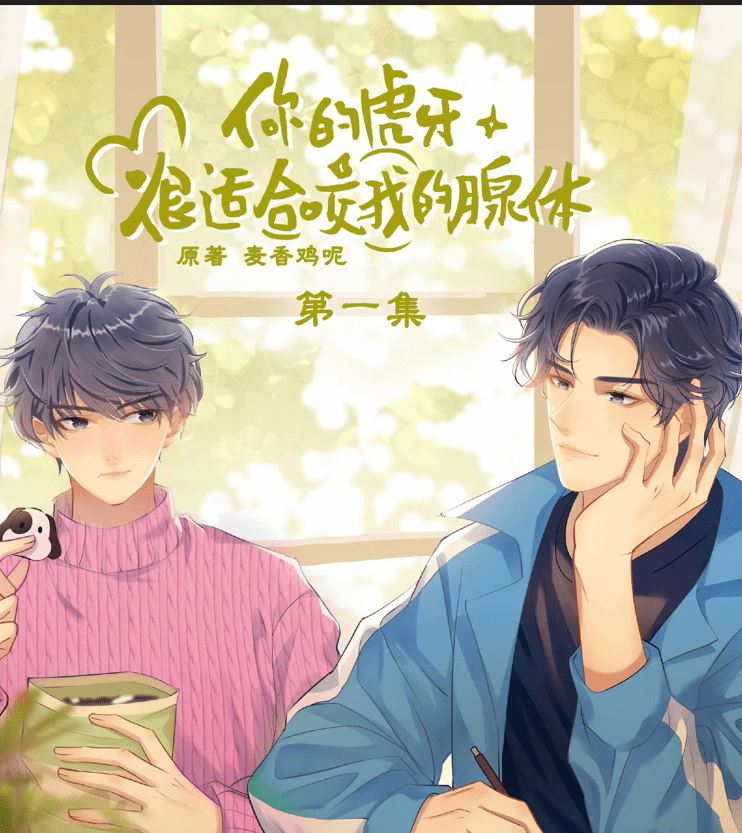
... Read More
I need to talk about how these two communicate because it's genuinely one of the best dynamics I've read. "Pig," Cheng Che said. "You're the pig! Your whole family are pigs!" "If that's the case, why are you with me? It means you're also a pig." This is how two people who are deeply, unshakeably secure with each other talk. There's no actual hostility here—just playful provocation and a partner who flips it back instantly. Cheng Che's logic is impenetrable and Zhou Zhou knows it, which is why he just gives up and says "Childish" instead of continuing. But what's really brilliant is Cheng Che's physicality throughout the scene. He doesn't just say sweet things—he LIFTs Zhou Zhou's chin. He stands behind him with his hands around his shoulders. He closes the balcony door wider when Zhou Zhou was hesitating. His love language isn't words; it's presence. Protective, gentle, persistent presence. And Zhou Zhou? He initiates the emotional honesty. "I'm really glad to have met you." Cheng Che responds with a kiss, and then whispers his answer. They complete each other's sentences without either of them having to try too hard. The translator noted a cheongsam reference at the end which I have zero context for, but honestly, by that point I didn't care. These two had already said everything that needed to be said.
... Read More
On the surface, the conflicts in these chapters seem tiny. Sausages. Grades. A tutoring session. But peel back the layer and there's real tension here, and it's working. Zhou Zhou's external conflict is obvious: he's bad at chemistry and needs help. But the INTERNAL conflict is where it gets interesting. He's clearly anxious about taking up Cheng Che's time — remember, he told the teacher separately that he's "afraid of taking up too much of your time." So now he has to navigate asking for help while also not wanting to be a burden. That's a delicate emotional tightrope, and the author walks it perfectly. Then there's Cheng Che's side. He's an Alpha in a world where pheromones and biology seem to dictate social dynamics. His hesitation, his careful smile, the way he clears his throat — these are the tells of someone who wants to get close but isn't sure how. The stakes for him aren't about grades; they're about connection. About whether this boy who bought him sausages and asked for a milkshake will ever understand what he's offering. And Yu Yang! Don't forget Yu Yang, the unwilling participant in the sausage saga. His conflict is purely comedic but it raises the question: what happens when Zhou Zhou's chaos starts affecting people who didn't sign up for it? There's a limit to how many sausages one person can endure, and that limit is a ticking clock. The social media post at the end is fascinating as a stake indicator. "The progress bar is starting!" Zhou Zhou views this tutoring arrangement as progress — as movement toward something. If it fails, if Cheng Che rejects him, if the chemistry doesn't click academically or personally... what happens to that optimism? The story hasn't shown us the threat yet, but I can feel it building. And that anticipation? That's what keeps you reading.

Leave a comment

You must be logged in to leave comments. or
