Would You Like to Have A Drink - Reviews

Would You Like to Have A Drink
+Add to Custom List
Sort
Add review
... Read More
"Even if he can't even see, Zong Luo can feel the gaze of the other person. Like a cold-blooded animal waiting for an opportunity to crawl in the dark. The heat in his body was rising steadily, and it still felt creepy and exceedingly uncomfortable even with the layers of fabric covering his eyes." I need to talk about this symbolism because it's everywhere in this passage and I can't unsee it. The blindfold—Zong Luo wearing it as a disguise, a literal cloth over his eyes—but also as a metaphor. He's supposed to be the one navigating this world blindly, a transmigrator who can't see the full board. Meanwhile Yu Beizhou, who can see perfectly, is the one operating in moral darkness. The goshawk in the sky above them is another layer: predatory, watching, circling. And then there's the jade pendant. Yu Beizhou throws it at Zong Luo like a gambler betting his hand, and Zong Luo catches it. Jade in Chinese literature always carries weight—purity, status, bonds between people. Here it's weaponized. An invitation that's also a chain. The recurring motif of eyes and vision throughout this scene really makes you wonder: who is actually blind here?
... Read More
Zong Ruichen is one of those characters who carries the weight of the entire story on his silence. He's described as invisible in a palace full of people — not just socially invisible but nearly erased. His mother's family was executed to the ninth generation, she died giving birth to him in the cold palace, she was given poisonous wine. He grew up being taught not to cause trouble, and over time everyone decided he was stupid. But Zong Luo knows the truth: he's not foolish, he's surviving. The promise Zong Luo made him — to take him to the battlefield, teach him martial arts, help him become a famous swordsman — is devastating because in the previous life, Zong Luo never got to keep it. Zong Ruichen threw himself into the succession struggle to protect him and was beaten to death at a banquet. The fact that Zong Luo still remembers this, still carries guilt over it, tells me everything I need to know about what this story is really about beneath the political intrigue. The cold palace itself is a symbol — not just of neglect but of how the imperial system consumes those it can't use. Zong Luo calls both him and Zong Ruichen the most pitiful in the royal family, which is an interesting parallel. Both are outsiders in different ways. One pretends to be weak; the other was forced into it. The ancient jade with the Kui pattern on Zong Luo's waist is what finally convinces Zong Ruichen it's really his brother — a piece of jewelry becomes proof of identity in a world where everything else has been stripped away.
... Read More
Some books have worldbuilding that reads like an encyclopedia entry. This one? It paints the scene and lets you feel the cold rain soaking through your robe. The opening is drenched—literally. Zong Luo standing in the rain, picking up the sword of benevolence, laughing through a throat full of blood. You can taste the iron. You can feel the wetness on his skin, the dryness in his eyes. Then the transition to waking up in the military camp, cold sweat, heart still hammering from the phantom sensation of a blade across his neck. The shift from the open sky of his execution to the confined roof beams of a tent is so visceral—it grounds the time jump in pure physical sensation rather than some magical shimmer. The Baijia Banquet entrance scene is another highlight. The imperial guards checking every student for weapons, the whispering about the blind man in white silk who looks eerily familiar, the comparison to last year's dream prophecy of nine stars linked like beads. These details make the world feel enormous and alive. Everyone has opinions, everyone is watching, and no one is entirely trustworthy. The palace itself feels like a character—imposing, surveilling, ancient. And Emperor Yuan's entrance. The black dragon robe, the twelve jade tassels, the Mian Liu crown casting shadows over a face that is cold and harsh. The students trembling. Zong Luo standing behind everyone, head lowered, trying to disappear. The setting and the power dynamics are woven together so tightly that you don't need exposition dumps to understand who holds power and who doesn't.
... Read More
There's something about the way this author describes the approach to the Great Yuan capital that just immediately puts you THERE. You can feel the carriage rocking over the rough road, hear the wheel squeaking, sense that autumn chill as summer fades. And then — boom — the city appears. Dark walls at the bottom, vermilion dragon flags on top, iron-armored troops patrolling everywhere. "This is the Capital of Yuan! How spectacular!" — that moment where all the students' exhaustion just evaporates because they're finally seeing it? I felt that. I've been there before, you know, closing in on somedestination after hours of travel and suddenly it just… appears. That visceral reaction is perfectly captured here. But the worldbuilding goes way deeper than just scenery. The political landscape is rich — hundreds of competing schools of thought across the Great Wilderness, the Six Kingdoms history referenced naturally through dialogue, the whole Legalist vs Confucianist tension baked into the setting itself. Great Yuan isn't just a backdrop, it's an active character. Millions of troops, severe criminal regulations, the reputation as a "flood beast" that makes foreigners afraid. And yet, the city gate scene shows the system working in a way that's both intimidating AND flawed — the painter spotting the sword and immediately recognizing its danger, the Commander being pulled in within moments, the whole apparatus of state power activating around a single weapon. The contrast between the scholars' wonder at the magnificent city and the cold, suspicious guards is Chef's kiss. One group sees opportunity and glory. The other sees potential threats and paperwork.
... Read More
I need to talk about the father-son dynamic because it absolutely wrecked me. Zong Luo spent his entire life trying to earn his father's approval. He admired Emperor Yuan. He loved his younger brothers. He fought wars, built an empire, held the throne together with sheer will—and what did he get in return? Nothing. Not even a proper death. Just a sword and an order to die quietly so the dynasty could move on. The line that destroyed me: "He did his best to excel, he admired his father, and loved his younger brothers, but he couldn't compare to the youngest prince, Cheng Huanyuan, who acted coquettishly and like a spoiled child." This is the kind of detail that makes you sit with your phone for twenty minutes just processing. The youngest son gets everything through performance—through being cute and vulnerable and needing protection—while the eldest son who literally bled for this country gets a suicide order. And the most haunting part? When Zong Luo actually stands in the palace courtyard again after three years, staring at his father, he feels... nothing. No anger. No hatred. Just a calm, hollow realization that he was never the son his father cared about. "Perhaps he finally understood that he was never the one who was actually cared for." That's not catharsis. That's grief. A lifetime of love redirected toward someone who saw him as a tool, not a son. And now he has to live this life again with that knowledge, armed with nothing but the memory of betrayal and the stubborn refusal to die the same way twice.
... Read More
I need to discuss how the author handles pacing here because honestly it's masterful. The chapter opens almost casually — Duan Junhao reflecting on the war, the Third Prince's character, the compensation he gives to soldiers' families. It's informative, world-building, a bit expository but done through an in-character perspective so it doesn't feel like a textbook. Then the author drops the Hangu Pass backstory. This is where the pacing shifts. We get the siege — 50,000 troops, 500,000 enemy, the Third Prince arrives with 3,000 cavalry like a "god of war descending." Then the dream sequence. Let me just say: the dream is visceral. Black clouds, thunder like coiling dragons, the white-clad general surrounded by smoke and flames and halberds, blood dyeing his robes red, his cavalry fallen one by one, him collapsing and laughing at the sky, the sword across his neck, torrential rain. This is cinematic in a way that most novels never achieve. And then after the dream, everything slows down. The mundane bureaucratic reality crashes back in — the Emperor is suspicious, talking about royalty is a crime, people could be tortured. The contrast between the mythic dream and the dangerous present creates this incredible emotional whiplash. The chapter ends on an imperial decree arriving, announcing the King of Beining's return. Right. At. The. Perfect. Moment. The pacing from mythic past to dangerous present to imminent political collision is exactly right. I finished reading and immediately wanted to turn the page.
... Read More
I need to talk about one specific moment because it's been living in my head rent-free. We've got this huge, loud, powerful scene with the Emperor and the general. All that prestige, all that military report, the Emperor is basically gloating about unifying the world. It's all external, all loud. And then, right at the end, after the rewards are promised, the Emperor asks a personal question. 'What's the happy event?' And Yu Beizhou, this ruthless general who buried tens of thousands of Huns alive, who ‘swept away' states with ‘contemptible' efficiency... he just smiles. The text says: 'The general in red cloth bent his phoenix eyes.' He bent his eyes. And he says, 'It's not a happy event, but this general just saw an old friend.' That's it. That's the emotional gut punch of the entire chapter. In the middle of all this imperial ambition and political maneuvering, there is this tiny, personal sliver of connection that matters to him. It's not a grand romance. It's not a tearful reunion. It's a quiet acknowledgment that somewhere in this vast, cold machinery of state, he found something human. I re-read that part three times. The Emperor doesn't even push. He just accepts it. That shared silence between two powerful men about a personal connection? That's more intimate than any dialogue I've read in weeks. And then you have the subplot with Gu Ziyuan and Zong Luo. It's a different kind of warmth. Gu Ziyuan's concern for his 'brother' isn't mushy; it's action-oriented. He sees the paper, he understands the social stakes for a blind man, and he quietly offers help. 'I just happened to pass by a bookshop...' What a sweet friend. It's not flashy, but it's genuine. These two layers of emotion—the restrained, significant personal connection and the steadfast, practical friendship—balanced out the cold political plotting perfectly. It reminded me that even in a story about conquering nations, it's the small, human moments that stick with you.
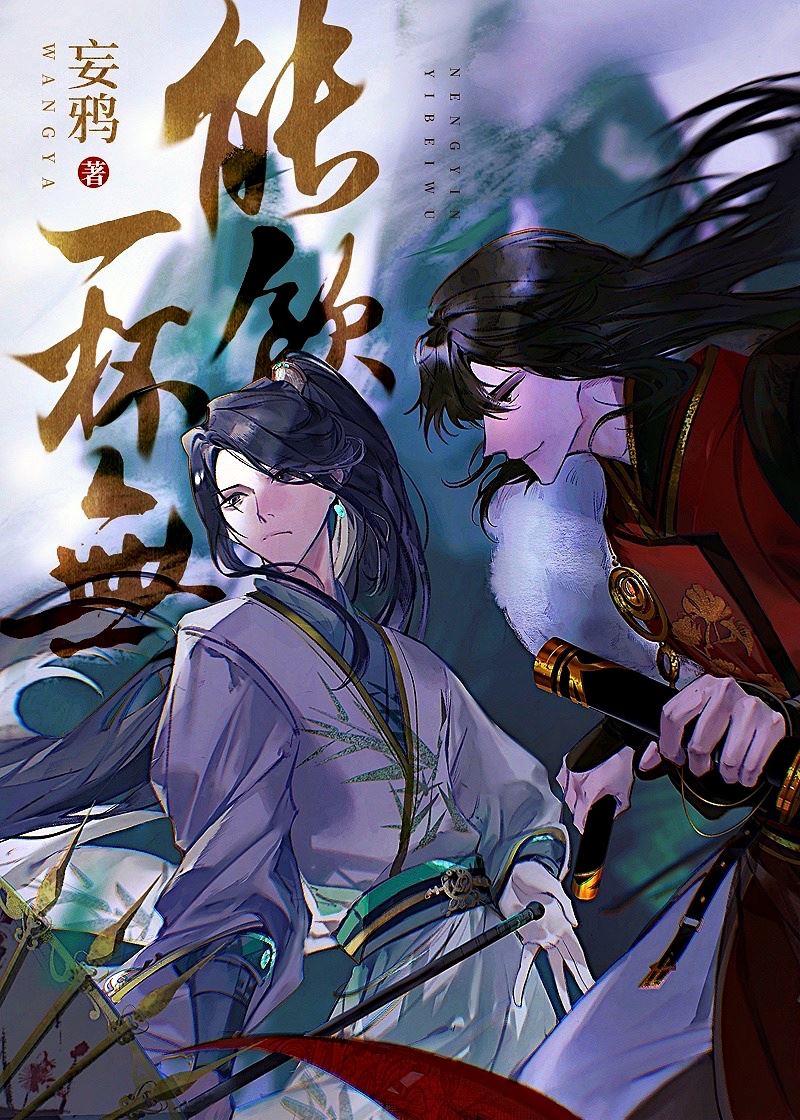
... Read More
This is the most intense dynamic I've ever read. Zong Luo and Yu Beizhou - they were apprentices at Ghost Valley together for ten years, but apparently they hate each other's guts. The text says literally "fight the next second they meet". Blood feud level hatred. But here's the thing that chills me - they know each other's bottom line better than anyone else. "The person who knows the other most in the world is always the adversary." This line gave me chills. It's true, isn't it? How well do you really know someone if they can pretend to be dead and you see through it instantly? How well must they know each other to recognize the disguise so quickly? And Yu Beizhou - the man everyone fears. The King of Beining. The God of Carnage. But he has this pet falcon that everyone mocked for being ugly, and he protected it. Now that bird can understand human nature and secret signs. It intercepted Zong Luo's messages before. It's like having a third eye. This bird knows things it shouldn't. The power dynamic between these two is everything. Yu Beizhou is practically a god now - feared across the continent, promoted from nobility straight to King. Zong Luo supposedly died, came back blind and amnesiac, trying to slip under the radar. But when Yu Beizhou says "Looks a bit the same" and laughs, he KNOWS. He's playing with him. Duan Junhao is caught in the middle - poor guy sweating bullets because he just mentioned the Third Prince might be alive right in front of the one person who would definitely have an opinion about it. These two have such history. Such hatred. And yet, Yu Beizhou can't help but notice Zong Luo immediately.
... Read More
The scene transitions in this batch are honestly staggering. You go from the Lanting Waterside Pavilion — carved beams, painted buildings, an eighteen-bend canal dug just for drinking and poetry — to a palace so decrepit that spider webs coat the logs and beams, walls have fallen off, and fat mice roam freely. The contrast isn't subtle but it works because it's grounded in physical detail rather than just emotional contrast. Zong Luo literally steps across a threshold and enters a different world. I love that the author takes time to describe the palace garden's layout — the brick-red walls, the hidden gate in the back, the fact that only a few people know about it. It makes the imperial city feel like a real place with secrets, not just a backdrop. And the detail about the palace being deserted except for palace guards on weekdays, no servants walking around, that sense of abandonment — it's chilling. The cold palace isn't just a metaphor, it's actually cold and decaying. Then you have the Nine Prince's entourage arriving: twelve young slaves, maidservants in various colors, a mighty group contrasting with the emptiness of the Cold Palace. The visual storytelling here is excellent — color, numbers, movement all communicate power dynamics without a single line of exposition.
... Read More
There's something profound about the symbolism of blindness here. Zong Luo covers his eyes with white fabric - literally blindfolding himself to hide his identity. But Yu Beizhou sees through everything. The ultimate irony - the man who pretends to be blind cannot hide from the one person who truly sees him. The falcon represents truth. Everyone mocks its ugliness, but Yu Beizhou protects it. It can see secrets, intercept messages, understand human nature. It's the third eye that sees what others miss. And now it screeches - sensing something the humans around it don't fully grasp yet. Red clouds at dusk, black flags, white armor - the colors tell a story. The Yuan dynasty respects dark colors now because power demands it. But red - the color of blood, of danger, of passion - it's everywhere. Burning clouds, Yu Beizhou's gorgeous red clothes, the sword named Qixing Longyuan (Seven Stars Dragon Origin). These aren't random choices. The whole scene plays out like a chess game. Zong Luo thought he had calculated everything - thousands of people entering the capital on the same day, careful timing, the perfect disguise. But fate - or whatever force governs this story - has other plans. "What's going to happen must be a blessing and not a disaster; however, the upcoming casualty would really be inevitable to escape from." This line suggests that avoiding destiny is impossible. Ghost Valley, ten years of training together, martial brothers who became enemies - all of this speaks to the theme that those closest to us become those who know us best, and therefore, those who can hurt us most.
... Read More
Okay so let me just say this scene at the city gate is a masterclass in false reveals. Zong Luo is sitting there with his whole plan about to use Duan Junhao as a pawn—identify the blind scholar, escalate things logically—and then Yu Beizhou absolutely detonates his carefully laid groundwork by showing up out of nowhere like a supervillain who forgot he had a scheduled appointment elsewhere. The irony is delicious. And what's interesting is that Yu Beizhou isn't even really trying to expose him. He just wanted to test if this was the guy, but along the way he stumbles into literally the same result Zong Luo was going for. So now both of them are stuck playing a game where the board keeps rearranging itself. Also, the jade pendant throw—Zong Luo catching it with his tiger's mouth going numb? That detail hit me. Yu Beizhou used extra force deliberately. It's a threat wrapped in hospitality. "Come visit me anytime" literally translates to "I know exactly what you are and I'm giving you an invitation you can't refuse without looking guilty." Chills.
... Read More
Okay so I need to process this. The Third Prince apparently died at Hangu Pass a year ago — posthumously crowned crown prince, memorial tablets everywhere, people mourning him for months, orchids lining the streets tens of miles long. Beautiful, tragic imagery. And then he just... appears? At the city gate? Blindfolded, with amnesia, carrying his legendary sword Qixing Longyuan, while the Emperor is currently tyrannical and violent and would probably execute someone for even whispering about royal family matters. The stakes here are absolutely insane. Let me break down why this works so well. The story first sells us on the Third Prince as this untouchable figure — "civil and military qualities, gentle breeze and bright moon, truly having a gentleman's atmosphere." We see his victories against Lu, his compassion for soldiers' families, his solo charge with 3,000 cavalry against 500,000 at Hangu Pass. He's basically a god of war who cares about his people. Then he dies heroically, and the narrative lets us mourn with him. And then BAM. He's alive. Standing at the capital gate. A blind swordsman who happens to look exactly like the dead Third Prince. The plot twist isn't just a surprise — it's layered with danger because we know the current Emperor is suspicious, cruel, and quick to kill. The plot is setting up this incredible tension: what happens when a man who was declared dead shows up, while the person sitting on the throne has every reason to want him actually dead? Also the detail about the Emperor sending an imperial decree to welcome the King of Beining back at the exact same moment? That is NOT a coincidence. The political chess game is about to get fascinating.

Leave a comment

You must be logged in to leave comments. or
