Would You Like to Have A Drink - Reviews

Would You Like to Have A Drink
+Add to Custom List
Sort
Add review
... Read More
Oh my god, the relationship between Yu Beizhou and Emperor Yuan. It is everything. You have this emperor who is described as 'callous,' where 'neither joy nor rage could be seen on his face,' and yet this whole scene is about his volatile temper. But look at who can stand in his presence. 'At this time, only Yu Beizhou, who was greatly favored by the emperor, could still stand.' That line hit me like a truck. It's not just about favor; it's about a fundamental, unspoken understanding. Beizhou knows he's dealing with a tiger. The text literally says it: 'accompanying a king is like accompanying a tiger.' But Beizhou doesn't treat him like one. He's respectful but direct. 'Your Majesty, Nanliang has already written a letter of descent...' No fluff, no fear. And the Emperor's response? He laughs. The chill dissolves. 'As expected of Yu Qing!' This is a relationship built on mutual recognition of power and utility, but there's a weird, twisted affection in there too. The Emperor calls him 'Yu Qing'—a term of endearment for a minister or close confidant. He's asking personal questions about his mood. Then Beizhou drops that tiny, devastating line: 'this general just saw an old friend.' And the Emperor? He doesn't press. He just lets it go. That restraint from a man who throws tantrums over letters? That's huge. It tells you everything about Beizhou's status and the Emperor's curiosity. Then you switch to Gu Ziyuan and Zong Luo. Look at Gu Ziyuan's internal monologue. 'Brother Luo really had the world in his heart. Although physically disabled, his spirit was firm. This made Gu Ziyuan admire him from the bottom of his heart.' This is the mirror image. Gu Ziyuan, the orphan, the one who feels he has to work harder because he's blind, sees in Zong Luo the stability and ambition he aspires to. Their bond isn't declared; it's shown through Gu Ziyuan noticing the fancy paper and figuring out Zong Luo needs it for social climbing. It's practical care. It's loyalty without drama. These relationships feel real because they're transactional yet deeply human.
... Read More
Okay so the plot structure here is genuinely clever when you think about it. Our protagonist transmigrates knowing exactly how this story goes, decides the smartest move is to escape entirely—trains at Ghost Valley, avoids the plot, lives quietly. And yet! The universe has a sick sense of humor. Yu Beizhou shows up as his junior brother. The same person he was running from ends up being the one he's destined to oppose. That arc from fleeing the capital to returning to the capital as a General opposing the new regime—it's circular and tight. The Hangu Pass battle is the plot's centerpiece, right? Five hundred thousand against three thousand, a textbook underdog victory that elevates our MC to near-legendary status among the common people. But then the emperor strips his military power overnight. The sudden shift from rising hero to exiled border guard happens almost casually, which actually makes it more brutal. The author doesn't linger on the injustice—they just show us the edict and move forward. That restraint is intentional. What really caught my attention was how the rebellion unfolds while Zong Luo is stuck at the frontier. He gets the news too late, rallies his troops, gets ambushed on the way back—his elite force decimated. By the time he reaches the capital walls, everything has already happened or stopped happening. Emperor Yuan wakes up from his coma. The fourth prince still got the throne anyway. Yu Beizhou played both sides perfectly, or at least came out on top regardless. The final scene with the sword Zhanlu thrown from the city wall—that's a brilliant closing image. It's not just a weapon; it's his father's personal sword, the one he treasured and rarely even looked at. Throwing it means Emperor Yuan isn't just accusing him of treason. He's cutting the last thread. The imperial edict lists four offenses like a prosecution's opening statement. Cowardice, disloyalty to ministers, unfilial behavior, rebellion. Each one designed to strip him of every identity he had. I want to know what happens next though. The plot has set up this incredibly tense standoff—Zong Luo outside the walls, his father inside, the new regime consolidating power. There's also the question of Yu Beizhou's true allegiance. Did he betray the fourth prince or was that all part of his plan?
... Read More
There's so much symbolism packed into these pages that I can't stop thinking about it. Let's start with the biggest one: the thunder pond. 'He waited and stood at the door with his head bowed, not daring to take a step beyond the thunder pond.' The translator note explains it's about abiding by laws and boundaries, being conservative. But symbolically? It's the boundary between life and death, between favor and ruin. Everyone in that palace is trembling on that edge. Yu Beizhou, though? He steps over it. He crosses the line that others are terrified of. That's his entire character theme: he operates outside normal moral and social boundaries to achieve the Emperor's goals. Then there's the Emperor's crown. 'The twelve jade tassels dangling from the Emperor's crown obscured the Ninety-Five Venerable's deep and dark pupils.' The jade tassels hide his eyes. You can't see what he's thinking. It's a symbol of imperial opacity, the unknowable nature of absolute power. The subjects see the regalia, not the man. And contrast that with the ending scene and the 'five-color wax papers with golden clouds and dragons.' These aren't just papers; they're symbols of social climbing, of trying to make a name for oneself in a rigid hierarchy. 'Renowned papers were analogous to modern business cards...' This is the theme of ambition in peacetime versus wartime. In war, ambition is blood and conquest (Beizhou). In peace, ambition is social currency and networking (the Baijia Banquet attendees). The recurring motif of 'eyes' and 'vision' is everywhere too. The Emperor's obscured vision, Beizhou's 'sharp eyes' reading the scattered letters, Zong Luo's blindness but acute perception. Who really sees the world clearly? The one with sight but hidden behind jade, or the blind man who notices a sleeping cat? The text is asking big questions about power, perception, and the cost of unity, all wrapped in a story about empires and scholars. It's layered as hell.
... Read More
The dialogue here is so sharp, every exchange crackling with unspoken history. Let me share some of my favorite lines: "Ugly. You haven't learned the slightest bit of charm from your master for so many years." - Yu Beizhou casually insulting his own falcon while completely ignoring the fact that there's a supposed blind man standing right there. The audacity. And then his response to the bird: "Why did I catch a stupid bird like you in the first place? Get out of here." This is the man everyone fears, yet he treats his animal companion with such casual cruelty. Or maybe it's affection in disguise? "Looks a bit the same." - After laughing loudly enough to startle black crows off the city wall. Just three words, but loaded with so much meaning. He knows. Of course he knows. But he's giving Zong Luo space to play along. The narrative voice is incredible too. Lines like "misfortune depends on blessing, and blessing lies in misfortune" and "he who wishes to avoid him will not be able to do so indefinitely" - these aren't just plot notes, they're philosophical undertones woven into the storytelling. Duan Junhao's internal monologue is gold: "He forgot that the Third Prince and the King of Beining had a bad relationship that was known to the whole court." This poor commander realizes way too late what he's done. He mentioned the Third Prince might be alive RIGHT IN FRONT OF THE PERSON WHO HAS A BLOOD FEUD WITH HIM. The dramatic irony is suffocating in the best way.
... Read More
This batch does something really interesting with pacing — it starts almost documentary-style. The audience with Emperor Yuan, the dismissal announcement, the background on the three competing princes, the Taoism discourse rules. It's info-heavy but not boring because each piece of information raises a new question. Why does Zong Luo feign amnesia? Who is he actually playing for? What's his endgame? Then the shift is sudden and deliberate. Zong Luo excuses himself to change clothes and the narrative narrows dramatically — from imperial politics to a hidden corridor, from public ceremony to a whispered conversation behind a locked door. The pacing slows down physically as he moves through the palace (the stone, the sparrow, the leap over the wall, the turning left and right in the dark halls), and then it slows even more at the door. Knock. Knock. Knock. Three knocks and no answer. The author could have rushed this reunion but instead stretches those seconds. And then — boom, the Ninth Prince kicks the door. The pace snaps back to chaos. It's like the story inhales during the Cold Palace scene and exhales violently when the little devil king appears. The chapter ends on that note of impending trouble, which is a perfect structural pivot. I was ready to settle into an emotional moment and suddenly someone's ordering slaves to break down a door. That's skilled pacing — knowing when to let the reader breathe and when to steal their air.
... Read More
Okay so let me just… take a breath. The way this chapter unfolds is actually brilliant. You start with these Confucian scholars arriving at the Great Yuan capital, all optimistic and hopeful, and then it just escalates from there. A simple weapon inspection turns into an emergency summons for the Commander because someone spots a legendary sword. And that sword belongs to a prince who's been DEAD for a year. The tension build is masterful here. Gu Ziyuan is visibly terrified the whole time — he keeps trying to wrap things up quickly, making excuses about his friend having amnesia, which obviously only makes everyone MORE suspicious. Meanwhile you've got this blind man just sitting there being impossibly calm while chaos erupts around him. Classic misdirection, I love it. And then the big reveal — "Qixing Longyuan?!" — that single line from Duan Junhao hits like a truck. Because now you know this sword shouldn't exist. It went missing with the Third Prince when he died in battle. So either it's a fake, or… well, we know it's the real thing. Which means this blind man carrying it has some serious connections to dead royalty. The political context underneath all this is also doing heavy lifting. Great Yuan runs on Legalism, not Confucianism. These scholars are basically ideological refugees showing up at a hostile court. The fact that they brought a sword-wielding blind guy who happens to carry the late crown-pr favorite's weapon right into the capital? That's not clumsy, that's either extremely bold or extremely calculated. I need to know what's going on.
... Read More
What a devastating opening chapter. Zong Luo receiving the sword meant to take his own life—it is almost too much. The naming alone is brutal: Zhanlu, the sword forged by Ou Yezi at the pinnacle of his career, called the "sword of benevolence." And Emperor Yuan hands it to him to commit suicide, trampling on every virtue the Third Prince supposedly stood for. The irony is so thick I could choke on it. But the real masterstroke is the time travel mechanism. He doesn't just wake up in the past—he wakes up three years earlier, at the critical moment of the Battle of Hangu Pass. And here's where the author plays with my head: Zong Luo had never truly understood why his father turned against him in his previous life. Was it Yu Beizhou? The emperor's younger brother? The usual "male supporting characters surrounding the protagonist" mess? He died not knowing the truth, and now he has to live long enough to find out. His decision to fake his death and flee to Bo country—outsmarting the entire system by pretending to be a dead man—is exactly the kind of strategic move that makes this story addictive. But wait, then he comes back later with amnesia and blindness as cover stories. So he faked death, hid away, then returned playing someone else entirely. The layers of deception are dizzying, and I love that the author doesn't explain everything upfront. Every revelation feels earned. "What joy is life, what fear in death!" He laughs this line through the rain before trying to kill himself, and it echoes all the way through the next chapters like a promise. Whatever happens next, he already stared death in the face and survived. That gives him a terrifying kind of freedom.
... Read More
I need to talk about this friendship because it's already so good and I only have a tiny sample. Gu Ziyuan is clearly the anxious one — the one doing all the social maneuvering, the bows and the careful explanations, the guy whose throat has a literal lump in it from fear. But he's also fiercely protective of Zong Luo. When the painter starts dawdling over the sword, Gu Ziyuan drops a proverb right there: "A gentleman does not take people's favor" — and I love that he uses it to say "stop touching our stuff" in the most polite Confucian way possible. And Zong Luo? He's this perfectly still center of chaos. Blindfolded, carrying a legendary sword, speaking in that calm melodic voice. "Sir must not mobilize the troops and stir up the masses. This commoner will now come down." The guy's literally walking into a confrontation while sounding like he's inviting someone for tea. What gets me is the trust between them. Gu Ziyuan doesn't try to hide Zong Luo from the guards — he just frames him as a distinguished guest with eye problems, which is technically true but also clearly a cover story. And Zong Luo doesn't seem to mind. He hands over his sword without hesitation, smiles at the painter, plays along. These two have history, and I am HERE for it. Also — the whole visual of a blind swordsman with a ponytail and warm jade face is AESTHETICS. Everyone around him is having these reactions — young women sighing, guards being suspicious, the painter getting lost in the sword's intensity. Zong Luo moves through the world like a ghost who happens to be stunning.
... Read More
Oh my god, can we talk about this plot twist? Zong Luo faked his death a year ago, planned everything down to the last detail - the blindfold, the amnesia act, even waiting for the perfect moment to slip into the capital during that Confucian scholar procession. He had it all mapped out! But then YU BEIZHOU SHOWS UP. Like literally the one person he wanted to avoid. Fate is so cruel sometimes. The way the author builds tension here is masterful. We start with Emperor Yuan's bloody history - brothers killed on the battlefield or by his own hand, no one left alive. Then this king named Yu Beizhou comes in, gets called the 'God of Carnage' because he wiped out the Huns without leaving a single one alive. Unprecedented. Notorious. And now he's returning to the capital. Meanwhile, Zong Luo is hiding in plain sight, trying so hard not to get noticed. He even had to grab his own sword - the Qixing Longyuan - and sneak back with the scholars. The irony is absolutely delicious. His plan was perfect until it wasn't. And now this whole scene at the city gate where both armies are there, the crowd watching, Duan Junhao sweating bullets... it's a powder keg waiting to explode. What really gets me is the timing. Thousands of people chose this day to enter the Great Yuan. Zong Luo carefully calculated everything. And still, he runs straight into his worst enemy. That's not bad luck - that's poetic justice or some cosmic joke. The author is really playing with fate here.
... Read More
I need to talk about the Zong Luo and Yu Beizhou dynamic because honestly this is the emotional core of the entire chapter sequence and it wrecked me. At first, Zong Luo's whole motivation is fear-based survival. He reads about how ruthless Yu Beizhou is, decides he needs to escape this planet, and does everything he can to avoid him. The scene where he has his servants pretend he's still in bed whenever Beizhou comes looking—that's almost funny, but underneath it is genuine terror. He knows what this person becomes. He's seen the comments. He's read the book. Then they end up at Ghost Valley together and the power dynamic completely flips. Zong Luo is the senior martial brother now. He's ten years older mentally, a full-grown man in a teenager's body, and he treats young Beizhou with deliberate coldness. The scene where Beizhou confronts him about the cold treatment, asking what he did wrong—that moment is devastating. This kid, who is apparently manipulative and cruel by nature according to the novel, is genuinely confused about why his senior won't talk to him anymore. He's performing, yes, but he's also a child who doesn't understand rejection. But Zong Luo sees through it. He watches the mask crack. And rather than soften, he doubles down. Because in the book, this person kills him. So he chooses hostility over false friendship. The text says it plainly: "As far as becoming enemies, it was better than being killed." What's interesting is that their rivalry at the battlefield seems almost playful in places. They compete for military merit, one takes a city while the other accepts a surrender, they never meet in person but constantly try to undermine each other. It's like a dark dance. And yet somewhere underneath that, there's genuine recognition between two people who understand each other better than anyone else in this world. The ending hits different because now we see Zong Luo standing outside the city walls while his father inside has effectively sentenced him. Yu Beizhou is presumably in the capital, having helped install a new emperor. The emotional triangle is set up beautifully and I'm already spiraling.
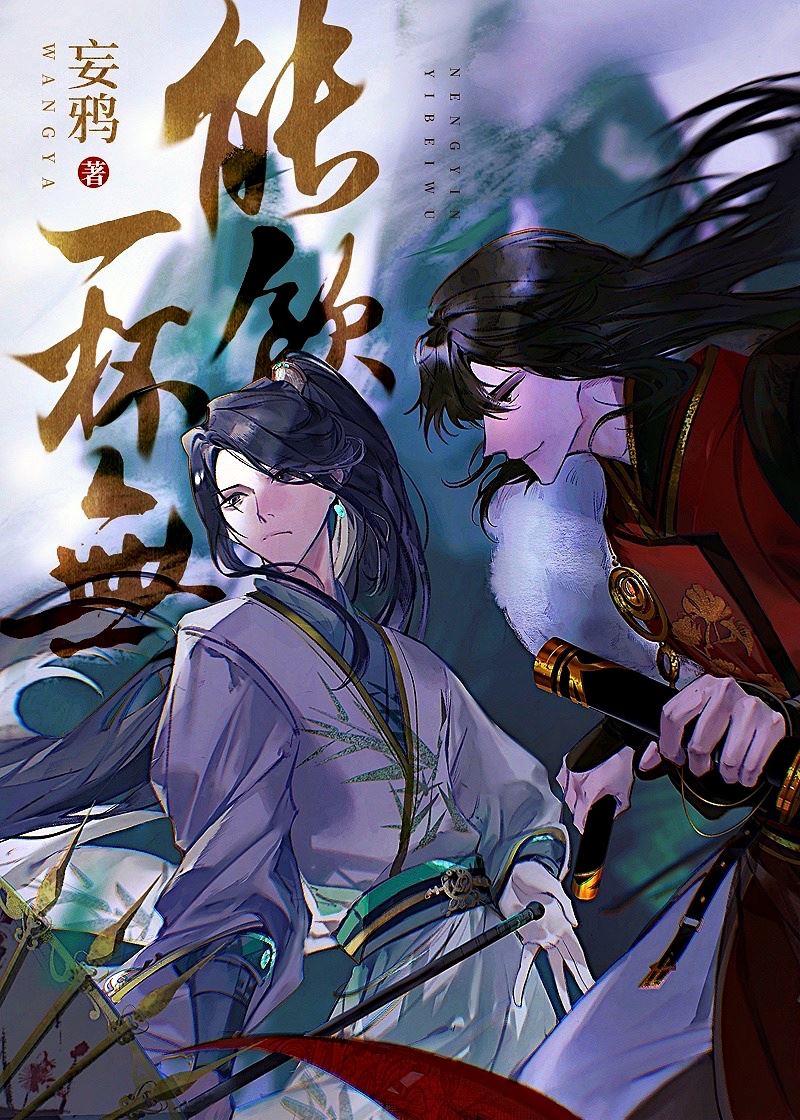
... Read More
The imagery in this chapter is absolutely stunning. Let me paint this scene for you - burning red clouds at the horizon, dark and profound military flags fluttering in the wind, soldiers in cold armor with somber faces. A young man in white fur cloak and fine red clothes on a black iron horse, sunset glow reflecting off his garments making them more intense. "Yu—" and then silence. The crowd parting. The horses approaching. The falcon swooping down from above. All of this plays out against a backdrop of darkening sky and burning clouds, like the world itself is holding its breath. The way the author describes the Yuan people's respect for dark colors is fascinating. In the past, using black and red on battlefields would've been mocked by other nations. But now? Just seeing those colors on the border sends beacon tower warnings flying. Enemies are terrified. The visual impact of this empire's power is palpable. And the city gate scene - noon, people eating and resting, suddenly all this commotion. Guards clearing the road, commoners stopping their meals to watch. The whole atmosphere shifts from mundane to electric in seconds. You can feel the weight of military presence, the fear and reverence people have for the King of Beining. That moment when Zong Luo stands behind Gu Ziyuan, pretending to be blind, while all around him this magnificent army returns... it's like a stage set for the most dramatic confrontation. The contrast between Zong Luo's quiet hiding and Yu Beizhou's grand entrance is perfection.
... Read More
The pacing in these chapters is a total rollercoaster, and I love how the author switches gears. You start in the main hall. The tension is so high you can choke on it. Short, sharp sentences. 'The spacious main hall was extremely quiet.' 'It was almost frighteningly silent.' You're leaning forward, waiting for the Emperor to explode or execute someone. Then Yu Beizhou enters, and the pacing speeds up with rapid dialogue—military strategy, promises of reward, the quick pivot to personal questions. It's efficient, high-stakes, and then... it just cuts. Like a film editing to a completely different scene. 'On the other side, Zong Luo and Gu Ziyuan led the Confucian disciples...' Whoa. Okay. We went from life-and-death imperial audiences to... scholarly logistics? But it works. The structure here is using contrast to let the reader breathe while still advancing the plot. The 'Baijia Banquet' is introduced not as an action set-piece, but as a backdrop. 'The varied perspectives from the different schools of thought would complement each other...' It feels like a deep breath before the next storm. And then the pacing slows even further for these two characters walking out of the courtyard. Notice the detail work: 'Zong Luo halted for a moment when he noticed a curled sleeping civet cat by the gate, then he slightly raised his boot and stepped over from the side.' This is deliberate, observant pacing. It establishes Zong Luo's sensory world—his hearing, his caution, his awareness—even in a mundane moment. It tells us everything about his character without a single line of exposition. The transition from the macro (emperor conquering states) to the micro (a blind man stepping over a cat) is seamless. It prevents narrative fatigue. If we'd stayed in that palace for another five chapters, I would have snapped. But dropping us into this quieter, character-driven moment? That's smart structural storytelling. It keeps the world feeling vast and lived-in, not just a series of plot devices.

Leave a comment

You must be logged in to leave comments. or
