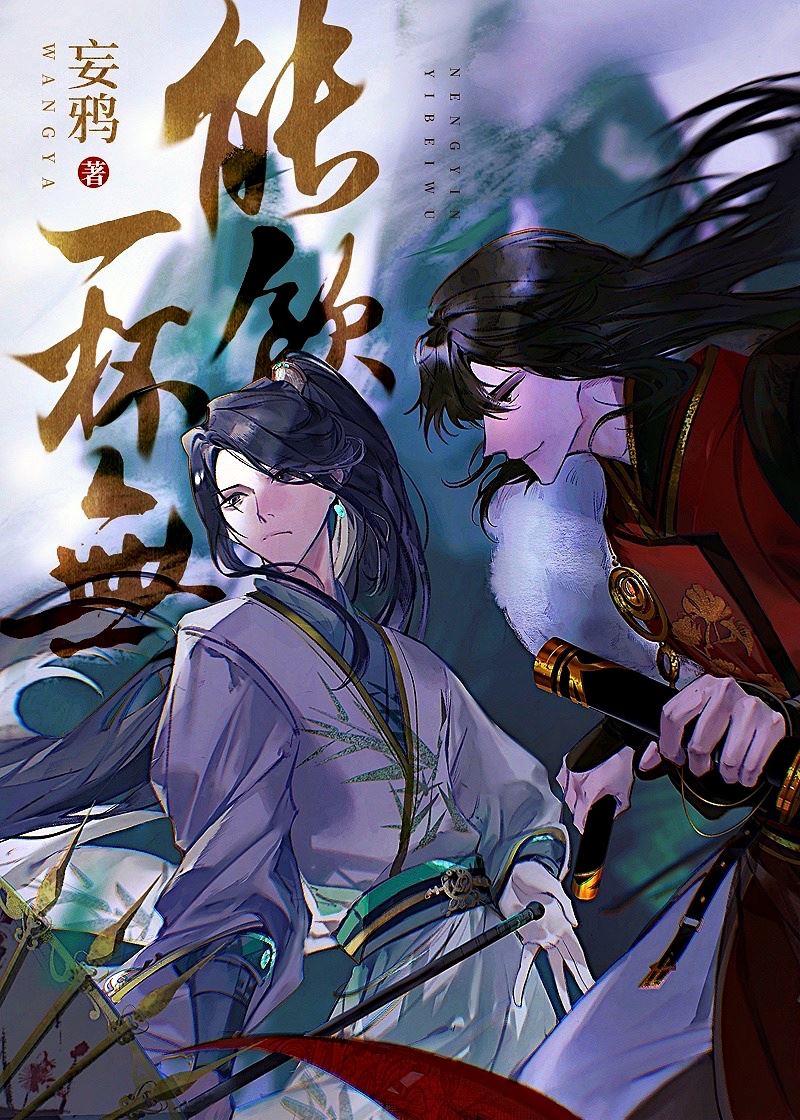
Zong Luo is a swordsman who transmigrated into the world of a novel, assuming the identity of Gu Luo, a blind and amnesiac Confucian scholar. He carries Qixing Longyuan, one of the ten legendary swords in the Great Wilderness, which previously belonged to the Third Prince of Great Yuan. The Third Prince died heroically defending Hangu Pass against a coalition of five hundred thousand enemy troops with only three thousand cavalry, vanishing without a trace. Emperor Yuan posthumously named him crown prince, but rumors persisted that the prince might still be alive. Zong Luo’s true identity is that of this fallen Third Prince, who orchestrated his own fake death to escape political entrapment and survived a year in hiding under the care of Confucian masters. Now disguised as a blind commoner, he enters the capital alongside his friend Gu Ziyuan, aiming to reposition himself within the chaotic power structure of Great Yuan.
Great Yuan is a legalist state that suppresses Confucian ideology, making Zong Luo’s presence dangerous. At the city gate, guards inspect all weapons and discovers the unique aura of Qixing Longyuan. The armory painter recognizes the sword and alerts Commander Duan Junhao, who kneels before Zong Luo, believing him to be the resurrected Third Prince. Zong Luo attempts to maintain his cover by claiming amnesia and blindness, but his plan is interrupted by the arrival of Yu Beizhou, the King of Beining. Yu Beizhou is the only vassal king in Great Yuan, known as the God of Carnage, and a fellow disciple of Ghost Valley alongside Zong Luo. Their relationship is defined by years of bitter rivalry and mutual hatred, making Yu Beizhou the most dangerous obstacle to Zong Luo’s secret return.
Yu Beizhou immediately suspects Zong Luo’s identity despite the blindfold. He attacks Zong Luo with lethal intent, testing his swordsmanship and reaction speed. Zong Luo, though blind, matches Yu Beizhou’s skill using only auditory cues and memory, drawing Qixing Longyuan to defend himself. The clash ends in a standoff, with both swords pointed at each other’s throats. Yu Beizhou mocks Zong Luo, claiming he does not truly remember the Third Prince’s face, while secretly probing for weaknesses. He invites Zong Luo to Beining Palace under the guise of academic discussion, handing over a jade token that serves as both an invitation and a threat. Zong Luo realizes that Yu Beizhou knows his secret but chooses not to expose him publicly, likely preferring to deal with him privately.
The story shifts focus to the political landscape of Great Yuan. Emperor Yuan is a tyrannical ruler who values strength and loyalty above all else. Yu Beizhou returns to court after conquering the Nanliang kingdom, earning the emperor’s favor despite his ruthless methods. The Baijia Banquet, a grand gathering of scholars from all schools of thought, is approaching, offering a platform for talent to rise. Zong Luo prepares to participate in the banquet, seeking to establish a new identity while navigating the perilous court politics. He must avoid detection by imperial agents while countering Yu Beizhou’s persistent interference.
Zong Luo’s internal conflict stems from his desire for freedom versus his ingrained stubbornness. He refuses to submit to Yu Beizhou, even though hugging the protagonist’s thigh would ensure his survival. His past as the Third Prince shaped him into a leader who cared for his soldiers and accepted public blame for military losses. Now, stripped of his title and visibility, he must rely on wit and combat skill to survive. The narrative sets up a tense dynamic between Zong Luo and Yu Beizhou, where every interaction is laced with danger and unspoken history.
As Zong Luo settles into the Confucian quarter, he prepares for the upcoming challenges. The Baijia Banquet will bring together rivals from various philosophical schools, providing opportunities for both alliance and conflict. Gu Ziyuan remains unaware of Zong Luo’s true identity, viewing him as a brave disabled scholar. Zong Luo’s journey involves balancing his hidden heritage with his current disguise, confronting Yu Beizhou’s predatory interest, and navigating an emperor who tolerates no dissent. The story unfolds as a struggle for survival and identity in a world where martial prowess and political maneuvering determine fate.
| Date | Group | Release |
|---|---|---|
| 2026-10-01 | hiraeth translations | c69 |
| 2026-10-01 | hiraeth translations | c68 |
| 2026-10-01 | hiraeth translations | c67 |
| 2026-10-01 | hiraeth translations | c66 |
| 2026-10-01 | hiraeth translations | c65 |
| 2026-10-01 | hiraeth translations | c64 |
| 2026-10-01 | hiraeth translations | c63 |
| 2026-10-01 | hiraeth translations | c62 |
| 2026-10-01 | hiraeth translations | c61 |
| 2026-10-01 | hiraeth translations | c60 |
| 2026-10-01 | hiraeth translations | c59 |
| 2026-10-01 | hiraeth translations | c58 |