Winner Takes All - Reviews

Winner Takes All
+Add to Custom List
Sort
Add review
... Read More
The stakes in these chapters are enormous, and the author handles them with unusual restraint — which makes them hit even harder. On the surface, Li Shuo's conflict is external: he helped a friend with fraudulent loans, violated professional ethics and the law, and now faces the consequences. But the deeper conflict is internal — the clash between his Buddhist inclination toward acceptance and his very human desire to fix everything. What's remarkable is how the author layers the stakes. First, there's the career stake: ten years of work, gone. Then the moral stake: he's punishing himself because he believes he deserves it. 'No one can commit wrongdoing without paying the price.' This isn't just philosophy — it's self-flagellation dressed as wisdom. And then there's the relational stake: how does he tell the people he cares about? He can't even face Mr. Liang directly. Xiang Ning has to be the buffer. But the most interesting conflict is the unspoken one with Zhao Jinxin. Li Shuo just handed away his livelihood, walked back into a hospital room, and found the man he might love playing Go with his father. The tension here is deafening in its silence. Zhao Jinxin notices nothing is wrong — or pretends not to. He offers coffee. He changes the subject. And Li Shuo, having just survived the emotional equivalent of a car crash, has to perform normalcy. The suspense isn't in whether Li Shuo will recover his career — we know he won't. The suspense is in whether he'll recover himself. Can a man who believes in karma and conscience find a way forward after choosing to pay his debt? And what role will Zhao Jinxin play in that journey? The author leaves us on a fragment — 'Such a perso...' — which is the perfect cliffhanger. Not a dramatic revelation, but an incomplete thought. The stakes are set, the characters are where they need to be, and we're desperate to know what Li Shuo was about to think about Zhao Jinxin's person.
... Read More
Let me just lay out the stakes here because WOW. Li Chengxiu is MISSING. We don't know if he's alive, we don't know if Shao Qun had anything to do with it, we don't know where he is. And Li Shuo is in NEW YORK, hundreds of miles away, powerless to do anything about it. That's the fundamental conflict driving this entire chapter: distance. Physical distance from the crisis, emotional distance from his own sense of control, and now this new, confusing closeness with Zhao Jinxin that neither of them fully understand. The phone call with Shao Qun is pure collision. Two men who represent opposite poles of Li Shuo's emotional world—the man he wronged and the man who wronged him—and both of them are breaking on the other end. Shao Qun's voice deflating from aggressive to hoarse and broken: 'He's gone...' That's not the voice of a villain. That's the voice of someone who also cares about Li Chengxiu. Which makes everything so much more complicated. Internally, Li Shuo is wrestling with guilt. He admits he's partly to blame. That's huge for a character who prides himself on moral clarity. He's been wrong, he made choices, and now someone he loves is suffering because of it. The stakes aren't just 'will he find Li Chengxiu'—they're 'can Li Shuo forgive himself regardless of the outcome?' And externally, there's Zhao Jinxin orbiting all of this, bringing his own stakes. He's playing along with this ambiguous relationship with Li Shuo, but what does HE want? What happens when Li Chengxiu is found—alive or dead—and Li Shuo has to look at him differently? The author keeps the tension drumming throughout every scene. Even the office meeting about financial software feels charged because you KNOW something terrible is happening somewhere and these two men are pretending to discuss spreadsheets. That's good writing. That's layered conflict. That's why I can't stop reading.
... Read More
Can we just take a moment to appreciate the visual choreography of the locker room scene? Because this is WHERE the author really flexes. Li Shuo undressing while Zhao Jinxin watches 'without blinking.' That detail about 'without blinking' is everything. It's not a stolen glance — it's an intentional, sustained look. And Li Shuo doesn't avoid it. He doesn't get shy. He leans into it. "If you want to watch so much, then watch closely." He hooks his finger around his tie, loosens it, unbuttons his shirt ONE BUTTON AT A TIME. This isn't just description, this is PERFORMANCE. He's giving Zhao Jinxin exactly what he wants while maintaining complete control of the situation. Then the belt, the zipper, the trousers coming down. And Zhao Jinxin's reaction — his Adam's apple bobbing, his gaze traveling down. The physicality of desire described through small, specific details rather than grand gestures. "Their breathing became light and shallow." Three words and suddenly the entire scene shifts from playful to charged. The tension is palpable even through text. The ultra-luxurious gym setting with surfing and indoor skiing is worth noting too — it establishes the world these characters inhabit without needing entire paragraphs of description. This is wealth as atmosphere, not as backdrop. And then — the abrupt interruption. The awkward guy who walks in, gives them a thumbs-up, and leaves. The contrast between that raw, building intensity and the mundane reality of 'oh someone walked in, let's go play squash' is both hilarious and devastating. My heart literally dropped.
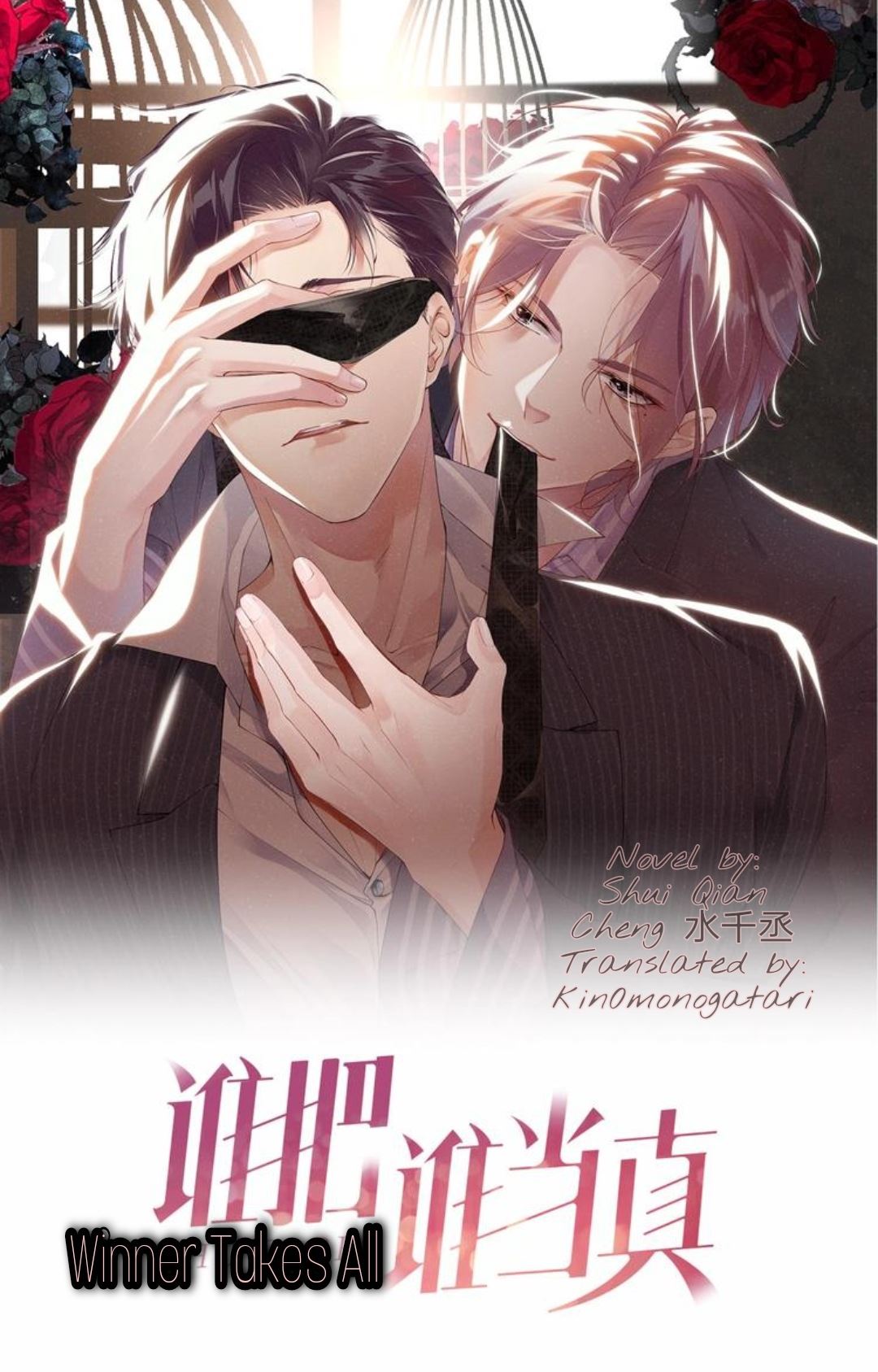
... Read More
Can we talk about the hand? Like, I know it sounds ridiculous but the injured hand is doing thematic heavy lifting throughout this entire passage and I need to process it. On the surface, it's a plot device—Zhao Jinxi gets his hand caught in a car door, which gives him a believable excuse to demand Li Shuo's presence and care. But the symbolism runs deeper. The hand is swollen, useless, reduced to a carrot-like state. And yet it's also the instrument of Zhao Jinxi's manipulation. He uses this helpless-looking injury to lure Li Shuo into his apartment, to make him cook, to feed him, to stay. Then there's the feeding scene, which is absolutely dripping with symbolic weight. Zhao Jinxi says "You feed me" and Li Shuo says "Don't make me feed you" at the same time. This is power dynamics in miniature—both trying to control the frame of the interaction. When Li Shuo finally caves and feeds him, he's not just being kind. He's surrendering ground. The porridge becomes a symbol of care that Zhao Jinxi extracts from him through vulnerability. And Zhao Jinxi's line—"Now I have another reason to like you" after tasting the food—this is the theme of desire masquerading as affection. Every touch, every compliment, every act of intimacy is both genuine and strategic. The novel keeps asking: how do you distinguish between someone who loves you and someone who loves the chase? The final symbolic moment is Zhao Jinxi blocking Li Shuo's path. Physical obstruction as a metaphor for emotional entrapment. Li Shuo literally cannot leave until Zhao Jinxi has had his say. And that unfinished sentence—"a clear sky had ju..."—the metaphor of disrupted clarity, of something precious being clouded over. I'm still thinking about this.
... Read More
Okay so the plot here is basically that after going through ALL THAT drama—the hospital misunderstanding, the whole mess involving other people—they just... ended up back where they started? Li Shuo literally says "we will re-establish trust" like nothing happened, and I have so many thoughts about this. On one hand, it's kind of hilarious that all that chaos resolved to them holding each other in a field of rose petals. On the other hand, if Zhao Jinxin had just responded in the hospital back then, how much unnecessary suffering could have been avoided? The story really drives home that the drama was self-inflicted. But here's what I found clever about the structure: the author deliberately gives us this quiet moment of resolution, then immediately undercuts it with Wen Xiaohui's phone call. It's like, just when you think everything is settled, boom—new plot thread appears. Will Wen Xiaohui come to the house? What does he know about Li Shuo's secret lover? What happens when Luo Yi comes into the picture? The author is building this domestic tension that's totally different from the earlier dramatic conflict. It's not "will they or won't they" anymore, it's "can they keep their relationship stable while the outside world intrudes." And honestly? That's more interesting to me. The stakes feel more real now.
... Read More
Okay so this scene where Han Feiye just blurts out 'Little Shuo, is it possible for us?' after twelve whole years—how am I supposed to act like my heart didn't just stop. The way he builds up to it, all casual at first, talking about food and walking him home like nothing's different, and then BAM. Right out of nowhere. And Li Shuo's reaction? 'I don't know.' Not no. Not yes. Just... I don't know. That hesitation is everything. It's not that he doesn't care, it's that he's been carrying this ghost of someone else for so long that letting someone new in feels impossible, even when that someone is literally the person he loved before. And then Han Feiye's response—so grounded, so mature for once—'I want to have a home, and so do you.' That single word 'home' hits like a freight train. It's not about passion or drama, it's about wanting someone to wait for you when you come home. Who wouldn't melt hearing that from the person they never stopped thinking about?
... Read More
The structural brilliance of these chapters is honestly annoying. They spend nearly the entire excerpt building this soft, domestic atmosphere—Wen Xiaohui transforming a tacky presidential suite into something that looks like a honeymoon suite, the secret shopping trips, Li Shuo getting his eyebrows done against his better judgment, all of it humming with anticipation. You can practically smell the peaches. And then the phone rings. The author doesn't even give us the villain or the crisis directly—just a phone call mid-conversation, mid-planning, mid-happy, and suddenly we're in emergency territory. "My brother pulled the wound and it split open, and then my sister-in-law got angry and went home." The parenthetical about the order of events being confused is almost comical, which makes it worse. Zhao Jinxin is so flustered he can't even narrate properly. What works brilliantly is that the author lets us feel the disappointment without dramatizing it. Li Shuo doesn't rage or sulk. He just says "Oh, what's the matter?" in that gentle voice, and the reader is the one whose heart drops. The pacing refuses to let us settle into comfort, which is exactly right for a story where comfort is always temporary.
... Read More
The visual contrast in this chapter is absolutely striking. It opens in a banquet hall — warm, social, performative — and by the end we're in a dark hotel room and then an ice-cold shower, completely isolated. The setting mirrors Li Shuo's internal state perfectly, and I love how deliberate that feels. Let me talk about the terrace scene for a second because the author nails it. You've got these two men who were just dancing together, sharing something intimate in a crowd, and now they're on an open terrace looking at a city's starry sky. The vastness of that view against the claustrophobia of Li Shuo's realization is chef's kiss. And Zhao Jinxin following him out — not pulling him, not blocking him, just trailing behind like he's afraid Li Shuo will disappear if he looks away. That's a small detail but it stays with you. Then the hotel room. Dark. Li Shuo alone with his thoughts. The mirror scene — "His casual suit was wrinkled beyond recognition. He looked terrible, absolutely terrible." I keep coming back to this. There's something so vulnerable about noticing your own disheveled appearance as a physical manifestation of emotional ruin. And then the shower: "The cold water poured down without warning, chilling him to the bone." Not warm, not lukewarm — cold. He needs the shock. He needs to feel something physical to match the physical pain in his chest. The worldbuilding here isn't about magic systems or invented cities. It's about how a familiar space — a party, a terrace, a hotel room — becomes alien the moment your understanding of everything in it shatters. That's skilled writing.
... Read More
Let me tell you what gets me every time about this book—the stakes aren't just 'will they or won't they.' That would be simple. Simple is boring. No, the stakes here are layered like an onion made of anxiety. Li Shuo is risking something MASSIVE by letting himself want this. He's a man who built his entire life on control, on knowing his limits, on playing it safe. And Zhao Jinxin is the one variable he cannot control. Every moment he spends with him is a moment he's risking his carefully constructed emotional walls. But here's the thing that makes it hurt to read—it's not just about romance. It's about identity. If Li Shuo gives in, who is he anymore? The man who decided his best years were behind him? The man who thought he should settle? Zhao Jinxin's stakes are different but equally heavy. He has this rare condition that makes physical intimacy genuinely dangerous. He's chasing someone he wants with his whole body and his whole heart, and every move he makes could physically harm him. And yet he does it anyway. 'I trust you,' he says. Simple words. Devastating weight. And then there's the mother. Mrs. Li seeing those bite marks—that's a new stake entering the board. Now it's not just about two people and their feelings. Now there's family. Now there's exposure. The ground keeps shifting under everyone and I am HERE for it.
... Read More
So this sequence is basically a masterclass in layered tension. You start with what seems like a standard business meeting—corporate suits, PPT presentations, strategic talks—and then the whole floor drops out from under you. The moment they step into that empty break room, everything shifts. Zhao Jinxin drops the facade and it's like the rug got pulled from under Li Shuo again. What I found fascinating is how the author structures the escalation. It goes from polite corporate banter → private flirting → personal investigation reveal → physical confrontation → accidental injury. Each beat raises the stakes a notch higher, and by the time Zhao Jinxin's hand gets caught in that car door, I was literally holding my breath. That moment was so unexpectedly dark comedy, honestly. One second he's being smug and provocative, the next he's shrieking in pain like "it hurts it hurts it hurts" and suddenly Li Shuo's the one driving them to the hospital. And that line, "You're the third party in someone else's relationship. So why resist me so much?" Just completely undresses Li Shuo emotionally in front of him. The plot didn't just throw a twist at us—it threw MULTIPLE. First the information age comment showing Zhao Jinxin has been digging, then the Li Chengxiu revelation, then the whole “take it by force” speech. Each one peeling back another layer. The hospital ending feels like both a victory and a defeat for Li Shuo. He walked away from the confrontation physically, but he's now stuck driving an injured man to the hospital while Zhao Jinxin is basically manipulative-gaslighting him the whole ride. This plot doesn't give its characters any clean wins, does it?
... Read More
I have to talk about this confrontation scene because holy hell. Li Shuo finally pieces it together. He goes from "we're good" to realizing Zhao Jinxin was playing him from day one, and the pivot is brutal. The line that wrecked me was: "So I should thank you for fucking me up, huh?!" Just pure, unfiltered shock and rage bubbling out. What makes this plot beat hit so hard is the pacing — Zhao Jinxin tries to smooth it over with the classic "I was actually helping you" gaslight, and you can practically see Li Shuo's brain short-circuiting as he realizes every sweet moment was weaponized. The structure here is also interesting because the author doesn't give us a clean resolution. Li Shuo decides to leave, but then Zhao Jinxin literally follows him to meet his friend Cheng Sheng. That's not closure — that's escalation. The author is deliberately keeping the wound open. And the chapter title "Hypocritical"? Chef's kiss. It's not just about Zhao Jinxin being hypocritical; it's about how the whole relationship was built on performance. Every nice moment becomes recontextualized in your head as you read this scene. That's solid plotting — making the reader do the work of re-examining everything that came before.
... Read More
I need to talk about the stakes here because they are NOT subtle. Li Shuo has spent a month telling himself he's fine without Zhao Jinxin. He's rebuilt his routine, thrown himself into work in Sanya, pretended that the whole thing never happened. And now Zhao Rongtian is asking him to go back—to walk into that house and face the person he's been avoiding. But it's worse than just an awkward visit. Zhao Jinxin is at his lowest point: drunk, isolated, not showing up to work, emotionally broken. If Li Shuo goes there, what happens? Does Zhao Jinxin lunge at him? Does he break down? Does he say something that shatters the fragile peace Li Shuo has built? The external conflict is obvious—Li Shuo vs. his own feelings—but the internal stakes are terrifying. Every second he hesitates before leaving, every question he asks his assistant, every kilometer he drives closer to that house, the tension builds. And Xiao Chen? He's holding information that could change everything. "We all know that you and Mr. Zhao are together, right?" Together. Not dating. Not together. Just... together. The euphemism is killing me. Whatever happens when Li Shuo walks through that door, nothing is going back to the way it was before.

Leave a comment

You must be logged in to leave comments. or
