Winner Takes All - Reviews

Winner Takes All
+Add to Custom List
Sort
Add review
... Read More
This chapter is a masterclass in controlled escalation. It starts almost慵懒ly—with care, humming, gentle touches—and you think maybe, just maybe, this is the soft moment. The kind where things actually work out. Then Zhao Jinxin starts getting handsy and the temperature rises (pun intended), and you're like okay this is still uncomfortable but at least it's consensual teasing. Next thing you know it's morning and Li Shuo is trying to leave and Zhao Jinxin has gone full predator mode. The pacing of that wardrobe confrontation is ruthless—one beat he's whining about being sleepy, the next he's backing Li Shuo into a corner delivering ultimatums. No warning, no gentle transition. Just snap. And the author doesn't even let us catch our breath before dropping the Han Feiye bomb and the testing revelation. Every scene contains a reversal: care becomes coercion, tenderness becomes threat, gratitude becomes boundary-setting. The chapter structure itself mirrors Li Shuo's experience—just when he thinks he's safe, the ground shifts. And ending on "I still can't understand" is perfect because it refuses closure. We want an answer, a resolution, something. Instead we get a man standing in his own house, trapped by someone who loves him in ways he can't parse. The tension doesn't release. It coils tighter.
... Read More
Can we just take a moment to appreciate how distinctly these two characters sound when they talk? Zhao Jinxin's voice is immediately recognizable—flirty, pushy, occasionally sharp underneath the teasing. "We really seem like we're hiding an affair… I like it." He says things like he's throwing darts at a target and hoping something sticks. Every line from him carries this undercurrent of "I know this is dangerous and I'm having the time of my life." Li Shuo, on the other hand, speaks in short, controlled bursts. "Stop with the nickname." "You are on my site now, speak carefully and act carefully." "It's alright, don't make trouble, eat honestly." Even when he's being affectionate—which he is, constantly, whether he wants to admit it or not—his dialogue is clipped, almost defensive. The gap between what he says and what he does is where all the chemistry lives. He tells Zhao Jinxin not to make trouble while simultaneously wiping sauce from his mouth and tasting it. Of course. The narrator's voice is worth talking about too. It's restrained but intimate, like a friend who knows all the gossip but pretends not to. Lines like "He really didn't have the courage to do it with Zhao Jinxin in his room when his parents are clearly downstairs. Although… that scene is extremely exciting to think about." That littleAside in third person is hilarious and revealing. The narrator isn't just reporting events—they're judging them, commenting on them, almost winking at the reader. And that final exchange before Li Shuo drives off—"I will fuck you on your bed next time" followed by Li Shuo smiling and closing the car door on him. It's crude, it's funny, it's perfectly in character for Zhao Jinxin, and it ends the entire section on a note that's equal parts tender and ridiculous. That's the voice this book has been building toward, and I'm fully invested.
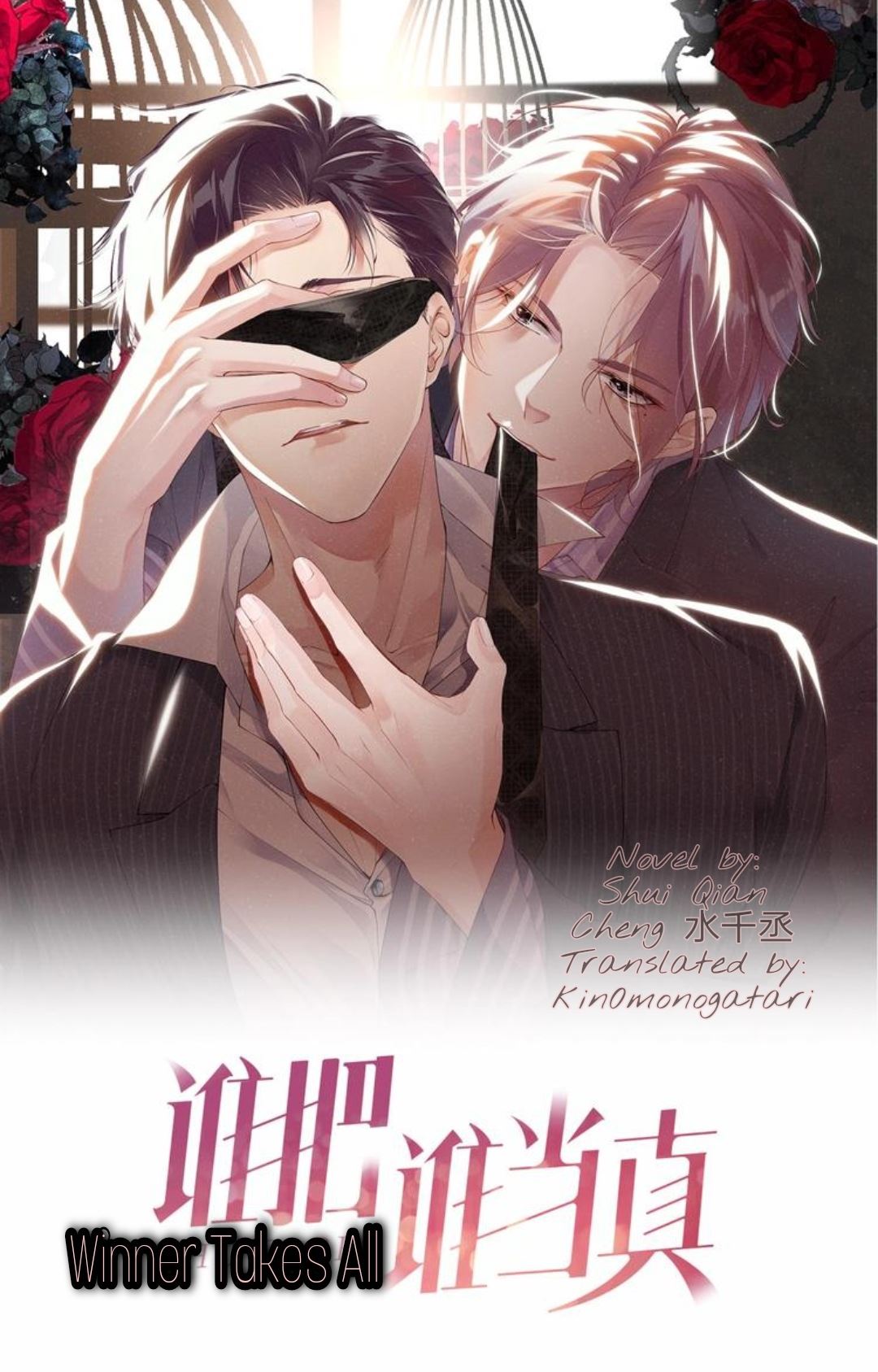
... Read More
Can we talk about Zhao Jinxin for a second? Because this chapter made me re-evaluate everything I thought I knew about him. Throughout the series he's always been this calculating person, someone who hides behind layers of interpretation and deflection. But when he tells Li Shuo "I have never dated anyone" — that's not manipulation. That's someone who has absolutely no defense left. And Li Shuo! Oh my god, Li Shuo. The moment where he touches his forehead, his Adam's apple rolling up and down — it's such a small physical detail but it tells us everything about his internal state. He's distressed, he's confused, he's realizing that whatever boundary he thought existed between them has been thoroughly crossed. And yet... he still goes downstairs. Still lets him in. The power dynamic shift here is everything. Zhao Jinxin has spent so much time trying to be the one in control of their interactions, and now he's the one counting seconds outside in the cold. But Li Shuo isn't winning either — he's just as lost. When he thinks "he would not be as confused now" if they'd stayed purely as sex partners, you can feel the regret. The tragedy is that both of them want something real but neither knows how to ask for it. I keep coming back to that moment where Zhao Jinxin says "I won't apologize" — he's choosing vulnerability over pride. That's character growth, even if it's messy and uncomfortable.
... Read More
"He had swallowed that malicious deception like a sweet dessert, only to find in his stomach that it was shards of glass, already cutting through his insides, leaving him bleeding endlessly." I CANNOT. I am not okay. This metaphor alone deserves its own discussion but I'll try to move on. The entire emotional arc of this chapter is Li Shuo going from someone who genuinely believed he found something real to someone questioning whether any of those three months meant anything at all. And what makes it hurt so much is that Zhao Jinxin doesn't even get to be purely villainous here. When he says "At first, I approached you because of my Ge. But I really do like you," that's the knife twist. Because maybe — MAYBE — some of it became real. But Li Shuo can't know that. He can't unhear the part about Shao Qun sending him. He's trapped between hope and devastation. And then there's the fist. Oh god, the fist. He swings at Zhao Jinxin and misses, hits the wall INSTEAD. That detail broke me. He physically cannot bring himself to hurt the person he cares about, even when that person has dismantled everything he believed in. The blood seeping from his knuckles — Zhao Jinxin notices it, wants to treat it, and Li Shuo pulls away. That rejection, that withdrawal, is so much louder than any scream could be. The cold shower scene at the end — I know it's a cliché in romance novels but here it hits differently because we've just spent the entire chapter inside Li Shuo's collapsing head. Five minutes in the bathroom before he can face the world again. That's not drama, that's grief.
... Read More
The author does something so clever here with pacing. This chapter moves at three different speeds simultaneously, and that's what makes it work so well. The restaurant scene is slow. Deliberate. Almost conversational. Zhao Jinxin leaning in, touching Li Shuo's chin, saying things that are technically flirtatious but feel like confessions. The author gives us these beats of silence—the waiter arriving, the hotpot arriving, the seemingly normal question about what to order. It's so mundane and yet every second crackles. You can feel both men holding back, and the reader is screaming at them to just DO SOMETHING already. Then the car ride shifts. The dialogue becomes more pointed, more urgent. 'You're just avoiding me.' 'I want to do it with you.' The stakes raise from emotional to physical. And then—bam—the apartment scene explodes into a completely different tempo. Short sentences. Fragments. Physicality over words. The prose itself seems to speed up, to lose its polish and become more breathless. 'They used every trick in the book to provoke each other.' No more careful analysis, just pure momentum. And then the abrupt cut to Li Shuo's mother at home. Back to normal speed. Domestic rhythm. And that single detail—the neck marks—hits like a freight train precisely because the chapter had just spent ten pages building such intense, breathless energy. The contrast is intentional and devastating. The author knew exactly what they were doing, and I was completely swept away.
... Read More
The fish metaphor in this section is EVERYWHERE and I think the author knows exactly what they're doing. Li Shuo says he's 'waiting for a big fish' — which is literally a pickup line ZJX would appreciate but he means it practically. Then he's literally on a boat being trapped by someone's scheme while staring at a fishing float. The parallel between being on the hook and waiting to be caught is so thick you could cut it with a knife. And ZJX keeps offering help that Li Shuo refuses, which ties into the theme of pride versus connection that runs through the whole novel. The Ethiopian flashback is another symbolic layer. Li Shuo went to a place of suffering to prove something to himself, to grow through hardship, to become someone his parents could be proud of without him having to explain himself. But now he's in a different kind of suffering — trapped, unable to reach out — and his philosophy of 'only my own experiences are meaningful' is both his strength and his prison. The same idealism that made him a better man is keeping him isolated. Mr. Li saying he's proud of 'marrying a good wife and raising a good son' versus starting his business — that's the theme of family and belonging versus achievement and independence playing out in real time. Li Shuo wants to be self-reliant but he's surrounded by people who want to care for him. The novel keeps asking: is independence always virtue, or can it also be a wall? I keep thinking about that line 'I'm waiting for a big fish' and how it applies to ZJX too. He's the one casting lines, waiting, persistent. Who's actually catching whom here?
... Read More
The pacing in these chapters is honestly masterful and I need to unpack why. We open mid-scene on a plane with a kiss that immediately raises the emotional temperature. Then we cut to Li Shuo's internal monologue about the legal situation — brief, sharp, efficient. No dragging. Just enough info to establish stakes, then back to the character moments. The author doesn't linger on exposition because the tension from the plane conversation keeps you hooked. Then the transition to the vacation villa feels like exhaling after holding your breath. The Samoyeds jumping around, the lobster arriving, the elders chatting — it's domestic warmth after emotional intensity. But even here, the pacing never fully relaxes. Li Shuo is making phone calls under the table, checking emails, planning his return. The underlying anxiety never disappears, it just changes frequency. What really impressed me was the scene at dinner. The author slows everything down — the lobster description, the shrimp peeling, the exchanged dialogue. This deliberate slowdown makes you feel like you're sitting at that table. And then Li Shuo excuses himself saying he's airsick when clearly he's just stressed. The reader knows this. Everyone at the table probably knows this. That dramatic irony creates a whole new layer of tension without any words being spoken about it.
... Read More
The lake setting is doing SO much heavy lifting in these chapters and I need to give credit where it's due. On the surface it's a picturesque family vacation scene — boating, fishing, a magnificent lake, families eating together. But the atmosphere is completely different from what you'd expect. Li Shuo isn't appreciating any of it. The calm lake surface becomes this mirror for his internal state, and every time the text mentions it, you feel that contrast between the serene environment and the chaos in his head. The translator's note about ZJX's possessiveness appearing 'for a moment' is interesting too — it's like the author is telling us to PAY ATTENTION to small gestures. The hand on Li Shuo's shoulder that startles him. The way ZJX 'could only behave himself' when elders were watching but showed resentment. These tiny scene details build the entire emotional geography of the story. And the meal scene! Both families enjoying grilled fish with only salt, chatting and laughing, feeling content. Meanwhile Li Shuo is in his room making frantic calls to every friend he can ask for help in China. The juxtaposition is BRUTAL. One moment the whole house is warm and familial and the next it's Li Shuo alone in a room he can't leave, scrolling through contacts like it's his last lifeline. The writer knows how to use setting as emotional counterpoint and it works every single time.
... Read More
The airport departure scene is one of those moments that quietly recontextualizes everything around it. Let me paint what the author sets up: Li Shuo driving his parents to the terminal. The casual exchange about traffic. His father mentioning he already visited the company and met Lao Zhao. The envelope being handed over with both hands — a detail that matters more than it should, because it signals formality, respect, the weight of gesture. "Mr. Zhao said he was busy today and did not have time to send Mr. and Mrs. Li off. He heard that the two of you are going back to their hometown to visit relatives so he prepared some gifts." This is Zhao Jinxin operating through intermediaries, through gestures, through gift lists. He can't show his face directly but he's still present in the scene. The subtext is suffocating. Then there's Li Shuo's internal moment — looking at that list of gifts: special products, precious tea, high-end gifts, and most importantly, a long list of heart health supplements. He notices Zhou Jinxing's earlier gift and now sees how Zhao Jinxin is mirroring and exceeding it. This is a man weaponizing thoughtfulness. The Sanya trip looming on the horizon adds another layer — a vacation setting that will force proximity between these two, which terrifies and fascinates the reader. The geography itself becomes emotional architecture.
... Read More
Let's talk stakes because they just went UP. Li Shuo thought he was safe in his orderly life — girlfriend, career, family, all checked boxes. But Zhao Jinxin won't stop harassing him, which is already a personal conflict. Then Zhao Rongtian — the chairman of Ennan Group, the man who barely remembers Li Shuo from a five-minute interview years ago — suddenly wants to meet. What does HE want? And why now? The external stakes are unclear but palpable. Meanwhile the internal stakes are huge: Li Shuo just admitted to himself that he 'snatched' Li Chengxiu from someone else. That's a moral conflict he hasn't resolved, just buried under logic. And the Zh Family is connected to all of this somehow — the name Zhao appears everywhere. Something is converging and I am genuinely anxious for Li Shuo. He's smart and calculating but he's walking into territory where numbers won't save him. The suspense is killing me. Who is Zhao Rongtian really summoning him for? And more importantly — what is Zhao Jinxin playing at
... Read More
Okay so this chapter is basically a masterclass in how to layer tension without doing anything dramatic. It's just people sitting in a cafe talking about investments, right? But the subtext is going crazy. Zhao Jinxin showing up “I ran over immediately” after a text message? That's not business. That's something else. And then Zhou Jinxing dropping that gold line about making “tenfold vs a hundredfold” like it's nothing… bro really thinks he's the CEO of the room. But here's the plot twist that gets me every time: Li Shuo's dad doesn't care about money. Like actually. He's more worried about “love and justice.” So the entire business negotiation is just a vehicle for the emotional landmine that is these three men in a room together. And then BAM, the photo from Qiandao Lake appears out of nowhere. No context, no caption, just two people smiling at each other with Ann and Bee. “There was no barrier or deception between them.” That line hits different when you know what comes before and after. The plot isn't about the investment. It never was.
... Read More
The pacing in this batch is really satisfying because it moves through emotional phases instead of just plot events. You start with the business introduction — relatively dry, expository, getting the cast assembled. Then it hits you with the Zhou Jinxing reveal, and suddenly everything has color. Then there's this perfect comedic relief with Wen Xiaohui's video call — the hair color drama, Luo Yi's appearance, the whole thing is light and fast. I actually smiled reading that. But here's where it gets masterful: the author doesn't linger on the comedy. As soon as Wen Xiaohui hangs up (because of Luo Yi, naturally), Li Shuo's phone rings again, and the tone SHIFT. Zhao Jinxin's voice on the other end — calm, controlled, asking about Sanya — lands like a cold splash of water. The dialogue becomes clipped, professional, almost hostile in its restraint. "Don't call me unless it's official business." "It is official business." Two people who clearly know each other intimately, pretending they're strangers. And then the chapter ends on THAT fragment — "Sanya's 'entertainment industry' is particularly well-develo..." — trailing off mid-sentence. The author knows exactly what they're doing. They give you the setup (Zhao Jinxin is interested in the same project), the personal tension (that phone call), and then THEY REFUSE TO RESOLVE IT. The ellipsis isn't just a pause — it's a trap. You have to keep reading. This is how you make someone stay up until 3 AM. The structure here goes: assembly → relief → tension → cliffhanger. Four movements in what amounts to a few thousand words, and each one serves the emotional arc.

Leave a comment

You must be logged in to leave comments. or
