When Two Alphas Meet, One’s an Omega - Reviews

When Two Alphas Meet, One’s an Omega
+Add to Custom List
Sort
Add review
... Read More
Beneath the comedy and romantic tension, this chapter explores several recurring themes that give it depth. The most powerful image is the melting of ice. Three years of emotional distance between Jian Songyi and Bai Huai—described as ice walls standing and growing—finally melt during winter military training, transforming into "long steam of sunrise." This is not just a metaphor for their relationship; it is a statement about adolescence itself. The coldness of youth gives way to warmth, but the process generates something beautiful—steam rising into morning light. Birthdays mark this transition. Eighteen is not just a legal milestone but an emotional one, a point where friendships must be examined and relationships renegotiated. The moneyboy scheme, grotesque as it is, represents the fear that these bonds are shallow, that boys their age reduce everything to sex and jokes. But Bai Huai's genuine concern for Jian Songyi's birthday suggests something deeper underneath. Reading comprehension becomes a symbol of the larger struggle to understand not just texts but people. Jian Songyi cannot answer questions about what authors thought hundreds of years ago, yet he is learning to read the person sitting beside him. The father-son dynamic around Chinese literature adds another layer—Lao Bai's tears represent parental hope that the next generation will value what he values. Even the winter setting matters. Military training in cold weather, worksheets in heated classrooms, the contrast between outdoor hardship and indoor refuge—all of it reinforces the theme that warmth comes through shared difficulty.
... Read More
Okay so let me just say—Bai Huai is a tactical genius and also kind of a menace, and I am HERE FOR IT. The fact that this man deliberately induced a fever just to manipulate a system that would otherwise deny Jian Songyi suppressants? That's not just resourceful, that's unhinged in the most beautiful way possible. He went from catching a cold shower at 2 AM to playing patient to get Lao Bai to sign off on a hospital trip. The lying skills alone should come with a warning label. But here's what gets me—Jian Songyi sees right through it. Of course he does. They're both pretending this is about medical necessity when really it's about survival. The whole dynamic between them is built on this delicious layering of truth and performance. Bai Huai claims indifference with that flat tone in the hospital, but Jian Songyi knows better. And Jian Songyi's anger? Yeah, it's real, but it's also protective. He's furious that Bai Huai would hurt himself this badly, furious that the system makes them play these games just to keep each other safe. Their relationship isn't straight lines—it's spirals. Every interaction circles back to the same question: how far are we willing to go for each other? And the answer, apparently, is farther than either of them would admit out loud.
... Read More
I need to talk about how these characters actually speak to each other, because it's one of the most honest pieces of dialogue I've read in this genre, and it's doing so much work with so little. Let me start with the most deceptively simple exchange in the entire batch. Bai Huai asks: "If you are satisfied, then can the coach give me a reward?" And Jian Songyi just raises a brow. Not words. Not even a nod. Just an eyebrow movement. And Bai Huai continues, holding his dogtail grass, saying: "I think this is pretty good." The silence between them is full of meaning. Jian Songyi doesn't need to speak because he already knows what Bai Huai wants. He knows his friend, and his friend's request is almost ridiculous — he doesn't want money, he doesn't want praise, he wants the random blade of grass that Jian Songyi is chewing on. It's a stupid, intimate request. And the fact that Jian Songyi doesn't laugh at it, doesn't dismiss it, doesn't say anything at all — that silence is louder than any dialogue could be. Then the exchange with Yang Yue about dignity. "Bai Huai, can you not understand what I've said earlier? Even if the chair is a little gray, your ass won't rot if you sit on it." Yang Yue's voice is loud, performative, almost comical. But it's also genuine — he wants his friend to relax, to be himself, and he uses humor as the vehicle. When Bai Huai finally sits, Yang Yue says: "I, Yang Yue don't deserve dignity. Master Bai, please rub it well!" And the crowd laughs. That laugh is real. It's the laugh of seven kids who just survived hell together and found something to joke about. Jian Songyi's line about Bai Huai being a "noble and exquisite gentleman" when they're heading to a street food stall — it's teasing, but it's also affectionate. He's not mocking Bai Huai's fastidiousness; he's acknowledging it as part of who his friend is, and he's inviting him into a world that might be uncomfortable but is shared. And the most devastating line in the whole text: "How can I not go down if you've already gone down?" Spoken almost casually, as if it's the most normal thing in the world. But it's not. It's the most honest thing any character says in this entire passage.
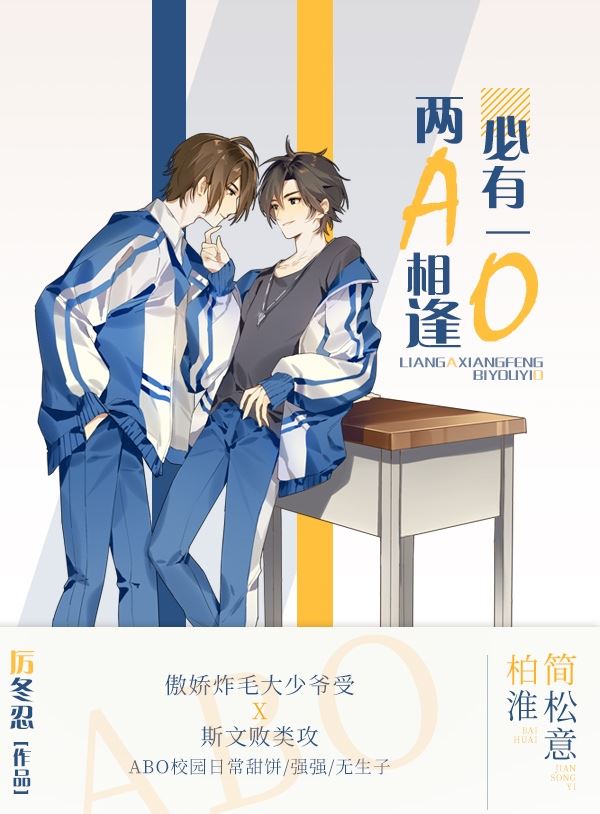
... Read More
'I didn't wait for you for dinner. I saw that you were training with Yang Yue...' Jian Songyi's explanation comes out clumsy and over-articulated, and that's exactly what makes it so devastating. Here is a character who has spent every moment since this morning trying to construct distance, and yet he cannot stop himself from justifying his absence. The irony is thick enough to cut. But then comes the second layer—the part where he actually names what's bothering him: 'Don't you think this is the right way?' He's asking permission to pull away. He's asking Bai Huai to agree that they should reclassify their relationship from 'intimate' to 'appropriate for Omegas.' The tragedy is that Bai Huai hears the question and answers with a forced laugh and 'Yes, you're right.' He agrees to the distance. He agrees to pretend that the cotton ball being drawn from the strand is acceptable. Later, when Jian Songyi says the line about growing up like brothers, it reads like he's trying to convince himself more than Bai Huai. The relationship between these two has always operated on a frequency the rest of the squad can't access. Their banter about annoying sides—'Everything'—is tender in a way that would be invisible to anyone outside their orbit. The most revealing moment, though, might be the simplest: when Bai Huai says 'We sleep in the same room at night. You can't throw me to sleep in a bathroom like a husband and wife in a love quarrel.' He names the intimacy they've been circling for chapters, using humor as cover. Jian Songyi freezes. He knows. They both know. And yet the word 'husband and wife' hangs in the air like osmanthus scent—sweet, heavy, impossible to ignore.
... Read More
This chapter starts with noise and ends with silence, and that contrast is doing a lot of structural work. Opening: everyone mourning and weeping about giving up electronics, Alphas complaining about heats, Lao Bai trying to be rational while failing. It's chaotic, almost comedic. The humor comes from the absurdity — ''my heat is a little unhappy with me, I don't think it will come again any time soon'' is the kind of line that makes you laugh out loud because it's so casually devastating. Then the uniform scene. Still noisy, still lots of body-horror-adjacent comedy with Yu Ziguo's belt situation, but the energy is shifting. Jian Songyi and Bai Huai remain seated, indifferent, while everyone else scrambles. This is the author establishing that these two operate on a different wavelength from everyone else — they're the calm center of the chaos. The bus ride is brief. Two paragraphs. Jian Songyi's bag hogging a seat, Bai Huai calling him a bully. Quick, efficient, gets us from point A to point B without lingering. Then — arrival at Eagle Base. The structure pivots hard here. The communal noise of the classroom dissolves into the quiet of dorm assignments, then into the nearly silent moment of Bai Huai whispering to Lao Bai, then into five minutes of Jian Songyi alone in a room while Bai Huai waits outside. The pacing literally slows down with the scene. That five-minute gap is the best structural choice in the chapter. We don't see what happens inside. We only know the door opens, a crack appears, and then Bai Huai pushes in. The author refuses to give us the full reveal — we get Bai Huai's reaction, Jian Songyi's appearance described through his eyes, and that's it. The reader is left with the same anticipation Bai Huai felt. It ends on that observation — 'He looks capable and valiant' — followed by Bai Huai's thought about military training being ''good.'' The chapter closes on an intimate note rather than a dramatic one, which feels right for the kind of story this is. The tension isn't in what happens next; it's in the quiet space between two people who already know exactly what they want.
... Read More
"The noise of the rainstorm and the noise inside the classroom mingled together" — this opening line is doing so much work and I barely noticed until I reread it. The author opens with atmosphere and immediately grounds us in Nancheng's oppressive August humidity before dropping us into classroom chaos. Xu Jiaxing begging his dad for answers, the whole copy-paste operation happening around a sleeping protagonist — this is textbook misdirection. We think this is just a slice-of-life classroom scene, right? Wrong. The pacing here is deceptive. Every beat feels casual until you realize the author is systematically introducing every major element: the academic pressure (25 sets of papers in 25 days, summer homework called "too easy"), the AB O worldbuilding (Alphas, Omegas, pheromones dropped like everyday facts), the family dynamics (Mom's voice messages from LA, Grandpa Bai's dinner invitation), and the central rivalry (Bai Huai). All of this in four chapters with zero wasted movement. And that ending — Zhou Luo flying out of his seat screaming about pheromones, Jian Songyi's chair clanging to the marble floor, "he immediately felt that there was something wrong with the aura around him" — that is a cliffhanger that doesn't even try to hide it. The pacing goes from lazy afternoon nap energy to full alarm in three paragraphs. Perfect.
... Read More
I don't know how the author does this. I genuinely don't. One chapter sequence and we go from competitive meat-grabbing to full-blown emotional breakdown and I am HERE for it. Let's trace the plot movement here because it's brilliantly constructed. It opens with chaos — literal chaos. Bai Huai grabs two cans and declares war on both Yang Yue and Lu Qi Feng. A dinner becomes a water fight. The narrative energy is at its peak, everyone's loud and alive and young. Then it pivots HARD to quiet intimacy — Bai Huai and Jian Songyi sitting apart from the madness, eating meat, having a conversation that seems casual but is actually loaded. Jian Songyi asks why Bai Huai always bullies Yang Yue, and Bai Huai's response reveals his strategic mind: he was creating a diversion. He didn't want Yu Ziguo to keep going on about their love story. This tiny detail tells us SO MUCH about their dynamic — Bai Huai manipulates situations to protect Jian Songyi's comfort, and Jian Songyi is starting to notice. Then the blind boss enters the scene, and Yang Yue delivers exposition about his tragic backstory — not through narration but through dialogue, which is so much more natural. This shifts the mood completely. Zhuo Luo and Yu Ziguo are on the verge of crying. The tone goes from playful to heavy in one breath. Bai Huai leaves. This is the plot's turning point. His withdrawal triggers Jian Songyi's realization, which triggers the staircase confrontation — and THAT is where the real plot engine fires. The Beicheng incident is revealed as a major past conflict. Three years of silence. No contact. And now Bai Huai is planning to pay the whole bill and disappear again. The stakes are laid bare: if Bai Huai leaves without explanation, everything between them resets to zero. What I love most is how the author uses a seemingly throwaway subplot (the blind BBQ owner) to mirror the main emotional arc. Everyone in this scene is dealing with invisible wounds. The structural parallel isn't heavy-handed — it's organic, woven into the fabric of a single gathering. And that final image of Jian Songyi turning to look at the withered vines as he ends his speech? The plot doesn't resolve here. It hangs. Bai Huai is looking down at him, and the chapter cuts before we get his response. That cliffhanger energy is everything. I need to know what he says next.
... Read More
The pacing here is absolutely ruthless and I mean that as a compliment. We go from an intimate bedroom scene—quiet, slow, charged with unsaid things—to a full-blown mission: find Lao Bai, get permission, go to the hospital, queue for inhibitors. It's like the author takes one look at the tender moment between Bai Huai and sleeping Jian Songyi and says 'nah, drama incoming.' The transition from night to morning is brutal. One paragraph Jian Songyi is buried under quilt, the next he's cursing an alarm clock at dawn. But within that rush, there's a brilliant structural choice: the hospital scene operates as both plot progression AND character revelation. Every stop—registration, blood draw, waiting, pharmacy queue—adds a layer to their dynamic. Bai Huai watches Jian Songyi run around and feels embarrassed. Jian Songyi returns with inhibitors and immediately lashes out. The tension doesn't drop; it compresses. By the time Bai Huai asks 'what if your pheromones get out of control,' we've been riding this wave of suppressed emotion for chapters and the pressure is about to crack. The chapter ends mid-conversation, which is either the best cliffhanger or the most impatient narrative choice ever and I can't decide which.
... Read More
'Do I look like someone who has to do summer homework to you?' — this line alone made me laugh out loud on the subway and I am not ashamed. The dialogue in this book has such a sharp, distinctive rhythm that feels completely natural. Every character speaks differently and you could identify them blind. Xu Jiaxing is the nervous middle-child energy, always deflecting and asking for favors. Zhou Luo is pure chaotic hype man — 'Oh my God! Take me there! I want to smell it too!' — this person lives for drama. But Jian Songyi's voice is what carries the whole thing. His lines are short, dismissive, laced with this effortless arrogance that comes from someone who has NEVER been challenged. 'Is he sick?' when told about a transfer student. '...' when someone calls another student handsome. The silence BETWEEN his lines is almost as loud as what he actually says. And the narration itself has this wry, knowing tone — 'When you are a student, you always have a mentality that the law is not to blame and neither is the top-ranking student' — that's the author wink­ing at us. The dialogue isn't just functional, it's character-building in real time. Even the mother's voice messages feel authentic: the slightly awkward English, the over-explaining, the guilt-tripping wrapped in love. It all sounds like a real family conversation that just happens to be translated.
... Read More
The pacing in these chapters is absolutely relentless and I have zero complaints. It opens with a small, almost timid voice making a huge bet—quiet entrance, massive stakes. Then we cut to the classroom scene, lingering on details: the yogurt, the sandwich, the whispered words. Slow, intimate, almost languid. You're settling in, getting comfortable with the rhythm. Then Bai Huai arrives and the energy shifts. The temperature drops. Zhou Luo shudders. The prose gets tighter, sharper. Every sentence has a edge to it. And then—bam—the chair falls. The clang. The door closing. Xu Jiaxing's water bottle hitting the floor. Three rapid-fire images that hit like a drumroll. From there, the chapter EXPLODES into rumor territory. The narrative velocity increases dramatically as the gossip spreads. We go from a single moment of physical contact to a full-blown campus-wide spectacle in what feels like minutes. And then—just as quickly—the author reins it all in and drops us into Jian Songyi's calm, almost bored exam-taking, finishing a comprehensive paper with ease while plotting murder against his informant. That whiplash between high tension and chilling calm is masterful. The chapter doesn't let you breathe, but it also doesn't exhaust you because it keeps varying the emotional temperature. One moment you're buzzing with anticipation, the next you're sweating over an Alpha's existential crisis about his own identity. The cliffhanger ending—"as fast as a dog can eat"—leaves you hungry and slightly amused, which is exactly the right note to land on before turning the page.
... Read More
This passage is FILMED. I don't care who says otherwise, this reads like a scene breakdown for an actual director. Let me start with the rain. We get it twice—in the car scene and then when they arrive at the classroom—and each time it serves a different mood. The first rain is backdrop to intimate, awkward family dynamics with Grandpa Bai. The second rain is... nothing. Just rain. Bai Huai's chestnut hair remains "obediently fixed to his forehead," not a strand disturbed. While Jian Songyi is presumably getting damp and chaotic, Bai Huai is this pristine statue. The contrast isn't stated outright but it's there, hanging in the humid air between them like the weather itself knows who the alpha of this pairing really is. Then there's the classroom exam scene, which is pure visual storytelling. The author doesn't need to describe the tension through internal monologue—we see it in the rhythm of the prose. Two hands, two pens, two boys who finish together every single time. The "smoke of gunpowder without war" is such a perfect phrase. It transforms an exam hall into a battlefield and these two into silent warriors who don't need to raise their voices because their stationery does the talking. And the canteen! The school canteen only has two windows open, it's raining, and Jian Songyi is too lazy to go out. This small detail builds such a specific, lived-in world. It's not a glossy fantasy school—it's a place where the food service is limited, where students line up for dinner and gossip about who's hotter, where Xu Jiaxing sounds like a proud father describing his offspring. The world feels tangibly real because the author knows what matters: the weather, the food availability, the social hierarchy of a classroom, the betting culture around academic rivalries. The most cinematic moment though—the one I keep replaying in my head—is the double hand-in. They both finish at the exact same minute, walk slowly to the podium, and return to their seats. One sleeps, one reads. The rest of the class is having an existential crisis while these two act like they just bought groceries. The visual of two handsome figures moving in synchronized laziness across a room full of panicked students is IMAGERY I will never unsee.
... Read More
Okay so let me just say this: the entire emotional weight of these chapters rests on one car scene and I am absolutely not okay. Jian Songyi spending all night protecting Bai Huai, making sure he doesn't drink too much, then being the one to literally shove him into the back seat and shout back at that grumpy uncle about how amazing eighteen is — this man is so clearly in love with Bai Huai and he has no idea what to do with it. And Bai Huai? He knows. He absolutely knows. Watch how he immediately tugs Jian Songyi by the wrist and pins him against the corner, the teddy bear between them like a barrier neither of them acknowledges. Then the conversation about falling in love. Jian Songyi's reaction when he finds out Lu Qi Feng kissed Zhuo Luo at eighteen — his pupils dilated, he started swearing, called Lu Qi Feng an "old animal." But Bai Huai's inner monologue? "Bai Huai is the purest and top animal of that breed." Bro. He's comparing himself to Lu Qi Feng. He's asking Jian Songyi if they could fall in love. And he's terrified Jian Songyi will reject him. The desperation in that scene is suffocating in the best way. "What he is afraid of is that Jian Songyi might not be able to accept it at that time, but even the animal would not bother to scold him." This line broke me. Bai Huai is lowering himself so far, calling himself an animal, basically saying 'even if you don't love me back at least don't ignore me.' Meanwhile Jian Songyi keeps saying things like "This is called puppy love" and "If you don't study hard, you'll always think about something you don't have" and it's literally flirting denial at its peak. The tension between them is so thick you could cut it with a knife. I was screaming internally.

Leave a comment

You must be logged in to leave comments. or
