When Two Alphas Meet, One’s an Omega - Reviews

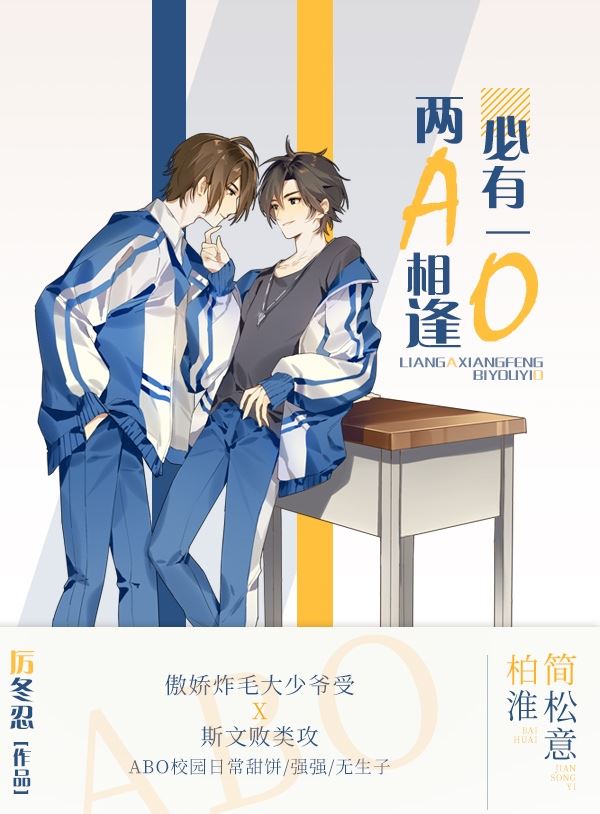
When Two Alphas Meet, One’s an Omega
+Add to Custom List
Sort
Add review
... Read More
"That's right. God is fair. If you give someone a paramecium-like right brain, you will naturally compensate him for an Einstein-like left brain." Okay, first of all, THIS is the kind of self-justification that makes my skin crawl in the best way. Jian Songyi saying this out loud — while literally patting Bai Huai on the shoulder like a patronizing big brother — reveals SO much. He's trying to convince himself that their dynamic is natural, that Bai Huai's academic struggle is just cosmic balance, not something he could potentially help with. But here's the thing: Bai Huai knows it. His "soft smile" right after? That's not acceptance. That's the smile of someone who sees right through the performance. And then immediately after this pseudo-philosophical moment, Jian Songyi's phone starts ringing off the hook and he completely pivots to "check your phone, something's wrong." Classic avoidance behavior. The man cannot sit with even ten seconds of genuine emotional acknowledgment, so he deflects into practicality. But the REAL character reveal comes when we see how Jian Songyi reacts to the fan theories. He's dismissive at first — "Jian Songyi is dismissive of the idea" — but his fingers keep scrolling. He reads every single comment. He even smiles. The fact that he's "quite satisfied with the name Songbai couple. At least he is the one in front of Bai Huai" is arguably the most vulnerable thing he's done in the entire novel. He let someone else name their relationship before he was ready to do it himself.
... Read More
I need to talk about Jian Songyi for a moment because the man tried Bai Huai's phone with Bai Huai's birthday, his parents' birthdays, his grandpa's birthday—four attempts, all wrong, all revealing how little he actually knows about the person he's supposedly close to. And then he guesses 0101 on a whim and it works. His own birthday. IN the phone of the person he's been pining after since junior high. The irony is so thick you could cut it with a knife. But what really gets me is Bai Huai's reaction. He watches Jian Songyi fail with this barely-contained amusement, this quiet satisfaction, like he's been waiting for this exact moment for years. And then when Jian Songyi accuses him of having a crush, Bai Huai doesn't deny it. He just says 'well, that's right' and walks away. The man is a tactical genius and a coward at the same time. He plants the seed, watches it grow, and then flees before he has to tend the garden. Classic Bai Huai.
... Read More
There's a scene in here that I keep coming back to and I can't figure out if it's accidental brilliance or intentional devastation. Bai Huai walks into his house. Empty. Aunt Liu is cleaning. She greets him with this desperate warmth - offering noodles, offering to buy him food, trying SO HARD to make his birthday feel normal. And he says no three times. Polite. Distant. 'I have already eaten, Auntie Liu.' 'You can return to what you were doing.' 'I'll go back to my room first.' But then the narrator tells us: 'Bai Huai's expression was so light that Aunti Liu could not see what was on his mind.' WHAT IS ON HIS MIND? He just spent the day thinking about Jian Songyi. He's carrying the weight of knowing things Jian Songyi doesn't know. He's protecting someone who doesn't even know he's being protected. And he comes home to an empty house where his family has abandoned his birthday for charity work, and he just... goes upstairs. Charges his phone. Changes his clothes. Opens his messages. The contrast between the crowded table of food Aunt Liu prepared and Bai Huai eating alone is not lost on me. The author paints this picture of material abundance (large table, delicious food, wealthy family) paired with absolute emotional emptiness. This is a world where families give money and time to strangers but forget their own son's birthday. Where 'rich family' means nothing when you're alone in a big house. And then there's the tech world - the post-bar, the IP tracking, the plug-ins and drivers. The author builds out this digital underground layer where anonymous cruelty lives and where Bai Huai operates as a secret guardian. The boundary between the physical world (empty house, untouched food) and the digital world (deleted posts, hidden IPs, coded messages) mirrors how Bai Huai himself exists - present everywhere except where it matters most. The translation note with the popcorn is adorable by the way but also terrifying because we KNOW something bad is about to happen.
... Read More
I opened this chapter thinking I'd read it and go to sleep. That was three hours ago. The pacing in these chapters is absolutely diabolical in the best way possible. It starts with this slow, languid drunk scene — Bai Huai being clingy, Jian Songyi pretending to be annoyed. You're like, ok this is a fluffy friendship moment, I can relax. Then the bite happens and your heart rate immediately spikes. Not a full mark, but close enough to make everything TENSE. Every second of that moment stretches out like rubber band. Then — BAM — Bai Huai mentions his grandfather forbade him from drinking and now he has no place to sleep. The pivot from romantic tension to practical problem-solving is so fast you almost miss it. And Jian Songyi's internal negotiation before offering his bed? Chef's kiss. The author makes you suffer through every step of that decision process. The bathroom scene is a masterclass in slowing things down. Bai Huai trying to undress, Jian Songyi shoving him in there, the role reversal callback — it's playful but underneath it all there's this current of electricity that neither character acknowledges. Then Bai Huai falls asleep before anything else can happen, and you're left with this enormous buildup that just... dissipates into tenderness instead of passion. Which honestly hits harder. And then the sleep murmurs. The chapter goes from funny drunk antics to "I miss you, I'll come back, don't be mad at me" and suddenly your stomach drops. The pacing shift here is so sharp it's almost violent. One moment you're smiling at their banter, the next you're sitting in silence processing an emotional gut punch. Then Jian Songyi's jealousy spiral. The chapter ends on this note of barely-contained fury and confusion. It doesn't resolve anything. It just... cuts off mid-choking motion. Of course it does. The author is a monster and I will keep reading.
... Read More
Let's talk about how each character's dialogue is so distinctly theirs it's almost comical. Jian Songyi's speech pattern when he's flustered is peak comedy. He goes from formal to fragmented in half a sentence. "It's more difficult than you think. It took me hours to complete it. It's my mother's intention, but… But if you think it looks okay, then at least wear it." The double-but, the trailing off, the desperate justification — this is someone who has never had to ask for anything and is now desperately asking someone to accept a handmade bracelet. His voice is all over the place because his emotions are. Bai Huai is the opposite. Calm, deadpan, almost monotone. "The fortune-teller said I was unlucky, so your Brother Song is giving me his luck." Said with zero emotion while internally he's a storm. The contrast between his spoken words and his thoughts is where all the tension lives. Yu Ziguo is chaos incarnate. "Hiss—" "Master Bai smiled at me! I'm so excited!" The guy cannot contain himself in any direction. His dialogue reads like someone typing at 200 words per minute while jumping up and down. And Lu Qifeng? One line: "Who cares about whether you're lovers or brothers? Anyway, we should all go back to the private room first." Pragmatic to the core. Doesn't engage with drama, just redirects it toward food and wine. The narrative voice itself also deserves mention — it slips into Bai Huai's head so smoothly you forget it's narration and not his actual thoughts. The transition from external description to internal monologue is nearly invisible, which makes every emotional beat hit harder because you're not being TOLD how to feel, you're inhabiting the feeling directly.
... Read More
There's a symbol in this chapter that I can't stop thinking about. Those two lonely widows. Yang Yue says it as a joke, but it lands with this weird weight because it's true in a way she doesn't understand. They're both trapped in roles they didn't choose — her with the Omega differentiation she clearly resents, him with whatever emotional armor he's built over ten years of pretending he doesn't care. The belt itself is its own little metaphor. Something that holds you together, that you struggle with when things don't fit right anymore, and then someone else has to come along and make the adjustments for you. He punches new holes — literally changing the structure of how she carries herself — and then hands her the tool so she can do it herself next time. That's such a loaded gesture for two people who supposedly can't stand each other. And the water. No hot water after eleven. Cold baths for everyone else, but him thinking three steps ahead with thermoses. The contrast between what the world offers them and what he provides — that's the theme right there. The system fails them, but he doesn't. Or maybe he does, in his own venomous way. I'm still not sure which makes it more complicated.
... Read More
Let's talk stakes for a second because the author doesn't need to shout to make you terrified. The threat hanging over this entire passage is simple: Jian Songyi has two inhibitors. Two. In a environment where he's surrounded by trained Alphas during intensive physical training, with his heat potentially triggering at the worst possible moment. Bai Huai puts it bluntly: 'What if your pheromones get out of control?' That's not rhetorical. That's a genuine, visceral fear. The conflict here operates on three levels simultaneously—the external conflict of getting抑制剂, the interpersonal conflict between Jian Songyi and Bai Huai, and the internal conflict of desire versus duty. Jian Songyi's anger at being treated like a child masks his own terror. Bai Huai's calculated sickness masks his inability to just ask for help. The scene where Jian Songyi discovers the cold shower detail is where all three conflicts collide. He's furious, yes, but also horrifyingly aware that Bai Huai was willing to suffer alone rather than risk him. The stakes aren't just about survival—they're about trust. If Bai Huai can deceive his own body to protect someone else, what does that mean for everything between them? And if Jian Songyi can't control his own biology in a room full of predators, what does that mean for his future? Both questions are unanswered and neither character is ready to answer them yet
... Read More
Let me just say this outright: Zhuo Luo is the villain of these chapters and I will die on this hill. Here's the sequence of events that makes me so mad. You have a moment — a fragile, rare,almost sacred moment — between Jian Songyi and Bai Huai. They've stopped fighting. They're not provoking each other. They're just... existing together in a way that neither of them has allowed themselves before. Bai Huai has lowered his guard. Jian Songyi has reached out physically. The air is different. And then Zhuo Luo forwards a link. A gossip post. About Bai Huai. About his looks. About his power. And suddenly Jian Songyi is back in the battlefield, back in the competition, back in the version of himself that measures worth in rankings and appearances and who the internet decides is better. The stakes here are deceptively simple: it's just a stupid internet poll about who's the most handsome boy in Nanwai. But the emotional stakes are EVERYTHING. Because what the post represents is the public narrative that keeps these two apart. As long as they're 'Brother Song' and 'Bai Huai' in the collective imagination — rivals, opposites, the two poles of some cosmic competition — they don't have to figure out what they actually are to each other. The vote post at the end with 江小松 and Bai Huai as options isn't funny. It's tragic. It reduces a complex, messy, developing human connection into a binary choice for strangers to judge. And Jian Songyi's reaction — 'this sucked all the soul in his heart' — that's not about pride. That's about grief. Grief for the night that got ruined, for the moment that slipped away, for the fact that the world keeps inserting itself between him and the person he actually wants to talk to.
... Read More
The dialogue in this section is where the whole book finds its voice, and honestly, it's hilarious. Let me just highlight a few moments that made me actually laugh out loud. Jian Songyi's entrance into the bathroom is peak comedic timing. Huang Fuyi is mid-threat with this Omega girl, and Jian Songyi just appears in the doorway with one hand in his pocket, knocking on the frame like he's a landlord inspecting a problematic tenant. 'Huang Fuyi, what are you doing in this sacred men's toilet?' The word 'sacred' — who talks like that? Nobody. Except Jian Songyi, apparently, because he's being ironic and condescending and it's absolutely perfect. Then his line: 'It's none of my business, but my ass is actually quite expensive.' This is the kind of dialogue that only works because the character is so unhinged. He's not even making sense — he's just deploying nonsense as a weapon. And Huang Fuyi, despite being physically dominant, immediately understands he's been scolded. The power dynamic shifts entirely through dialogue before a single punch is thrown. But the real masterpiece is the umbrella scene. Bai Huai's entire personality is contained in these exchanges: 'Can you hold your umbrella higher?' 'Huh?' And then Jian Songyi's pivot from aggressive protector to soft-hearted idiot: 'Oh! Forget it... I'm soft-hearted and kind-hearted enough to let you use the umbrella with me. You're going to owe me for this.' The 'Oh!' is everything. It's the sound of a tough guy realizing he's about to do something nice and trying to reframe it as a transaction so he doesn't have to feel vulnerable. And Bai Huai's response? Silence. Just... silence. The text says '...Bai Huai glanced at him and raised his legs to get ready to walk into the rain.' He's about to walk away into the storm rather than accept the umbrella. And that's what makes Jian Songyi say 'come on.' Their dialogue patterns are so distinct. Jian Songyi is all performance — loud, theatrical, covering everything with aggression. Bai Huai is minimal. One word answers. Ellipses. Actions instead of words. Every time Jian Songyi tries to provoke a reaction, Bai Huai gives him exactly nothing, which is somehow the most provocative response possible.
... Read More
The pacing in these chapters is ridiculously well-controlled. You've got a scene that could easily drag—two guys talking in an apartment—and it moves like a thriller for the first third. Jian Songyi arrives, the confrontation explodes, the dialogue is rapid-fire and almost comedic in its intensity. 'Would you please be serious and stop laughing!' I was literally laughing out loud at this point. Then just as suddenly, the whole temperature shifts. The hair-touching moment acts as a pressure valve. After that, the chapter slows to a crawl—the walk inside, changing shoes, sitting down, the description of light fading through windows, the specific clinking of chopsticks. It's almost meditative compared to what came before. And that contrast IS the point. The author is showing us that these two can go from zero to sixty and back to zero in approximately four minutes because that's how their relationship works. The chapter title 'I Like People Who Are Not Very Smart' lands perfectly at the end too—it's Bai Huai's joke but also kind of a thesis statement about Jian Songyi. Everything about this boy is loud and impulsive and poorly filtered, and Bai Huai clearly finds it endearing. The structural choice to end on that lighter, almost breezy note after such emotional intensity is what makes this chapter feel complete rather than rushed.
... Read More
The pacing here is masterful in the most cruel way possible. Chapter starts with physical comedy—tickling, laughing, banter—gives you all the warm fuzzy feelings of a rom-com meet-cute gone wrong. Then it shifts into this intimate bedroom moment where everything feels like it's heading somewhere. Your brain is like 'yes, yes, finally.' And then the author just... walks away from it. Full stop. No confession, no kiss, no confrontation. Just Bai Huai getting up, going to the bathroom, reading a book, and asking about physics competition dates. The abrupt tonal shift is intentional and it hurts. It's the narrative equivalent of pulling the rug out. And then—the competition arc drops in right after the emotional devastation. 'If I don't win first place... I won't be able to meet anyone anymore.' He's using academic ambition as a shield. The pacing doesn't let you feel anything fully before it moves on. That's the author's signature move, and I'm here for it, even if it's emotionally abusive to the reader.
... Read More
Let me just say — this chapter flows like water. It starts heavy, gets lighter, and then ends on a comedic note that makes you want to immediately start the next chapter. The structure is essentially three acts: cemetery scene (emotional core), mountain temple scene (character exploration), classroom scene (comic release). And each transition is smooth enough that you don't even notice the shift in tone until you're already there. The cemetery opening is slow and deliberate. Long silences, the white light rising, the soft smiles. This is where the author lets the reader breathe and feel the weight of Bai Huai's loss. Then they skip school — and suddenly the pace picks up. The temple visit adds a playful, almost whimsical energy with the red cloth seller pestering them all the way up the mountain. "The two broke up in discord. The one went to the east while the other one went to the west, 10800 miles apart." That line is hilarious because it's so dramatically overstated for something as mundane as splitting up at a wishing tree. The author knows exactly when to use hyperbole for comic effect. And then the classroom scene? Perfect button on the chapter. Yang Yue winking, Yu Ziguo marveling at Bai Huai speaking ten words, the WeChat group reveal — it's all quick, punchy, and ends with Jian Songyi shaking his phone screen in Bai Huai's face. No long goodbye, no moral of the story. Just... done. Leaves you wanting more.

Leave a comment

You must be logged in to leave comments. or
