When Two Alphas Meet, One’s an Omega - Reviews

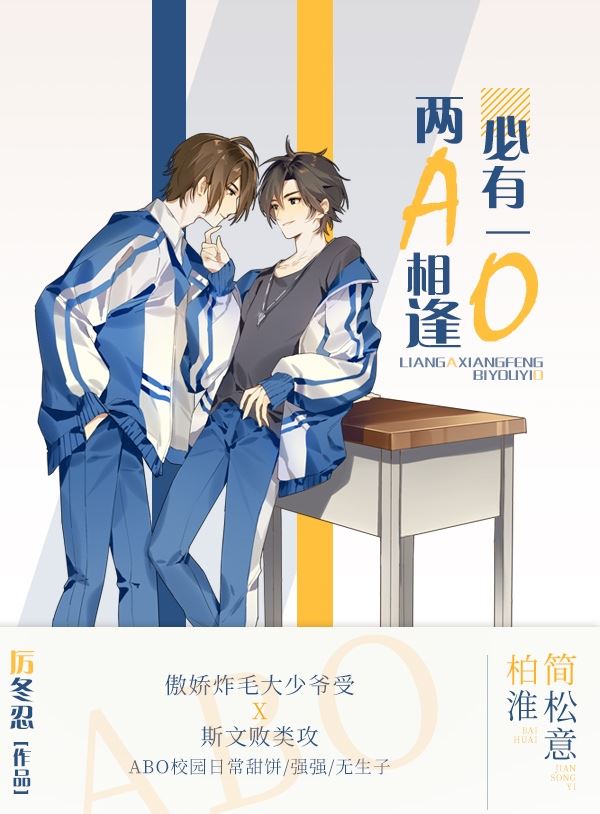
When Two Alphas Meet, One’s an Omega
+Add to Custom List
Sort
Add review
... Read More
Wang Shan's line haunts me: "You can't hide it. But don't worry, I would not say a thing. I just want to see in my own eyes how you'd try to cover this all up until your best friend that you care about the most finds out and thinks of you as dirty and disgusting. God is still fair, and no one will be spared." What a sick bastard. He didn't even need to publish the sketchbook—he just needed to DESTROY it and let Bai Huai suffer in silence while pretending he was okay. The real violence wasn't exposure, it was the psychological warfare of watching your secret unravel inside yourself while the person you love looks at you with confusion and annoyance. The stakes here aren't life-or-death in the traditional sense, but they might be worse. Bai Huai risked everything—his relationship with his only friend, his mental health, his entire sense of self—and walked away anyway. And Jian Songyi? He bet that nothing would change if he stayed, and he was RIGHT. Nothing DID change until Bai Huai left. That's the tragedy. The conflict wasn't external at all. It was two boys who loved each other desperately, surrounded by people who couldn't help, unable to communicate because fear was louder than every other emotion. The differentiation scene is where everything peaks—Bai Huai alone, hammering his wall until his hands bleed, no father figure, no Jian Songyi, just pure physical pain masking emotional collapse. And then he walks out acting like nothing happened. That's not strength, that's survival.
... Read More
"His fingers are typing vigorously against the screen. Not to mention the fact that his lips are unpleasantly pursed into a straight line. He looks fierce while his good-looking eyebrows are furrowed to resemble an unconcealed cold and grumpy look." I keep coming back to this image. The contrast between a domestic space — two guys in a bedroom, one reading a book, the other on his phone — and this simmering, barely-contained intensity radiating from Jian Songyi. It's such a specific kind of atmosphere. The reader is placed right there in the room, watching Jian Songyi from Bai Huai's perspective, and every detail lands with weight. The quiet morning setting is crucial here. It's still, intimate, ordinary. And then Jian Songyi throws his phone. The sound of the beads on his wrist crashing together — "a crisp sound, which was particularly abrupt in the quiet morning" — that's the author using environment as emotional punctuation. The stillness of the room makes that noise feel violent, even though it's just accessories hitting each other. And Bai Huai's response — "If it's inconvenient, then you should take it off" — delivered faintly, almost accidentally — that shifts the entire mood of the scene. What was tense becomes fragile. What was physical becomes psychological. The bedroom itself becomes a container for everything unsaid. Two people who share an implicit history, sitting in the same space but increasingly in different headspaces. The worldbuilding here isn't about sprawling cities or magical systems — it's about how intimately we know these characters' living spaces, how the smallest environmental details (a closed book, a charging phone, a grape stone bracelet) carry the weight of their entire relationship. Jian Songyi burying himself in the bed afterward, feeling "stuffy and heavy as if he is suffocating" — that's not just emotion described metaphorically. The physical space itself has become oppressive. The room that was once comfortable now reflects the growing distance between them.
... Read More
Let's talk about the STRUCTURE of this chapter because it's actually really clever how it's built. The chapter starts with a quiet moment—almost intimate in its stupidity. Bai Huai thinking about how cute it is that Jian Songyi gets ashamed when kissed, turning around to hide his smile. They bicker about cuteness, walk in separate directions, and THEN—BAM. Someone sneaks into the classroom and ransacks Jian Songyi's bag, zipping something into the innermost pocket. Who? We don't know. And that is DELIBERATE. The author drops this like a grenade and keeps walking. No explanation. No villain reveal. Just the aftermath waiting to explode later. This is textbook misdirection—I love it. Then we cut to the sports day. Full energy shift. Lao Bai's ridiculous pep talk, the running scenes, the camera tracking Jian Songyi like a documentary. The 400 meters in the morning, the 3000 meters in the afternoon. The author is giving us breathing room between beats, letting us settle into the warmth before pulling the rug again. And the title of the chapter—"Willing to Gamble." What are they gambling on? Bai Huai clearly gambled on something when he started protecting Jian Songyi two years ago. Jian Songyi's response to Lao Bai is telling: "I haven't failed you ever since you started protecting me so hard over the past two years." Protection. That word keeps coming up like a motif. Who protects whom? At what cost? The subplot with Lu Qi Feng sending chocolates to Zhuo Luo because of low blood sugar—another thread dropped in casually. Why does the author include this? Foreshadowing? Character worldbuilding? Or just to show that Jian Songyi isn't the only one who's quietly devoted to someone? And that ending—"I also"—cut off mid-sentence. Jian Songyi was about to say something and the chapter stops. What was he going to say? About the water? About Bai Huai? About the fact that his friend is also doing something similar? The pacing here is masterful. Quiet → threat → warmth → jealousy → cut off. It's a rollercoaster dressed like a slice-of-life. Also can we discuss how the author never explains WHY someone is planting something in Jian Songyi's bag? That's going to haunt me until the next chapter.
... Read More
Okay so let me just say this - the tension in this chapter is UNreasonable. On the surface level, there's the cyberbullying plot. People are posting disgusting things online about Jian Songyi, questioning whether he's even an Omega, shipping him with someone named Zhuo Luo, basically tearing his identity apart through a keyboard. And Bai Huai - who apparently just happens to be a secretly talented hacker who won a provincial competition - quietly tracks down every single IP address. But the REAL stakes are underneath all of this. And they're devastating. Bai Huai isn't just worried about bullies. He's worried about ONE SPECIFIC THING: 'if the other party really realized that Jian Songyi was an Omega, he would be forced to jump to the wall, and use some pickling means. If something bad happened to Jian Songyi, he might go crazy.' LET ME REPEAT THAT. Jian Songyi has considered or attempted suicide ('jump to the wall') and self-harm ('pickling means') before because of his Omega status. Bai Huai knows this. Bai Huai has LIVED through this. And now people are circling again, sniffing around, discovering what should have stayed hidden. The stakes aren't 'someone said mean things online.' The stakes are 'someone might discover Jian Songyi's deepest secret and destroy him completely, and Bai Huai will lose his mind.' This isn't teenage drama. This is life-or-death. And yet - Bai Huai is calm. Methodical. Sending messages, installing plug-ins, tracking IPs. 'Fortunately, these people are probably a pussy. They only dare take advantage of the protection of the anonymous network.' He's confident he can handle this alone. But the reader knows something he doesn't: the more he handles alone, the more he pushes Jian Songyi away. Meanwhile, Jian Songyi is ALSO handling things alone. Xu Jiaxing literally says 'Brother Song just told me that he will take care of this matter.' TWO boys are fighting the same war from opposite directions, both convinced they're protecting the other by staying silent. And the worst part? Huang Fuyi. 'Nanwai. Huang Fuyi. Whatever they do, these people won't get out of their hair.' The enemies from the basketball team days are resurfacing. The past is NOT letting go. I am not okay. I am genuinely not okay.
... Read More
The setting in this section is doing SO much heavy lifting and honestly the author deserves a raise. Let me paint the picture for you: night, Indus Road, street lamps casting warm yellow light, two boys walking home after what has been an emotionally exhausting day. Bai Huai's mansion. Quiet. No one around. And in that specific atmosphere — that liminal space between school and home, between public performance and private self — something shifts. The text says 'perhaps because that tenderness has nowhere to hide on the quiet Indus Road.' THAT is worldbuilding as emotional architecture. The road itself becomes a confessional. There's no audience. No Mr. Lao breathing down their necks. No Huang Fuyi lurking to start something. Just moonlight and a conversation that almost becomes something else. And then there's the interior scene — the physics problem session. Bai Huai's place, the mundane domesticity of it. One guy seriously working through problems with a pen, the other lounging beside him, eating fruit, scrolling on his phone, pretending this is normal. Normal. As if this is what friends do. As if this is what people who are slowly discovering they might want more than friendship do. The contrast between the public world — the gossip posts, the voting threads, the school hierarchy, the ABO social dynamics — and these quiet private moments is what makes this book breathe. The world feels lived-in because the author understands that the most important scenes happen in the margins, in the spaces between the dramatic plot points, in the car rides and the street lamps and the unsaid things.
... Read More
Okay can we just talk about how perfectly this opens? The umbrella moment is everything. Bai Huai literally holding it five centimeters higher while making a comment about it affecting Jian Songyi—this is such a tiny, seemingly minor interaction but it establishes their entire dynamic in one beat. One is asserting dominance without raising his voice, the other is bristling but also secretly flustered. And then Bai Huai gets in the car and Jian Songyi spends the next few paragraphs visually dissecting him like—bro he literally just noticed the hip line? The belt situation? I'm dying. But here's what really got me: the school forum posts. The author just casually drops this entire history through internet gossip and I was reading it like “wait, what happened three years ago? Why is everyone asking why he didn't come back to NO.1 Middle School?” That final post title “That man, he's back” followed by hundreds of comments that all abruptly stop when someone asks the forbidden question? Chilling. It's like the author just held up a mirror to everyone in that school and showed us they all remember but nobody will say it out loud. And Jian Songyi closing the post and sighing like “yeah they haven't forgotten either” — that's the plot hook right there. We don't know what happened yet but I am LOCKED IN. Also the big reveal that Jian Songyi is ALSO an Alpha? I literally sat up. All this time I thought I was reading some kind of tension setup and now the dynamics just flipped entirely. The tutor scene at the end with Bai Huai just saying “your house or my house?” like he's already won before the conversation even started — this guy is playing 4D chess while everyone else is still learning the board.
... Read More
Okay so let me just say this out loud because I am still recovering — Wang Shan's entire storyline basically ends HERE. The author wrote a literal spoiler tag right into the author's note like 'yep, he's done, next chapter we move on.' This kid who threatened Jian Songyi, who got all jealous and unhinged about Bai Huai, who spewed all that bitterness about fate and privilege — he's just... wrapped up. And get this, apparently he's pulling off what the author calls an "assist of the century" which apparently involves him getting a mouthful of saliva thrown at him by someone named Yu Ziguo. I don't know who Yu Ziguo is yet but I need to know immediately because this sounds like the most satisfying moment in the book. What I love about how the author handled this confrontation is that it didn't drag. Wang Shan gets his one moment of cathartic ranting, Jian Songyi fires back with two perfectly calibrated verbal attacks — one about reincarnation being unfair to him, and then the gut-punch about Wang Shan's family livelihood being tied to his missing brother's legs — and then he just LEAVES. No drawn-out moralizing, no hero speech. Just done. Walks away. That restraint actually made it hit harder than any dramatic showdown could have. And then the cemetery visit? Twelve years. Both of them, showing up every single year with white flowers, dressed in black, in the cold autumn fog. The plot doesn't even need to explain who died or why because the weight of that image does all the work. What happens next with this new chapter about the straw bug turning into a rose — I'm genuinely curious how the plot will pivot from mourning back into something lighter without betraying the emotional truth the author has built.
... Read More
Can we just talk about how GOOD Bai Huai is at manipulating situations without anyone noticing? The guy gets tickled, makes a joke, then goes into the bathroom, COMES OUT wearing his own clothes, puts on his glasses, reads a physics book, and acts like absolutely nothing between them has shifted. Meanwhile Jian Songyi is over here having a full existential crisis about whether his body is betraying him, whether he has evil thoughts about his best friend, whether he's 'sinful' for wanting things he can't have. The asymmetry here is brutal. And the funniest part? Bai Huai is probably fully aware of what's happening. Remember the author's note? 'Cub: What is more important to you? Your wife or your brother?' That tells me Bai Huai knows exactly what game he's in. He's not naive. He's choosing this—choosing to stay reasonable, choosing to be the guest who doesn't make a move. And that restraint is actually more telling than any confession ever could be.
... Read More
"With two bouquets of white flowers and two teenagers dressed in black; It has been twelve years after his death and they're both still mourning." I said that line five times out loud. Five times. Not because it's the most poetic thing written — though it kind of is — but because it condensed an entire emotional universe into one sentence. Twelve years. Twelve YEARS. These two kids are still showing up on the same morning, same black clothes, same white flowers, in the fog, without fail. And the husband who died, the one they both loved, "didn't even have time to come back and see him." The grief in this book is so quiet. It doesn't scream. It just shows up, year after year, with flowers in the dark. And then there's the Jian Songyi and Bai Huai thread running underneath all of this, which is honestly the sweeter thing I've read in a long time. Jian Songyi deciding "I'll share my luck and good things with Bai Huai, so long as it will make Bai Huai's life better" — that's not dramatic confessional love. That's the kind of love that shows up at 5 AM with Platycodon flowers and fixes someone's collar because they look good in black. "You almost caught up with me" — such a small, casual compliment coming from someone who just confronted a threat for Bai Huai the day before. The contrast between the heavy, silent grief at the cemetery and this almost-childlike tenderness between the two leads is what makes the emotional landscape of this book so rich. It's not one-note sad or one-note sweet. It holds both at once. The author's note says "the sour and astringent days are over, and the little green plum is starting to ripen and will become sweeter" — and I feel that in my bones. But I also feel like that cemetery visit is going to keep echoing through whatever sweetness comes next.
... Read More
This chapter is a masterclass in controlled pacing and I have to unpack why it works so well. It opens with casual banter — Yu Ziguo patting heads, Yang Yue making jokes, the whole group sitting together like nothing is wrong. The author lulls you into thinking this is just another slice-of-life hangout scene. Then Lu Qi Feng pivots. He starts asking about the blind man's sons and suddenly the room goes silent. This is how the author builds tension — not with action sequences but with conversation. One question and everything shifts. The pacing of Zhuo Luo's revelation is perfect. She doesn't dump it all at once. She teases them with Do you know Master Bai at that time? and then forces them to ask before finally dropping the weekly note bomb. Remembering My Friend Bai Huai. The reaction shots — the other four shaking their heads decisively, saying they don't want to know — this comedic beat gives you space to breathe before the emotional weight hits. And then Bai Huai's face appearing right behind Zhuo Luo? Frozen to the ground? I literally gasped. The author controls rhythm through these micro-moments of shock and silence. The WeChat conversation in the middle acts as comic relief while simultaneously deepening the mystery of Song Yi and Bai Huai's bond. Lu Qi Feng screenshooting the brother message and sending it to Bai Huai? That's a structural choice that connects three separate threads — the friend group's gossip, Song Yi's hidden feelings, and Bai Huai's private reaction. The chapter closes with them walking into the sunset, which feels earned after all that tension. Not rushed, not dragged — every scene serves the emotional arc.
... Read More
The pacing in these chapters is masterful because it understands that emotional scenes need room to breathe. The chapter opens with this almost comedic setup—Bai Huai teasing Jian Songyi into hugging him—and then gradually shifts into something far more vulnerable. The transition isn't jarring; it's earned. We get jokes about humanitarian care and brotherhood, then we get silence where both characters are too nervous to move. What I love most is how the author controls tension through stillness. The actual hug lasts barely a paragraph, but the aftermath—the refusal to let go, the observation of the scar, the awkward pant-rubbing—stretches time in a way that makes every second feel enormous. This is pacing as emotional manipulation, and it works perfectly. Then the shift to Bai Huai's internal monologue in the taxi is where the real structural brilliance shows. Instead of rushing toward resolution or drama, the author makes us sit with longing. The repeated “he imagined” passages create a rhythm that mirrors how someone actually replays moments in their head. And that ending with Mrs. Tang appearing? Cliffhanger done right—she arrives without explanation, and suddenly everything changes. The chapter doesn't drag or rush; it breathes. And that's exactly what this story needs.
... Read More
So here's the thing about this chapter — on the surface it's just setup. Military training, dorm assignments, trying on uniforms. Nothing explosive happens. But if you actually read between the lines, there's a whole plot mechanism happening that most people would gloss over. The plot engine here is simple: these two are obviously together (or at least heading somewhere) and they need five days of close proximity without interference. The school assigns them separately — Jian Songyi with Yang Yue, Bai Huai with Xu Jiaxing — and the story would be perfectly fine just leaving it at that. But then Lao Bai stops Jian Songyi and announces the switch, and suddenly everything shifts. What's clever is that the reader doesn't immediately know WHO orchestrated this. We get Lao Bai doing the announcing, but then we cut to Bai Huai whispering to Lao Bai beforehand, taking the key, silencing Xu Jiaxing with a look, and sending Yang Yue running. The plot reveals itself in stages — first the surprise swap, then Bai Huai's explanation about not wanting to watch ''a round Alpha dangling in front of you in her underwear,'' and finally the aftermath where Jian Songyi is flustered and Bai Huai is amused. The Yu Ziguo subplot — his ridiculous uniform, his belt falling down, his ''underwear doesn't have a sense of security'' line — isn't just comic relief. It actually mirrors Jian Songyi's own situation. He's also got a uniform that might not fit right, also worried about his body, also vulnerable in ways he won't admit out loud. Yu Ziguo is the visible version of Jian Songyi's invisible anxiety. And the ending — Bai Huai watching Jian Songyi struggle with his belt, thinking ''Military training, huh? I bet it will be good.'' That line is doing a lot of work. Is he talking about the training? The proximity? The fact that Jian Songyi will be in their shared room, potentially changing, potentially vulnerable? Probably all three. The plot doesn't need explosions when it has this kind of layered tension.

Leave a comment

You must be logged in to leave comments. or