When Two Alphas Meet, One’s an Omega - Reviews

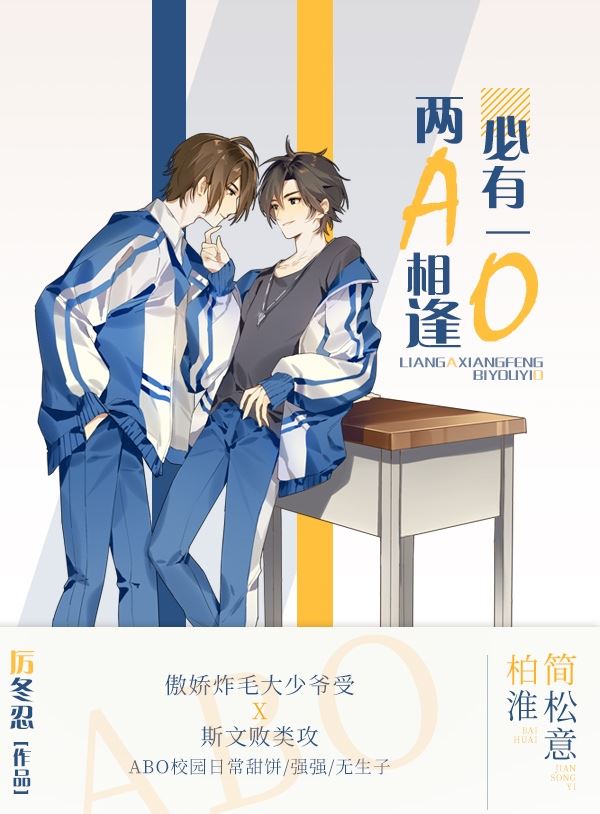
When Two Alphas Meet, One’s an Omega
+Add to Custom List
Sort
Add review
... Read More
I need to talk about Bai Huai because this chapter rewired my understanding of him completely. Up until this point, he's been all smug and provocateur—teasing Jian Songyi, stealing his uniform, making him squirm. But then Jian Songyi is lying there physically falling apart during his differentiation, head against the desk, and what does Bai Huai do? He doesn't leave. He doesn't gloat. He sneaks under the desk like a goddamn thief, retrieves Jian Songyi's confiscated phone (which by the way required some dirty negotiation with a notoriously cruel teacher), and pretends it was just a surprise. His exact words: "Don't be angry with me now, okay?" Said while fixing Jian Songyi's hair. The man is a walking contradiction and I am obsessed. He can be the cruedest person in the room one moment and then quietly perform an act of service the next, wrapping it in teasing so it doesn't count as vulnerability. That's the whole relationship in a nutshell—every tender moment is smuggled in through the back door wrapped in provocation. And Jian Songyi? He pretends not to notice. He grabs the hand, calls him a thief, but he's holding his phone and his composure and whatever fragile thread is left between them. This is not a rivalry anymore. This is something else entirely and neither of them will name it.
... Read More
The stakes in this section just multiplied in the worst possible way and I am not okay. We have three separate conflict layers all converging on Jian Songyi at once and the author is stacking them like a house of cards in an earthquake. Layer one: the public rivalry. Bai Huai won the most handsome vote, Jian Songyi lost face in front of their entire school, and now there's this declaration that there's only room for one Alpha. That's not just pride talking—that's identity-level stakes. If Jian Songyi loses to Bai Huai, what does that make him? Layer two: the biological crisis. His differentiation is hitting him hard—body-wide pain, swelling, burning spine and neck. The text specifically notes that later differentiation means stronger reactions, and that detail matters because it means this is going to get worse before it gets better. He's physically vulnerable right when he's made his biggest stand. Layer three: the interpersonal betrayal-adjacent wound. Bai Huai is the source of both his greatest frustration and his unexpected care. The phone retrieval scene proves that Bai Huai went through hell to get something back for him—a teacher who is described as a "notorious devil"—and did it silently. But Jian Songyi still has to process the fact that the same person who just forced him into a permanent rivalry declaration is also the one crawling under desks to help him. What does he fight for? What does he lose if he loses to Bai Huai? And how is his own body supposed to cooperate while all of this is happening? The answer is apparently: it isn't. Which makes every scene in this stretch feel like watching someone run a race while their legs are on fire. Brutal.
... Read More
I need to address the dialogue in these chapters because it's genuinely one of the most talented pieces of writing I've read in this genre and nobody is talking about it enough. Let me start with the absolute gem of the entire section: Jian Songyi says 'Well, I think there seems to be something wrong with the physics problems you did today.' There is NOTHING wrong with the physics problems. He made that up. The entire sentence is a carefully constructed lie delivered with the casual tone of someone who absolutely did not just think of this on the spot while walking home at midnight. And Bai Huai — who is literally the smartest person in this entire school — plays along. 'It happens to be a little difficult to synthesize the magnetic field.' Sure, Bai Huai. Whatever you say. The dialogue throughout these chapters operates on this same frequency: characters saying one thing and meaning another, and the reader is the only one who sees the gap between them. Even the gossip forum text is purposefully written — those comments are so authentic, so unhinged, so REAL that I almost checked if the author actually has a Weibo account. The [ijin.jpg] reaction from Zhuo Luo? Perfect comic relief that also reveals character — he's petty, he's dramatic, and he cares enough to object on behalf of someone else. But the most powerful dialogue is what's NOT there. The scene where they sit together doing physics problems — how many lines of actual dialogue are there? Almost none. Just the sound of pens on paper and the occasional phone notification. The author trusts the reader to feel the weight of that silence. That's not lazy writing. That's confident, skilled writing.
... Read More
Okay I need to process what just happened between Bai Huai and Xu Jiaxing and I don't think I'm over it. Xu Jiaxing says two Alphas together won't end well—no kids, fines, the usual ABO world consequences. And Bai Huai's immediate response is this soft, almost careless line: "It shouldn't be that expensive." Then when Xu Jiaxing doesn't catch it, Bai Huai just... drops it. "Nothing." Lowered eyes. Changed subject. Do you understand what that does? In two sentences, the author establishes that Bai Huai is thinking about something entirely different from what Xu Jiaxing is saying. He's not thinking about the fine or the social consequences. He's thinking about the cost of something else—perhaps how much he'd pay to be with someone he wants, perhaps how little the world's rules matter to him. And he hides it behind a whisper. I kept replaying that scene. The way he looks out the window first, then lowers his eyes—classic deflection. He lets something real slip and then retracts it like a turtle pulling into its shell. This is someone who feels deeply but has learned that vulnerability gets punished. Meanwhile Xu Jiaxing, bless his heart, has no idea what just happened. He tilts his head in bewilderment and moves on. That gap between them—Bai Huai's unspoken depth and Xu Jiaxing's innocent surface—creates this aching tension. I don't even know what storyline this is building toward, but my chest physically tightened.
... Read More
Okay, let me just say — the Bai Huai and Jian Songyi dynamic in this chapter is everything. I'm still processing the cemetery scene. Bai Huai literally says "I do not want to be alone" to Jian Songyi, and that's such a raw, vulnerable moment for someone who's always put up that arrogant genius wall. Like, he's letting someone see behind the curtain. But what got me? Jian Songyi telling him he's more like Uncle Wen. For the first time in 18 years, someone says this to him. And Bai Huai's reaction isn't some big emotional breakdown — it's this soft smile, this helpless little smile at his father's tombstone. Then we get the inner monologue: "Dad, you see, he can always make me happy. I can't help but like him. So can I trouble you, bless me, bless me to make him like me, love me, in this lifetime of ours." I'm dead. I am actually dead. This boy is writing his wish on that ugly red cloth and the wish isn't about grades or money or whatever rich kids wish for — it's about Jian Songyi loving him back. And then he hides it! When Jian Songyi asks if he wrote his wish, Bai Huai "pressed the red cloth in his trouser in fear of revealing what he had written or the fact that he had written something at all." Meanwhile Jian Songyi is secretly buying a "superstitious gadget" from an old monk for Yu Ziguo and also keeping something close to his chest. Both of them have secrets. Both of them are hiding things. The parallel is beautiful. And the whole 'you live too rationally and harshly, can you be more romantic' line — Jian Songyi basically accusing Bai Huai of being emotionally constipated while simultaneously doing the most romantic thing imaginable by having a secret wish. The irony is delicious.
... Read More
Can we just take a moment for how this chapter opens visually? Because the author really went there. "The sun carved from the window, which hid the man's face hidden but vaguely sketched out his outline: handsome, slender, and temperament cold." This line is everything. It's not just description — it's mood, it's foreshadowing, it's character introduction all in one sentence. Bai Han enters through light and shadow. You don't see his full face immediately. You see the silhouette of authority. And the teahouse setting — old-school, elegant, simple architecture — it's the kind of place where serious conversations happen away from prying eyes. Traditional. Quiet. Heavy with implication. What strikes me is how the environment mirrors the emotional temperature of the scene. The teahouse is warm but restrained, much like Bai Han himself. He's not shouting or slamming tables. He's flipping through documents, noting tardiness with a clipped remark, speaking in measured tones. The setting reinforces that this is a man who doesn't need to raise his voice to be felt. And then there's the contrast with the earlier bathroom scene — cramped, flushed, chaotic intimacy — vs. this spacious, composed, culturally significant meeting ground. The author moves us from private vulnerability to public performance, and the environment shift does so much heavy lifting. You feel the change in stakes without being told explicitly. The food ordering detail is also telling — Bai Han ordered before they arrived. He controlled the environment entirely. Even the meal is a demonstration of power. But Jian Songyi refuses to be cowed by it, which is why the scene works so well emotionally. The setting wants to intimidate, and the characters choose not to be intimidated.
... Read More
I need to talk about Bai Huai because this character is giving me so many feelings and I'm not okay with how much I understand him. The text says it directly: "Bai Huai was so distressed that he could not breathe, but he was so calm that he was frighteningly calm." That contradiction IS Bai Huai. Everything about him is wrapped in this impenetrable exterior and the reader has to WORK to see what's underneath. And honestly? That's what makes him compelling. Look at what he does in this scene. He could have just marked Jian Songyi right there. Done. Problem solved. Pheromones settled, everyone happy. But he chooses the harder path — he lets Jian Songyi suffer through the heat without relief because he wants him to REMEMBER the danger. He wants him to understand his own vulnerability. That's not cruelty, that's terrifyingly strategic love. He's trying to protect him from future harm by making this pain unforgettable. And then the seven steps away. My god. He walks away while his Omega is literally sweating and trembling against the wall, and he can only make it seven steps before he caves. "He was too distressed to take another step." The man is breaking apart internally but his face is ice. That's the most Bai Huai thing ever. Jian Songyi is equally fascinating here. He's described as someone "always strong and conceited in front of the enemy" but shows fragility with the person he trusts most. That contrast is everything. His stubborn refusal to yield even while suffering — "I am just not convinced" — shows he's still fighting for his pride even in his weakest moment. But then he admits it: he knows he was wrong. He owned it. That's growth. Their dynamic is codependency dressed up as romance and I'm here for it.
... Read More
There's a theme running through these chapters that I can't stop thinking about: what does it mean to be defined versus defining yourself? Jian Songyi is undivided. The Alphas competing against him are mature, classified, acknowledged. By every external metric, they should win. But the story keeps insisting that Jian Songyi doesn't compete based on his classification—he competes because "I am Jian Songyi." That line hit me hard. "I only took this activity because I am Jian Songyi. What does it have to do with whether I am Alpha or not?" He's rejecting the entire framework that the world uses to measure worth. The Alphas have power, have status, have certainty about themselves. Jian Songyi has... himself. And apparently that's enough. The three-kilometer run itself is symbolic—seven and a half laps, a grueling endurance test where only half the participants finish. It's not about speed. It's about persistence. About refusing to stop. That's Jian Songyi's whole thing, isn't it? He doesn't win because he's the strongest. He wins because he won't quit. And then there's the towel. Bai Huai bringing a towel—something ordinary, practical, domestic—into a space dominated by athletic competition and alpha posturing. The towel becomes a symbol of care that exists outside the hierarchy. It doesn't matter if you're an Alpha or undivided when someone's drying your hair. In that moment, the categories don't apply.
... Read More
Let's talk about symbols because this chapter is dripping with them. The red imprint on the collarbone—classic marking imagery, ownership, proof of intimacy even if no one will admit what it means. The phone itself is a massive symbol: it's the modern diary, the private self, and when Jian Songyi grabs it, he's literally trying to access Bai Huai's inner world. But the real centerpiece is the password. 0101. Jian Songyi's birthday. The person who's been chasing him since junior high has been carrying his name in the most basic security layer of his daily life. And the fact that Jian Songyi himself can't remember it? That's the tragedy. He's so consumed with his own feelings, his own confusion, that he never noticed the evidence was right there in plain sight. The Iverson screensaver that Bai Huai switched to after being caught—another layer of deflection, another mask. But the oil painting, the meditative rose that appears on Jian Songyi's phone? That's the quiet truth neither of them can yet speak. Love as patient observation. Love as stillness. Love as a flower that doesn't need to move to exist.
... Read More
Let me just say—Jian Songyi is one of those characters who reveals himself through what he does, not what he says. When he tells Xu Jiaxing "Don't tell Bai Huai that someone is looking for him. And if he comes back and asked for me, tell him that I went to the office," he's already making the choice to protect Bai Huai from unnecessary worry. This isn't heroism; it's something quieter and more persistent. The way Jian Songyi recalls the Wang Shan incident is telling. He says, "I felt that Bai Huai was wronged. He was only thirteen years old by that time." Thirteen. A child who helped pay fees for a classmate, who tried to mediate rather than accuse, who wanted his stolen property back because he was a "clean freak"—not because he was materialistic. Jian Songyi understands this in a way the other students didn't, and that understanding has clearly shaped his loyalty ever since. But what gets me is the physicality of his protection. When he grabs Wang Hai by the collar, when he twists his neck, when he speaks in that cold, measured tone—it's not just anger. It's the accumulated frustration of watching someone he cares about be blamed for something he couldn't control. And that moment when he reveals the truth about the hospital? That's not just information; that's Jian Songyi choosing to bear the burden himself. "So if you two brothers must find someone to blame, it is me." I also can't help but notice the shoe comment at the end. Wang Hai asking about the price of Jian Songyi's shoes shows how little he understands about the people he's threatening. Jian Songyi doesn't need to prove his wealth; he needs to protect his friend. Their relationship dynamics are so clear here—Bai Huai carries silence, Jian Songyi carries action.
... Read More
Beneath this surface-level story about high school rivals and friend group drama is this incredibly rich exploration of what kindness costs and whether it's ever truly reciprocated. The central symbol throughout is the concept of brotherhood — or at least the performance of it. Song Yi keeps insisting we're brothers at best, but his actions prove he's fighting for something deeper. The Wang Shan tragedy is this dark reflection of what happens when you're kind to the wrong person. Bai Huai saved Wang Shan and Wang Shan blamed him for his own suffering. That's the book's harshest thesis: kindness doesn't guarantee gratitude, and loyalty can be weaponized against you. The weekly note Remembering My Friend Bai Huai becomes this powerful symbol of Song Yi's private devotion — something written in secret, something he's not ready to say out loud. Zhuo Luo reading it aloud transforms it from personal artifact into communal evidence of feelings that exist beneath the rivalry. And the twin brothers Wang Shan and Wang Hai? That's symbolism on another level entirely. Twins separated by tragedy, one dead, one surviving, representing how proximity doesn't guarantee understanding. Even Song Yi and Bai Huai are twins in a sense — first and second ranking, mirrors of each other, locked in the same competitive orbit. The sunset walk at the end is another loaded image. Between them and everyone, it seems like that revolutionary friendship has completely been forgotten in just a blink of an eye. But they're walking together toward that sunset, which suggests the opposite — that their bond survived everything precisely because it was never really forgotten. The WeChat messages become modern symbols of unsaid feelings, digital spaces where truth can hide behind brother and joke. Every layer of this chapter is working to ask the same question: when you give everything to someone and they push you away, do you stop being kind, or do you keep going anyway?
... Read More
Let me talk about stakes, because this passage is a masterclass in how to make something feel enormous without raising the volume. The external conflict is clear: four teenagers, one obstacle course, fourteen minutes and fifty-nine seconds to prove themselves. But the author never lets us forget what's really at stake. These kids are seventeen. They've been through military training that pushed them to their limits. They've failed, they've struggled, they've watched each other suffer. And now they have one final chance to show that their friendship — their reckless, unreasonable, almost foolish friendship — matters. When Bai Huai takes the final stretch, fourteen seconds remaining, the author doesn't describe the obstacles or the crowd. There's only the countdown: "Fourteen seconds left." "Six seconds left." "Three seconds left." "Jump." The bell rings. And in those three words — one syllable each — the entire weight of the chapter collapses into a single action. But here's what I find most interesting: the stakes don't end when the bell rings. They shift. The external conflict dissolves, and a new kind of tension emerges. Bai Huai, who completed the course in what seemed like ease, now faces a different kind of obstacle — the dark stairs leading to a rough barbecue place where he might get diarrhea. It sounds funny, but it's not. It's the same pattern: facing something uncomfortable because your friends are already there. The blind barbecue boss adds another layer of unstated stakes. Yang Yue warns them: "Don't say anything you shouldn't say." What could go wrong? We don't know yet. The author is planting seeds — small, almost invisible ones — that suggest this world has consequences, that these kids are stepping into spaces they don't fully understand, and that their choices matter. And the snapping vine at the end — that's the author's way of saying: something has broken. Something has changed. The old vine is gone. The wind still blows. And two boys walk down the stairs together, leaving behind whatever was holding on.

Leave a comment

You must be logged in to leave comments. or