Uncle, I have a lot of skirts (BL) - Reviews

Uncle, I have a lot of skirts (BL)
+Add to Custom List
Sort
Add review
... Read More
Okay so let me just say — the tension in these chapters is doing something really subtle but devastating. On the surface, nothing explode-y is happening. No battles, no dramatic confrontations. But underneath? The stakes are absolutely climbing. Every time Cheng Yue tries to act normal, every time he smiles and jokes about his stomach being an "oil painting," you just know something is wrong. The doctor's diagnosis hits like a gut punch — it's not physical illness, it's emotional stress. He's literally breaking from the inside. And Ji Xu? He notices. He notices everything. That sideways glance when Ji Xu is feeding him water, the way he watches Cheng Yue in the rearview mirror and then decides NOT to go back to the office but instead pulls over to call a psychologist — this man is carrying so much weight right now. He's trying to protect Cheng Yue while also figuring out what the actual problem is. The suspense isn't in action scenes. It's in the question: what is stressing Cheng Yue out so badly that his body is physically reacting? The author is doling out clues like breadcrumbs and I am FOLLOWING THEM. Duan Changsheng squinting at Cheng Yue's hands, Ji Xu catching the tremors, Song Yi asking pointed questions about whether Cheng Yue has been seeing things or blacking out — every character is circling the same unresolved tension. What I love is that the author makes you CARE about the outcome even without any traditional conflict. You're sitting there going "just tell us what's wrong with him" while everyone around him is tiptoeing around it. The stakes feel personal and real. This is what peak suspense writing looks like when it's done right.
... Read More
I need to talk about this moment where Cheng Yue secretly packs porridge for Ji Xu and then pretends he didn't when Ji Xu finds it. THIS. This is the kind of scene that sits in your chest for hours. The whole thing is built on this asymmetry between them—Cheng Yue's soft, almost clumsy care versus Ji Xu's guarded restraint. Cheng Yue packing that porridge is such a small gesture but it says everything: he noticed Ji Xu hadn't eaten, he remembered the restaurant, he thought about him even while worrying about his own case. And then the way Ji Xu's face changes when he sees it—that smile. The text says Cheng Yue had never seen him smile like that before, and immediately Cheng Yue feels his back go cold and runs away. It's not fear, is it? It's embarrassment at being seen so tender. But here's what gets me: Ji Xu eats the porridge anyway. He 'usually didn't eat before court sessions' but he opens it and eats it at the dining table. He doesn't thank Cheng Yue or comment on it again, but he eats it. That's Ji Xu's love language right there. And then the whole carrying Cheng Yue to bed, the breakfast note, the video call panic—these are all moments of this quiet push-and-pull where neither of them can just say what they mean. Cheng Yue wanted to wait until Ji Xu finished work before sleeping, thinking Ji Xu must be bored. Ji Xu carried him without making a big deal out of it. They're both trying so hard to be considerate and it's adorable and heartbreaking at the same time.
... Read More
I need to talk about the moment Cheng Yue starts crying and we don't immediately know why. Ji Xu slaps him — twice more, actually, softer but harder — and Cheng Yue collapses. His waist goes soft. He can't hold himself up. And then the tears come. Ji Xu panics. He picks Cheng Yue up, carries him to the sofa, rubs his back, says 'I won't hit you anymore.' The tenderness in that moment is so jarring coming from the same person who just disciplined him. But here's what wrecked me: Cheng Yue buries his face in Ji Xu's shoulder and tries to hide his expression. The narration tells us directly 'he was crying not from pain but from...' and then it cuts off. We're left hanging. From excitement? From the overwhelming proximity? From something he can't name? The author refuses to label it, which somehow makes it hit harder. And then the fall. Cheng Yue trips over an apple, lands on Ji Xu, starts crying again — this time from actual pain in his teeth. Ji Xu checks his mouth, touches his face, unlocks the cuffs. Every touch is careful. Every action is worried. The man who was just being dominant a minute ago is now meticulously examining someone's teeth like it's a medical emergency. Then Cheng Yue goes to his room, discovers his body is having... reactions... and spends the next morning researching whether he's broken. The vulnerability of a character who can't even understand his own desires alone vs. with someone else? That's not romance tropes. That's human messiness. I re-read the sofa scene four times. Four times.
... Read More
The visual storytelling in this batch is genuinely cinematic and I want to talk about how the author uses light and darkness as emotional shorthand. The cat ear scene at the beginning is bathed in warmth — Ji Xu's calm face, Cheng Yue's flushed cheeks framed by black fringe, the softness of those ears against Cheng Yue's small face. It's intimate domesticity captured in a single frame. Then we cut to the bar — dim, quiet, almost ghostly. Tang Jing's commentary about the bar possibly closing down because the owner is "into different things" mirrors Ji Xu's own drifting away from the life he planned. The bar is dying; so is Ji Xu's old identity. But the real masterpiece is the school gate sequence. Cheng Yue stepping out after evening self-study, the cool breeze finally lowering the temperature on his burning face, and then — the sound of a motorcycle behind him. Bai Zhen's hand on his forehead. This scene is all about touch and proximity without meaning. Bai Zhen checking if Cheng Yue has a fever becomes a cover for something else entirely. And then the motorcycle ride home, Cheng Yue staring at Bai Zhen's back while Bai Zhen clears his throat twice before asking about the neighborhood — the awkwardness is palpable. The bedroom at the end is pure shadow. "The room was dark" — we don't see anything clearly. We experience it the way Cheng Yue does: through touch, warmth, breath, heartbeat. The author strips away visual detail deliberately so we're forced into Cheng Yue's sensory experience. Brilliant.
... Read More
Every conflict in this chapter runs on two levels, and the second one is the one that matters. On the surface, Ji Xu is fighting a legal battle against people who abused children. The stakes are clear, public, noble. But underneath — and this is where the chapter earns its weight — Ji Xu is fighting himself. The coat scene is the key. Cheng Yue grabs Ji Xu's arm before the trial and says "Good luck!" His voice is almost hoarse from swallowing saliva. He's terrified — not for himself, but for Ji Xu. And then later, outside the courthouse, he buries his face in Ji Xu's coat and breathes it in. That's not innocence. That's devotion bordering on hunger. And Ji Xu notices it. He lets it happen. He doesn't pull away. Then he finds Cheng Yue asleep in the back seat, t-shirt ridden up, pale waist exposed. His grip on the car door tightens. He leans in. His hand lands on Cheng Yue's lower leg. And then — snap. He pulls back. Walks to the back of the car. Lights a cigarette. The narration tells us his smoking has decreased "especially in Cheng Yue's presence." Not because he's health-conscious. Because he's trying not to scare him. Because he's trying to be someone Cheng Yue can trust. And yet. "He wanted to control his abnormal behaviors and thoughts, keep Cheng Yue bound to him, and then discard the so-called 'good person' facade." He wants to bind him. He knows it's wrong. He's doing it anyway. That's the stakes — not a courtroom verdict, but whether Ji Xu will become the monster he's already imagining himself to be.
... Read More
The pacing in these chapters is actually really clever when you think about it. It opens with the skirt joke—pure comedic relief—and then immediately pivots into the classroom scene where Cheng Yue accidentally outs his obsession with Jiang Gezi's skirt by shouting "I DON'T!" at the top of his lungs. The transition from internal panic to public humiliation to punishment laps is so fast you barely have time to laugh before you're cringing. Then the Bai Zhen encounter slows everything down with that languid, sweaty afternoon energy. He's basically the narrative equivalent of sitting in shade after being in the sun. And then—Teacher Chen appears with the exchange program thing, and suddenly there's a new plot thread. Cheng Yue's enthusiasm about getting rewards (read: avoiding something) vs his visible dread is funny but also moves the story forward. The chapter ends on that car scene which is basically a mini-cliffhanger. Ji Xu reaches out to touch Cheng Yue's hair, says something cut off mid-sentence, and we're left wanting MORE. The author knows exactly when to speed up and when to linger. The bathroom sink moment alone gets three sentences of pure sensory detail before the bell rings and we're back in motion. That's controlled pacing, not accidental.
... Read More
Man, this chapter had me sitting on the edge of my seat. The way the author threads together the domestic warmth of cooking scenes with the cold investigation of Cheng Yue's parents' death is genuinely masterful. 'Buddha Jumps Over the Wall' appearing out of nowhere as Cheng Yue's first attempt at communication after days of silence? Perfect comic relief that also underscores his gradual reopening. But then the hearing scene—my heart was pounding. The pacing from Ji Xu confidently teaching cooking to the tense courtroom wait, to that moment when Cheng Yue couldn't speak despite wanting to scream 'I'm happy'—it all cascaded together. The subplot of Liang Siwei's financial crime as the catalyst for everything, layered over Cheng Yue's psychological regression, creates this dual narrative that never lets you breathe. I particularly loved how the author used the court hearing as both plot resolution and emotional trigger. Cheng Yue pacing until Tang Jing complained, clutching his chest when Ji Xu emerged victorious—that's not just plot progression, that's character revelation through action. The mutism plotline isn't mere melodrama either; it's tied directly to the trauma of potentially learning his parents' death was murder. Every plot point serves emotional truth. This is tight storytelling.
... Read More
Okay so can we just talk about how Cheng Yue is OBVIOUSLY in love and he's doing everything in his power to pretend he isn't?? The way he just casually watches Ji Xu chop tomatoes in those sweatpants and then—bam!—nosebleed. I was wheezing. 'Maybe it's too hot...' bro there's CENTRAL AIR CONDITIONING in the room. We all know what's happening. But then it gets actually sweet because Ji Xu is just so gentle about it, pinching his nose, making sure he's okay, completely unaware that he's the actual cause. And then later in bed when Cheng Yue is literally hiding under a blanket trying to cool down because Ji Xu is reading him a STORYBOOK about a Buddhist monk eating vegetarian food—my dude was fighting for his life. The contrast between the wholesome Buddha story and Cheng Yue's internal meltdown is comedy gold. But honestly the moment that wrecked me was when Cheng Yue finally falls asleep in Ji Xu's arms. He fought it so hard, had all these dramatic realizations about growing up and being worthy, and yet his body just gave up and passed out. That's love right there. You can fight it all you want but your body knows.
... Read More
Okay can we talk about that forehead kiss scene because I literally stopped reading and just sat there?? Ji Xu saying 'I'll wait for you to grow up' after Cheng Yue's panic attack was the most devastatingly tender thing I've ever read. This guy is carrying so much—work stress, anxiety about the future, responsibility for Cheng Yue's wellbeing—and what does he do? He just pulls him close and whispers something that hits like a truck. And then the bite mark reveal!! I SCREAMED. Cheng Yue genuinely bit Ji Xu at some point and forgot about it because of course he did, and Ji Xu had been holding onto that detail like... like a detective? But not in a creepy way, more like he was trying to find the real person who hurt him. When Cheng Yue touches his own teeth and remembers, I felt his relief physically. That heavy stone dropping. But honestly what wrecked me more was the Tan Minmin scene. Cheng Yue refusing to forgive her? That's not the kid we met in earlier chapters. Something hardened in him, or maybe something finally awakened. Ji Xu watching with that surprised expression—he sees how much Cheng Yue's grown and it pains him too. The line 'the cost of this growth seemed too heavy' is Ji Xu being Ji Xu, immediately noticing the tragedy behind every victory.
... Read More
Okay so let me just say—the author absolutely nailed the way this chapter weaves together three completely different story threads and somehow makes them feel like they're all connected. On one level you've got the mystery plot with Ji Xu investigating Tan Minmin and the chain of events that led to Cheng Yue's family going under, which is clearly building toward something bigger. On another level you have this domestic slice-of-life thread with Cheng Yue actually passing an exam, which honestly felt like the author giving readers a breather after all the tension. But then the skirt thing drops and suddenly both plots collide in this really interesting way—it's not just a funny romantic beat, it's also a character moment that tells us something fundamental about Ji Xu's priorities and how he shows care. The most impressive part to me is how the author handles the Tan Minmin thread without info-dumping. Tang Jing lays out the facts—assistant turned editor, suspicious contacts, linked to the security guards—and Ji Xu's internal reaction is so cold and calculated ('I think she'd be more suitable as a crutch') that you immediately know this woman is trouble. Meanwhile Cheng Yue's passing grade feels like genuine narrative payoff because we've been seeing his struggle, and the 26-to-60 improvement arc is satisfying without being unrealistic. The chapter ends on what seems like a lighthearted moment but honestly feels like the beginning of a much weirder and more complicated emotional plotline. I'm equal parts confused and delighted.
... Read More
There's something about how this author handles atmosphere that I keep coming back to. The panic attack scene opens with physical sensation first—breathing, heartbeat, the press of chests—and only later do we understand the emotional context. That's how real anxiety feels. You don't start with the why, you start with the body. The tea house meeting is wonderfully restrained. No dramatic music, no lightning strikes. Just a tired woman with dark circles forcing a smile, a boy who won't look at her, and another man watching everything with that half-smile that says he's already three steps ahead. The detail about Tan Minmin rubbing her hands together before speaking—such a small gesture but it tells you everything about her nervousness and her calculation. But the most vivid scene is honestly the ice cream shop. A small shop, a long line, evening light, and this perfect mirror of what Ji Xu and Cheng Yue could become—the young couple playing with their food, the boy teasing, the girl blushing. Ji Xu seeing himself in that boy and deciding to try it with Cheng Yue. The contrast between the formal, heavy tea house upstairs and the ordinary, glowing street-level shop downstairs feels almost symbolic. Life goes on. People fall in love over frozen treats. And somewhere in there, so are they.
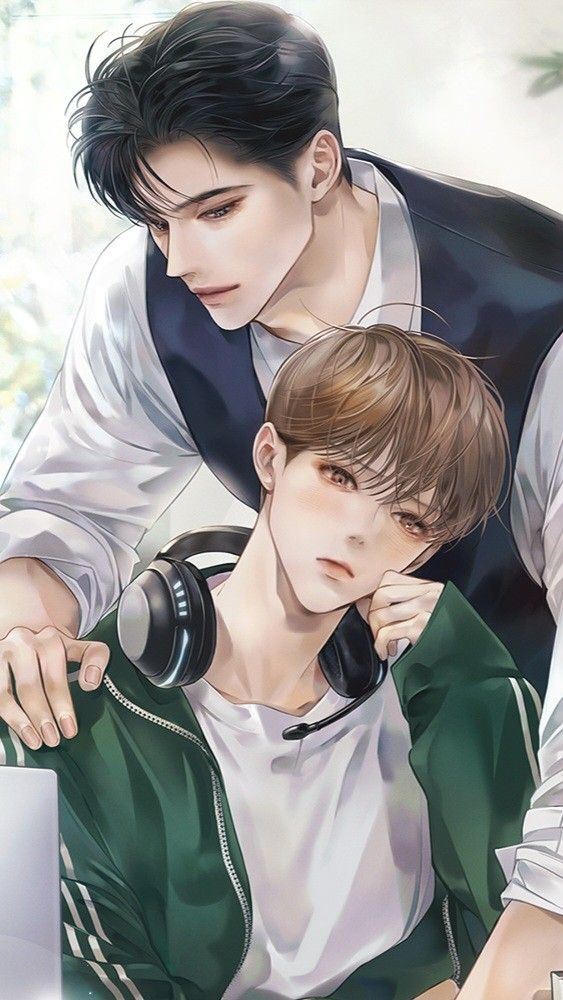
... Read More
I need to talk about the debt collectors because they are NOT what I expected. I walked in expecting scary thugs and got three guys who are visibly struggling with their own consciences. The burly guy on the left literally can't do it — 'I can't intimidate a kid. Who the hell set this job up?' The middle-aged man is more stressed about the logistics than the intimidation. And the third guy? He's just there to make up numbers, no lines, just stirring his coffee like a prissy extra. The dialogue between them feels incredibly natural — they argue like coworkers who didn't sign up for this shift. 'Heartless... I'm not doing it. Your kid is about the same age, aren't you soft-hearted?' That's not villain dialogue, that's just two regular guys who took a job and now regret it. Meanwhile Cheng Yue's lines are shorter, sharper, more reactive — he's in survival mode. 'No money, then take my head' comes out defiant but his hands are shaking. The voice distinction between characters is really clean. Ji Xu's few lines are calm and efficient — 'You stay here and reorganize the information. I need to head back first.' No panic, just action. The author clearly knows how to give each character a distinct speaking rhythm.

Leave a comment

You must be logged in to leave comments. or
