Uncle, I have a lot of skirts (BL) - Reviews

Uncle, I have a lot of skirts (BL)
+Add to Custom List
Sort
Add review
... Read More
I've been thinking about water as a motif in these chapters and it keeps coming back. Cheng Yue enters the pool almost voluntarily — he's drawn to the light patterns, he walks on the bottom, he lets go of the edge. There's something almost meditative about how he surrenders to the water, even when he chokes and panics. But then he becomes calm underwater. Held breath. Still body. It's a strange image of finding peace in nearly drowning. I can't shake the feeling that this mirrors something about Cheng Yue's emotional state — the way he floats between not fully knowing what he wants and just letting things happen to him. The yellow duck is funny on the surface but it represents something tender too. Something small and soft that Ji Xu notices immediately when it's floating alone. And then there's the water spilling on Cheng Yue's chest in the pantry — Duan Changsheng wiping it off, getting close, lowering his voice to Cheng Yue's ear. The water here is different. It's not peaceful. It's a moment of intrusion, of unreturned feeling made physical. Duan Changsheng's confession that he's liked Ji Xu since university hits like a quiet bomb because Cheng Yue's face literally darkens and he doesn't know how to process it. Three people circling the same person in different ways — Bai Zhen with his hidden sacrifice, Duan Changsheng with his open longing, Ji Xu with his fierce protectiveness. What does it mean to be loved by someone vs loved by someone who wants to save you? This book keeps asking that without ever preaching about it.
... Read More
Water in this chapter is doing so much thematic work I barely know where to start. It represents danger and learning, vulnerability and control, fear and trust. Cheng Yue cannot swim—which is literally a inability to survive in water—so Ji Xu becomes his support system, his anchor, the one who decides when he goes under and when he surfaces. The pool itself is a controlled environment, a space where danger is managed, where mistakes have consequences but also where laughter is possible. The duck incident is symbolic of Cheng Yue's tendency to lose focus, to let go of what he is holding when things become overwhelming. And Ji Xu's response—the spanking, the forcing underwater, the holding—represents intervention, the refusal to let Cheng Yue drown metaphorically. But then the water becomes pleasure. The weightlessness, the closeness, the shared laughter. Water transforms from threat to sanctuary because Ji Xu is in it with him. The red marks on Cheng Yue's skin mirror the redness of his embarrassment and desire simultaneously. And the final image—Cheng Yue exhausted, chin on Ji Xu's head, still laughing—suggests that whatever this relationship is becoming, it has found its medium. They belong in water together. The theme isn't just romance; it is about learning to trust someone enough to go under and knowing they will bring you back up.
... Read More
This batch is absolutely soaked in symbolism and I'm not even sure the author intended all of it, but readers will feel it. The bite mark is the central image and it works on so many levels. Cheng Yue bit Ji Xu in a moment of confusion or fear or whatever wild emotion he was feeling, and that mark became evidence—not just of an unidentified attacker, but of Cheng Yue's own fractured state. The fact that it was on one side only, that it belonged to a 'dog' who wouldn't let go... there's self-loathing in Ji Xu's description, and I think Cheng Yue hears it even if he shouldn't have. Then there's the concept of growing up versus staying young. Ji Xu keeps saying 'hurry up and grow up' but also 'I'll wait for you.' It's contradictory and that's the point. He wants Cheng Yue to be safe and capable, but he also treasures the version of him that's still vulnerable enough to have panic attacks and bite people in the dark. The wish to grow up and the wish to stay are both real. And the ice cream—sweetness after bitterness, the最简单的 joy offered as a reward for surviving something hard. Five flavors becoming two. Compromise. Or maybe just... Cheng Yue not needing as much comfort as he thought he did. Or maybe Ji Xu knowing exactly how much he actually needs.
... Read More
The dialogue in this chapter is sparse, which is exactly what makes it land. Ji Xu speaks in commands and fragments — "Put on some shoes." "What for?" "Got it." "Won." He doesn't have room in his mouth for anything softer, and that's the whole point. His voice is a man who has spent too long making decisions that can't be undone. Cheng Yue is the opposite. His lines are questions and offers of care: "Can I come?" "Can I wait outside?" "I'm worried." "Good luck!" He fills silence the way other people fill space — nervously, honestly, without strategy. That contrast between them isn't romanticized. It's almost uncomfortable. Ji Xu finds Cheng Yue's request to wait outside "somewhat amusing" — not touched, not moved, amused. And yet he says yes. But the dialogue that stopped me cold is Ji Xu's line to Tang Jing about Xingchen: "That's not called conscience. That's humanity. When people are overwhelmed, they inevitably can't have it all." Spoken with a sarcastic smile. This is Ji Xu explaining human behavior the way a surgeon explains an incision — detached, precise, and deeply knowing about how people compromise themselves. He's not just observing Xingchen. He's reading himself in that sentence. The subtext is so thick you could spread it on bread. And then there's the absence of dialogue in the most important moments. Cheng Yue buried in the coat. No words. Ji Xu's hand on the leg. No words. The cigarette at the back of the car. Nothing. The author trusts silence to do the heavy lifting, and it pays off every time.
... Read More
I need to talk about the pacing of this section because it's doing something really clever and I almost missed it on first read. The slap happens in paragraph one. By paragraph three, Cheng Yue is already moving into Ji Xu's apartment. That's lightning-fast setup. Most authors would spend three chapters on the fallout of that slap. Here? It's gone. The author doesn't linger on the violence — she moves us straight to the emotional consequence, which is what actually matters. But then — and this is the masterstroke — the pacing *slows down dramatically* when Cheng Yue starts moving his stuff. Eight trips. The black mark. The tissue. The sweat. These details shouldn't take this long to read. They're doing the work of making us feel Cheng Yue's exhaustion, his caution, his attempt to shrink himself into a space that doesn't want him. It's a deliberate deceleration that mirrors his psychological state. Then right after that quiet, careful sequence, Cheng Yue sits on the sofa, pulls out his phone, and the rhythm changes again. The messages fly back and forth — fast, informal, American slang. Then silence. Ten minutes of phone face-down. Then the stomach growls. Then the message to Ji Xu. The pacing mimics real life here — the long waits, the sudden bursts of activity, the boredom, the hunger, the loneliness. And the Mu Jia subplot? It's dropped in at the end like a thread we'll pull later. Efficient. No wasted time.
... Read More
I have to talk about the imagery in these chapters because the author is clearly playing with light and darkness in ways that just... work. Remember the scene where Cheng Yue is watching Ji Xu in court? Let me just quote this because it's PERFECT: "Calm and confident, reserved yet sharp, Ji Xu's powerful aura made him seem almost radiant in Cheng Yue's eyes. To Cheng Yue, Ji Xu always had that glow. Just like in all the cartoons he watched as a child, where heroes always appeared with a powerful light. Ji Xu was his hero, saving him with warmth and passion, holding his hand." Stop. The cartoon comparison. The hero imagery. This isn't just description—this is CHARACTER. Cheng Yue literally sees Ji Xu through the lens of childhood fantasy, of saved-prince energy. And the fact that he had to SQUINT because he'd recently developed myopia? That's such a weirdly specific detail that makes the whole moment feel real. He's physically struggling to see clearly but spiritually seeing Ji Xu MORE clearly than ever. That's not accidental writing, friends. Then you have the cemetery scene. COMPLETELY different atmosphere. Dirt covering the jade urn. The gravestone. The finality of it. Cheng Yue watching the dirt "completely cover" that urn and suddenly his parents are TRULY gone. No more hope, no more waiting. Just... absence. The author strips away all the warmth here. No sunlight, no glowing heroes. Just gray earth and a boy who's finally letting go. And I can't forget the air conditioner scene! Ji Xu pulling Cheng Yue closer despite the heat, fumbling for the remote. The weather getting warmer mirroring their relationship getting warmer too, but Cheng Yue's body still thin, still struggling. The environment is ALWAYS doing something in these chapters. It's never just background. It's emotional weather, people. Every scene has its own temperature and I'm obsessed.
... Read More
I've been sitting with the symbolism in these chapters and it's been haunting me. Let's talk about the tree. Cheng Yue's memory of being forced to stand under a tree during a thunderstorm as punishment, getting struck by lightning, developing a fear of storms. Then his father secretly blocking the kid who hurt Cheng Yue at school, scolding him for an HOUR. The father who was strict, who punished harshly, but who ALSO protected fiercely. That tree is EVERYTHING. It represents the duality of paternal love—painful, frightening, but ultimately protective. The lightning strike is trauma, but the father's response is devotion. Both happened under that same tree. And then there's the lightning metaphor looping back to Ji Xu. Remember how Cheng Yue saw Ji Xu as a hero with a "powerful light" in court? The hero who appears in cartoons with glowing auras. Ji Xu isn't just saving Cheng Yue legally—he's becoming the protective father figure that Cheng Yue's actual dad tried to be. The symbolism is layered: the tree (father/trauma/protection) connects to the lightning (sudden violence) connects to the hero's glow (salvation). It's all one web. The jade urn is another symbol I can't shake. Jade—precious, ancient, enduring. But encased in urn form, it's also finality. Cheng Yue brought it back from the hospital ALONE before. Now he watches it被 covered with dirt with Ji Xu's hand in his. The urn represents his parents' absence, but also their presence in his life. Jade doesn't decay. Love doesn't decay. Even when the body is gone, the precious thing remains. What about the weight theme? Ji Xu constantly worrying about Cheng Yue losing weight, checking his body, feeding him nutritious meals three times a day. Cheng Yue's physical thinness mirrors his emotional state—starved of parental love, starving for justice, starving for closure. But also, the "weight" of carrying grief. The appeal adds legal weight. The death penalty adds moral weight. Cheng Yue is physically light but emotionally HEAVY. Ji Xu tries to nourish his body because he can't nourish his soul. Does Cheng Yue's father's protection through violence (scolding the other kid for an hour, making him stand as punishment) justify the emotional violence of making his son stand under a lightning-threatened tree? Or is that the tragedy—that love and harm are inseparable in this family?
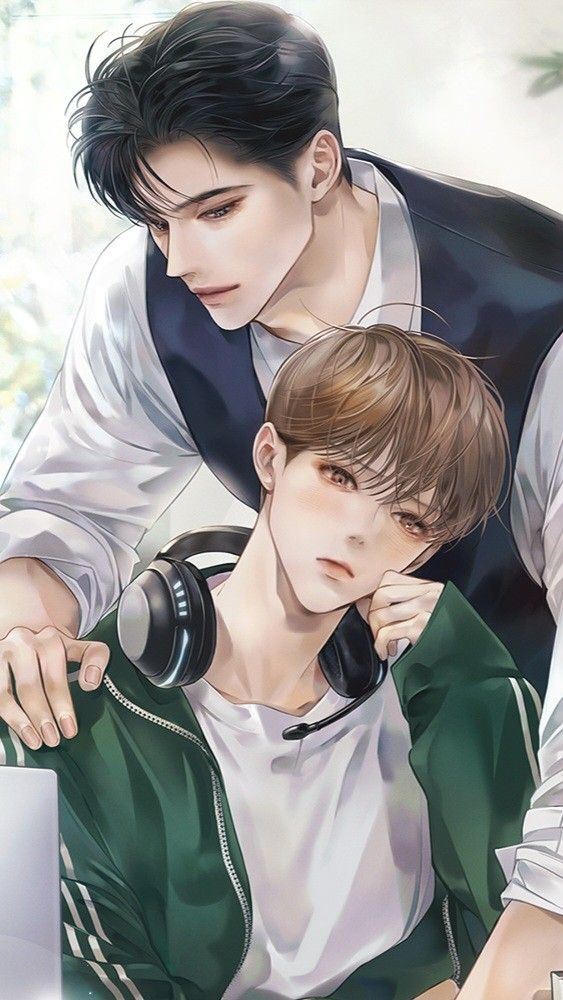
... Read More
The stakes in this section operate on at least three levels and they're all escalating simultaneously. Level one: Ji Xu's health. He's having episodes, 'recurring' is the keyword, and he's pushing through court cases anyway. The physical danger here is real and understated — he nearly got hit by a scooter because he was dizzy, and that's not dramatic, that's genuinely terrifying. Level two: the adoption dissolution. This is the emotional landmine. Cheng Yue is a month from 18, which means legally he becomes an adult and whatever arrangement exists between him and Ji Xu could simply disappear. Why is Ji Xu rushing this? What is he protecting Cheng Yue from, or what is he protecting himself from? Level three: the imminent separation. Cheng Yue leaving for three days right now, when everything between them is already fracturing. He's running away and he knows it — 'as if afraid he might regret it, quickly confirmed with his mentor.' That word choice is deliberate. He's fleeing. And Ji Xu? His mood is so toxic in the office that even Tang Jing doesn't dare bother him. The power dynamics are completely inverted — Ji Xu has all the institutional authority but Cheng Yue holds all the emotional leverage, and neither of them knows how to wield what they have. Who wins when the court case drops and the adoption is dissolved and Cheng Yue is gone for three days?
... Read More
This batch is wild because it does something really interesting structurally: it takes a seemingly small, domestic scene and lets it cascade into something bigger without any dramatic announcement. You start with a dead bird and awkward family dinner vibes, then it's New Year firecrackers, then suddenly it's 'oh hey, school starts soon, also Cheng Yue is 179.5 cm tall let's measure this,' and then BOOM—he's applying to a prestigious art school in another city and already told Ouyi he's coming. That's a huge narrative leap compressed into a few pages, and it works because the author grounds every jump in a concrete detail: the measuring tape scene, the cat-ear dress callback, Ouyi's beard and his thing for calling people baby. The plot doesn't feel rushed though—it feels like life. Life doesn't build to climax every time, sometimes things just happen because time passed. What I love is that the Cheng Yue-Ouyi connection is set up almost casually here ('he met Ouyi at the art exhibition last time') and already feels like a real direction the story is heading. Also the subplot with Cheng Yue giving all his money to Ji Xu—that's a thread that hasn't been resolved and I am HERE for it. Who is actually managing their finances? Who has power in this relationship? The narrative is quietly building questions even while everything looks cozy.
... Read More
Great Idea of Love a great read
... Read More
Really good

Leave a comment

You must be logged in to leave comments. or
