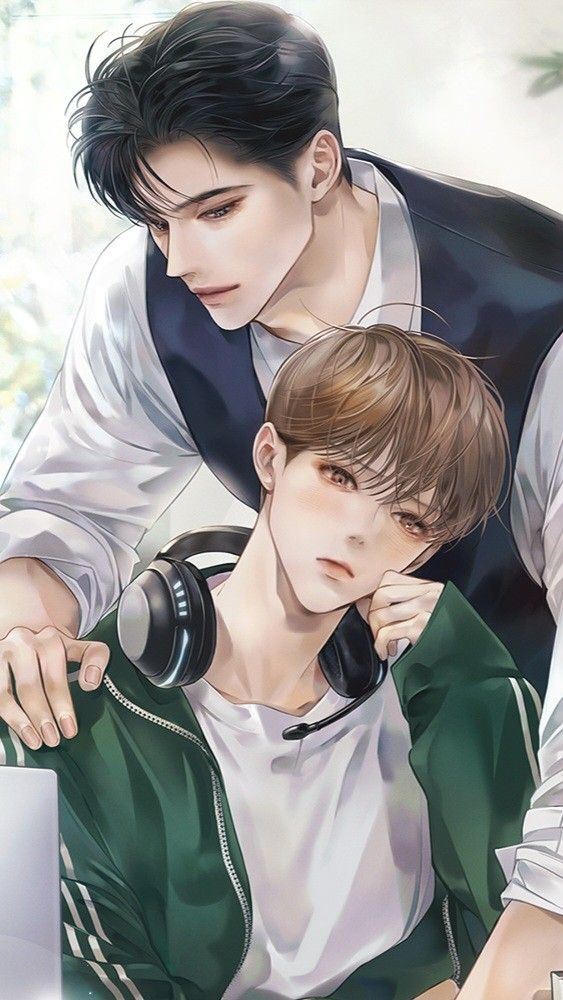
So Ji Xu gets mad about Cheng Yue's shoes being scattered on the floor, his backpack dumped everywhere, cash spilled all over — ALL of that — and yet the ONE thing Cheng Yue did perfectly was place the urn squarely in the center of Ji Xu's desk. And Ji Xu doesn't even say anything about it. He just accepts it.
This little detail absolutely wrecked me. An urn. On a lawyer's desk. In the middle of everything else going wrong — the case with disabled kids, Mu Jia suing higher-ups, Luo Fengxing the middleman — Cheng Yue walks in exhausted, barely functioning, and manages to get ONE thing right: he honors whoever that urn belongs to, and he does it with this strange sort of dignity.
Ji Xu notices this. He notices EVERYTHING about Cheng Yue. When he later looks at the sleeping kid and sees the dark circles under his eyes, his whole demeanor shifts. The annoyance melts into something quieter, something almost tender. He takes the folders and leaves Cheng Yue to sleep. That's the Ji Xu we rarely get to see — not the guy threatening to dump Cheng Yue in the shower, but the guy who decides, silently, that today he'll let it go.
It's interesting how their relationship operates on two levels. Publicly, Ji Xu is the cold lawyer who drags Cheng Yue by the neck and threatens him with disciplinary action. But privately, in these small moments, there's this unspoken recognition that Cheng Yue is carrying something heavy. The urn represents that — whatever loss Cheng Yue is holding onto, Ji Xu sees it and doesn't poke at it.
Meanwhile Cheng Yue pretends he doesn't want breakfast. Pretends he's not hungry. Pretends the criticism of the fish is about the food quality. But we know it's about pride. He's十七 years old, he's dealing with trauma, and the last thing he wants is to seem grateful or weak in front of the guy who just threatened to physically discipline him. The fact that he cracks anyway — stomach growling, eating the food — makes him feel so human and vulnerable. He's trying SO hard to maintain some sense of control in a situation where he has almost none.