I need to talk about the mother. Yuriko is dead and her absence is the ghost in every single scene.
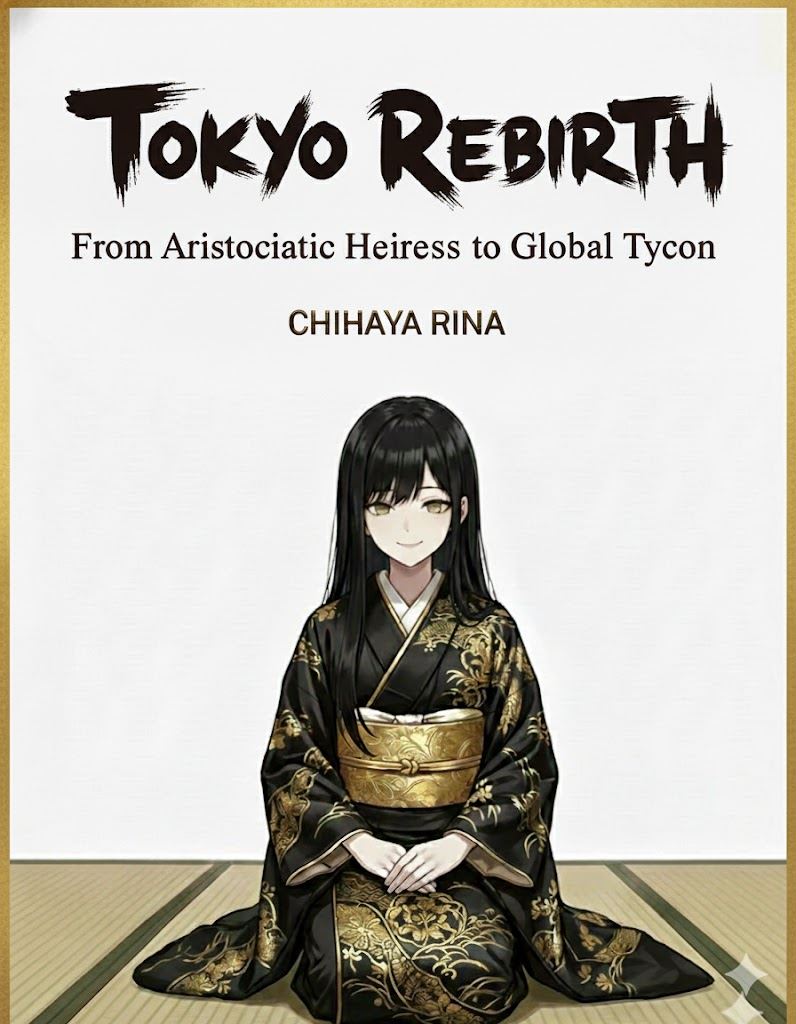
The chapter opens with Satsuki in front of a mirror, pale from days of keeping vigil. Not a single word about her relationship with her mother. Nothing. And yet the grief is everywhere—in the black mourning dress, the dark-gray ribbon at her collar, the red-rimmed eyes she refuses to let fill with tears in front of Fujita. The writer understands that the deepest grief isn't loud. It's the absence of sound where sound should be.
Then Fujita appears and calls her "Ojou-sama" with this withered voice, and for a moment—just a moment—I thought Satsuki might actually be a child. She asks about her father with this raspiness in her voice, this fragile lily-battered-by-wind quality, and I believed her. Then she pushes open the oak doors and becomes something else entirely.
The scene with her father is devastating in a way I didn't expect. Shuichi is holding himself together by sheer force of will—bloodshot eyes, brittle stiffness, the exhaustion of a man who has to perform strength at his wife's funeral while his brother circles like a vulture. And Satsuki brings him tea. Not because she's performing for the room, but because he sounds hoarse. That detail—his voice is hoarse, so she brings tea—feels real. It feels like a daughter who still sees her father as someone who needs care, even as the world around them is eating him alive.
But then she performs. Oh god, she performs so well. The trembling hands, the teary eyes, the childish innocence as she recounts Uncle William's tantrum at the American Embassy. Every gesture calibrated, every word measured. And yet—when she sinks into her father's arms and he feels her quivering frame—there's a question that won't leave me: is any of this her? Or is she so good at acting that she's forgotten where the performance ends?
The line that wrecked me: "With Okaa-san gone, I cannot leave Otou-sama alone to face those…pleasantries." She says this to Fujita, privately, without the audience of the funeral hall. Is this sincerity? Or is even this private moment calculated? The fact that she uses the softer, less formal "Okaa-san" instead of "Okaa-sama" suggests some genuine warmth, some real grief for a mother she's remembering from another life—or perhaps from this one. Does she even know which memory is hers?
And the ending. She's alone in the hallway, humming a nameless tune, steps light, black shoes clicking on marble. Round one: complete victory. There's no joy in that victory. No relief. Just the steady, predatory satisfaction of someone who has survived another round. The smile she gives Kenjiro from behind her father's shoulder—that black lily smile—is the most emotionally complex image in the chapter. It contains mockery, triumph, threat, and something almost like sorrow, all compressed into a expression a twelve-year-old girl shouldn't be capable of.
I keep wondering: when was the last time Satsuki felt anything real? Not performed, not calculated, just felt? And if she's forgotten how, is that her punishment for jumping off that building in her previous life?