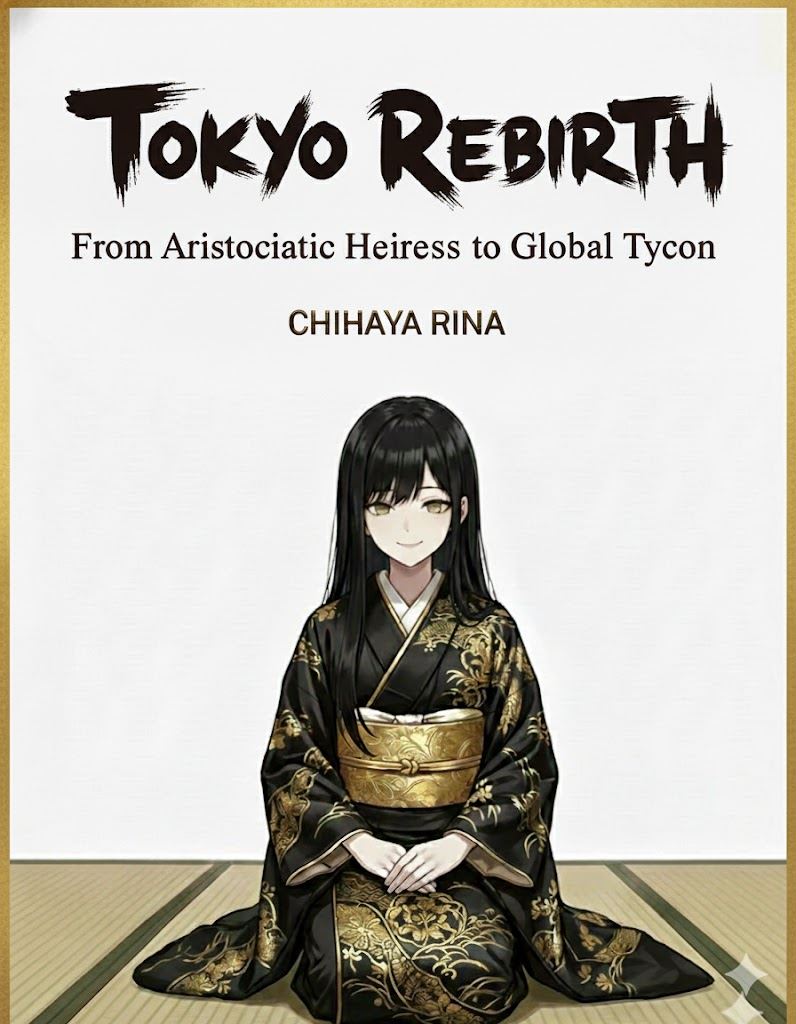
I need to talk about how this chapter is structured because it's genuinely masterclass-level pacing and I don't say that lightly.
The chapter opens with Satsuki alone in front of a mirror. We get her backstory dump—Goldman Sachs, the board resolution, the jump from the Manhattan skyline—all compressed into three paragraphs. Twelve years of a corporate career, boiled down to smell of coffee at 4 AM and candlesticks on monitors. It's efficient without being rushed because the emotional beat lands: she's been here before, she knows how this ends, and she's not doing it again.
Then Fujita arrives and we get the first performance. The transition from her cynical internal monologue to the tear-rimmed, trembling daughter is instantaneous. No warning. One second she's sneering at the irony of her situation, the next she's composing herself into perfect grief. This is the chapter's central rhythm—every time we think we understand Satsuki, she flips the mask.
The funeral hall scene is where the pacing really earns its keep. The writer doesn't rush us into the conflict. We drift through the crowd with Satsuki like a ghost, overhearing fragments—Minato Ward, bank executives, the pitiful soul comment. Then we land on Shuichi and Kenjiro in their corner, and the tension builds through dialogue alone. Kenjiro's impatience, Shuichi's exhaustion, Sato's plastic smile. Each character gets a beat, and none of it feels padded.
When Satsuki enters with the tea, the entire scene pivots. The reader expects a dramatic confrontation—and that's the trick, isn't it? The adults are bracing for a child's outburst, and instead she gives them something far more dangerous: a carefully constructed question delivered in the smallest, most vulnerable voice possible.
The silence after her speech about the Kobayashi family with seizure seals on their doors—that's the chapter's breathless moment. The writer lets the silence do the work. No narration, no internal monologue, just empty space where five billion yen of fate hangs in the balance.
And then the resolution comes fast. Shuichi shuts it down. Sato laughs awkwardly. Kenjiro is humiliated. Satsuki curtsies and leaves. Round one: complete victory. The text even tells us this explicitly, and then immediately pivots to the window scene where she traces the word "Short."
The final line lands like a bomb: "It was the smile of a hunter." Not a child. Not a grieving daughter. A hunter. And that shifts the entire genre of the book in one sentence. We thought this was a reincarnation revenge story. Turns out it's a financial thriller wrapped in aristocratic drama, and the protagonist is playing four-dimensional chess while everyone else is still learning the pieces.
The pacing from the mirror to the funeral hall to the rainy window creates this ascending spiral—each section tighter, sharper, more dangerous than the last. By the time we reach the ending, the twenty thousand characters have compressed into a single word written in condensation. Everything disappears except the plan.