Tokyo Rebirth: From Aristocratic Heiress to Global Tycoon
+Add to Custom List
Novel Info

Summary

... Read More

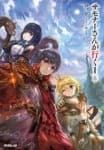
Saionji Satsuki is a twelve-year-old girl who possesses the consciousness and memories of a ruthless Wall Street analyst from her past life. Having died on the rooftop of a Manhattan skyscraper after being scapegoated for billions in bad debt, she is reborn into the body of the sole daughter of the Saionji family, an ancient aristocratic house holding the rank of Duke in 1985 Japan. While the Saionji family retains political prestige through their seat in the House of Peers, their economic foundation is crumbling. Their traditional textile and machinery businesses are struggling, and the family is burdened by the high costs of maintaining their noble status. At her mother Yuriko’s funeral, Satsuki observes the cold, transactional nature of the attendees, who treat the mourning ceremony as a mere business opportunity. Among them is her ambitious uncle, Saionji Kenjiro, who pressures her father, Shuichi, to approve a five-billion-yen loan for a factory expansion to capture American export orders. Satsuki recognizes this as a fatal mistake, knowing that the upcoming Plaza Accord will cause the yen to skyrocket, destroying export-dependent industries and leaving the family with insurmountable debt.

Using her dual identity as a fragile, grieving child and a calculating strategist, Satsuki intervenes in the funeral proceedings. She fabricates a story about overhearing angry American officials at the Embassy discussing trade barriers, planting seeds of doubt in her father’s mind. Later, in private, she manipulates Shuichi further by using a Time magazine article to explain the concept of the US dollar as an artificial dam that will eventually burst, flooding Japanese exporters. She frames this complex macroeconomic theory as her own innocent intuition, guiding her father to reject the factory expansion. Instead, she steers him toward a high-risk financial strategy: shorting the US dollar by leveraging the family’s remaining assets. Satsuki secures the loan not for production, but to establish an offshore investment account, marking the beginning of her transformation of the House of Saionji from a declining noble estate into a financial powerhouse.

Simultaneously, Satsuki navigates the treacherous social hierarchy of Seika Private Girls' Academy, where students are divided between old aristocracy and new money. She confronts Okura Masami, a wealthy classmate whose family builds fortunes on land reclamation, by weaponizing aristocratic etiquette to humiliate her without raising her voice. Beyond social combat, Satsuki treats the school as an intelligence hub. She identifies and recruits Suzuki Emi, a quiet classmate from a manufacturing family, by offering friendship and candy. Through Emi, Satsuki gains insider information on Nintendo’s supply chain, learning about the massive demand for the Famicom console before it becomes public knowledge. She also assesses Yoshino Ayako, the daughter of a Mitsui Bank branch manager, subtly warning her about impending Ministry of Finance crackdowns on real estate loans to secure a future ally within the banking sector.

The narrative follows Satsuki as she executes a cold-blooded plan to eliminate the threat posed by her uncle. During a family council meeting where Kenjiro demands authority over the failed expansion, Satsuki pretends to suggest that he take full responsibility for the project independently. Kenjiro, blinded by greed, accepts the role, unaware that he is being set up to bear the brunt of the inevitable financial disaster while the main branch remains protected by legal separations Satsuki helped draft. Her father, fully under Satsuki’s influence, signs the documents with a resolve that hides his true intentions. As the story progresses, Satsuki prepares to bet the entire future of the Saionji clan on the collapse of the dollar, positioning herself not merely as a heir, but as the invisible puppet master pulling the strings of finance and politics in bubble-era Japan.

Latest Release
DateGroupRelease
2026-10-03hosted novel c272
2026-10-03hosted novel c271
2026-10-03hosted novel c270
2026-10-03hosted novel c269
2026-10-03hosted novel c268
2026-10-03hosted novel c267
2026-10-03hosted novel c266
2026-10-03hosted novel c265
2026-10-03hosted novel c264
2026-10-03hosted novel c263
2026-10-03hosted novel c262
2026-10-03hosted novel c261

Community Reviews

Rating(0 / 5.0, 48votes)
5 stars
0(0%)
4 stars
0(0%)
3 stars
0(0%)
2 stars
0(0%)
1 stars
0(0%)

Popular reviews

... Read More
Okay so I need to talk about Shuichi and Satsuki's relationship because this is genuinely one of the best father-daughter dynamics I've read in any novel. Like, it's not romantic or anything—I'm not here for that stuff—but the way they operate as a unit is absolutely fascinating. The part where Satsuki handles Gonda? I literally stopped reading and re-read that whole exchange three times. She doesn't just defend her father; she dismantles the guy with ghost stories and superstition, and then casually sips her lemonade like she just swatted a fly. And her father's reaction? He doesn't scold her or treat her like a child. He asks, which book did you get that nonsense from? That's... actually kind of sweet in its own way. He respects her intellect even when she's being manipulative. But the real emotional gut-punch comes later on the terrace at night. Satsuki says, "Let others sweat and bear the risk. We only need to sit back and listen to the sound of gold coins falling into our pockets." And then—this is the part that wrecked me—the narration says the wind rustled through the treetops, sounding like the flow of countless coins. It's such a simple image but it conveys everything: the weight of their ambition, the cold calculus behind it all, and the strange intimacy between a father and daughter who are basically co-conspirators in building an empire. I love how loyal she is to him, and how he trusts her judgment completely. When he looks at her and thinks the light in her eyes will outlast Tsutsumi's lighthouse? That's pride. Pure paternal pride. No other scene in this entire arc hits as hard.
... Read More
Can we just talk about how this author controls tension like a fucking instrument? Because it's not accidental. The whole sequence is structured like a pressure cooker being slowly, methodically sealed shut. We start with the immediate crisis — the failed lighter, the shaking hands, the red phone ringing. Then we get the time jump to 2 AM, the storm, the ledger. Then Satsuki enters and slows everything down for this quiet, almost meditative conversation that's somehow MORE tense than if they were shouting. She gives us seventeen days. Seventeen. Then the next scene cuts to September 20th, four hours before the market closes on Friday, and we're counting down again. The telephone rings. Kijima's voice crackling through. Golf canceled. A cold that makes no sense. A plane to New York with no flight plan. Each detail drops like a stone into water, and we're watching the ripples get bigger. And the chapter doesn't end with resolution — it ends with the shorts being placed and the market beginning to twitch. The young trader yawning about going long on the dollar, then the sudden jump in quotes, the confusion, the recognition. It's a cliffhanger that doesn't need to scream because the entire setup has been whispering violence for pages. The pacing between scenes — from the domestic intimacy of the study at midnight to the cold corporate morning — gives you just enough air to breathe before the next wave hits. I finished these chapters at 11 PM and immediately opened the next one. No regrets.
... Read More
Okay so let me just say this — the relationship between Satsuki and Shuichi in these chapters? Understated but SO effective. I love how the author doesn't go full on dramatic confessions or anything. It's all in the little moments. Like when Satsuki returns home after securing that five million yen deal, locks it in her safe, and then goes to look at herself in the mirror before dinner — "the girl in the mirror was once again the model of obedience and good behavior." That right there gave me chills. She just went out and executed a brilliant financial maneuver, proved she can handle real pressure, and yet she still has to put on that mask at the dinner table because her father would lose his mind if he knew. And then Shuichi asks casually where she went today, and she lies to his face while picking up tofu "with elegant grace." The fact that she doesn't tell him about Mario either — she chooses to protect him from that stress too. That's not just siblings being cautious, that's genuine care. She's carrying this enormous secret alone so he doesn't have to worry on top of his forex nightmare. "Don't worry." She presses the warm oolong tea can against Emi's cheek earlier, same gesture energy — Satsuki knows how to comfort people in small ways. I think what makes these chapters work emotionally isn't any big romance or friendship montage. It's the weight of two people in a family business who clearly care about each other but can't fully communicate because the circumstances don't allow it. And that restraint? That's where the real feeling lives.
... Read More
Okay, let's talk about stakes, because this section ramps them up so aggressively I genuinely forgot to blink during some passages. On the surface level, the conflict is straightforward: should the Saionji family expand into manufacturing or not? Five billion yen. Full capacity at the Osaka factory. American orders flooding in. Kenjiro wants to build; Shuichi senses danger. The elders want dividends. Standard family business drama — except everything here is layered three times deeper. The first layer of stakes is the family itself. If Shuichi vetoes the expansion, he faces open rebellion from his relatives. If he allows it, he risks sinking the entire House of Saionji. Either way, he loses something irreparable. That's not a business decision — that's a man standing on a fault line. The second layer is Kenjiro's ambition. The man genuinely believes he's being handed a golden ticket. "Nii-san, just rest and recover. Leave this burden to me!" He's not just greedy — he's convinced he's smarter than his brother. And that conviction is exactly what makes him vulnerable. The higher the stakes feel to him, the less carefully he sees the trap. But the third layer — the one that redefines everything — is the dollar short. Satsuki takes a family survival problem and reframes it as a geopolitical opportunity. The conflict escalates from "will we keep our factory" to "will we bet the family's entire financial future on a currency play?" That's not just raising the stakes. That's blowing the stakes into orbit. And the most brilliant part? Satsuki doesn't frame it as gambling. She frames it as following "The Trend." Those who follow it prosper; those who defy it perish. She's not taking a risk — she's aligning with history. Or at least, she's convincing her father that she is. Whether she's right or wrong is the question that's going to keep me turning pages, I'll tell you that much.
... Read More
Let me just say this upfront: the stakes in this chapter are enormous and the author makes you feel every single yen of them. On the surface, it's a family drama. Mother dies, father is drowning in obligations, uncle is pushing a reckless expansion plan. Five billion yen loan. Mortgage half the ancestral land. But the deeper the chapter goes, the more you realize this isn't just about one bad business decision—it's about whether the entire Saionji house survives or becomes another cautionary tale like the Kobayashi family next door, with seals of seizure on their doors. Satsuki knows something the other characters don't. The Plaza Accord is coming in five months. September 22nd, 1985. The yen will skyrocket. Export-oriented manufacturers will be destroyed. Kenjiro and Managing Director Sato are betting on American demand; Satsuki knows the bet is already losing before it's placed. This is information asymmetry as weapon—the oldest trick in the financial playbook, executed by someone who looks like she needs a chair to reach the table. What makes the conflict so tense isn't just the financial stakes though. It's the social risk. Satsuki is a child in a ritualistic society where a funeral is sacred ground. If she speaks out of turn, if her performance cracks even slightly, she loses everything—not just the family's money but her position, her credibility, her survival. She's walking a tightrope over a pit of social ruin, and she knows it. The text emphasizes this repeatedly: the ears of nearby guests twitching, the weight of silence after her question about seizure seals, Kenjiro's panic when he realizes he's been checkmated in front of witnesses. And Shuichi—he's not a fool. The text explicitly says so. He hears his daughter's words and connects them to the larger geopolitical picture. His internal conflict is palpable: he wants to believe in the American market, he wants to trust his brother, he wants the easiest path forward. But the father in him, the one who felt his daughter's trembling frame against his chest, tips the scales. This is where the emotional stakes merge with the financial ones. Satsuki isn't just using facts—she's using her father's love for her as leverage, and whether that's manipulative or honest is a question the book hasn't answered yet. The closing image is the ultimate stake reveal. She traces "Short" on the window. Not "Factory." Short. She's not just blocking Kenjiro's plan—she's borrowing the five billion yen herself and betting the entire Saionji fortune on the yen appreciating. This is nuclear escalation. She went from defensive (stop the bad loan) to offensive (bet everything on the crash) in the span of a single rainstorm. The hunter hasn't just found prey—she's decided to hunt an entire market.
... Read More
Okay, I need to talk about what this chapter is actually ABOUT beneath all the social maneuvering, because the thematic density is insane. Macbeth is the obvious one. Satsuki literally distributes copies of Macbeth to her guests and quotes 'Fair is foul, and foul is fair'—the witches' chant that inverts moral order. This is a story about a girl who looks like a delicate aristocratic child but operates like a calculating strategist. She IS the witch—inviting trouble, promising prosperity, delivering ruin. When she says 'Things that look brilliant on the surface might be rotten at the core. And sometimes, seemingly foul methods are used only to protect what is most precious,' she's literally narrating her own philosophy. The Plaza Accord subplot is equally loaded. Satsuki overhears Reiko mentioning yen appreciation and immediately recognizes it as the trigger for Japan's bubble economy. She thinks to herself: 'It is precisely because exports will fail that the Bank of Japan will slash interest rates... everyone will have excess cash with nowhere to put it—except real estate.' This is historical knowledge weaponized. The entire economic collapse of the 1990s is a prophecy she's holding in her hands, and she's not telling anyone because knowledge is leverage. Then there's the imagery of rot and decay. The soggy macarons. The Okura family's 'ironclad' connections revealed as fragile. The Export business 'losing their minds.' The entire premise that the Japanese economic miracle is built on borrowed money and artificial inflation. Fair is foul. The white heron on Satsuki's kimono obi is interesting too—in Japanese symbolism, herons represent longevity but also stillness and patience. Perfect camouflage for a predator. And the final, most chilling symbol: the locked bedroom door. The door behind which the performance ends. What happens when the mask comes off? We don't know. But the click of that lock is the sound of Satsuki returning to her true self—the self that doesn't need to perform anything for anyone. This book is about power, yes, but more specifically about power disguised as virtue, violence disguised as politeness, and destruction disguised as protection. Every symbol points back to that inversion.
See all reviews

Custom lists

See all custom Lists