To the One Who Doesn’t Love Me - Reviews

To the One Who Doesn’t Love Me
+Add to Custom List
Sort
Add review
... Read More
Okay so this entire chapter just hit different. Duke Bermund leaves and Rachel is visibly drained — not just socially awkward drained, like she actually had to perform here. And then he thinks about it: her sudden magical improvement, her changed personality, her composure. He connects the dots. The Time Demon, Creon. He doesn't have proof but he's not wrong. The man reads people and he's suspicious now. That's dangerous. Then Viola shows up — completely different energy. Chaotic, warm, bringing Edward and Tervan with her. The Duke scene is cold political maneuvering and suddenly we're in the friend group zone. But then Viola does something interesting. She fakes remembering some family thing with Edward and deliberately dumps Tervan here with Rachel. Like she knows something is going on and she's creating space. Is she trying to help or is she still pining? The text says she always tries to set them up. But now Rachel doesn't love Tervan anymore. Viola doesn't know that. That dramatic irony is doing some real work here. And then the Tervan confrontation. The chapter drops the bomb — he knows she can cast FIVE spells, not three. She's been lying to everyone. The text literally cuts off mid-sentence which is brutal but also perfect. He saw through her at the Witch's Forest. Everything lines up for him. This isn't just about magic — it's about how many people actually know the real Rachel. What's wild is Rachel's internal monologue with Creon. After everything — the Duke, the friends, the secrets — she just sits there exhausted and Creon asks if she's upset. Her response is almost chilling in its simplicity. She escaped the constraints. That's all that matters. The regression survivor in her just wants peace. But peace seems impossible here.
... Read More
The tension in this chapter is INSANE. Like, multiple layers happening simultaneously and I barely had time to breathe. First layer: Ryan VS Tervan for Rachel's attention. Ryan literally tells her "I'm interested in you" in the middle of a waltz. That's bold. But Rachel's playing the long game — she knows this isn't the original story anymore, which means anything can happen. She refuses to rush into anything, tells him straight she doesn't plan to date for a while, and somehow makes it sound reasonable instead of cruel. The guy actually backs off and apologizes like a gentleman. Second layer: Duke Bermund showing up at her house uninvited. This is way more threatening on some level. He came to apologize for yesterday's rudeness but also to talk about THE NECKLACE. When Rachel says "Would you like me to give it to you?" — that was a power move. She's literally offering to hand over the Time Demon and watching him squirm. Creon was NOT having it. The stakes keep escalating and I'm here for it. Rachel is constantly walking this tightrope between preserving relationships and protecting herself. Every conversation is a battlefield and she's navigating it with this calm exterior while internally screaming. Also the neck-touch moment when she deliberately signals the seal's location and Bermund swallows hard?Chef's kiss.
... Read More
I need to talk about the very first scene - Rachel and Katrin in the carriage on the way to the palace. It seems like such a simple moment. Just two friends complaining about the Emperor scheduling a banquet right after they've been fighting monsters for a month. But the WORLD HERE is so vividly established in just a few paragraphs. The text describes evening falling, magic orbs illuminating the Great Hall 'bright as day' - this is a world where magic replaces electricity and it feels natural, not over-explained. You just ACCEPT that magic orbs exist. That's good worldbuilding. And the emotional atmosphere of that carriage scene - Katrin's genuine concern, Rachel's polite smile that 'her past self would have likely shown, out of obligation' - this tiny detail tells us SO MUCH about how much Rachel has changed. She's putting on performances now. She's learned to fake it. The contrast between the warm, slightly grumpy intimacy of the carriage with Katrin and then the cold, performative world of the imperial banquet is really well done. You can FEEL the shift from private safety to public danger just by the setting change.
... Read More
The stakes in this passage are layered in a way that most books don't attempt, and I need to unpack why this works so well. On the surface level, Rachel is hunting for the Tears of Licorice. That's a quest hook, standard fantasy fare. But the surface level is a trap. The real stakes are buried under twelve inches of emotional sediment: Rachel succeeded in saving Tervan, but the cost was her own identity, and now she has to live in a world where everyone she loves looks at her like she's a guest in her own life. The internal conflict is devastating because it has no resolution. Rachel can't go back to being the old Rachel—the old Rachel doesn't exist. She can't tell Tervan the truth—the truth would destroy them. She can't abandon her mission—the mission is the only thing keeping her anchored. And she can't stop feeling lonely—even though she's surrounded by people who love her, they love someone who no longer exists. The external stakes are equally brutal. Creon has been waiting a thousand years. Other humans have tried and failed and chosen death rather than continue the contract. Rachel is the twenty-seventh person to make this deal, and if she fails, the implication is clear: she joins them. The text doesn't need to threaten her with physical death repeatedly because the specter of giving up is present in every interaction she has with Creon. But here's what makes the conflict truly sharp: Rachel is not powerless. She just won. She saved Tervan. She broke the original tragedy. And yet, winning has created a new set of problems that are somehow more difficult than the original ones, because the original problems had clear solutions—don't die, save him—and the new problems are existential. Who am I now? Can I be loved if I'm not the person they fell in love with? Is endurance enough? The final nail in the coffin: she walks into the Magic Tower alone, hood up, pretending to be someone who just happens to be looking for a magical jewel, while carrying the weight of twenty-six dead timelines in her chest. That's not just high stakes. That's the definition of dramatic irony weaponized.
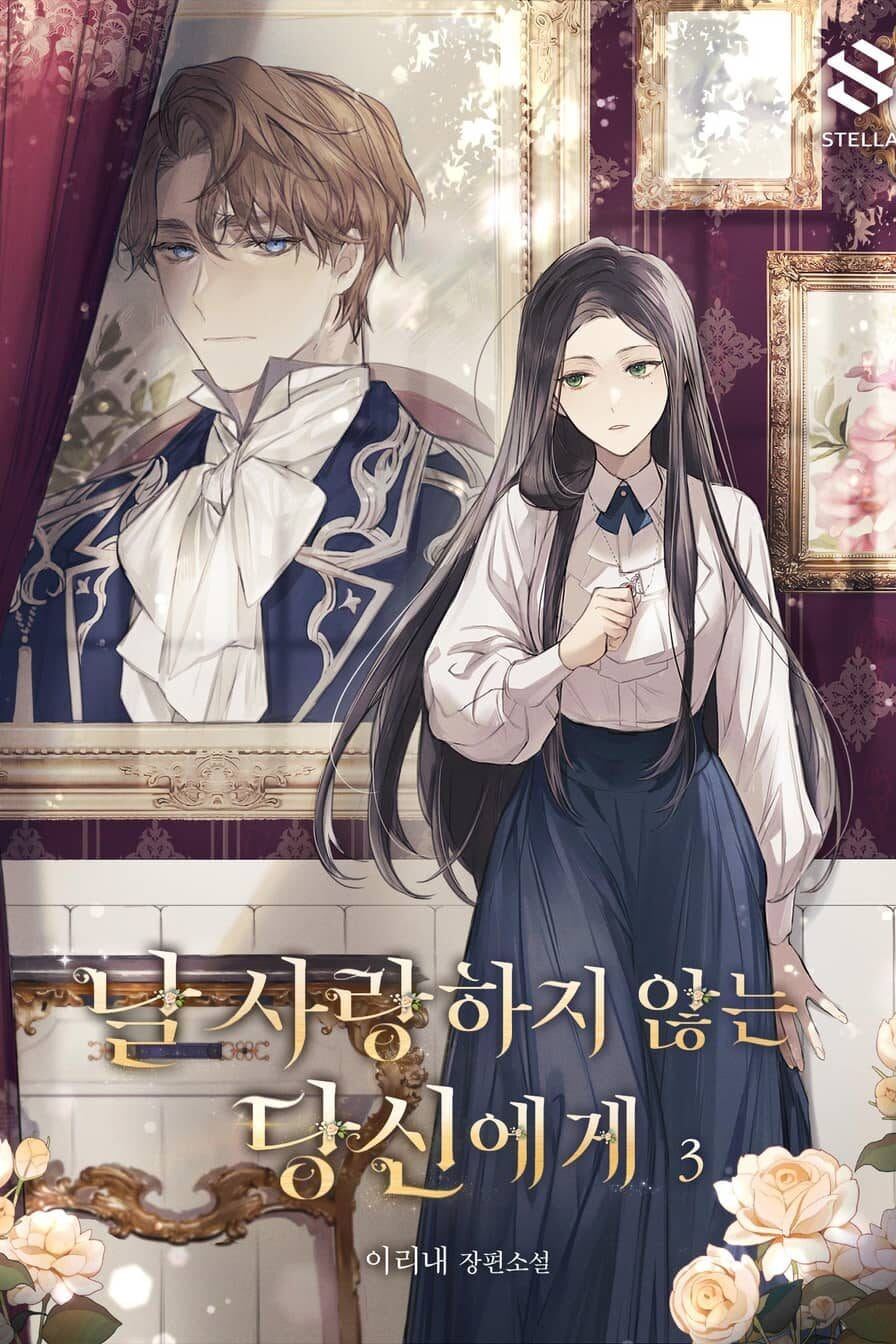
... Read More
"Even if I regret it, that's on me. So please, just don't push me away." I need a minute. I genuinely need a moment. Rachel rejecting Ryan here is one of those moments that hits you in the sternum because it's layered SO deeply. On the surface it's a romance rejection scene—standard fare, right? But then Rachel thinks: *Being just a friend to someone you love and staying by their side was more painful than one might imagine. She could say this with certainty because she had experienced it herself.* And suddenly it's not about Ryan at all. It's about Rachel seeing her own past self—the version of her who chased Tervan through endless regressions—reflected in this crown prince walking beside her. She's not rejecting him because she's cold. She's rejecting him because she KNOWS exactly how this ends and she won't let him repeat her suffering. That's not indifference. That's the most empathetic form of cruelty imaginable. The line "I won't feel guilty about it"/"I'll try not to make you feel that way"—their exchange is so polite and so devastating. These two are trying so hard not to hurt each other and it's tearing them apart.
... Read More
What makes this story's conflict so effective is that the external stakes (monsters, witches, a dangerous forest) are immediately secondary to the INTERNAL stakes (save him or watch him die again). The first time you read the battle scene it's exciting—lightning strikes, barriers shatter, monsters swarm—but once you know what's actually happening, every moment Rachel runs toward Sara instead of away from danger takes on this horrific weight. She's not brave; she's practiced. She's done this twenty-five times before. The tension isn't whether she'll succeed anymore—it's HOW MUCH OF HERSELF SHE'S LOST IN THE PROCESS. And that's the real stakes. The scene where she kills Sara and immediately applies the detoxification spell to her own wound without any fanfare? That's not action writing—that's a character who has reduced herself to pure function. The Emperor's banquet at the end is the perfect ironic contrast: the whole Empire is celebrating a hero, and the hero is a girl who would rather be anywhere else, still waiting for the other shoe to drop.
... Read More
I've been thinking about this necklace and what it REPRESENTS throughout this entire passage, and it's layered in ways the author probably didn't even consciously plan. On the surface it's a magical artifact - Creon sealed inside, granting Rachel power. But thematically it's everything: It's her BURDEN. She carries the weight of knowledge about the original story, about Duke Bermund's villainy, about how Viola was supposed to die. The necklace is literally the cage for the demon who could undo time - and also the thing that makes her TARGET. It's her CHAINS to a fate she's trying to escape. Every time she touches it or threatens to remove it, we're reminded she can't just walk away from this. It's also IRONICALLY her POWER source. The same object that makes her vulnerable is what makes her strong enough to survive Duke Bermund. And then there's the color symbolism - that RED jewel described as looking like a ruby. Blood. Danger. The witch's forest. All connected. Duke Bermund's gaze locking onto the necklace at the end? That's the thematic payoff. He doesn't see a person - he sees an OBJECT of desire. Rachel is reduced to her utility in his eyes, just like in the original timeline.
... Read More
Okay so let me just say - Duke Bermund's entrance at this banquet is genuinely chilling in how smoothly it's written. Here's Rachel, having just come back from literally killing a witch, thinking she can have a quiet evening, and BAM, the hidden villain walks right up to her like it's no big deal. The way he probes her about her magic abilities is NOT subtle AT ALL. He's literally testing whether she's connected to Creon, right? And you can feel him circling. What's interesting is how the author structures this whole section - Rachel enters the banquet already in a somewhat tense emotional state from the Tervan interaction outside, then immediately has to put on her social mask. Duke Bermund enters and disrupts everything. He compliments her, she deflects, he presses, she pushes back harder. The power dynamic shift is SO satisfying to read. She's the only person there who doesn't want anything from him, and that clearly frustrates him. The subplot threading here is brilliant too - we keep getting little hints about Creon through the necklace conversations, about Rachel's time loop history, about Viola's past trauma, all woven into what表面上looks like polite banquet small talk. That's good plotting. The reader knows more than the other characters and it creates constant dramatic irony.
... Read More
I need to talk about how the author handles pacing in this chapter because it is absolutely masterful and I think most readers probably didn't even notice what they were doing. The chapter starts basically as a bureaucratic walk-in. Rachel arrives at the tower, registers a query, walks down a hallway. It feels slow. It feels like nothing is happening. And then inside Randolph's office, within the span of maybe six paragraphs, the entire stakes shift three or four times. First it's a verification meeting, then it becomes a political maneuver about the Magic Tower Mastership, then it turns into a genuine search for a mysterious artifact, and by the time they're leaving, Ryan is personally escorting her down the hall like some kind of courtly thriller subplot is simmering underneath. The genius move is that the author never lets the reader get too comfortable in any one tone. You think you're reading a straightforward exposition scene, and then—boom—Creon reveals that the Tears of Licorice contains magical power equal to his own. Just casually inserted. It's like the author knows we might start skimming and deliberately stabs us right when we get complacent. The Rachel pretending-to-be-exhausted bit is another pacing trick. On the surface it's character comedy, but it also functions as a breather between the high-tension reveals. And then the ending with Ryan offering to escort her? Cliffhanger energy. The chapter doesn't end with resolution, it ends with a question mark wrapped in a polite smile. Perfect.
... Read More
There's something deeply symbolic about the dance scene here. Rachel and Ryan moving in synchronized steps while having this completely asymmetrical conversation — he's leading physically but she's leading emotionally. She decides when to stop, when to decline, when to pivot to friendship. It's this beautiful metaphor for her entire existence in this world. The necklace itself is loaded with meaning too. It represents Creon, yes, but also Rachel's burden of knowledge — she knows things nobody else does, carries secrets that make her both powerful and vulnerable. When she deliberately touches it in front of Bermund, she's reminding him (and us) that she holds the cards. The Time Demon sealed within isn't just a plot device; it's a symbol of everything that makes her different from every other noble lady at that ball. Also interesting: Rachel leaving the banquet early. She's done dancing, done performing, done being the perfect hostess. The carriage ride home with her resting her head and feeling "that something lacking" in her heart... there's this haunting emptiness underneath all the social maneuvering. She's surviving, but is she actually happy? That lingering question of what she's missing — whether it's tied to Tervan, to something deeper, to herself — gives the whole chapter this bittersweet aftertaste.
... Read More
There's a theme running through this chapter that I can't stop thinking about: the gap between what Rachel shows and what she is. Five spells instead of three. Twenty-six regressions that no one knows about. A contract with a Time Demon that she can't explain. She built an identity that fits in this world and everyone is starting to see the cracks. The Duke suspects the supernatural connection. Tervan suspects the magical deception. Viola suspects emotional distress. Each of them is right about something, and each of them is missing the whole truth. Rachel is surrounded by people who love her but cannot actually see her. That's the loneliness of the regressor — carrying knowledge that isolates you from everyone around you. Creon's presence throughout is also significant. He appears in her internal monologue, answers her quietly, forgives her 'only because I'm generous.' He's not a companion in the traditional sense — he's a witness to everything she's done. The Time Demon who enabled her regressions is also the only entity who truly knows what she's endured. Their relationship is almost familial in its weird way. He knows her accumulated pain; everyone else knows only the performance. And then there's the door. The chapter opens with a knock at the door and ends with a closed door after Viola's exit. Entry and exit as structural metaphors — people coming into Rachel's space and demanding pieces of her time, and then leaving, none of them staying long enough to understand. Tervan refusing to leave is almost a rebellion against this pattern. He's not coming for small talk. He wants the truth. Maybe that's the only thing worth having.
... Read More
This chapter is fundamentally about what happens when the thing that gives your life meaning is gone — and you don't get to mourn it because everyone else is celebrating. The shackles metaphor is everywhere. Rachel describes her liberation as shackles being removed from her ankles, but shackles are still shackles. Twenty-six regressions bound her to a single purpose, and when that purpose is fulfilled, what remains? The author is asking a deeply uncomfortable question: if your entire existence is defined by sacrifice, what are you when the sacrifice is complete? The funeral-face imagery is the central symbol of this chapter. Ryan notices it almost immediately — 'such a person had an expression resembling someone attending a funeral.' But the subjugation team suffered 'injuries but no deaths.' So whose funeral is Rachel attending? Her own? The girl she was before twenty-six deaths rewrote her? The version of Tervan she loved who died over and over in her memories? Magic as storage — Rachel can 'store up to three magic spells.' This feels symbolically loaded. She carries spells the way she carries traumas. Multiple lives stored internally, ready to deploy when needed. The magic system itself becomes a metaphor for emotional hoarding. And Viola's observation that Rachel has become 'less talkative' and her 'smiles had also decreased' — this is the visual symbol of emotional erosion. Each regression took something from her, and the banquet hall full of laughing nobles becomes a backdrop against which her silence is deafening.

Leave a comment

You must be logged in to leave comments. or
