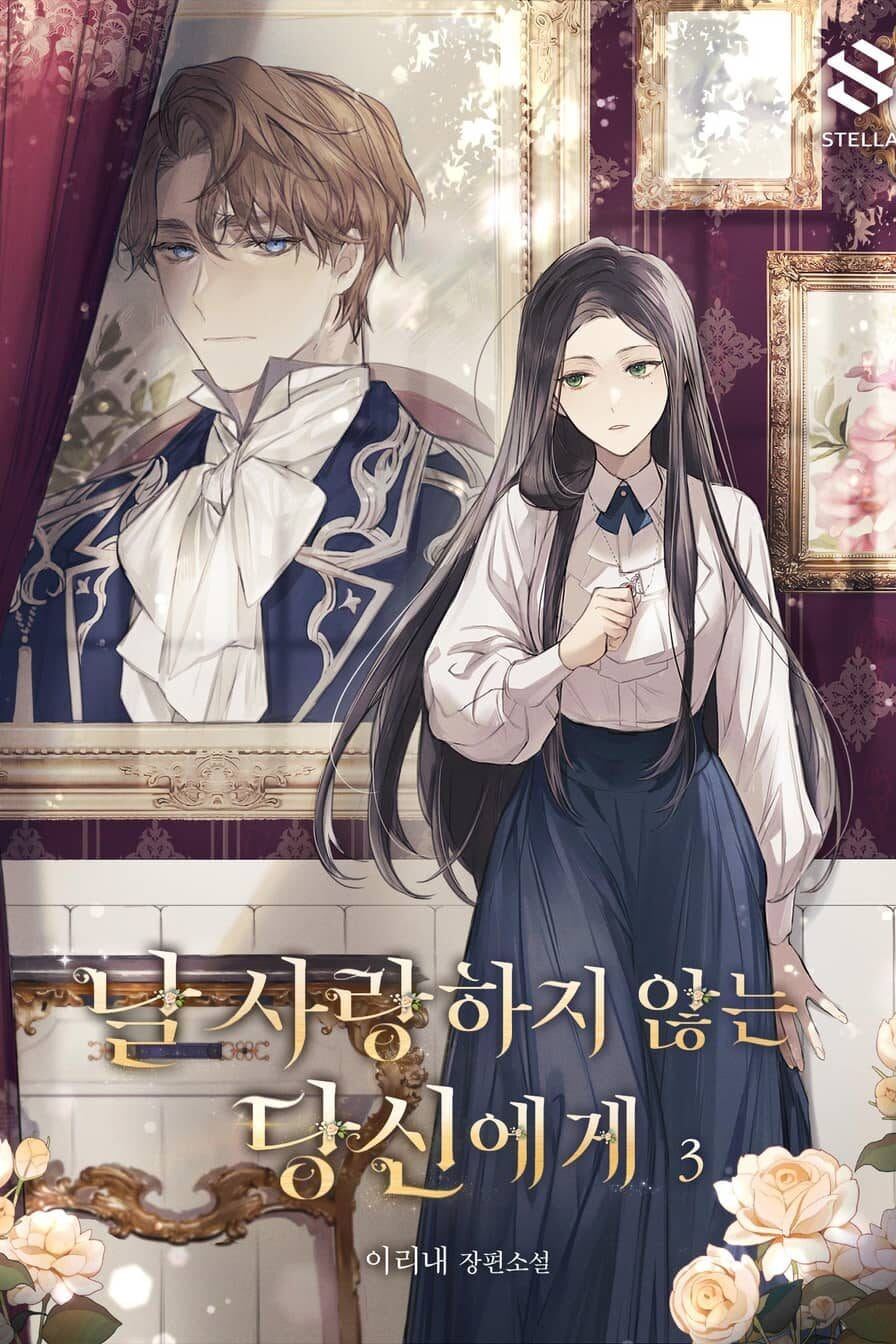
To the One Who Doesn’t Love Me
+Add to Custom List
Genres:
Novel Info
  • Author:
  • Status:Ongoing

Summary

... Read More

Rachel Pluret, the daughter of a count, possessed supportive magic rather than offensive abilities, which caused concern among her peers when she volunteered for the monster subjugation team in the Witch's Forest. Tervan Sanchez, a knight from a neighboring duchy and Rachel's childhood friend, noticed her unusual demeanor, characterized by a tired and detached expression that contrasted with her usual lively nature. As the team ventured deeper into the forest, the sky unexpectedly darkened, signaling an ambush by monsters and lethal lightning strikes. While the rest of the team was protected by barriers, Rachel secretly activated a time-slowing spell and departed the group, running at superhuman speed to confront the source of the chaos: a witch named Sara. Despite being wounded by the witch's poisonous nails, Rachel managed to kill her, ending the threat and saving the subjugation team. Upon her return, Tervan discovered the witch's corpse and realized Rachel had handled the situation alone, leaving him confused by her sudden display of lethal capability and cold demeanor.

Following the mission, it was revealed that Rachel was not merely a noble lady but a transmigrator trapped in a novel world. She had lived through twenty-six previous iterations, each ending in Tervan's death at the hands of the witch. To change this fate, she made a contract with Creon, a Time Demon sealed within a necklace, which allowed her to regress in time at the cost of her own life if the spell failed. After numerous failures where her supportive magic proved insufficient to stop the monsters or save Tervan, she spent years honing her abilities, eventually learning to store and cast multiple offensive and defensive spells. In the final timeline, she successfully eliminated the witch and protected the team, achieving her goal but losing the youthful innocence and emotional attachment she once held for Tervan. The repeated trauma and necessity of killing transformed her into a pragmatic and emotionally exhausted individual who viewed her past feelings with indifference.

At the victory banquet hosted by the Emperor, Rachel's newfound strength and status as a hero attracted the attention of various influential figures. Duke Bermund, a charismatic noble secretly plotting treason and seeking the power of the Time Demon, approached Rachel with feigned interest. He suspected her involvement with Creon due to her rapid magical growth and defiant attitude, which differed from the shy girl he had investigated. Rachel confronted him directly, revealing her knowledge of his true nature and warning the Crown Prince, Ryan, about Bermund's ambitions. Although Ryan was initially skeptical, her hint planted a seed of doubt regarding the duke's loyalty. Meanwhile, Tervan and Viola, the female protagonist of the original story, remained oblivious to the depth of Rachel's transformation, perceiving only that she had become colder and more distant since returning from the forest.

The narrative shifts as political undercurrents begin to surface around Rachel's new position. Duke Bermund, undeterred by her warning, continues to probe her secrets, visiting her home under the guise of apology to observe her interactions with the Time Demon. Rachel, aware of his malicious intent, uses her knowledge of the future to navigate these encounters while maintaining a facade of aristocratic poise. Crown Prince Ryan, intrigued by Rachel's capabilities and her rejection of traditional romantic advances, proposes a friendship, marking a significant deviation from the original plot where he was destined to love Viola. As Rachel accepts this alliance, she recognizes that the butterfly effects of her actions are altering the fates of those around her, particularly shielding Tervan from the tragedy that originally drove the story's conflict. Her primary objective remains securing peace and avoiding further bloodshed, even as she finds herself entangled in the schemes of nobles who seek to exploit the power she now possesses.

In the aftermath of the banquet, Rachel's relationships with her former friends stabilize into a fragile normalcy. Viola, sensing Rachel's lingering distress, attempts to reconnect, unaware that the pain stems from two decades of subjective experience compressed into a single month of objective time. Tervan, still troubled by Rachel's secrecy regarding her magical abilities, confronts her privately, correctly deducing that she used at least five spells during the battle. This conversation highlights the growing distance between them; Tervan remains bound by his unrequited love for Viola and his conventional knightly duties, while Rachel has transcended those emotional constraints through her suffering. She chooses to withhold the truth about her regressions to protect Viola from guilt, reinforcing her isolation. The story concludes with Rachel acknowledging her emptiness yet finding satisfaction in survival, as she prepares to face the impending political storm orchestrated by Duke Bermund, armed with the knowledge of the future and the power of the Time Demon.

Latest Release
DateGroupRelease
2026-10-03dusk blossoms c108
2026-10-03dusk blossoms c107
2026-10-03dusk blossoms c106
2026-10-03dusk blossoms c105
2026-10-03dusk blossoms c104
2026-10-03dusk blossoms c103
2026-10-03dusk blossoms c102
2026-10-03dusk blossoms c101
2026-10-03dusk blossoms c100
2026-10-03dusk blossoms c99
2026-10-03dusk blossoms c98
2026-10-03dusk blossoms c97

Community Reviews

Rating(0 / 5.0, 41votes)
5 stars
0(0%)
4 stars
0(0%)
3 stars
0(0%)
2 stars
0(0%)
1 stars
0(0%)

Popular reviews

... Read More
Okay so this entire chapter just hit different. Duke Bermund leaves and Rachel is visibly drained — not just socially awkward drained, like she actually had to perform here. And then he thinks about it: her sudden magical improvement, her changed personality, her composure. He connects the dots. The Time Demon, Creon. He doesn't have proof but he's not wrong. The man reads people and he's suspicious now. That's dangerous. Then Viola shows up — completely different energy. Chaotic, warm, bringing Edward and Tervan with her. The Duke scene is cold political maneuvering and suddenly we're in the friend group zone. But then Viola does something interesting. She fakes remembering some family thing with Edward and deliberately dumps Tervan here with Rachel. Like she knows something is going on and she's creating space. Is she trying to help or is she still pining? The text says she always tries to set them up. But now Rachel doesn't love Tervan anymore. Viola doesn't know that. That dramatic irony is doing some real work here. And then the Tervan confrontation. The chapter drops the bomb — he knows she can cast FIVE spells, not three. She's been lying to everyone. The text literally cuts off mid-sentence which is brutal but also perfect. He saw through her at the Witch's Forest. Everything lines up for him. This isn't just about magic — it's about how many people actually know the real Rachel. What's wild is Rachel's internal monologue with Creon. After everything — the Duke, the friends, the secrets — she just sits there exhausted and Creon asks if she's upset. Her response is almost chilling in its simplicity. She escaped the constraints. That's all that matters. The regression survivor in her just wants peace. But peace seems impossible here.
... Read More
The tension in this chapter is INSANE. Like, multiple layers happening simultaneously and I barely had time to breathe. First layer: Ryan VS Tervan for Rachel's attention. Ryan literally tells her "I'm interested in you" in the middle of a waltz. That's bold. But Rachel's playing the long game — she knows this isn't the original story anymore, which means anything can happen. She refuses to rush into anything, tells him straight she doesn't plan to date for a while, and somehow makes it sound reasonable instead of cruel. The guy actually backs off and apologizes like a gentleman. Second layer: Duke Bermund showing up at her house uninvited. This is way more threatening on some level. He came to apologize for yesterday's rudeness but also to talk about THE NECKLACE. When Rachel says "Would you like me to give it to you?" — that was a power move. She's literally offering to hand over the Time Demon and watching him squirm. Creon was NOT having it. The stakes keep escalating and I'm here for it. Rachel is constantly walking this tightrope between preserving relationships and protecting herself. Every conversation is a battlefield and she's navigating it with this calm exterior while internally screaming. Also the neck-touch moment when she deliberately signals the seal's location and Bermund swallows hard?Chef's kiss.
... Read More
I need to talk about the very first scene - Rachel and Katrin in the carriage on the way to the palace. It seems like such a simple moment. Just two friends complaining about the Emperor scheduling a banquet right after they've been fighting monsters for a month. But the WORLD HERE is so vividly established in just a few paragraphs. The text describes evening falling, magic orbs illuminating the Great Hall 'bright as day' - this is a world where magic replaces electricity and it feels natural, not over-explained. You just ACCEPT that magic orbs exist. That's good worldbuilding. And the emotional atmosphere of that carriage scene - Katrin's genuine concern, Rachel's polite smile that 'her past self would have likely shown, out of obligation' - this tiny detail tells us SO MUCH about how much Rachel has changed. She's putting on performances now. She's learned to fake it. The contrast between the warm, slightly grumpy intimacy of the carriage with Katrin and then the cold, performative world of the imperial banquet is really well done. You can FEEL the shift from private safety to public danger just by the setting change.
... Read More
The stakes in this passage are layered in a way that most books don't attempt, and I need to unpack why this works so well. On the surface level, Rachel is hunting for the Tears of Licorice. That's a quest hook, standard fantasy fare. But the surface level is a trap. The real stakes are buried under twelve inches of emotional sediment: Rachel succeeded in saving Tervan, but the cost was her own identity, and now she has to live in a world where everyone she loves looks at her like she's a guest in her own life. The internal conflict is devastating because it has no resolution. Rachel can't go back to being the old Rachel—the old Rachel doesn't exist. She can't tell Tervan the truth—the truth would destroy them. She can't abandon her mission—the mission is the only thing keeping her anchored. And she can't stop feeling lonely—even though she's surrounded by people who love her, they love someone who no longer exists. The external stakes are equally brutal. Creon has been waiting a thousand years. Other humans have tried and failed and chosen death rather than continue the contract. Rachel is the twenty-seventh person to make this deal, and if she fails, the implication is clear: she joins them. The text doesn't need to threaten her with physical death repeatedly because the specter of giving up is present in every interaction she has with Creon. But here's what makes the conflict truly sharp: Rachel is not powerless. She just won. She saved Tervan. She broke the original tragedy. And yet, winning has created a new set of problems that are somehow more difficult than the original ones, because the original problems had clear solutions—don't die, save him—and the new problems are existential. Who am I now? Can I be loved if I'm not the person they fell in love with? Is endurance enough? The final nail in the coffin: she walks into the Magic Tower alone, hood up, pretending to be someone who just happens to be looking for a magical jewel, while carrying the weight of twenty-six dead timelines in her chest. That's not just high stakes. That's the definition of dramatic irony weaponized.
... Read More
"Even if I regret it, that's on me. So please, just don't push me away." I need a minute. I genuinely need a moment. Rachel rejecting Ryan here is one of those moments that hits you in the sternum because it's layered SO deeply. On the surface it's a romance rejection scene—standard fare, right? But then Rachel thinks: *Being just a friend to someone you love and staying by their side was more painful than one might imagine. She could say this with certainty because she had experienced it herself.* And suddenly it's not about Ryan at all. It's about Rachel seeing her own past self—the version of her who chased Tervan through endless regressions—reflected in this crown prince walking beside her. She's not rejecting him because she's cold. She's rejecting him because she KNOWS exactly how this ends and she won't let him repeat her suffering. That's not indifference. That's the most empathetic form of cruelty imaginable. The line "I won't feel guilty about it"/"I'll try not to make you feel that way"—their exchange is so polite and so devastating. These two are trying so hard not to hurt each other and it's tearing them apart.
... Read More
What makes this story's conflict so effective is that the external stakes (monsters, witches, a dangerous forest) are immediately secondary to the INTERNAL stakes (save him or watch him die again). The first time you read the battle scene it's exciting—lightning strikes, barriers shatter, monsters swarm—but once you know what's actually happening, every moment Rachel runs toward Sara instead of away from danger takes on this horrific weight. She's not brave; she's practiced. She's done this twenty-five times before. The tension isn't whether she'll succeed anymore—it's HOW MUCH OF HERSELF SHE'S LOST IN THE PROCESS. And that's the real stakes. The scene where she kills Sara and immediately applies the detoxification spell to her own wound without any fanfare? That's not action writing—that's a character who has reduced herself to pure function. The Emperor's banquet at the end is the perfect ironic contrast: the whole Empire is celebrating a hero, and the hero is a girl who would rather be anywhere else, still waiting for the other shoe to drop.
See all reviews

Custom lists

See all custom Lists