The Villain Loaded My System - Reviews

The Villain Loaded My System
+Add to Custom List
Sort
Add review
... Read More
Okay so let me just say — the way these two interact is absolutely intoxicating and I cannot stop thinking about it. Ji Chen is such a fascinating character because he's fully aware he's not the protagonist. He says it straight out: 'Maybe it's because I am not the protagonist of this world.' And then he contrasts himself with Ji Zixuan who had everything handed to him. That self-awareness? Chilling. It shapes EVERYTHING about how he acts. His hatred isn't random — it's rooted in his father's partiality, and his entire destructive path is basically him screaming at the universe 'you didn't choose me, so I'll destroy what you built.' Meanwhile Gu Xiyu is this emotionally flat character who literally 'can't feel the happiness and sorrow of others.' He knows he should laugh when people are happy and comfort them when they're sad, but he has no actual feeling behind it. And yet... there's this moment where Ji Chen grabs him and says 'my mind tells me that it is interested in you, but my soul tells me it truly loves you.' GU YIU'S REACTION THO — he doesn't understand what love feels like, but he agrees anyway because the system told him to. The power dynamic between them is SO messed up. Ji Chen holds the remote, he holds the emotions, he holds the intensity. Gu Xiyu is along for the ride, processing everything intellectually. And yet when he finally responds with 'I haven't tried it either,' that tiny crack in his emotional armor hit me like a truck. Who is actually in control here? I don't know anymore and honestly that's what makes this relationship so good.
... Read More
What are we actually afraid of here? On the surface, it's an explosion. Ji Chen is at a hotel, possibly planning something involving explosives, and Gu Xiyu has infiltrated the building with flowers and a mask. The stakes feel immediate and physical. But the deeper terror isn't the bomb—it's the betrayal. Because if Gu Xiyu succeeds in his mission, if he prevents whatever Ji Chen is planning, what happens to them? The text makes this clear: "if he could, he doesn't want to be forced to fight with Ji Chen in the end." The real conflict isn't man versus villain, it's man versus the role he's been assigned. And Ji Chen's backstory raises the stakes exponentially. His own biological father orchestrated the accident that ruined his legs. This isn't just some vague trauma—it's betrayal by the person who was supposed to protect him. How do you trust anyone when your father tried to kill you? And now Gu Xiyu is there, close, caring, saying all the right things—but is he also part of the system that will eventually turn on Ji Chen? The risk value hovering at 80 is such a brilliant narrative device. It's not zero, it's not 100. It's that agonizing middle ground where nothing is resolved, where every peace offering gets undone by the next crisis. Gu Xiyu thinks he's found a shortcut with the kiss, but we both know that one romantic gesture isn't going to permanently fix this. The real question hanging over everything is: when the explosion happens—or when it doesn't—will they still be on the same side? Also the fact that Ji Chen's colleagues know about Gu Xiyu and call him "uncle" and that Ji Chen is planning a surprise for the upcoming weekend? What SURPRISE. My heart is not ready.
... Read More
I keep thinking about that ending and the System's response—or lack thereof. Gu Xiyu asks directly: "Have Ji Chen done anything illegal? Murder and arson?" And the System goes SILENT. Not a denial. Not an answer. Just weird, telling silence. That silence is louder than any confession. Because if Ji Chen were clean, the System would have said so immediately. The hesitation means something dark exists. And Gu Xiyu is MARRIED to this person now. The stakes just went from 'complete my mission' to 'my husband might be a literal criminal.' Let's map out the layers of danger here: On the family level, the Ji clan is tearing itself apart over a will. Ji Zixuan is positioned as the heir, but Ji Chen—who apparently had the last conversation with the dying patriarch—holds unknown leverage. The public thinks Ji Chen is an outcast. The comments call his mother a 'slut' and dismiss him entirely. But the narrative clearly positions him as someone who matters more than anyone realizes. The family conflict is a live wire. On the personal level, Ji Chen just invited Gu Xiyu into his home, touched his collar, looked at his neck like prey, and then withdrew into cold indifference. That push-pull creates real tension—not just romantic, but survival-level. Is Ji Chen testing him? Threatening him? Or is he someone who can't maintain intimacy because his world is too dangerous? And then there's the System itself, which appears to be manipulating Gu Xiyu's mission while withholding critical information about his marriage partner. The stakes aren't just about completing a task anymore—they're about trust, deception, and figuring out who's playing whom. Every conversation between these two carries double meaning. Every glance holds a threat. And I cannot wait to see what explodes next.
... Read More
Okay so let me just say this about the Ji family plotline because it's genuinely messy and I love it. The media speculation about Ji Yan's will exposing Ji Zixuan as the next patriarch? That's not just background gossip—the author is feeding us the entire family power struggle on a silver platter through random comment sections. It's genius, honestly. We get all this exposition without a single info-dump scene. And then there's Ji Chen. The whole setup around him is so carefully layered. On the surface, he's this low-key guy with a sparse black-and-white apartment and a white cat named Xixi. But the system already warned us he's NOT normal. And those news comments? "Ji Chen just doesn't fit with the Ji family!" "He was born from such a slut mother." The narrative is quietly building this picture of an outcast who somehow holds all the cards. The will being "suspected to be exposed" is the inciting incident that's about to blow everything up. What I really appreciate is how the plot doesn't rush. We get Gu Xiyu's mission objective (survive the small world, get points), the family intrigue, the arranged marriage, AND Ji Chen's mysterious background—all woven together without feeling cluttered. The author trusts the reader to connect dots. I'm already betting that Ji Chen's 'illegal records' are way worse than anything the public knows, and the system's hesitation when asked about murder and arson? Yeah, that's not reassuring. The plot is setting up a powder keg and I am HERE for it.
... Read More
This opening sequence is actually kind of a masterclass in pacing, and I wanted to talk about why because most system-transmigration novels get this completely wrong. Here's the structure: system activates → protagonist wakes up groggy in an alley → assassins talk nearby (info dump disguised as ambient dialogue) → cough breaks the tension → fight scene → aftermath with looting → system mission briefing → atmospheric closer with snow. Every single beat serves a purpose. The assassins' conversation accomplishes three things at once: it tells us the protagonist was supposed to be dead, it establishes the setting as somewhere without surveillance, and it gives us our first sense of the criminal underworld flavor. Brilliant economy. The fight itself is short — which is exactly right. These guys aren't even close to being threats, and the narrative knows it. The one-liner punch that takes out the big guy, the wrist-grab counter, the dislocated hand — it's efficient and brutal, but it doesn't drag because the author understands that Gu Xiyu is clearly competent. The suspense here isn't 'will he survive?' It's 'how fast can he end this before his own body fails him?' And that's what makes the vomiting moment hit so hard structurally. Right after the action peak, the author deliberately deflates everything. No triumphant pose, no collecting himself. Just nausea. It's almost comedic but it's also deeply effective — the pacing says 'the fight was never the point, the adaptation is.' The mission briefing that follows is long, yes, but it's earned because we just spent the last few paragraphs wondering what the hell is going on. The information drop lands right when the reader needs it.
... Read More
The LAN YUE ENTRY. So perfect. "Isn't this President Ji and his 'MADAM'?" The quotation marks around MADAM carry so much venom and I love it. Lan Yue's entire energy reads as someone who is deeply unhappy and projecting, and then the narrator just absolutely loses it with "JUST WAIT!!!!!! JI CHEN WILL BE THE ONE TO GET DEPRESSED IN THE FUTURE." The author just broke the fourth wall to deliver dramatic irony and I am HERE FOR IT. And then Lan Yue's final thought — "He couldn't even hold the hand of the person that he loves so much, but for Ji Chen he got his whole life so easily." That is so painful and so well-written. Then there's Ji Chen's line "my money is yours. You can just spend whatever I give you" and Gu Xiyu just goes "..." and I died. The silence says everything. The prose is clean and functional but those character-specific beats — the narrator's commentary, the subtext-heavy dialogue — that's where the magic lives.
... Read More
That chip. That goddamn tracker chip hidden inside the phone case. Ji Chen installed it without telling Gu Xiyu. When Gu Xiyu discovers it, he doesn't confront him—he smiles and says 'thank you.' What does that mean? Is it acceptance? Resignation? A strategy? The tracker is such a rich symbol here. Ji Chen controls through care (gifts, new phones, arranging trips) while simultaneously monitoring through technology. But Gu Xiyu playing along while knowing exactly what's happening adds this whole layer of mutual deception that's almost tender in its own twisted way. And the torn-up paper with apartment addresses—another symbol of Ji Chen's refusal to let Gu Xiyu slip away, disguised as spontaneity. Even the cat is a symbol: loyal only to Gu Xiyu, hostile to outsiders, a silent witness to everything. The recurring image of boundaries being crossed—physical (the apartment), digital (the tracker), social (parents meeting the partner), temporal (one night vs. forever)—it all points to this central question: who gets to decide how close is too close?
... Read More
The image of Director Li walking into the office with a yellow envelope, still cursing, followed by He Rong looking cautious behind him — this felt so cinematic. You could literally see the scene play out. The crackling sound outside, the man's roar, everyone freezing in place. It's like the author painted this in broad brushstrokes but hit every note. And then the computer screen lighting up with Ji Chen's press conference. One second it's just a regular workday, someone accidentally tore off their headset because they were too surprised, and the next everything changes. The moment of pause when the office owner hit pause on the broadcast — that silence was deafening. Everyone daring to look at each other but too scared to speak. 'What's going on?' written across a dozen faces. The contrast between the noisy, chaotic office and that moment of frozen shock was really well done. I also liked the detail about Ji Chen being this mysterious figure who disappeared from public view twenty years ago. 'The first time that Ji Chen had reappeared under the camera after twenty years.' That single line added so much weight to the scene. This isn't just a corporate scandal — it's the unveiling of someone who built an empire in total anonymity. The top-level office with President Lan's casual entrance and then departing felt like a different world entirely. Business elite moving through spaces Gu Xiyu was only being escorted through as a prisoner. The hierarchy and atmosphere of those rooms told you everything about power dynamics without the author having to explain it directly.
... Read More
The inheritance scene isn't just plot — it's the author's way of telling us exactly who matters and who doesn't in this family. Let's look at the numbers: Ji Zixuan gets everything — the companies, the empire, the power. Little granddaughter gets 'several hundred million yuan and a piece of land' — and that land will likely appreciate. Ji Chen gets FIVE MILLION YUAN and a small courtyard separated from the main house. Conditional on marriage. Five million in a family worth tens of billions. That's not inheritance, that's an insult wrapped in a legal document. And the condition — 'if he's still single, he gets nothing' — is the author being brutally clear: Ji Chen's worth is measured by his utility to this family, not his blood. But here's what really gets me: the courtyard. 'The small courtyard separated from the main house.' That's symbolism right there. He's physically separate. He's been exiled within his own family's property. No wonder he has a 'bad relationship' with Ji Yan. No wonder he's cold and calculating and already plotting against Gu Xiyu's family — he was raised to believe love and loyalty are conditional transactions. And then Gu Xiyu, who apparently has never 'coaxed people since he was born,' gets told to make THIS person happy. The thematic irony is almost too much.
... Read More
I need to take a second for this exchange: Gu Xiyu: "Is the new goal referring to something that can bring him more benefits than the Ji Group?" System: "I suddenly feel that you are not a human." Gu Xiyu: "?" System: "Otherwise you are a human with no heart." THIS. The system roasting Gu Xiyu for thinking in pure transactional terms is chef's kiss material. Gu Xiyu's voice throughout this chapter is fascinating because he's genuinely struggling to process emotions he barely understands, and it comes through in every line. When Ji Chen grabs his hand and says "I have a rare birthday. Do you only have such a surprise for me?" Gu Xiyu's response is so dry and practical: "Birthdays are celebrated every year." He's trying to be reasonable! He's not being cold on purpose—he genuinely cannot compute that someone might want something more than fireworks. And then the author drops "This is my first marriage" as Ji Chen's line, which is such a casual way to say something that should be monumental. The dialogue here has this perfect balance of humor, tension, and unspoken feeling. Every character speaks differently too—the system's sarcasm, Gu Xiyu's flat observations, Ji Chen's sudden softness when he thinks no one's listening. The author's voice is sharp and observant, never over-explaining, letting the subtext do the heavy lifting.
... Read More
These four chapters are a masterclass in building dread without ever breaking into full action. Let me break down why I couldn't put it down. Chapter 134 starts almost casually—Gu Xiyu is doing his daily routine of coaxing Ji Chen, system gives bizarre advice about flowers, risk value hovers at 80 like a pendulum that never settles. It feels almost domestic. Then Ji Chen's expression shifts when the topic of the entertainment/music city comes up, and the tone DARKENS. "Nothing." Just one word, but your stomach drops. The author weaponizes that single word like a knife. Then the office nap scene—this is where the pacing gets really smart. Gu Xiyu falls asleep, wakes up to darkness, hears fragments of a phone conversation. "Right...that day...explosion..." The author doesn't tell us what this means, just drops these words and lets our anxiety do the work. We're piecing it together in real time with Gu Xiyu. And then—BAM—he checks the chat history, and we get that devastating internal monologue about not wanting to fight Ji Chen. The pacing here slows right before the climax of the scene, which makes the kiss hit so much harder. After the hilarious "I'm in a meeting" deflation, Chapter 135 opens with this cinematic hotel description—limousines, white European architecture, Gu Xiyu in a mask with flowers. It reads like a thriller opening. And then the cat. Xixi appearing like a plot device that's also just... a cat who wants something? The escalation from domestic office tension to this almost spy-thriller hotel surveillance is jarring in the best way. The author knows exactly when to speed up and when to linger. The ending on Ji Chen's confession about his father—cut off mid-sentence, literally trailing into "Even if I won't die,"—is a cliffhanger that made me immediately open the next chapter. Chef's kiss.
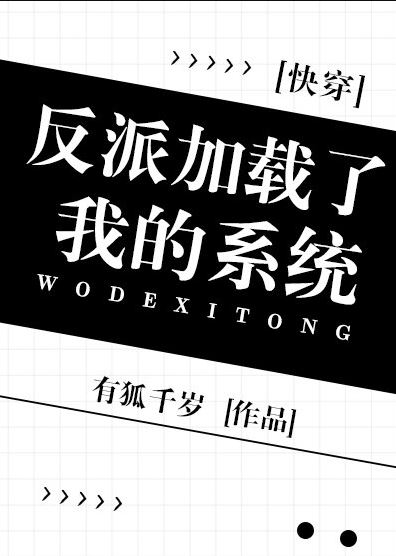
... Read More
"May I?" I think this might be my favorite line in the entire passage. Let me explain why. Ji Chen spends the whole chapter being this calculating, almost monstrous figure—burning down companies, dropping risk bombs, doing whatever it takes to survive this collapsing world—but then in this quiet bedroom moment he just asks, so softly, like he's genuinely nervous about crossing a boundary with Gu Xiyu. And Gu Xiyu's response? Just "whatever." Not romantic. Not deeply moving on the surface. But that flat, practical acceptance is somehow more intimate than any grand declaration. It says: I am here. You have my permission. Stay. The emotional whiplash from the explosive blackmail plotlines to this almost domestic stillness is something else. Gu Xiyu doesn't even understand what he's agreeing to, which makes it all the more poignant—he's offering everything without knowing the price.

Leave a comment

You must be logged in to leave comments. or
