The Villain Loaded My System - Reviews

The Villain Loaded My System
+Add to Custom List
Sort
Add review
... Read More
The concept of the 26 information transmission hubs is deeply symbolic. Twenty-six locations, identical in function, except for one marked with the letter X. In literature, X has always represented the unknown, the forbidden, the erased. This is where the Great Demon King's soul is confined—an empty prison running on offline hardware, a ghost haunting a machine that no longer truly exists. It's a brilliant metaphor for how evil persists not through physical presence but through absence, through the spaces left behind when something powerful is broken apart. The "crossing worlds" mechanism itself is rich with meaning. Task executors send their bodies to different stations, but their consciousness operates through connection—through cables, through signals, through networks that bridge impossible distances. Ji Chen receiving this strange panel of text in his head, seeing his own name and information about marriage contracts and tasks, suggests that the systems controlling these worlds are already inside people's minds before they even realize they're being targeted. The marriage subplot isn't just plot decoration—it's about how institutions (marriage, family, duty) become containers for forces we don't understand. Gu Xiyu is entering a marriage as a task, as a performance, as a strategic move, but the emotions involved are real and messy and completely uncontrollable by any system.
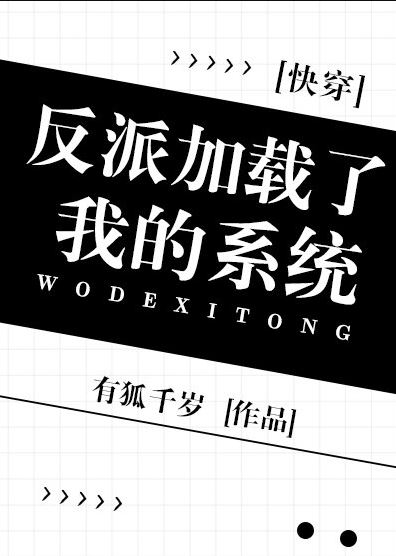
... Read More
There's something deeply symbolic about the interstellar executive costume that the fan mentions. Gu Xiyu has to wear it — a costume representing authority, power, status — while simultaneously dealing with a boy whose real-life authority figure (his father) treats his passions as worthless. The costume is a metaphor for performance, for being someone you're not, for hiding behind roles. And then there's the voice overlap — Lu Ziqing's voice 'subconsciously overlapped with a certain president in his memory.' Gu Xiyu hears the president in the teenager's words. The past haunts the present. The mission target and the original target are merging into something new and confusing and beautiful. The game itself is symbolic too. It's Lu Ziqing's secret world — where he's powerful, skilled, respected — contrasted with his real world where his father calls his interests 'unsuccessful things.' The game is freedom. It's where he can be the top national player instead of the disappointing son. But the most powerful symbol is probably the head tap. A simple gesture of affection, repeated across this strange new reality, and Gu Xiyu noting how 'strangely familiar' it feels. Even with a different body, in a different world, some connections persist. The physical reminder of another person's touch becoming a site of emotional memory — that's the kind of symbolic depth this story keeps layering in without ever trying too hard.
... Read More
The scene where Lu Ziqing's ears go hot. That's it. That's the whole romance thread in one physiological betrayal. No confessions, no lingering touches—just a man realizing his body has mutiny-ed while someone else is explaining quadratic equations. And the author doesn't even dwell on it. Three sentences, then back to the math. Which makes it hurt more. Because the emotional truth is that Lu Ziqing is starving for engagement, and Gu Xiyu is feeding it like a controlled experiment. The system's reaction—『The target's risk value is -5』—is almost tender in its indifference. It reduces complex human vulnerability to a spreadsheet. But look at Gu Xiyu's smile. He's not gloating; he's satisfied. He got the reaction. He proved he could be seen. The friendship here is bizarrely intimate: two people trapped in a shared secret (the system, the bureau, the elimination risk) who communicate through homework and side‑glances. When Lu Ziqing finally grabs the pen and says 'Let's do it,' it's not compliance. It's a dare. 'Now you teach me properly.' And Gu Xiyu? He leans in. The CP energy isn't in grand gestures; it's in the shared silence after a correct answer, in the way one character notices the other's unusual pupil color, in the furious scribbling that follows. Where does this go? Toward dependency? Toward rebellion? Or toward something softer that neither of them knows how to name yet?
... Read More
The pacing in these four chapters is a masterclass in controlled acceleration. We start with Gu Xiyu contemplating a fortune teller backstory—that's exposition, but it's framed as a question rather than an answer, which keeps us moving. Then immediately we cut to him ignoring the USB drive. Good. We're establishing his conflict before we understand its source. The chapter with the butler feels slower, deliberately so, because we need to sit in Ji Chen's vulnerability. But then—bam—Valentine's Day dinner, the gift exchange, all that unspoken tension, and we're out the door. And that ending? A flower girl. Just one image, but it changes everything. It suggests the outside world is still turning, there are still ordinary moments happening while these two are playing with fire, and maybe (just maybe) there's hope somewhere. The structure moves from internal (Gu Xiyu's thoughts) to external (the dinner) to mysterious (the flower girl). It's like the author's saying: your mission matters, your feelings matter, but the world doesn't stop for either of you. And that transition from "he didn't click the USB" to "he accepted the pendant" happens so smoothly I barely noticed I'd been emotionally betrayed.
... Read More
Okay I need to talk about this old butler scene because honestly it hit me harder than anything else in these chapters. Like, you have this character who just appears briefly, hands Gu Xiyu coffee, and completely recontextualizes Ji Chen's entire existence in that house. The way he talks—"It is not easy for him to be in Ji's house"—and then the tears welling up? That's not an extra. That's someone who has been watching Ji Chen suffer in silence for years and finally sees a glimmer of hope. And Gu Xiyu's reaction is so perfectly in character too. He immediately thinks the butler owes an Oscar for that performance, which is hilarious because of course he does—that's our boy, suspicious of everything, unable to accept genuine warmth without suspecting an angle. But then he actually asks about the family relationship. He shows curiosity. For a guy who literally said marrying either of them is "the difference between a pig or a dog," he's doing surprisingly well at being a person. Meanwhile Ji Chen is out there on the phone being all mysterious about share transfers and telling someone he wants to see "who dares intervene." The man is building this image of untouchable power while simultaneously wearing his high school pajamas and having a bookshelf that takes up an entire wall. These contradictions are everything.
... Read More
There's something really grounding about the hardware store scene. Think about it — Gu Xiyu takes a high-speed train for most of the day to end up at this tiny shop on an old street, and the shopkeeper is this cheerful older guy in a padded jacket who notices immediately that someone foreign has walked in. The world feels real here because of these small details: the bike repairer next door, the retro TV tuned to business news, the magazines on the table. I love how the author uses the shopkeeper's conversation with Hao Zi — "Hey you lazy ass" — to make this place feel lived-in. It's not just a plot device location, it's someone's actual shop. And the shopkeeper watching business magazines about big companies while complaining about being poor? That's character work in one beat. Then contrast that with the Ji family mansion lobby — loud, chaotic, full of relatives arguing like customers at a vegetable market. The author specifically chose that comparison and it works so well. It paints the scene immediately: noisy, messy, undignified. Everyone piled on Ji Zixuan at once, trying to use the moment to advance their own positions. And Ji Zixuan just standing there, head lowered, holding something back. The visual contrast between the quiet old street hardware store and that chaotic family hall really shows how different worlds Gu Xiyu moves between.
... Read More
Okay so can we talk about this moment where Ji Chen literally says his bottom line will be on Gu Xiyu? Like… that is such a massive character beat. This man has been painting himself as some kind of untouchable force of chaos from the start, and now he's basically admitting that Gu Xiyu is the only one who can redirect his whole moral compass. It's terrifying and kind of beautiful at the same time.
... Read More
I need to talk about the stakes escalation because this is genuinely impressive writing and I'm not even being dramatic. Let's check the board. In the previous world, Gu Xiyu's conflict was internal and interpersonal—dealing with Ji Chen's obsessive, murderous love, surviving a poisoning, processing betrayal from someone he was assigned to connect with. High emotional stakes, personal and suffocating. Then he wakes up and the external stakes immediately multiply. His new father is a gambler who literally SOLD HIM for 100,000 yuan. His stepmother figure is crying and hugging him but the father is already talking about shipping him off to the Lu family. A man twice his age is waiting to marry him because some ancestor is in a coma and the family needs a wedding to fix it. The original body HANGED ITSELF after getting the certificate. Gu Xiyu is inheriting a suicide note as his starting condition. And the mission target for THIS world? Lu Ziqing—an 18-year-old whose resentment was engineered by his mother Zhou Tianyi's messy romantic history. So Gu Xiyu is walking into a new family drama where the target's emotional damage has generational roots, and the father who sold him is already pressuring him to complete the marriage ceremony. The stakes went from "survive emotional abuse and possible death" to "survive being sold again, possibly die by suicide like the original body did, AND complete a mission with a target who already hates everyone." And the system says the original body is "cannon fodder that does not appear much in the subsequent plot." Translation: this world might not even be worth his full attention, but he's stuck in it anyway. How is he supposed to win when the game keeps changing rules?
... Read More
This guy's internal voice is everything. I cannot stop replaying this line in my head: "Can he apply to the Administration for a change of system?" After the system basically feeds him Ji Chen's entire biography — height 185, blood type AB, Scorpio, likes… — and then when Gu Xiyu finally closes his eyes to block it out, his first thought isn't existential dread or romantic confusion. It's bureaucratic frustration. He's mad that the system is withholding useful intel (like actual photos of the target — we get a knuckle-sized pixelated image, absolute garbage) but voluntarily dumping his crush's blood type and zodiac sign. The comedic timing in this passage is *chef's kiss*. The contrast between the high-stakes corporate conspiracy and Gu Xiyu just being done with his supernatural GPS is what makes this book. And then there's Jin Ke, who literally just clears his throat because everyone in that meeting is sweating and Ji Chen hasn't said a word, and Ji Chen's response is to glance at him like "were you not paying attention, this is clearly a personal moment" and then immediately move on to the next department. The casual power move. Also the narration itself has this great dry observation quality — like "It's just that Fengming Group is a well-known large company" delivered with the same energy as someone saying "yeah the guy tried applying to Harvard once" after describing how the original host had a record of being fired. The narrator doesn't even pretend to be sympathetic about the original body's qualifications. Brutal. I love it.
... Read More
Let's talk about what's actually at stake here, because on the surface this reads like a standard 'transmigrate and become OP' setup but the details tell a much more interesting and genuinely tense story. Gu Xiyu wakes up in a body that just got brutally attacked. Three people came to kill him — or at least they THOUGHT they killed him. He's in a foreign body, his powers are instinctive rather than conscious, and his own nervous system is still rebooting. This isn't a protagonist who's ready for anything — this is a guy who survived by accident and instinct and is currently leaning against a wall trying not to pass out. Then the system drops this mission on him: prevent Ji Chen from marrying Lei Lina, keep his 'risk value' below 100, and apparently he's working for some protagonist whose team Ji Chen threatens. So not only is he dealing with a hostile body, he's also trapped in someone else's plot with specific rules he didn't agree to. The constraints are what make this genuinely tense. He can't just eliminate Ji Chen — that triggers exile. He has to work within the system's rules. And the risk value system means every interaction matters, every choice compounds. This is basically a game where he doesn't know all the rules yet and the difficulty keeps adjusting. But here's what really hooked me: the three men who came after him weren't professionals. They were drunk, sloppy, talking about money and luxury cars. If THESE guys almost killed him on pure luck, what happens when he actually faces competent opposition? The opening fight felt too easy, which somehow made me MORE worried, not less.
... Read More
Can we talk about the internal dialogue situation in this book because it is PEAK comedy gold. Gu Xiyu is having a genuine, panicked moment. It's midnight, his blind date meeting is tomorrow, and he needs ANSWERS. So he calls out to the system like a normal human being would call out to customer service: "System." Silence. "System?" Still nothing. And then the response comes: "." JUST A PERIOD. A single period. And then: "The system is going to sleep. Let's talk about it tomorrow." GU XIYU: "?" Not even a proper response. Just silence and then an automatic reply that says "Hello, your little cute smart system is temporarily offline~" with a TILDE and a WAVE~ I literally cannot. The tonal whiplash from this character's deadpan seriousness to this system's casual ghosting is something else. Gu Xiyu's entire personality seems to be built on stoicism and controlled reactions, which makes his internal scream of "?" so much funnier. He's sitting there, emotionally shocked, unbelievable, slightly angry, and this AI entity is out here acting like it's on vacation. And the narration style throughout these chapters is doing something really interesting — it's shifting between a fairly standard third-person limited POV (following Gu Xiyu) and then cutting to Ji Chen's perspective with the same level of detail. The voice changes subtly between sections. When we're in Gu Xiyu's head, it's clipped and practical. When we're with Ji Chen, the prose slows down and lingers on details — the tapping fingers, the dense English text, Jin Ke's existential crisis in the driver's seat. The author also has this great habit of ending chapters on little cliffhangers that are equal parts dramatic and absurd. The last line cuts off mid-sentence with "He was dismissed because of poo" — which is either going to be the most ridiculous workplace scandal ever or just a weird translation glitch. Either way, it made me snort.
... Read More
I need to talk about this line because it literally gave me chills: "Xiyu ah Xiyu... You, on the one hand, seduced Ji Chen and made him love you to death, while on the other hand, you kept avoiding me making me feel unbearable. What exactly do you want, my love?" The delivery of this line is SO Lan Yue. It's layered — the nickname 'Xiyu ah Xiyu' sounds almost affectionate but it's actually condescending, like he's tasting the name. The semicolon-separated accusation about seducing Ji Chen while rejecting Lan Yue himself? That's not just dialogue, that's character. This guy genuinely sees himself as the central figure everyone orbits around. And then he caps it with 'my love' like it's nothing, like it's casual. That's the disturbing part — to him this might genuinely sound tender, but we KNOW from the backstory that his version of affection involves drugging people, orchestrating murders, burning houses. The contrast between the softness of that phrase and the horror behind it is exactly what makes Lan Yue such a well-written antagonist. Also love the casual way he asks 'do you have a knife?' — this is a man who treats violence like small talk. His voice is consistent throughout: polished, possessive, and always subtly threatening underneath whatever mask he's wearing.

Leave a comment

You must be logged in to leave comments. or
