The Villain Loaded My System - Reviews

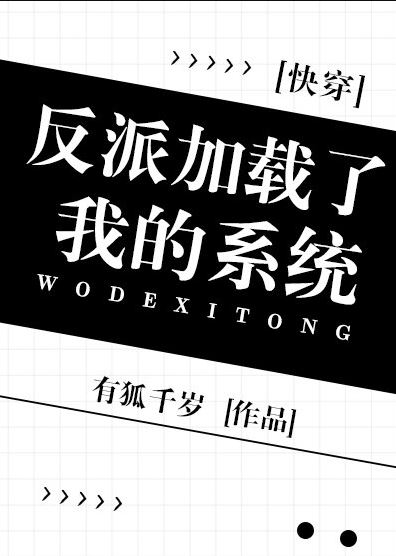
The Villain Loaded My System
+Add to Custom List
Sort
Add review
... Read More
'Let me guess, did you design a pig or a dog?' THAT is such a Ji Chen line. Of course he comes back from overhearing an intensely personal moment about love letters and unrequited feelings and his first instinct is to mock the latte art. The man operates on a completely different frequency and I am dying. And the back-and-forth between these two? Gu Xiyu is all clipped responses. 'If you don't want to drink, just throw it.' 'Thank you but I don't need your suit.' 'I don't really want to attend your high-profiled party.' He's guarded, short, almost petulant. But Ji Chen? He keeps coming back with these elaborate deflections that somehow reveal more than if he'd just said what he meant. 'So that they don't think I abducted you from some small village' — that's not just a joke, that's Ji Chen acknowledging the absurdity of their situation while pretending it's nothing. The author's narrative voice is doing something really clever here too. We get Gu Xiyu's internal monologue full of profanity ('F U C K ! ! !') and system notifications, but the actual dialogue stays so restrained. The gap between what they're thinking and what they're saying IS the story. And then Ji Chen drops the pity glance and doesn't deny wanting to catch Gu Xiyu in adultery. That's the line that shifted everything for me. He could've played it cool. Instead he let the truth slip through his teeth and honestly? Respect. The author's voice overall has this dry, slightly amused tone that fits perfectly. It's like watching people who want to say things but can't, and the reader is the only one who understands why.
... Read More
There are so many layers of symbolism in this chapter that I had to re-read several parts just to process everything. The diary itself is huge. It's literally hidden under the bed—buried, concealed, meant to stay forgotten. But Gu Xiyu finds it accidentally when his foot hits the bed frame. The original owner's secrets were never really gone; they were just waiting beneath the surface. That's such a perfect metaphor for repressed identity and unspoken desire. Then there's the moonlight imagery. The original owner saw Fu Nian as a distant moonlight—beautiful, guiding, but unreachable. And now Gu Xiyu is navigating this same world where Fu Nian exists as this idealized figure who changed someone's entire life direction through nothing more than presence and example. Ji Chen's villain label is another layer. The text opens with him thinking about exposing someone to the public, about transaction failures, about threats. But then we see him in his study, rubbed eyebrows, tired, watching a reunion through a window. The system calls him a villain but he's also just a person sitting alone with coffee and unanswered questions. What does 'villain' even mean when the narrative gives you access to someone's solitude? And the risk value ticking up—70, then 75—Feeling like the system itself is almost annoyed by how dangerous Fu Nian is to the plot. Which is hilarious because Fu Nian hasn't even done anything yet! He's just existing and people's risk values are going up because of him.
... Read More
Okay, let me just sit with what Ji Chen did for a second. He tore up the paper with all those apartment listings. Like, calmly, methodically. And then asked 'Is it STILL enough?' after ripping it apart. That is such a Ji Chen move—acting all casual about it while basically saying 'I don't want you leaving.' And Gu Xiyu's reaction is everything. He was genuinely confused. His internal monologue is like: 'If he's shy, why is he tearing paper? If he's not shy, why isn't he asking directly?' BRO. This man operates on a completely different frequency. Then Gu Xiyu just says 'Let's eat' and pretends nothing happened. The tension here is unreal. It's not dramatic confrontation, it's two people orbiting each other, neither willing to name what's happening. And then Ji Chen brings gifts for the parents but frames it as 'things for Xiyu,' and Gu Xiyu finds the TRACKER chip in his new phone and says 'thank you' with a smile. The layering of control and affection is so dense I can barely parse it.
... Read More
The pacing in these chapters is absolutely manic and I love it. We start with Gu Xiyu waking up, checking his phone, getting a relatively calm message from Ji Chen. There's a brief comedic beat with the system being useless ('Who knows' / 'What to check' / 'Check what?'). It feels like a normal Monday. I was relaxed. I was at peace. Then Director Li kicks the door in. In the space of a few paragraphs, we go from a sleepy office morning to a live press conference revealing the president's marriage to the very person everyone just accused of being a spy. The escalation is relentless. One moment Gu Xiyu is wondering about his risk value, the next he's being escorted to Ji Chen's office like a criminal. What's clever is how the author uses the news broadcast as a pacing device. It's playing in the background, almost like ambient noise, and then it becomes the central event that reframes everything. The computer voice announcing 'It is indeed my husband' acts as this dramatic crescendo that stops the entire chapter in its tracks. The ending with Ji Chen on the phone saying 'Wait for me' is a classic cliffhanger structure — not a chapter break, but a moment of suspended action that makes you immediately want to turn the page. And the President Lan reveal at the end? That's the author saying 'oh, you thought that was the only mystery?' Perfect control of reader engagement throughout.
... Read More
"To me, to marry Chen Jin or you is just the difference between a pig or a dog." I AM DEAD. I am absolutely deceased. This line has replayed in my head approximately forty-seven times since I read it and I still cannot recover. On one hand, this is Gu Xiyu at his most brutally honest—which is also his most vulnerable, because let's be real, saying something that hurtful means he has to actually sit with his own feelings about the situation. He's not just being edgy for the aesthetic. He's genuinely overwhelmed and deflecting with aggression because what else is he supposed to do? But then Ji Chen's response—"Then who is a pig?"—is the most Ji Chen thing I have ever encountered. Of COURSE that's the point he latches onto. Not the divorce request. Not the insult. The taxonomy question. The man has priorities. And the whole sleeping arrangement! Borrowed high school pajamas. A white cat that chooses Ji Chen's pillow. Gu Xiyu standing outside the study door hearing him conduct multinational conferences at midnight. This is domestic softness disguised as inconvenience, and I am here for it. The author keeps dropping these tiny intimate moments like they're nothing, but they're literally everything. "This is my pajamas from high school. It should fit on you." That is a love language and Ji Chen doesn't even know it yet.
... Read More
Let me just start by saying: I read these four chapters in one sitting and I have no regrets and also I need to lie down. The pacing here is deceptively calm. It starts with Lu Ziqing doing homework — literally the most boring activity imaginable — and somehow the author makes it feel like a psychological thriller. "Why should he be so obedient?" he thinks, and the narration just keeps circling this one question like a shark. The tension isn't in what happens, it's in what he CAN'T stop himself from doing. That's masterful micro-pacing. Then the breakfast scene hits and the rhythm accelerates. Short exchanges. Sharp dialogue. "Then don't eat." "How about eating wind? It's free." The back-and-forth is quick, almost comedic, but underneath it there's this current of genuine care — Gu Xiyu cooking porridge, Lu Ziqing noticing and reacting. The apron line detonates in the middle of this and the scene goes dead silent. The spoon breaking is the perfect structural beat — it externalizes what both characters are feeling internally. The bus sequence is where the author really shows their hand. What could have been a simple action scene (harasser appears, hero saves day) becomes something much more interesting because of how the perspective shifts. We're seeing this through Lu Ziqing's eyes mostly, confused and flustered, while Gu Xiyu remains this impenetrable figure of cold competence. Then the brake happens and the physical collision forces everything to the surface. The chapter endings are structured like a rollercoaster. Each one leaves you hanging: the spoon break, the bus harassment, the brake collision, the morning-after silence. But the REAL kicker is the final image of Lu Ziqing walking into class early — not because he cares about education, but because Gu Xiyu's influence has rewired his entire relationship with routine. The pacing from chaos to this quiet, ordinary victory is exactly right.
... Read More
Okay can we talk about the backstory dump that just absolutely wrecked me? The part about the original owner and Lan Yue? Like... what a tangled mess of manipulation and something that almost looked like affection. So the original owner was this timid guy who got into Liyang Group because Lan Yue saw his photo and decided to make an exception — classic power imbalance setup right there. But then he kept working late, and Lan Yue kept being there, and somehow this dynamic formed where the original owner was genuinely afraid but also had to play along. And then the twist — he drugged Lan Yue! He pretended to submit, pretended to fall in line, all while secretly building a way out. That took SO much nerve for someone described as cowardly. And Lan Yue — the system note says he 'almost believed and loved.' ALMOST. That word hits different. It means he let his guard down, just for a second, and that's what got him exposed. I keep imagining the scene where the original owner wakes him up after drugging him, probably shaking, probably crying, trying to disappear with evidence. And then Lan Yue waking up to find himself betrayed by someone he thought he controlled. That betrayal must have cut deep, not just professionally but personally. And now Gu Xiyu is living this exact situation — trapped with the same man who killed the previous version of himself, except now Gu Xiyu has the combat skills to fight back. The irony is almost poetic.
... Read More
"You have to solve these questions step by step according to these formulas..." And then the moment where Lu Ziqing notices the heterochromia. That's the writer slipping something raw into the middle of a math lesson. I love that. It's not romantic; it's clinical, but it cracks him open. Earlier he's all cold detachment, sneering at the 'guardian' role, refusing to even pretend. Then Gu Xiyu just walks out, says goodnight, and the room explodes. Lu Ziqing chasing after him isn't about homework—it's about not being ignored. The power dynamic flips so smoothly: the 'target' becomes the pursuer, the 'executor' becomes the calm center. And that little note—T/N: HeHe—right after the 'attractive' thought? Chilling. It's not just sexual tension; it's panic. The character is aware of his own reaction and immediately pathologizes it. But Gu Xiyu? He sees everything. He smiles. He knew Lu Ziqing understood the pitfalls all along. The relationship isn't built on trust; it's built on mutual recognition of how badly each of them wants to be seen. Gu Xiyu offers that attention, but on his terms. What happens when Lu Ziqing stops needing the provocation?
... Read More
There's this one image that I keep coming back to — Gu Xiyu sitting with his back against a wooden stake, one leg bent slightly, watching Ji Chen and Ji Zixuan enter. He's injured, he's vulnerable, but he's also the one who's been orchestrating everything. The visual of him there, almost casual despite everything that's happened, is so cinematic. I could literally see this as a film frame. And the old housekeeper! Such a small detail but it made the whole Ji family estate feel so real. Just an old man cleaning tables, mentioning casually that the young master used to be in a wheelchair, that he refused to surrender to fate. You get this entire history of pain and determination dropped in like it's nothing — and it's EVERYTHING. That's how real families work, right? The big trauma gets folded into daily conversation until it loses its edge but keeps its weight. The atmosphere between Gu Xiyu and Ji Chen living in the same courtyard but barely speaking — that cold war energy in a quiet house with no servants around — it's so suffocating. The author doesn't even need to describe it directly, just the fact that they're in the same room and choosing not to interact says more than any dialogue could.
... Read More
I need to talk about the transition from the office to the villa fire because the author really just — you go from this sterile, tense corporate investigation room where Ji Chen is acting all clinical and Gu Xiyu is being interrogated about his phone, and then BOOM, you're looking at a villa surrounded by flames with billowing smoke and Xu Caiting wailing like her whole world just collapsed. "That was their only remaining house and most of their net worth was in it." — five words and suddenly I understand everything about why Gu Xun is grasping at Gu Xiyu like a drowning man. The financial crisis at Gu's company, the burning house happening at the exact same moment, it's not coincidence, it's design. Someone is systematically dismantling this family and Gu Xiyu is standing in the middle of it all. The visual of Gu Xun with his cane, motionless like a wooden man, just staring at the fire — that image stuck with me. It's such a powerful contrast to how he later grabs Gu Xiyu's hand and pleads "you are the only support for parents." One second he's catatonic, the next he's performing grief and desperation. Who is he really performing for? And then cutting to Gu Xiyu's apartment where there are freshly cooked dishes and tableware set out for Ji Chen like he knew the man was coming? Who is cooking? Who prepared this? The domestic details in this scene are so casually dropped but they build such a vivid, unsettling atmosphere. This isn't just a romance novel with corporate intrigue — the world feels alive and dangerous in a way that makes you want to keep turning pages.
... Read More
"What if I don't give it?" — three words from Ji Chen and suddenly everyone in the hallway has to redefine their understanding of danger. This author writes dialogue the way a cat plays with a mouse. Nothing is stated directly. Everything is layered, double-edged, dripping with subtext. Look at how Fu Nian tries to smooth things over with Gu Xiyu: "we should be as frank as before without leaving any grudges." Sounds nice, right? Wrong. Because immediately after, the reader learns that Ji Chen's drink was swapped with something drugged, and Fu Nian had no idea. Is Fu Nian genuinely oblivious, or is his casual friendliness itself a performance? The dialogue never tells us. It just sits there, perfectly polite, while everything below the surface rots. And Ji Chen! Every line from him is either a threat wrapped in flattery or a compliment that's actually a negotiation. "But because you are good-looking, I won't make it too difficult for you." He's literally negotiating the terms of black mail while calling the other person attractive. The tonal whiplash is incredible. He never raises his voice. He never loses composure. Even when his secrets are exposed, he's the one holding the card—literally and figuratively. The author's narrator voice is equally good at this—detached, observant, occasionally sardonic. The bit about Gu Xiyu not knowing why the original owner of the phone was involved in all this? That's the narrator winking at us, acknowledging the gap in knowledge like a conspirator. "Feng Ming's and your reputation or your room card, which one do you choose?" Gu Xiyu's line is the sharpest in the whole chapter. Two options, no middle ground, no explanation needed. Perfect.
... Read More
Okay, so there's this whole mystery simmering around that USB drive. Gu Xiyu keeps looking at it but never clicks. That hesitation? That's the plot holding its breath. The fortune teller backstory from twenty years ago sets up this whole family tragedy framework, but honestly the real tension is in what isn't done—plugging in the drive, revealing the truth to Ji Chen, actually confronting the fraud. The author's playing with dramatic irony beautifully here because we know Gu Xiyu has ulterior motives (helping Ji Zixuan), but Ji Chen doesn't. And then there's the Valley's Day dinner scene that feels like a trap dressed as romance. "I didn't prepare any gift for you..." That line hit me hard because it's not just about forgetting a date—it's about Gu Xiyu feeling guilty for harboring secrets while sitting across from someone who just gave him this beautiful key-shaped pendant. The plot's got layers, man. You've got the surface-level enemies-to-lovers tension, then underneath there's this whole conspiracy thread about the destiny system, task performers, and whether Ji Chen's existence is even supposed to be allowed. And that last bit about the girl selling flowers outside? Classic author move to leave you hanging. What if she's connected to the kidnapping? What if she represents some past connection? The plot's not wrapping anything up neatly—it's letting these threads dangle and making us want to yank them.

Leave a comment

You must be logged in to leave comments. or
