Summary

... Read More

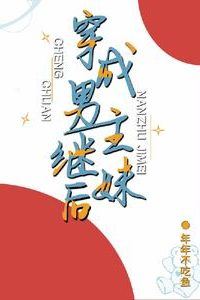
Gu Xiyu is a commander in the Time and Space Administration, tasked with maintaining the stability of small worlds. After a previous mission executor fails to neutralize a fragment of the Great Demon King in world 1385, Gu Xiyu is sent to infiltrate the world and restrict the target's growth before the fragment can consolidate enough energy to threaten reality. The target is Ji Chen, the youngest son of the influential Ji family who founded the business giant Fengming Group. Gu Xiyu’s system malfunctions upon arrival, accidentally binding to Ji Chen instead of him, which grants the target access to mission data and future events, while leaving Gu Xiyu without his usual support.

Gu Xiyu awakens in the body of a twenty-five-year-old office worker who was beaten to near-death by hired thugs. The original host was a mediocre employee fired from a previous job, and his family is in financial ruin. Gu Xiyu’s first mission is to prevent Ji Chen from entering a business marriage with Lei Lina, the daughter of another wealthy family, as this alliance would allow Ji Chen to exploit the Lei family and significantly increase his risk value. To achieve this, Gu Xiyu intercepts the arranged meeting by taking the place of the intended bride, presenting himself as a substitute partner for Ji Chen.

Ji Chen, aware of the system's predictions due to the accidental binding, realizes that Gu Xiyu is an external actor trying to alter his fate. Instead of rejecting the proposal, Ji Chen agrees to a sham marriage with Gu Xiyu. He sees Gu Xiyu as a useful variable he can control and investigate. The two sign marriage certificates, but the union is purely transactional. Ji Chen provides Gu Xiyu with an apartment and orders him to work at Fengming Group to keep him close while monitoring his actions.

As Gu Xiyu integrates into Ji Chen’s company, he discovers that the original host had a deep, unrequited affection for a boy named Fu Nian, who is identified as the second male lead of the world. Gu Xiyu learns that Ji Chen’s rise to power involved outmaneuvering his own family, particularly the protagonist Ji Zixuan, and securing control over key assets like the international brand PAP. The risk value assigned to Ji Chen fluctuates unpredictably, often increasing when Ji Chen interacts with Gu Xiyu, suggesting that the target’s awareness of the system is actively countering Gu Xiyu’s interventions.

The dynamic between the two men shifts from adversarial to a tense partnership. Ji Chen uses the system to anticipate Gu Xiyu’s moves, often staying one step ahead. Meanwhile, Gu Xiyu struggles to complete his mission without direct combat, forced to navigate corporate politics and familial obligations. The Ji family patriarch’s will becomes a focal point, with rumors swirling around Ji Zixuan’s inheritance. Gu Xiyu’s initial goal of reducing Ji Chen’s threat through business sabotage fails as Ji Chen adapts to the new variables introduced by their marriage.

The story progresses with Gu Xiyu uncovering more about the Great Demon King fragment within Ji Chen. The fragment’s consciousness is not entirely dormant; it influences Ji Chen’s instincts and strategic decisions. Gu Xiyu realizes that simply hindering Ji Chen’s business ventures is insufficient. He must address the root cause of the threat—the demon fragment itself—while managing the complex personal entanglement with his husband. The narrative sets the stage for a confrontation that will determine not only the fate of the world but also the true nature of the bond forming between the administrator and the villain.

Latest Release
DateGroupRelease
2026-09-26knoxt c29
2026-09-26knoxt c28
2026-09-26knoxt c27
2026-09-26knoxt c26
2026-09-26knoxt c25
2026-09-26knoxt c24
2026-09-26knoxt c23
2026-09-26knoxt c22
2026-09-26knoxt c21
2026-09-26knoxt c20
2026-09-26knoxt c19
2026-09-26knoxt c18

Community Reviews

Rating(3.9 / 5.0, 171votes)
5 stars
52(30%)
4 stars
45(26%)
3 stars
73(43%)
2 stars
1(1%)
1 stars
0(0%)

Popular reviews

... Read More
I need to talk about this one scene where Ji Chen is standing at the window watching Fu Nian arrive. The author really knows how to paint a picture. You've got this cold night, the black car pulling up, the old lady in her dark purple dress with fleece and cloak braving the wind just to hug her grandson. And Ji Chen is up in his study, separated by glass, watching this warm family moment like he's on the outside looking in. The housekeeper bringing him coffee, saying 'it's not good to stay up too late'—this tiny domestic detail makes the whole scene feel so real. It's not just some dramatic villain monologue. It's a person in a house, with servants, with routine, with layers. The contrast between the warmth downstairs and the cold isolation upstairs? Chef's kiss. And then there's the system panel still floating on his screen, that gray 'command' button he hasn't figured out yet. The author keeps reminding us that Ji Chen has this technological or supernatural advantage but doesn't fully understand how to use it. It creates this tension between power and uncertainty. Later, the scene at Feng Ming Group's lobby with the heating making Li Changyuan sweat and his glasses fogging up—that's such a specific, tactile detail. You can practically feel the stuffy building and the awkwardness of a man whose cards just fell on the floor. Gu Xiyu helping him pick them up and seeing 'Tian Hai Group' on the card? Perfect casual worldbuilding that drops important information without feeling forced.
... Read More
Ji Chen is genuinely terrifying, and I love it. Think about what he just did: he walks into a room full of people who openly want to take down Ji Zixuan, lets them all dig their own graves with their own words—"You can talk about your ideas, everyone will support you!"—and then he turns around and uses their own greed against them. The scene where he says "I can easily find out if there are any hands of insiders in this chaos" and suddenly every dirty uncle in that room goes silent? Chef's kiss. That is a man who doesn't need to raise his voice to win. But here's what really gets me: Ji Zixuan. He gave away 5% of the company shares to his own uncle—the man his grandfather actively kept out of the family business for his entire life. Why? The text says he was "forced to use this share to do something with Ji Chen." Forced. Not chosen. Not wanting to. That's a guy who handed a loaded gun to someone and now has to live with pointing it at his own back. And Lin Fangru? She's furious but completely blind to the real game being played. She thinks Ji Chen is attacking her family's legacy, when really he's quietly dismantling every person in that room who thought they could ride his coattails. The dynamic between Ji Chen and Gu Xiyu is also wild to me. Gu Xiyu is essentially watching a predator at work in real-time, and he's not even the prey—he's the observer who sees the whole board. When he asks Ji Chen about Cheng Qianqian afterward? That's not an accusation, that's a man trying to map the shape of the thing he's entangled with.
... Read More
The structure of this transition between worlds is genuinely masterful and also deeply uncomfortable in the best way. Let me explain why. Chapter 144-146 builds this incredibly intimate, almost claustrophobic scene. Tea pouring. Two people on the floor. A confession. Dying. It's slow, sensory, heavy—all of the right beats for a climax. The reader is supposed to be sitting with Gu Xiyu as his vision fades, right? And then—BOOM. "The host's soul is detected to be unstable. Soul stripping process initiated." Clip. Cut. White light. Servers. Data lines. The system's cold bureaucratic voice snaps in like a seatbelt locking. The emotional devastation of the previous scene is treated with the same clinical efficiency as a software update. This is such a deliberate structural choice. The author isn't just moving the plot forward—they're making you FEEL what it's like to be Gu Xiyu. Your grief gets interrupted. Your closure gets cancelled. You were mid-mourning and now you're being told your data is loading. The pacing here mirrors the protagonist's experience of having his entire emotional arc hijacked by forces he can't control. Then we hit the hospital scene and it's almost comedic in its chaos—screaming nurse, confused mother, violent gambler father—but it lands because we're still emotionally raw from the previous scene. The rhythm is: devastating intimacy → cold system interlude → chaotic realism. Each beat resets the reader's expectations before the next one hits.
... Read More
Let's be real — every conversation in this passage is a bluff. Gu Xiyu tells Lan Yue he wants to cooperate (lie). He says he's carrying Ji Chen's tracker (lie — it's his own trap). He tells the system he'll cooperate seriously (then immediately admits he won't). He messages Ji Chen casually about dinner (while internally interrogating the meaning of their relationship). The entire narrative runs on deception, and yet somehow the emotional stakes feel MORE real because of it, not less. The external threat is clear — someone wanted to arrest Ji Chen, people are getting their hands broken, tracker devices are everywhere. But the INTERNAL conflict is where this passage actually lives or dies. Ji Chen's injury history. His refusal to use a wheelchair. The way he drives away from Gu Xiyu without a word. What did happen between them that made silence the only response? And Lan Yue — "People are mean to change" — that line from Gu Xiyu feels like it applies to everyone in this story. We've all seen versions of these characters before, and the horror and hope of this passage is watching them become someone new while pretending nothing changed.
... Read More
There's something deeply symbolic about a work permit becoming the central piece of evidence in a betrayal accusation. Director Li grabs Gu Xiyu's badge — this small plastic card that represents his place in the world, his identity as an employee, his normalcy — and turns it into proof of guilt. The object that should represent belonging becomes the object that marks him as an outsider, a spy, a traitor. And then Ji Chen's public announcement flips that symbolism completely. By declaring Gu Xiyu his husband on national television, he's essentially replacing the work permit with something far more powerful — a marital bond that no corporate investigation can sever. The identity that got him accused becomes the identity that protects him. The work code trace is another layer. Technology as accusation. Something invisible, digital, impersonal pointing a finger at a person. But it's flawed — it can be forged, manipulated, framed. The system that was supposed to provide truth instead becomes a tool for deception. And the system inside Gu Xiyu — that red bouncing dot, the all-caps frustration, the deliberate misuse of language ('Check what?' / 'What to check?') — it's almost comic relief, but underneath it represents Gu Xiyu's loss of control over his own body and mind. He didn't ask for this. He didn't choose to carry this internal entity. And yet it's part of him, just like his past at Liyang Group is part of him, just like his relationship with Ji Chen is part of him. All these identities colliding, some chosen, some thrust upon him, all of them creating the person he's trying to survive as.
... Read More
What strikes me about the scene work here is how grounded and lived-in everything feels. The living room where Gu Xiyu walks in and finds his parents on the sofa—Gu Xun waving excitedly with his不方便 legs, Xu Caiting speaking in a tone he's never heard before—that's not set dressing, that's character. The author makes you feel the weight of Xu Caiting's changed attitude, how she's carefully measured her words, how she tries not to overstep but also can't hide her relief. And then she casually drops the line about giving Ji Chen "that thing" a few more times if he won't agree to meet them, and you almost choke laughing because the shift from tense political maneuvering to a mother-in-law's bedroom advice is so jarringly human. Then there's the system panel—the cold digital overlay on an otherwise warm domestic scene. Gu Xiyu lying on his bed, staring at the bright red number beside the risk value, calculating how long he has left. That visual of a glowing panel floating in a dark bedroom is such a striking image. And later, when Ji Chen is also looking at his own disappearing panel while holding his phone, the parallel composition between two characters in separate apartments both consulting invisible interfaces is quietly brilliant. The business party that looms on the horizon hasn't even been described yet, but you can already feel the glitter and tension of it pressing in.
See all reviews

Custom lists

See all custom Lists